Temporary Parking Lot Striping
In Charleston, SC
Event and Construction Markings
1-800-STRIPER provides professional temporary parking lot striping in Charleston, SC — short-duration event markings, construction-zone layouts, and overflow capacity laid out on grass, gravel, pavement, or any surface using removable water-based traffic paint.
1-800-STRIPER® of Charleston PROVIDes Temporary Striping Services NEAR YOU
Need Temporary Stripes?
Use temporary stripes to direct traffic and create parking areas at your special event or to keep construction sites safe without a long-term commitment. We paint on grass, gravel, pavement, or any other surface where temporary striping is needed.
Striping solutions for:
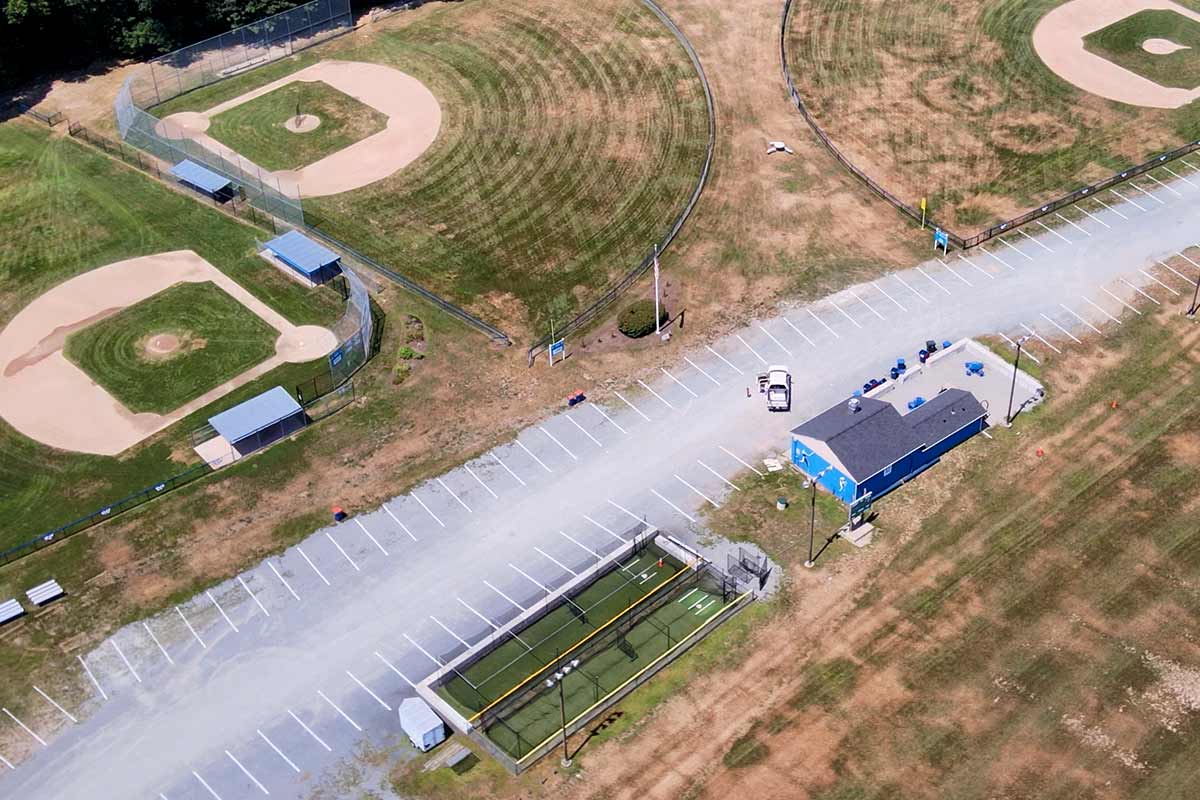
Temporary Parking Lot Striping in Charleston, SC
Temporary markings solve a problem permanent paint can’t: you need the lot organized for a while, and then you need it to go away.
We handle temporary parking lot striping across Charleston, Dorchester, and Berkeley counties — festivals and one-off events, construction-phase layouts, seasonal overflow, church and school peak days, and any situation where the marking has a scheduled end. The work runs on removable water-based traffic paint, chosen because it does the job and then releases.
Any Surface: Grass, Gravel, Pavement
The most common misconception here is that temporary markings need asphalt. They don’t, and in this market a lot of overflow capacity isn’t paved at all.
- Grass — event overflow fields, festival parking, church peak-day capacity. Water-based paint marks turf well enough to organize thousands of cars, and it fades out with growth and mowing rather than needing removal.
- Gravel — the surface where conventional striping fails hardest. Paint sits on stones that move, so lines blur as soon as traffic arrives. Gravel lots usually want a different answer: markers, stops, or signage rather than paint. Charleston County’s own code takes this view for unincorporated lots — where a surface “cannot be marked with directional arrows, directional signage is required to mark one-way ingress and egress driveways” (ZLDR §9.3.7.D.4.c).
- Pavement — asphalt and concrete take temporary paint cleanly and release it cleanly, which makes them the easiest case for construction-phase and seasonal work.
- Any other surface — compacted earth, slag, reinforced-grass systems, sports surfaces pressed into parking duty for a weekend. Tell us what you’ve got and we’ll tell you honestly what will hold and for how long.
There’s a local wrinkle worth knowing. In unincorporated Charleston County, unpaved lots aren’t an afterthought in the code — they’re addressed directly. ZLDR §9.3.7.D.4.b requires that “all Parking Lots must have an all-weather surface, such as gravel, slag, or another approved pervious surface, excluding asphalt shingles,” with the driveway paved “a minimum distance of 20 feet” in from the street. And §9.3.7.D.4.a requires “a minimum four-inch Curb stop” on every space in an unpaved parking area. So on unpaved county land, the county’s own answer to “how do you delineate a space you can’t paint” is a curb stop — not a line.
Inside the City of Charleston the framing differs: §54-318.d requires hard paving but lists exceptions permitting “slag, gravel, ROC, or grasscrete” for uses including places of worship, schools and day-care, private clubs, recreational facilities, and agricultural uses — each with a paved apron at the street. Those exceptions are exactly the properties that most often need temporary overflow marking.
Events, Construction Zones, and Overflow
Events. The job is throughput. Cars arrive in a compressed window and every minute a driver spends hunting a lane is a line backing onto the road. That makes the layout — lanes, direction, and where staff stand — matter more than the paint. We lay it out with the traffic plan, not after it.
Construction phasing. A lot under construction changes shape as work moves. Temporary markings keep the working lot legible through each phase: contractor parking, a route that keeps deliveries clear of the public, and reduced-capacity layouts while a section is closed. Then they come up and the next phase goes down.
Seasonal and peak-day overflow. Retail at Christmas, a church on Easter, a school at graduation, a venue with a season. Capacity you need for weeks a year and don’t want painted for the other fifty.
Whatever the case, the layout still has to work as a parking layout. Aisles have to be wide enough for the vehicles actually using them, circulation has to keep moving, and drivers have to be able to leave without reversing into a road. Being temporary is not a reason to be badly designed — it’s usually the opposite, because a temporary lot handles unfamiliar drivers.
Removal and Turnaround
Removable water-based paint is the point of the product, and the honest answer about how it goes away depends on the surface:
- Grass — no removal step. It grows and mows out.
- Pavement — water-based paint releases far more easily than permanent marking paint. Where a surface has to come back clean and quickly, pressure washing lifts it (see our parking lot pressure washing page).
- Gravel and loose surfaces — the marking degrades with traffic, which is a feature for a temporary layout and the reason paint isn’t usually the right tool there in the first place.
Turnaround: most temporary layouts go down in a single visit, and the real constraint is the same as any striping work — a dry surface and time to cure before traffic. Weather drives the schedule. Charleston’s summer averages over six inches of rain a month from June through September, so an event layout in August gets planned around the forecast, with a fallback.
Two things temporary work is not the right answer for. If the layout is going to stay, it should be permanent paint or thermoplastic — temporary paint on a permanent lot just means restriping sooner. And temporary markings don’t relax any rule that would otherwise apply: if your lot needs accessible spaces, it needs them at full ADA specification, laid out and marked properly, whether the rest of the lot is there for a weekend or a decade.
For a full list of our pavement marking services, visit our parking lot striping in Charleston page.
Businesses We Serve




How it Works

GET A FREE ESTIMATE
Contact us today and we’ll have a quote to you in 24 hours

SCHEDULE A STRIPING
We’ll have your space restriped in less than 7 days, without affecting your business hours

GET A PARKING LOT THAT POPS
For a budget-friendly price, you’ll get a parking lot that looks like new
We proudly work with:


We proudly work with:


Frequently Asked Questions About Temporary Parking Lot Striping in Charleston, SC
Can you stripe a grass field for event parking?
Yes — grass is one of the most common surfaces we mark for events. Water-based traffic paint marks turf well enough to organize a field full of cars, and it doesn’t need removing: it fades with growth and mowing. Festival parking, church peak days, and school events are the usual cases.
Will temporary striping come off my asphalt?
Yes. Removable water-based traffic paint is chosen precisely because it releases from pavement far more readily than permanent striping paint does. Where the surface needs to be clean quickly, pressure washing lifts it. On grass it simply grows out with mowing; on gravel it wears away under traffic. The one case to watch is a long “temporary” layout: leave water-based paint down for a season on a busy lot and it weathers into something that needs more than a rinse. If the layout is staying, use permanent paint.
Can you mark a gravel lot?
We can, but paint is usually the wrong tool and we’ll say so. Gravel moves under traffic, so painted lines blur almost immediately. Charleston County’s own code reaches the same conclusion for unincorporated lots: where a surface “cannot be marked with directional arrows, directional signage is required” (ZLDR §9.3.7.D.4.c), and unpaved parking areas need “a minimum four-inch Curb stop” on each space (§9.3.7.D.4.a). For gravel we’d normally propose stops, markers, or signage rather than paint.
How long does temporary parking lot striping last?
It’s built to be short-duration, and the surface decides. On pavement it holds through an event or a construction phase and then comes up. On grass it lasts until growth and mowing take it. On gravel it degrades with traffic. If you need a layout that survives a season or more, temporary paint is the wrong product — you want permanent paint or thermoplastic.
Do temporary layouts still need accessible spaces?
Yes. Nothing about a marking being temporary relaxes accessibility requirements. If the lot is in use, accessible spaces need to be there at full ADA specification — the space and access aisle dimensions in §502, properly marked and signed. Our ADA parking lot striping page covers the detail.