Parking Lot Pressure Washing
In Charleston, SC
Surface Prep Before Restriping
1-800-STRIPER provides professional parking lot pressure washing in Charleston, SC — lifting oil stains, tire marks, and built-up grime from asphalt and concrete with wash water managed per EPA National Pollutant Discharge Elimination System stormwater rules.
1-800-STRIPER® of Charleston PROVIDes Parking Lot Power Washing Services NEAR YOU
Need to blast away years of grime?
If your parking lot or parking garage looks dull and dirty, our professional crew can wash away grime, oil, stains, and slippery buildup to restore the appearance of your property.
Benefits:
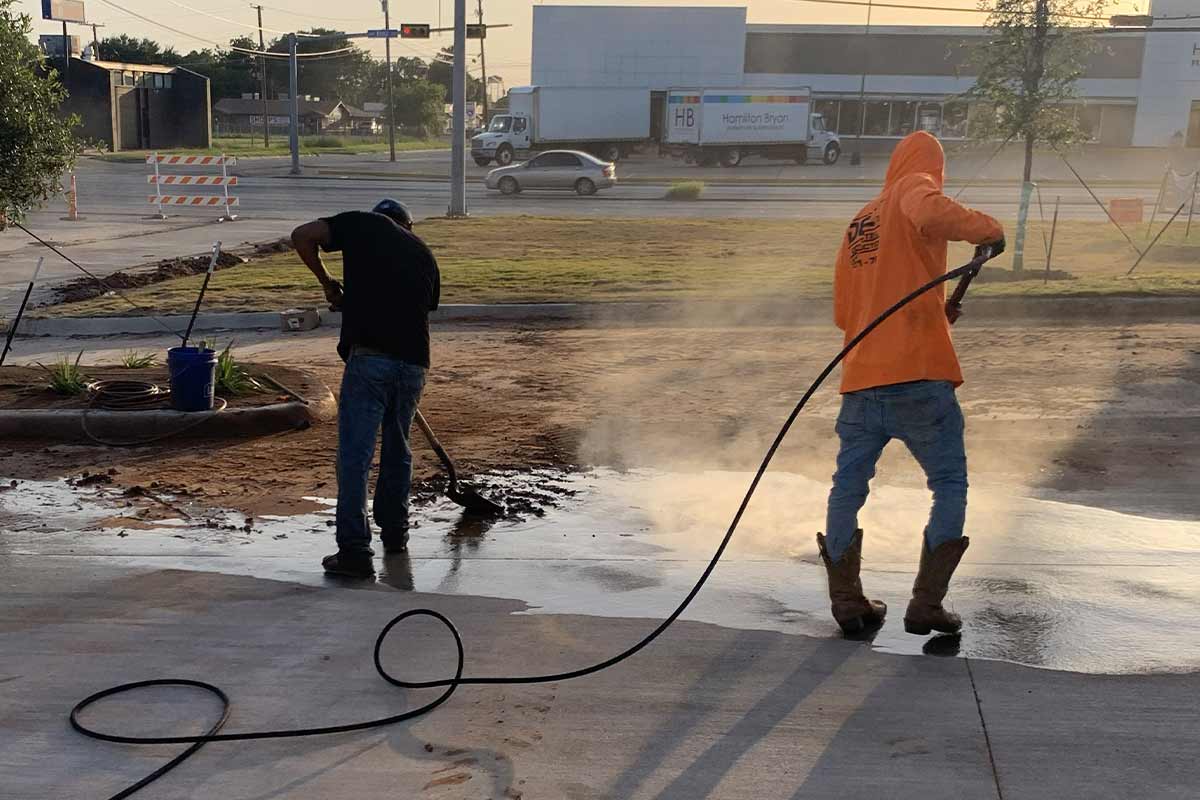
Parking Lot Pressure Washing in Charleston, SC
Pressure washing a commercial lot is straightforward work with one complication: where the water goes.
We wash commercial lots across Charleston, Dorchester, and Berkeley counties — retail centers, office parks, medical properties, restaurants and their dumpster pads, apartment communities, and industrial sites. Oil and grease, tire marks, gum, organic staining, and the general grime a Lowcountry year puts on a surface.
Wash Water Is a Stormwater Discharge
Here’s the part that separates a professional wash from a guy with a machine.
Your parking lot drains to a storm drain. A storm drain goes to a creek, a marsh, or the harbor — not to a treatment plant. So when you pressure wash a lot, whatever comes off the surface goes with the water, and in a market built around tidal creeks and the harbor, that’s not an abstract concern.
The federal framework is the National Pollutant Discharge Elimination System, administered by the Environmental Protection Agency, which regulates discharges of pollutants into waters of the United States. Wash water carrying oil, grease, detergents, and solids isn’t clean water, and letting it run into a storm drain is how a routine maintenance job turns into a problem.
Be precise about how that reaches you, though, because it depends on what kind of property you are. Keep EPA’s own qualifiers, because they’re doing work: the NPDES stormwater program “regulates some stormwater discharges from three potential sources: municipal separate storm sewer systems (MS4s), construction activities, and industrial activities,” and operators of those sources “might be required to obtain an NPDES permit.”
So there are two different answers, and you should know which one is yours. If your site is an industrial facility in one of the categories at 40 CFR 122.26(b)(14), you may hold your own NPDES permit, and the duty is yours directly. For a retail center, office park, or apartment community, you are normally not the permittee — the duty reaches you through the illicit-discharge rule your municipality has to enforce to keep its own MS4 permit. Either way it lands on your lot; it just arrives by a different road, and anyone telling you flatly that “the EPA doesn’t regulate you” hasn’t asked which of the two you are.
The practical handling is the same wherever you are:
- Contain first. Block or berm the drains in the wash area before the water starts moving.
- Collect the water. Vacuum recovery rather than letting it find the nearest inlet.
- Handle solids separately. Filter what’s in the water; grit and debris don’t belong in the sanitary system either.
- Dispose lawfully. Recovered wash water goes to an approved disposal route, not the storm system.
- Treat oil and grease as their own problem. A dumpster pad or a fuel-spill area isn’t a general wash — the contamination is concentrated and needs handling as such.
A note on how we cite this: we’re pointing at the EPA’s NPDES program as the governing framework rather than at a specific South Carolina permit condition, because a site’s obligations depend on its own permit, its MS4, and what’s actually being discharged. If your property has a stormwater permit with conditions attached, those conditions govern — and we’d want to see them before we wash.
Oil, Tire Marks, and Organic Staining in a Coastal Climate
Charleston’s climate is hard on parking surfaces, and the numbers say why. From the NOAA station at Charleston International Airport (GHCND: USW00013880), 1991–2020 normals:
- 52.51 inches of rain a year — and it isn’t spread evenly. June through September each average over six inches (6.21, 6.60, 6.97, 6.01), so roughly half the year’s rain lands in four months.
- 64.3 days a year above 90 °F.
- Annual average temperature 66.5 °F, with no month averaging below 49.5 °F.
Warm, wet, and rarely freezing is the ideal condition for organic growth. Algae, mildew, and mold establish on shaded and north-facing pavement here in a way they don’t in colder markets, and that’s the staining we’re most often called about — not oil. It’s also why washing here is a recurring need rather than a one-off: the climate that grew it the first time is still there.
Oil and grease behave differently. Heat is the factor: with 64.3 days a year above 90 °F, asphalt softens, and oil that would sit on the surface of a cool lot works into it instead. Which is why a fresh spill and a two-summers-old stain are genuinely different jobs, and why we’ll tell you honestly when a stain has gone too deep for washing to fully lift.
Tire marks are mechanical — rubber deposited by turning and braking, concentrated at entrances, drive-through lanes, and loading areas. They respond well to washing, and they come back, because the traffic that made them hasn’t changed.
Washing Before Restriping: Why Sequence Matters
If you’re doing both, wash first. Every time.
Striping paint bonds to the surface it’s applied to. Apply it over oil, grime, or algae and it bonds to the contamination rather than to the pavement — and it fails early, taking your money with it. That’s not a preference, it’s how coatings work: the paint can only be as durable as what’s beneath it.
The sequence we run:
- Wash the surface and lift what’s on it.
- Let it dry properly — genuinely dry, not surface-dry. This is the step people rush.
- Seal, if the lot is being sealed.
- Stripe last, onto a clean, cured, dry surface.
The drying step is where Charleston’s climate makes itself felt again. A summer wash competes with the same wet season that put six inches of rain into each of June, July, August, and September — and a lot that looks dry after an afternoon in high humidity may not be. We plan the sequence around the forecast rather than the calendar.
If you’re restriping, the wash isn’t an upsell — it’s the thing that makes the restriping last. See our parking lot restriping page for what happens after the surface is clean.
For a full list of our pavement marking services, visit our parking lot striping in Charleston page.
Businesses We Serve




How it Works

GET A FREE ESTIMATE
Contact us today and we’ll have a quote to you in 24 hours

SCHEDULE AN INSTALLATION
We’ll have your installation scheduled in less than 7 days, without affecting your business hours

GET A PARKING LOT THAT POPS
For a budget-friendly price, you’ll get a parking lot that looks like new
We proudly work with:


We proudly work with:
Frequently Asked Questions About Parking Lot Pressure Washing in Charleston, SC
Where does the wash water go?
Into containment, and then to lawful disposal — not into your storm drain. Parking lot storm drains discharge to creeks, marshes, and the harbor rather than to a treatment plant, so wash water carrying oil, grease, detergents, and solids doesn’t get a second chance once it’s in the inlet. Containment at the drain, recovery of the water, separate handling of solids, and disposal through an approved route is the method the job calls for. Ask us how we’ll handle it on your specific site before we start — and ask anyone else quoting the work the same question. It’s the fastest way to tell a wash from a rinse-and-run.
How often does a commercial lot need parking lot pressure washing?
It depends on what’s staining it and how the lot is used, but Charleston’s climate makes it a recurring job rather than a one-off. The 1991–2020 normals at Charleston International Airport show 52.51 inches of rain a year and an annual average of 66.5 °F — warm and wet, which is exactly what algae and mildew want. Restaurants, dumpster pads, and drive-through lanes need it most; a shaded lot with organic growth needs it more often than a sunny one.
Will pressure washing remove old oil stains?
Fresh spills, usually. Old ones, sometimes only partly — and we’d rather say so upfront. Charleston averages 64.3 days a year above 90 °F, and hot asphalt softens enough that oil works down into the surface rather than sitting on it. Once it’s in the binder, washing lifts what’s on top but can’t recover what’s soaked in. We’ll look at the stain and tell you honestly what’s achievable before you spend money on it.
Should I wash before restriping?
Yes — always, and it’s not an upsell. Striping paint bonds to whatever it’s applied to. Put it over oil, grime, or algae and it bonds to the contamination instead of the pavement, then fails early. The sequence is wash, dry properly, seal if you’re sealing, then stripe last. The drying step is the one people rush, and in Charleston’s humidity a lot that looks dry sometimes isn’t.
Can you wash while we’re open?
Usually, in sections. We work the lot in zones so you keep trading, and we contain each zone as we go. The constraint is that we need the area clear of cars for the wash and the recovery — and we need to control where the water goes, which is harder with traffic moving through. Most retail and office properties get washed at night or early morning for that reason.