Temporary Parking Lot Striping
In Philadelphia Suburbs, PA
Event and Construction Markings
1-800-STRIPER provides professional temporary parking lot striping in Philadelphia Suburbs, PA — short-duration event markings, construction-phase layouts, and overflow parking on grass, gravel, pavement, or any surface using removable water-based traffic paint for commercial properties across Montgomery, Bucks, Chester, and Delaware counties.
1-800-STRIPER® of Philadelphia Suburbs PROVIDes Temporary Parking Lot Striping Services NEAR YOU
Need Temporary Stripes?
Use temporary stripes to direct traffic and create parking areas at your special event or to keep construction sites safe without a long-term commitment. We paint on grass, gravel, pavement, or any other surface where temporary striping is needed.
Striping solutions for:
Surfaces We Can Stripe: Grass, Gravel, Pavement, or Any Surface
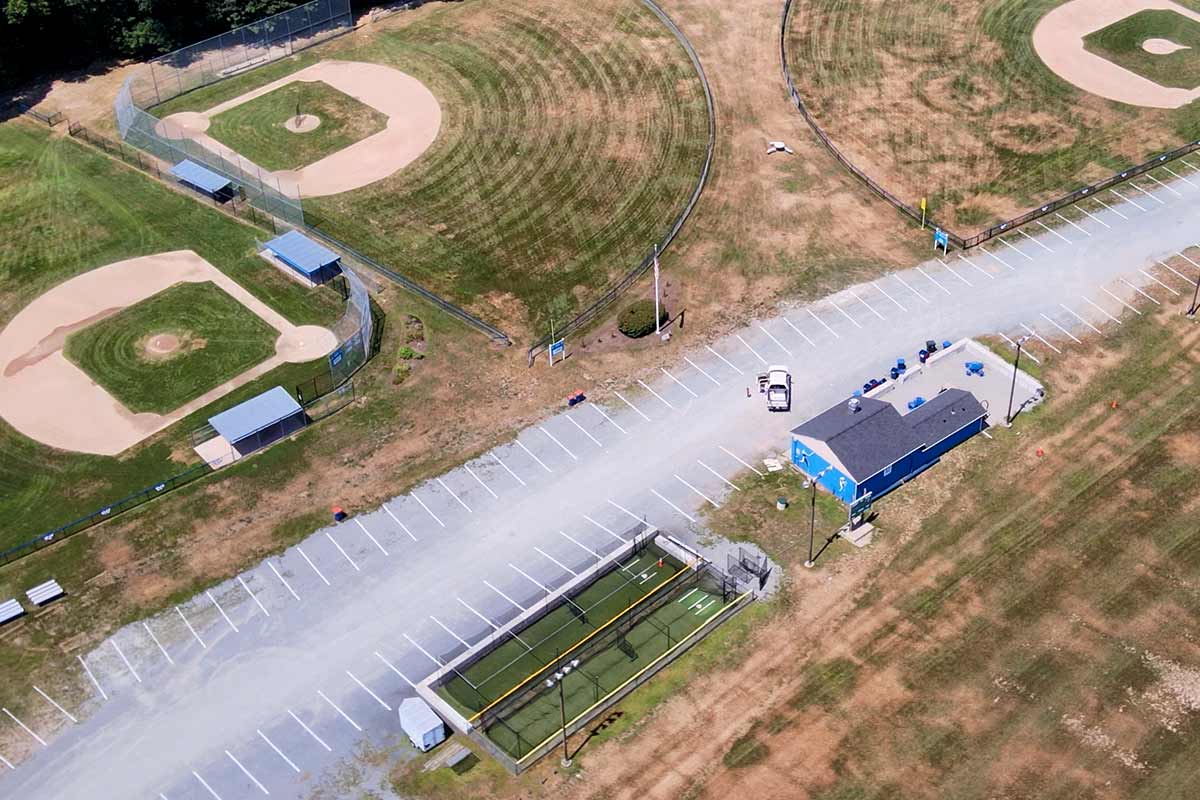
Temporary striping is not limited to asphalt and concrete, and that is the single most useful thing to know about it. Grass fields used as event overflow, gravel and stone lots, dirt and compacted surfaces, and finished pavement can all be laid out, and each takes a different marking approach.
Grass and turf take a marking product intended to sit on vegetation and fade out over time rather than one designed to bond. Gravel and loose surfaces usually need physical layout aids as well as marking, because a painted line on stone reads poorly from a driver’s seat. Pavement takes a removable water-based traffic paint chosen for a shorter service life than permanent striping.
The question we ask first is not what the surface is but how long the layout has to last and what has to happen to it afterward. A field that returns to being a field has different requirements from a lot that will be permanently striped in six months.
Events and Overflow Parking
Event parking is a throughput problem before it is a marking problem. The layout has to get cars off a public road quickly, fill predictably, empty without gridlock, and keep pedestrians out of the driving path while all of that happens.
Typical work includes numbered or lettered rows so attendees can find their car afterward, directional arrows and entry and exit routing, staff, vendor, and reserved areas, accessible spaces positioned close to the entrance with proper aisles, and pedestrian routes marked from the parking area to wherever people are going.
Accessible provision is not optional because the parking is temporary. An overflow field serving an event still needs accessible spaces on a firm, stable surface with a usable route, and that is a layout decision made at the start rather than a patch applied when somebody asks.
What we need to know to lay out an event lot
- How many vehicles, and arriving across what window.
- The surface, and whether it has to return to its previous use.
- Where cars enter from and where they exit to.
- Where attendees walk once they are parked.
- How long the markings have to remain legible.
- Whether staff, vendors, or accessible parking need dedicated areas.
Construction-Phase and Phased-Work Layouts
Properties under construction need parking that changes as the work moves, and permanent striping cannot follow that. Temporary layouts hold a site together while a building is going up, a lot is being resurfaced in sections, or a tenant fit-out is taking a portion of the parking offline.
The pattern is usually the same: mark the area that is available now, route traffic around the closed portion, keep accessible spaces reachable from a route that still exists, and re-mark as each phase completes. On a resurfacing project, temporary layout also keeps the property trading while the permanent striping waits for the surface to be ready.
This is the part of the job that rewards being local. Coming back to move a layout twice in a month is only practical for a crew already working across the four counties.
Removal and Site Restoration
How the markings come off is decided before they go on. That is the difference between a temporary layout and a permanent one applied carelessly.
On grass, the marking is expected to fade with growth and mowing rather than being removed. On gravel, layout aids come up and the surface is raked back. On pavement, a removable water-based product is chosen so the lot can be returned to its prior appearance or overstriped with a permanent layout without ghosting through.
Where a temporary layout is a step toward a permanent one, we keep the survey and measurements so the permanent striping can reproduce or improve the geometry without starting from scratch.
For a full list of our pavement marking services, visit our parking lot striping in Philadelphia Suburbs page.
Businesses We Serve




How it Works

GET A FREE ESTIMATE
Contact us today and we’ll have a quote to you in 24 hours

SCHEDULE A STRIPING
We’ll have your space restriped in less than 7 days, without affecting your business hours

GET A PARKING LOT THAT POPS
For a budget-friendly price, you’ll get a parking lot that looks like new
We proudly work with:


We proudly work with:

Frequently Asked Questions About Temporary Parking Lot Striping in Philadelphia Suburbs, PA
Can you stripe parking on grass or gravel?
Yes. Temporary striping is not limited to asphalt and concrete: grass and turf fields, gravel and stone lots, dirt and compacted surfaces, and finished pavement can all be laid out. Each takes a different approach, since a product designed to bond to pavement behaves nothing like one intended to sit on vegetation and fade out. The surface and the required lifespan of the layout together decide what we use.
How long does temporary striping last?
It is specified rather than fixed, which is the point of it. We choose the marking approach around how long the layout has to stay legible, from a single weekend event through to a construction phase running several months. Longer service life means a more durable product and a more involved removal; a short-lived layout can use something that fades on its own. Tell us the timeline first and the material follows from it.
Do you need a permit for temporary event parking?
It depends on the municipality, on the surface, and on whether you are affecting a public street. Parking on your own property for a private event is usually a different question from restricting on-street parking, which typically does involve the municipality. We are not the permitting authority, so the honest answer is that the township or borough your property sits in is the place to confirm it, and it is worth doing before the event rather than during.
Will temporary markings damage my pavement or turf?
Not when the product is matched to the surface and the removal is planned before application. On pavement we use a removable water-based traffic paint chosen so the lot returns to its prior appearance or can be overstriped permanently without ghosting. On turf we use a marking intended to fade with growth and mowing. The failure mode is using permanent traffic paint for a temporary job, which is exactly what we are avoiding.
Can temporary striping include accessible parking?
It can, and it should. Accessible provision does not lapse because parking is temporary. An overflow area still needs accessible spaces placed close to the entrance, on a firm and stable surface, with access aisles and a usable route to where people are going. We build that into the layout at the start rather than adding it once somebody points out it is missing, because retrofitting it into a filled field is much harder.