Parking Lot Pressure Washing
In Philadelphia Suburbs, PA
Surface Prep Before Restriping
1-800-STRIPER provides professional parking lot pressure washing in Philadelphia Suburbs, PA — lifting oil, rubber, gum, and salt residue from asphalt and concrete with wash water contained rather than sent to the storm drain, for commercial properties across Montgomery, Bucks, Chester, and Delaware counties.
1-800-STRIPER® of Philadelphia Suburbs PROVIDes Parking Lot Pressure Washing Services NEAR YOU
Need to blast away years of grime?
If your parking lot or parking garage looks dull and dirty, our professional crew can wash away grime, oil, stains, and slippery buildup to restore the appearance of your property.
Benefits:
What Comes Off, and What Does Not
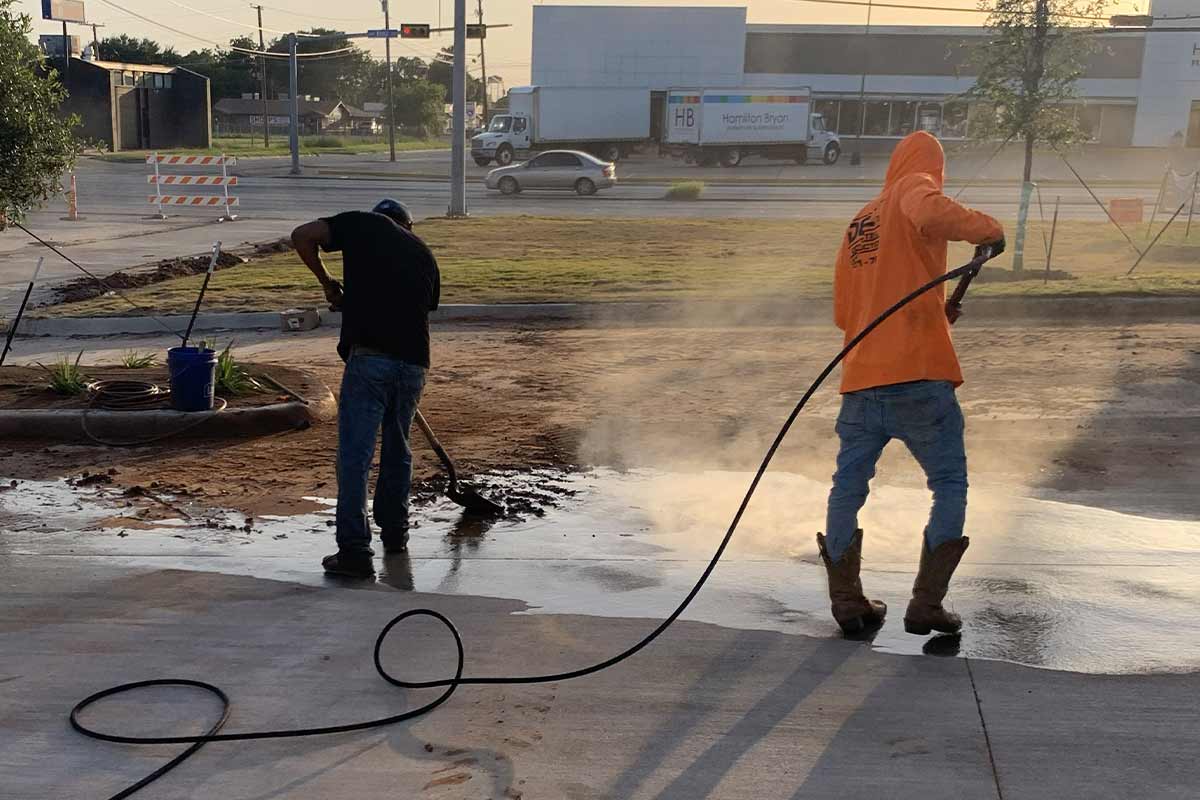
Pressure washing lifts what is sitting on the surface, not what has changed it. It works well on dirt and grime, tire rubber and skid marks, gum, bird droppings, salt residue after winter, and the film that builds along curb gutters and around dumpster pads.
It is far less effective on anything that has penetrated. Deep oil saturation has soaked into the asphalt binder rather than sitting on it, so washing lifts the surface layer and leaves the stain. Rust staining and paint overspray are similar. Where a stain is structural rather than surface, we say so rather than charging for a result the method cannot produce.
Wash Water, Storm Drains, and MS4 Areas
Where the water goes is a real regulatory question, and most of our service area sits inside a regulated system. Pennsylvania has one Large, one Medium, and 1,059 Small municipal separate storm sewer systems, and the municipalities covered by them hold permit obligations administered by the Department of Environmental Protection‘s Bureau of Clean Water, generally through the PAG-13 general permit or an individual permit.
A municipality carrying an MS4 permit has committed to controlling what enters its storm sewers, and wash water carrying oil, detergent, and sediment is exactly the discharge those programs address. Whether a particular practice is permitted is a question for that municipality’s own ordinance, and we do not assume the answer across four counties. What we control is our method: containing and recovering wash water where the site calls for it, and keeping it out of storm inlets.
Scheduling Around a Working Property
Washing is disruptive in a specific way: the surface is wet, the equipment is loud, and the area being cleaned cannot hold parked cars. So it is scheduled the way striping is, in sections, around the property’s own rhythm. Retail centers usually prefer early mornings, medical offices work around appointment blocks, and distribution sites often have a genuine window between shifts.
Washing is also the natural precursor to restriping, because markings bond to clean, dry pavement. Where both are planned, running them in sequence on one visit saves the property a second closure.
How a wash runs on a working property
- Confirm the governing municipality’s own ordinance on wash water, since most of our service area sits inside a regulated municipal separate storm sewer system.
- Section the lot and clear the area being washed, because the surface will be wet and cannot hold parked cars.
- Identify what is surface residue and what has penetrated, and say which is which before starting rather than after.
- Wash the section, containing and recovering wash water where the site calls for it and keeping it out of storm inlets.
- Let the surface dry, then move to the next section so the property keeps working throughout.
- Where restriping is also planned, run it in sequence on the same visit while the pavement is clean and dry.
For a full list of our pavement marking services, visit our parking lot striping in Philadelphia Suburbs page.
Businesses We Serve



How it Works

GET A FREE ESTIMATE
Contact us today and we’ll have a quote to you in 24 hours

SCHEDULE AN INSTALLATION
We’ll have your installation scheduled in less than 7 days, without affecting your business hours

GET A PARKING LOT THAT POPS
For a budget-friendly price, you’ll get a parking lot that looks like new
We proudly work with:


We proudly work with:
Frequently Asked Questions About Parking Lot Pressure Washing in Philadelphia Suburbs, PA
Will pressure washing remove oil stains from asphalt?
Partly, and it depends on how far the oil has gone. A fresh surface spill usually lifts well. Long-standing saturation has soaked into the asphalt binder rather than sitting on top of it, and washing will clean the surface layer while leaving a shadow behind. We will tell you which one you have before starting rather than after. Where a stain is structural, the honest options are treatment or patching, not more pressure.
Where does the wash water go?
That is a real regulatory question in this region, not a detail. Most of our service area sits within municipal separate storm sewer systems, and Pennsylvania has more than a thousand of them under permits administered by the Department of Environmental Protection. Those permits commit the municipality to controlling what enters the storm sewer. We contain and recover wash water where the site and the work call for it, and keep recovered water out of storm inlets.
How often should a commercial lot be washed?
There is no universal interval worth quoting, because it depends on traffic, tree cover, food tenants, dumpster placement, and how much salt the property takes in winter. The practical pattern we see is a spring wash to clear salt residue and winter grime, with additional visits driven by specific problems: a food tenant’s frontage, a dumpster pad, or entry lanes that collect rubber. Condition is a better trigger than the calendar.
Can you wash and restripe in the same visit?
Running them together is usually the efficient way to do both. Markings bond to clean, dry, sound pavement, so washing is the natural precursor to striping rather than a separate errand. Doing them in sequence means the property closes sections once instead of twice. The only constraint is drying time between the two, which depends on conditions on the day and which we confirm rather than assume.
Do you wash parking garages as well as open lots?
Yes. Structures bring their own considerations: drainage runs to specific points rather than sheeting off, ventilation affects drying, ceiling heights limit equipment, and levels have to be closed one at a time to keep the structure usable. Containment is generally more straightforward in a garage than on an open lot because the drainage is defined, which makes recovering wash water more practical rather than less.