Warehouse Line Painting
In Charlotte, NC
OSHA-Compliant Safety Markings
1-800-STRIPER provides professional warehouse line painting in Charlotte, NC — OSHA-compliant aisle lines, pedestrian walkways, and safety zone markings per OSHA 29 CFR 1910.22 requirements using durable epoxy and traffic paint for industrial facilities across the Charlotte metro.
1-800-STRIPER® of Charlotte PROVIDes Warehouse Floor Markings Services NEAR YOU
Want your indoor space to operate more efficiently?
Warehouse and interior markings ensure clear traffic lanes, organized storage zones, and designated spaces designed to help your business operate safely and efficiently.
Benefits:
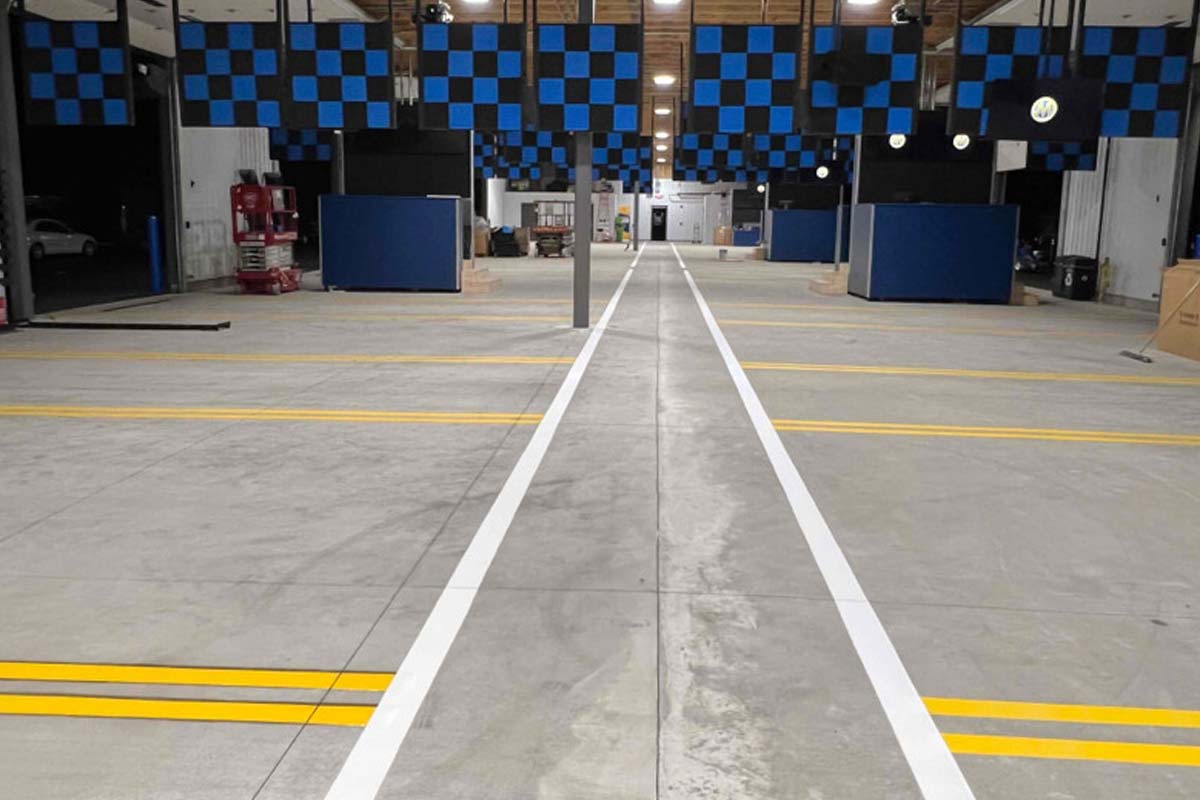
Warehouse Line Painting in Charlotte
Charlotte warehouses and distribution centers face real citation exposure when aisle markings fade or disappear. OSHA 29 CFR 1910.22 requires that walking-working surfaces stay clear, dry, and distinctly marked — and inspectors notice when they aren’t. 1-800-STRIPER paints warehouse floors for facilities of all sizes across Mecklenburg, Gaston, Cabarrus, and Union counties.
We stripe aisle lines, forklift traffic lanes, pedestrian walkways, loading dock boundaries, and staging zones. Paint selection — epoxy or traffic paint — is matched to your floor type and how hard it gets used. Markings are ready for traffic quickly, so your operation loses minimal floor time.
OSHA-Compliant Marking Standards
OSHA 29 CFR 1910.22 requires employers to keep walking-working surfaces hazard-free and to mark aisles and special areas wherever needed. That requirement shapes every color and width decision we make on warehouse floors. The ANSI Z535.1 Safety Color Code assigns meaning to each color, so employees, contractors, and safety inspectors all read your floor the same way.
| Color | Meaning | Typical Use |
|---|---|---|
| Yellow | Caution / aisles | Aisle lanes, pedestrian walkways, caution zones |
| Red | Fire / emergency | Fire equipment, emergency exits, sprinkler areas |
| Green | Safety / first aid | First-aid stations, safety equipment locations |
| Blue | Informational / mandatory | Mandatory PPE areas, informational zones |
| Orange | Warning / energized equipment | Energized panels, conveyor pinch points, machinery |
Line widths generally run 2–4 inches for pedestrian paths and 4–6 inches for forklift lanes, though your layout and risk profile may call for something wider. We nail down exact dimensions during the site walk — before any paint touches the floor.
What We Mark
Good warehouse marking goes well beyond painting a few aisle stripes. 1-800-STRIPER of Charlotte installs the full set of floor markings your facility needs for OSHA compliance and clean traffic flow.
Aisle and traffic lanes — defined lanes keep pedestrian paths and forklift routes from crossing unexpectedly. Widths are set to OSHA 1910.22 minimum clearances plus your equipment’s actual turning radius.
Pedestrian walkways — striped paths through active forklift zones give employees a visible safe route. Green or yellow makes the right path obvious without any guesswork.
Safety zones — red markings ring fire extinguishers, pull stations, and AED cabinets so emergency equipment is never hard to spot. Blue marks mandatory PPE areas and informational stations.
Loading dock areas — dock edge lines, trailer pull-up limits, and staging grids cut down congestion and reduce the risk of dock-edge incidents.
Hazard zones and restricted areas — orange markings near energized panels, conveyor pinch points, and machinery perimeters stop workers before they walk into the hazard.
Call 1-800-STRIPER at (704) 828-9922 for a free estimate on your Charlotte facility.
Our Marking Process
The project starts with a site walk: we confirm your floor surface, note any existing markings, map traffic patterns, and establish line widths based on your layout and OSHA history.
- Surface prep — the floor needs to be clean, dry, and clear of debris. Loose or peeling old paint gets addressed first, so the new coating has a solid surface to bond to.
- Layout and measurement — chalk lines go down before any paint does. We verify aisle widths against OSHA minimums and match your CAD plan or hand-drawn layout.
- Paint application — epoxy or traffic paint is applied with professional line-striping equipment. Epoxy holds up better in forklift lanes and high-wear areas; traffic paint works well for lighter-use zones or phased projects.
- Cure and inspection — we walk the finished markings with your facilities manager, confirm colors match your safety plan, and flag any follow-up items before wrapping up.
Most warehouse jobs finish in one visit. Facilities with multiple zones or complex layouts may be phased around shift changes to keep things moving.
For a full list of our pavement marking services, visit our parking lot striping in Charlotte page.
Businesses We Serve




How it Works

GET A FREE ESTIMATE
Contact us today and we’ll have a quote to you in 24 hours

SCHEDULE A STRIPING
We’ll have your space restriped in less than 7 days, without affecting your business hours

GET A PARKING LOT THAT POPS
For a budget-friendly price, you’ll get a parking lot that looks like new
We proudly work with:


We proudly work with:

Frequently Asked Questions About Warehouse Line Painting in Charlotte, NC
How long does warehouse floor paint last in a high-traffic facility?
Epoxy floor markings in busy forklift areas typically hold up 3–5 years before wear becomes noticeable — how long depends on traffic volume, forklift wheel type, and the condition of the concrete going in. Traffic paint in lighter pedestrian zones tends to last 2–4 years. Surface prep is the biggest variable: a clean, dry, properly profiled floor gets you the top of that range. Annual walk-throughs help catch fading lines before they turn into an OSHA line item.
Does OSHA require specific colors for warehouse floor markings?
OSHA 29 CFR 1910.22 requires that aisles and special areas be marked, but leaves color selection to the employer. The ANSI Z535.1 Safety Color Code is the recognized industry standard for color meaning: yellow for caution and aisle lanes, red for fire and emergency equipment, green for safety and first-aid stations, blue for mandatory or informational areas, and orange for warning and energized equipment. Aligning with ANSI Z535.1 gives your facility a consistent, widely understood marking system that holds up to outside scrutiny.
What surface preparation is needed before warehouse line painting?
The floor needs to be clean, dry, and free of oil, grease, dust, and any loose concrete or old coating. Epoxy typically requires light mechanical profiling — shot blasting or grinding — to open the concrete pores and give the coating something to grip. Traffic paint on smooth concrete usually needs a thorough cleaning and little else. We look at the floor during the initial site walk and tell you upfront what prep is needed before we schedule the work.
Can you work around our warehouse operating hours?
Scheduling around shift changes, weekend shutdowns, or a bay-by-bay rotation is standard practice for warehouse projects. Paint does need time to cure before forklifts and foot traffic return — epoxy takes longer than traffic paint, and cooler temperatures slow both. We build the schedule with your facilities team during the estimate process, not after the job starts. Call (704) 828-9922 to walk through your facility’s timing requirements.
Do you handle both new warehouse markings and repainting faded lines?
1-800-STRIPER handles both fresh installations and restriping jobs where the old markings have faded or worn through. For restriping, we check whether existing lines can serve as a layout guide or need to come up first. Where paint has lifted or started peeling, that gets resolved before new coatings go down — skipping that step is how you get early failure. Reach out for a free estimate on either scope.