Parking Lot Layout Design
In Charlotte, NC
Customized Parking Lot Layouts
1-800-STRIPER provides professional parking lot layout design in Charlotte, NC — custom-engineered layouts that maximize parking capacity, ensure ADA compliance per the 2010 ADA Standards for Accessible Design, and meet MUTCD pavement marking specifications for commercial properties across the Charlotte metro.
1-800-STRIPER® of Charlotte PROVIDes New Layouts Services NEAR YOU
Are you ready to create a great first impression?
A proper parking lot layout with clear markings is critical for any business that serves the public. Let us help you make a great first impression with an attractive, well-organized, and safe parking lot.
Benefits:
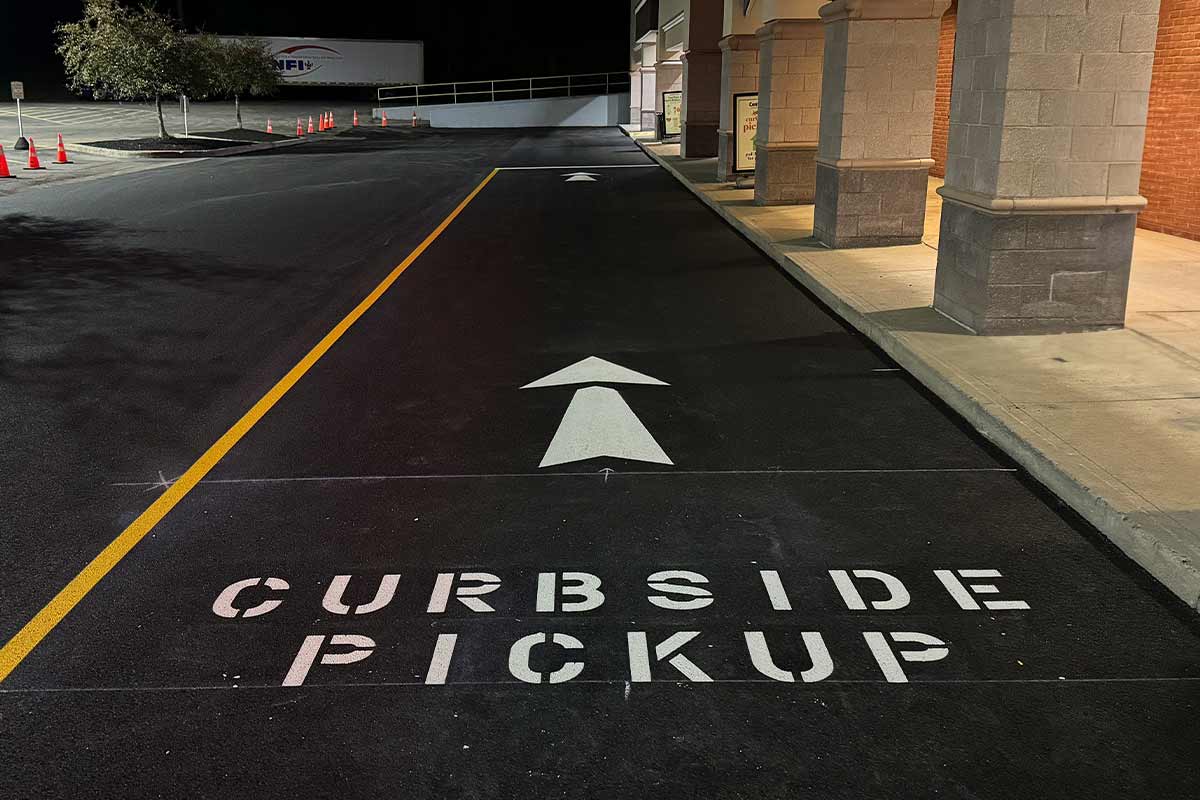
Parking Lot Layout Design in Charlotte
A well-planned parking lot layout affects everything from daily traffic flow to your legal compliance with state and federal accessibility requirements. Without a deliberate design, you end up with wasted stalls, bottlenecked drive aisles, and code violations that can trigger costly remediation. In Charlotte, commercial properties across Mecklenburg, Gaston, Cabarrus, and Union counties increasingly face scrutiny from ADA enforcement actions and fire marshal inspections — making a professionally designed layout a baseline operational requirement, not an optional upgrade.
Charlotte’s growth has pushed older lots into heavier use than they were originally designed for. Strip centers along Independence Boulevard, industrial parks in Steele Creek and Westinghouse Boulevard, medical office buildings in Ballantyne and University City — many of these properties are operating with striping plans that are years or decades old, and they no longer reflect current stall count requirements, ADA stall ratios, or fire lane standards. A parking lot layout design refresh addresses those gaps with a documented, code-referenced plan rather than a cosmetic repaint.
1-800-STRIPER of Charlotte handles layout design for new pavement and re-striping projects alike. Whether you’re opening a new retail strip, reconfiguring an aging industrial lot, or responding to an accessibility complaint, the process starts with a site-specific design that accounts for your actual lot dimensions, zoning setbacks, and the realistic volume of vehicles you need to accommodate.
What a Compliant Layout Includes (ADA Stalls, Drive Aisles, Fire Lanes)
A compliant layout isn’t just about putting down paint — it requires meeting a specific set of code-driven dimensions before a single stripe is applied. The 2010 ADA Standards for Accessible Design require at minimum one accessible stall per 25 total parking spaces, with each stall at least 8 feet wide and paired with a 5-foot access aisle (8 feet for van-accessible stalls). Van-accessible spaces need direct access to a pedestrian path without requiring travel behind moving vehicles. The U.S. Access Board publishes technical guidance that details these requirements, including slope tolerances of no more than 1:48 in any direction for accessible stalls.
Drive aisles are just as regulated. One-way aisles for 90-degree stalls need a minimum of 24 feet; two-way aisles require the same. Angled stalls at 60 degrees can narrow that to 18 feet for one-way flow, but many Charlotte lots have older configurations that predate these clearances. Fire lane requirements in North Carolina follow the North Carolina State Building Code, Chapter 11 and local fire marshal standards — typically a minimum 20-foot clear width with unobstructed overhead clearance and highly visible curb paint or signage to prevent unauthorized parking.
Pavement markings themselves must conform to the Manual on Uniform Traffic Control Devices for any lot that connects to a public roadway or is subject to traffic engineering review. That includes retroreflectivity standards, color choices (white for stalls and directional markings, yellow for no-parking zones and fire lanes), and symbol dimensions for accessible parking signs.
Our Layout Design Process
A parking lot layout design that holds up under a code inspection doesn’t come from a template — it comes from a methodical review of the actual site and its applicable regulations. Here is how 1-800-STRIPER approaches every layout project in the Charlotte area:
- Site measurement and documentation. We take field measurements of the lot footprint, record existing markings, note pavement condition, curb cuts, drainage grades, and any fixed obstructions (islands, bollards, utility covers).
- Zoning and code review. We cross-reference Charlotte zoning requirements, applicable ADA stall counts per your facility type and total lot size, fire lane path requirements for your building occupancy, and any applicable county or municipal amendments in Mecklenburg, Gaston, Cabarrus, or Union counties.
- Layout design and stall optimization. Using the measured site data, we draft a layout that places the required accessible stalls and access aisles first, then fills in standard stalls at the angle and width that maximizes total count within the drive aisle clearance requirements.
- Fire lane and pedestrian path integration. Fire lanes and pedestrian crosswalks get sited before standard stalls — not as an afterthought. We confirm that fire apparatus access meets the clear-width requirements and that accessible routes connect stalls to building entrances without crossing active traffic lanes.
- Marking specification and layout approval. The completed design is documented with stall counts, dimensions, and marking specifications. You review it before any work begins so there are no surprises on install day.
- Installation and final verification. Once approved, our crew installs the markings to the designed layout. A post-installation walk confirms stall counts, access aisle placement, and that all dimensions match the approved plan.
Maximizing Capacity & Traffic Flow
Most property managers are surprised by how much capacity they leave on the table with an unoptimized layout. Common issues include oversized standard stalls (a legacy of 1970s and 1980s striping standards), unnecessarily wide drive aisles, and perimeter dead zones that could hold an additional row of parking. In practice, a professional layout redesign on an older Charlotte commercial lot routinely yields a 10–20% increase in usable stalls without expanding the lot’s footprint.
Traffic flow optimization goes beyond stall count. One-way circulation patterns, clearly marked entry and exit points, and pedestrian crosswalk placement all reduce the internal conflicts that cause fender-benders and pedestrian near-misses. Charlotte properties near high-foot-traffic corridors — shopping centers, medical offices, and industrial parks in areas like Steele Creek, University City, and South End — see the sharpest benefit from a systematic flow review, since those lots are under vehicle and pedestrian pressure throughout the day.
Where a lot serves both standard vehicles and larger trucks or delivery vehicles, the design needs to account for turning radii that differ significantly from a standard passenger car. Poorly planned truck access routes create their own compliance issues when trucks overrun accessible stalls or block fire lanes because no dedicated route was designed.
Shared lots — retail centers, medical campuses, mixed-use developments — introduce a further layer of complexity. When a single lot serves tenants with different peak hours and different vehicle mixes, the layout needs to anticipate those overlapping demands rather than design for a single-use scenario. That kind of site-specific thinking is what separates a layout that works under pressure from one that produces complaints and safety incidents on a busy Saturday afternoon.
Call 1-800-STRIPER of Charlotte at (704) 828-9922 or email Charlotte@1800STRIPER.com to request a free estimate and site consultation for your parking lot layout design project.
For a full list of our pavement marking services, visit our parking lot striping in Charlotte page.
Businesses We Serve




How it Works

GET A FREE ESTIMATE
Contact us today and we’ll have a quote to you in 24 hours

SCHEDULE AN INSTALLATION
We’ll have your installation scheduled in less than 7 days, without affecting your business hours

GET A PARKING LOT THAT POPS
For a budget-friendly price, you’ll get a parking lot that looks like new
We proudly work with:


We proudly work with:


Frequently Asked Questions About Parking Lot Layout Design in Charlotte, NC
How many ADA-accessible stalls does my Charlotte parking lot require?
The required number is set by the 2010 ADA Standards for Accessible Design and scales with total lot size: one accessible stall for 1–25 total spaces, two for 26–50, and so on up to lots with 1,001 or more spaces (20 stalls plus 1 per 100 above 1,000). At least one in every six accessible stalls must be van-accessible with an 8-foot-wide access aisle. North Carolina enforces these standards under the North Carolina State Building Code, Chapter 11, and local permitting reviews will flag non-compliant counts.
What are the minimum drive aisle widths for a 90-degree parking layout?
For 90-degree stalls, the Manual on Uniform Traffic Control Devices and standard traffic engineering practice call for a minimum 24-foot two-way drive aisle. One-way aisles can narrow to 22 feet in some configurations, but 24 feet is the standard that accommodates larger SUVs and light commercial vehicles without conflict. Angled stalls (45 or 60 degrees) allow narrower one-way aisles — down to 13 or 18 feet respectively — and can be a practical option when the lot’s overall width limits a full 90-degree layout.
How wide does a fire lane need to be in Charlotte, NC?
Fire lane width requirements in North Carolina are governed by the state fire code and local fire marshal standards. A minimum unobstructed 20-foot clear width is the typical requirement for fire apparatus access roads, with some jurisdictions requiring 26 feet where aerial apparatus is in use. Fire lanes must also provide adequate overhead clearance and connect directly to a public street or approved secondary access point. Curb marking in yellow paint and posted signage are required to keep fire lanes clear — parking in a marked fire lane carries fines under Charlotte city code.
Can you redesign an existing parking lot without resurfacing the pavement?
Yes. A layout redesign in an existing lot typically involves removing old markings and applying a new striping plan on the existing pavement surface — no milling, overlay, or resurfacing required unless the pavement condition prevents good adhesion. Our team assesses surface condition as part of the site visit. We can work with aged asphalt that is structurally sound; crack sealing or patching may be recommended before striping if the surface has significant deterioration, but the layout redesign itself does not require a full resurfacing project.
How long does a parking lot layout design and stripe take from start to finish?
The timeline varies by lot size and complexity. A straightforward re-striping project on a single-use commercial lot — say, a 100-stall retail lot — can typically move from site visit to completed markings within a few weeks once the layout design is approved. More complex projects involving fire lane reconfiguration, new accessible stall placement, or multiple connected lots take longer due to the additional design and review stages. Charlotte@1800STRIPER.com or (704) 828-9922 is the right starting point for a project-specific timeline.
Do parking lot markings need to meet any specific color or reflectivity standards?
Yes. Color and reflectivity requirements come from two sources. The Manual on Uniform Traffic Control Devices governs markings on lots connected to public roadways and specifies white for parking stalls and directional markings, yellow for no-parking zones, fire lane curbs, and hazard markings. Retroreflectivity standards apply where lots have nighttime vehicle activity. The specific traffic paint or thermoplastic material used must maintain adequate retroreflectivity over time — a factor we account for in the material specification for each project. For lots with specific safety color requirements, the ANSI Z535 series provides additional guidance on hazard marking colors.