
Wheel Stop Installation
In South Atlanta, GA
Concrete and Rubber Parking Stops
1-800-STRIPER provides professional wheel stop installation in South Atlanta, GA — concrete, recycled-rubber, and bolt-down composite wheel stops anchored at stall heads to protect walkways, storefronts, and ADA accessible routes per the 2010 ADA Standards §403 for commercial properties across the south metro.
1-800-STRIPER® of Atlanta OTP South PROVIDes Wheel Stops Services NEAR YOU
Need to protect vehicles or walls from accidental damage?
Wheel stops (also called parking blocks) protect your property, enhance safety, and improve parking lot organization.
Benefits:
Wheel stops prevent vehicles from parking too far into a space or overextending into other spots, pedestrian walkways, and other areas, while also helping with vehicle alignment. They can prevent damage to buildings, curbs, or landscaping. Wheel stops also serve as clear visual cues for proper parking and are sometimes used on slopes to prevent cars from rolling.
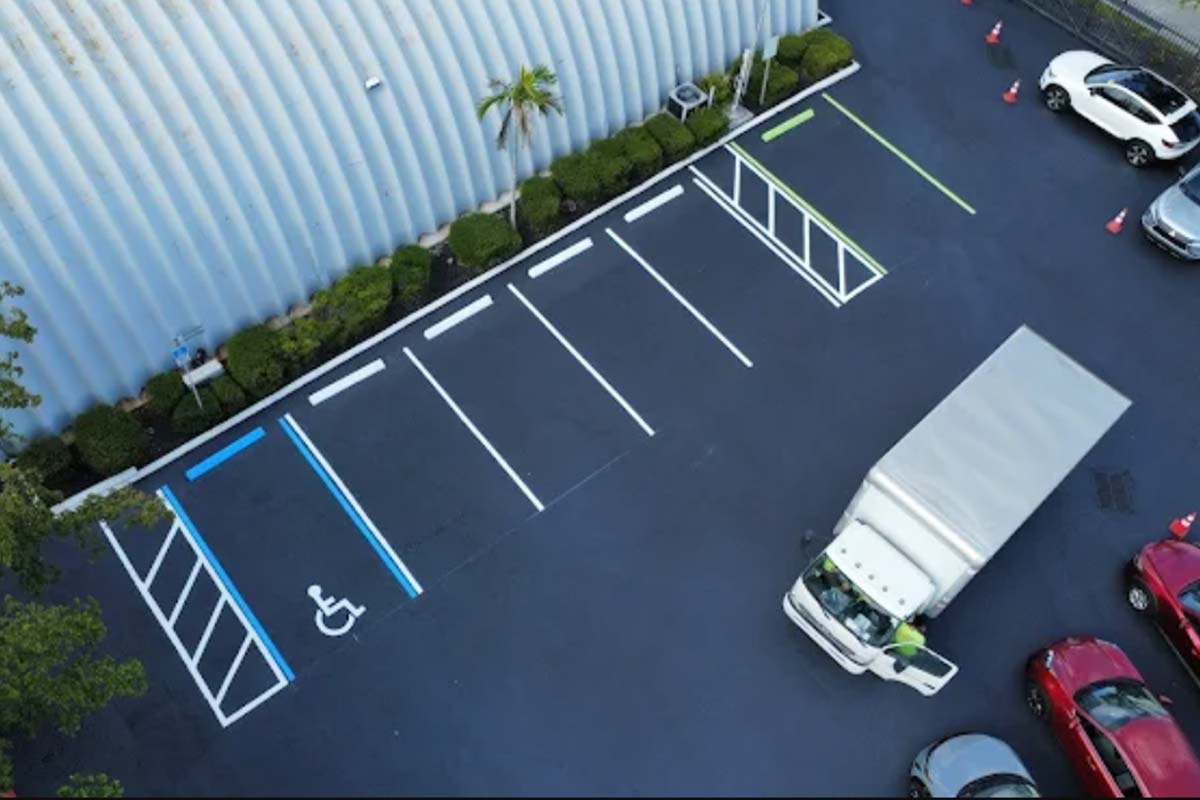
Wheel Stop Installation Services in South Atlanta, GA
Wheel stops (also called parking blocks or curb stops) mark the front of a parking stall and keep vehicles from overhanging a walkway, striking a storefront, or rolling into a dumpster enclosure or utility box. 1-800-STRIPER installs them at stall heads across retail centers, medical offices, apartment communities, and warehouses throughout DeKalb, Gwinnett, Fulton, Clayton, Henry, and the rest of the south metro’s counties.
Placement matters as much as the stop itself. A stop set too close to a wall doesn’t fully protect it, and one set too far into the drive aisle becomes an obstruction. We measure each stall before installing so the stop lines up with the vehicle’s front tires and the building line behind it.
Wheel stops work best where you need to protect a specific point — a storefront, a walkway, an ADA route, or a row of stalls facing a building — rather than an entire edge. For a continuous boundary, poured curbing is usually the better fit; wheel stops handle stall-by-stall protection in spots where curbing would block drainage or foot traffic.
Materials & Anchoring — Concrete, Rubber, Composite
The material you choose changes how a wheel stop holds up, how visible it is, and how it gets anchored to the pavement. The table below compares the three types 1-800-STRIPER installs most often in South Atlanta parking lots.
| Material | Durability | Weight | Visibility | Anchoring |
|---|---|---|---|---|
| Concrete | Highest — resists cracking, UV, and heat wear | Heaviest of the three, least likely to shift | Typically gray; can be painted for contrast | Masonry anchor bolts driven into the pavement |
| Recycled-rubber | Flexes on impact instead of chipping | Lighter than concrete, easier to position | Molded in high-visibility yellow | Steel rebar pins or spikes through pre-molded holes |
| Bolt-down composite | Resists weather and chemical wear, won’t rust | Lightest of the three | Available in high-visibility yellow | Surface bolt-down — no drilling into the base required |
Anchoring depends on the surface. On concrete pavement, 1-800-STRIPER sets stops with masonry anchor bolts driven into pre-drilled holes. On asphalt, we use steel rebar pins or spikes driven through the stop and into the base below. Stops typically sit about 2.5 to 3 feet back from the curb or wall, leaving a clear pedestrian gap in front while still catching a tire before the bumper reaches the obstacle behind it. Before drilling, the crew snaps a chalk line down the row so every stop lines up, then anchors each one — usually two pins or bolts per standard six-foot block. Keeping the row square and evenly spaced protects the pavement and keeps each stop aligned with the stall behind it.
A wheel stop placed on or near an accessible route also has to respect the clearance the 2010 ADA Standards for Accessible Design (§403) requires: a minimum 36-inch-wide accessible route must stay free of protruding objects. Installers position stops to keep that path open, not across it.
For a full list of our pavement marking services, visit our parking lot striping in South Atlanta page.
Businesses We Serve




How it Works

GET A FREE ESTIMATE
Contact us today and we’ll have a quote to you in 24 hours

SCHEDULE AN INSTALLATION
We’ll have your installation scheduled restriped in less than 7 days, without affecting your business hours

GET A PARKING LOT THAT POPS
For a budget-friendly price, you’ll get a parking lot that looks like new
We proudly work with:


We proudly work with:


Frequently Asked Questions About Wheel Stop Installation in South Atlanta, GA
What is a wheel stop?
A wheel stop (also called a parking block or curb stop) is a low barrier at the head of a parking stall that keeps a vehicle’s front tires from rolling past a set point. 1-800-STRIPER installs concrete, recycled-rubber, and bolt-down composite wheel stops across South Atlanta commercial lots to protect walkways, storefronts, and landscaping from vehicle overrun.
How are wheel stops installed?
Installation depends on the surface. On concrete pavement, 1-800-STRIPER anchors wheel stops with masonry anchor bolts drilled into the slab. On asphalt, the crew secures stops with steel rebar pins or spikes driven through pre-molded holes into the base beneath. Stops typically sit about 2.5 to 3 feet back from the curb, so the tire reaches the stop before the vehicle gets close to a wall or walkway.
Concrete vs. recycled-rubber wheel stops — which is better?
Concrete wheel stops are the heaviest and most durable option, holding up well under heavy truck and repeat traffic without cracking. Recycled-rubber stops flex on impact instead of chipping, which suits lighter passenger-vehicle areas. Both are available in high-visibility yellow; the right choice depends on the vehicle mix and traffic volume in your South Atlanta lot.
Do wheel stops block ADA accessible routes?
They can, if placed incorrectly. The 2010 ADA Standards for Accessible Design (§403) require accessible routes to stay at least 36 inches wide and free of protruding obstacles. 1-800-STRIPER positions wheel stops outside that clear path, never across an accessible route or access aisle, so accessible stalls stay compliant after installation.
How far from the curb should a wheel stop sit?
1-800-STRIPER typically sets wheel stops about 2.5 to 3 feet back from the curb or wall, leaving roughly a 3-foot pedestrian gap in front of the stop. That spacing lets a vehicle’s tires reach the stop before the bumper gets close to a building, fence, or landscaped area, while still leaving room for pedestrians to walk the row.
Are wheel stops a trip hazard?
A wheel stop can be a trip hazard if it sits in a walkway or blends into the surrounding pavement. 1-800-STRIPER installs stops in high-visibility yellow and positions them at the stall head, out of through-walking paths, to reduce that risk while still keeping vehicles from overhanging adjacent walkways or building lines.