Sports Court Striping
In South Atlanta, GA
Multi-Sport Court Line Marking
1-800-STRIPER provides professional sports court striping in South Atlanta, GA — pickleball courts to USA Pickleball specifications, basketball courts, tennis courts, and playground game markings using durable acrylic traffic paint for schools, HOAs, parks, and churches across the south metro.
1-800-STRIPER® of Atlanta OTP South PROVIDes Sport Court and Playground Markings Services NEAR YOU
Want to get people to come out to play?
Brighten up your faded sport courts or turn your playground into a safe, colorful, and engaging space that entices people to come out and play.
Sport Court Specialties:
Sports Court Striping Services in South Atlanta, GA
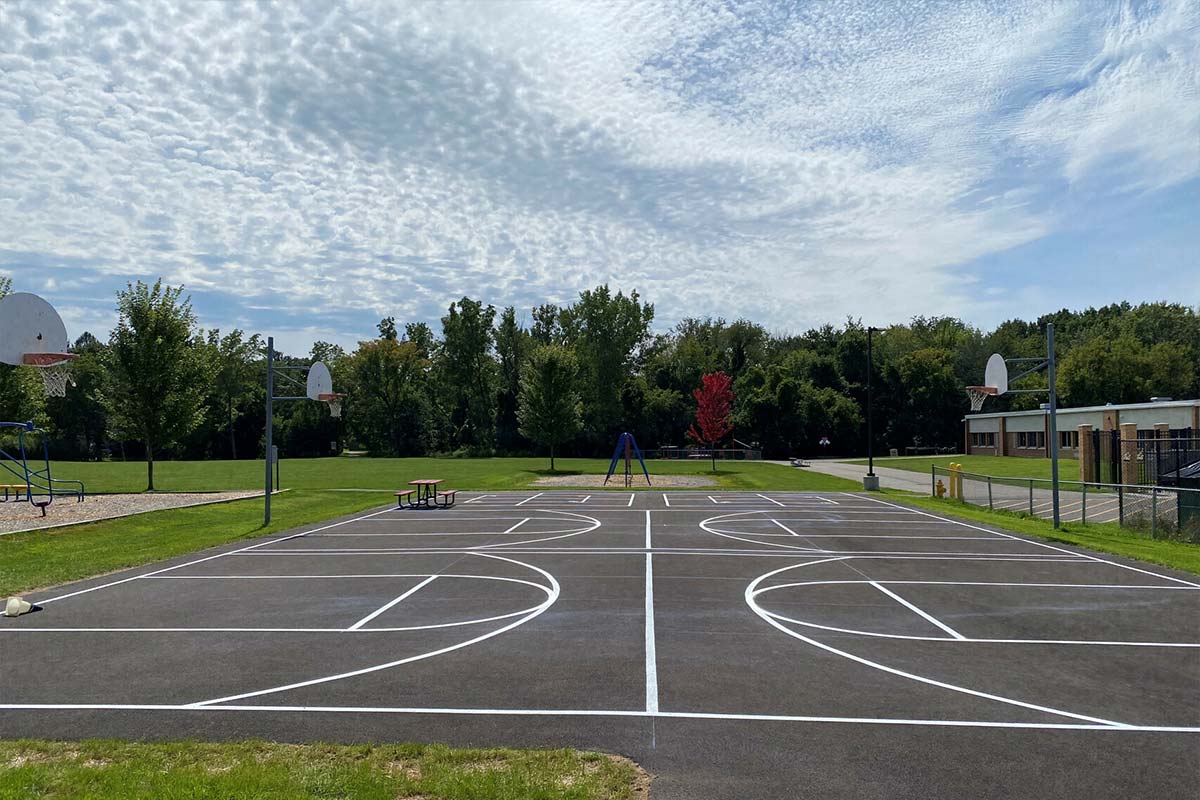
Sports court striping means laying out and painting the boundary lines, service lines, and game markings that make a court playable to spec. We work with schools, HOAs, parks departments, and churches throughout the south metro (DeKalb, Gwinnett, Clayton, Henry, and Fayette counties among them) to lay out courts dedicated to one sport or combination layouts that share one paved surface. Layout starts with a site measurement, moves to a line plan, and finishes with the painted markings themselves.
Courts We Mark — Pickleball, Basketball, Tennis, Playground
We stripe pickleball, basketball, tennis, and playground game courts, each to its own dimension and color standard. Pickleball layouts follow the USA Pickleball Official Rulebook — a 20×44-ft playing surface (including lines) with 2-in-wide boundary and service lines, plus non-volley zone (“kitchen”) lines set 7 ft from the net on each side. For basketball, we typically stripe a full, high-school-scale court at roughly 84×50 ft, with a half-court option available for smaller HOA and church lots. Tennis gets the standard 78×36-ft doubles layout, and we paint the singles sidelines inside the doubles lines.
| Court | Playing Surface | Line Width | Key Markings |
|---|---|---|---|
| Pickleball | 20 × 44 ft (per USA Pickleball) | 2 in | Non-volley zone (kitchen), service boxes, center line |
| Basketball | ~84 × 50 ft (full court) | 2–3 in | Free-throw lane, three-point arc, center circle |
| Tennis | 78 × 36 ft (doubles) | 2 in | Singles sidelines, service boxes, baseline |
Many south-metro schools, HOAs, and churches also want playground game markings (foursquare grids, hopscotch, and walking-track loops) painted in bright colors distinct from the athletic-court palette. Combination layouts, such as pickleball lines overlaid on an existing tennis court, are common where lot space is limited; a different line color per sport keeps each layout legible.
Acrylic Coatings & Line Durability
We use acrylic-based color coatings built for court surfaces rather than standard traffic paint, because acrylic holds color and texture better under the foot traffic and UV exposure a court takes. Acrylic coatings go down in multiple thin layers (typically a color base coat plus a top coat), building a consistent, non-slip texture that a single coat of traffic paint doesn’t hold as long.
South Atlanta’s Köppen Cfa humid-subtropical climate (hot, humid summers and freeze-thaw winters) works against a coating’s lifespan from both sun exposure and moisture cycling. Courts typically need a fresh coat every few years, sooner on surfaces that see heavy daily use or sit in direct sun most of the day.
Before any color coat goes down, we pressure-wash the surface, patch cracks, and confirm the pavement is sound — a coating applied over a cracking or contaminated surface won’t hold its lines regardless of coating quality.
For a full list of our pavement marking services, visit our parking lot striping in South Atlanta page.
Businesses We Serve




How it Works

GET A FREE ESTIMATE
Contact us today and we’ll have a quote to you in 24 hours

SCHEDULE AN INSTALLATION
We’ll have your play space restriped in less than 7 days, without affecting your playtime

GET A PARKING LOT THAT POPS
For a budget-friendly price, you’ll get a parking lot that looks like new
We proudly work with:


We proudly work with:


Frequently Asked Questions About Sports Court Striping in South Atlanta, GA
What are the dimensions of a pickleball court?
A regulation pickleball court measures 20 by 44 ft, including all boundary lines, per the USA Pickleball Official Rulebook. That’s the total playing surface for both singles and doubles play; pickleball doesn’t use separate singles and doubles dimensions the way tennis does. When we handle sports court striping in South Atlanta, GA for a pickleball layout, we mark the full 20×44-ft surface plus the non-volley zone lines 7 ft from the net on each side and the center service line.
How wide are the painted lines on a pickleball court?
USA Pickleball specifies 2-in-wide lines for all boundary, service, and non-volley zone markings, in a color that contrasts clearly against the court surface — commonly white or yellow. Consistent 2-in lines keep the court legible for line calls during play, which matters even more on a shared or combination court where more than one sport’s lines could otherwise blur together. We hold that 2-in spec on every pickleball layout we stripe.
Can you overlay multiple sports on one court?
Yes. Overlaying pickleball, tennis, or basketball lines on one paved surface is a common way to add court capacity to a limited HOA, church, or school lot without pouring new pavement. The layouts stay legible by using a distinct line color per sport (pickleball lines in one color, tennis lines in another, for example), so players can visually separate the sport they’re using from the other markings on the surface.
What’s the difference between acrylic and traffic paint for sports courts?
Acrylic color coatings are built for court surfaces — they go on in multiple thin layers to build a textured, UV- and foot-traffic-resistant finish that holds its color and grip longer than a single coat of standard traffic paint. Traffic paint is designed for pavement markings that see vehicle tires, not bare feet and repeated ball contact, so it wears faster and won’t hold a non-slip texture as long. We use acrylic coatings for court work and traffic paint for vehicle areas.
How often should a sports court be repainted?
Most acrylic-coated courts need a fresh coat every few years, though the exact interval depends on sun exposure, use volume, and South Atlanta’s Cfa humid-subtropical climate (hot, UV-heavy summers and freeze-thaw winters both accelerate coating wear). A court that sees daily school or HOA use, or sits in full sun most of the day, will fade and wear faster than a lightly used court. We inspect the existing coating before quoting a repaint.
What surface prep does a sports court need before striping?
Before any color coat goes down, we pressure-wash the surface clean, check for cracks or low spots, and confirm it’s sound enough to hold a coating. We patch cracks and, where needed, run a leveling pass before paint. Skipping prep is the most common reason a court coating fails early: paint applied over dirt, oil film, or an unstable crack won’t bond or hold its lines, regardless of coating quality.