Warehouse Line Painting
In South Atlanta, GA
OSHA-Compliant Safety Markings
1-800-STRIPER provides professional warehouse line painting in South Atlanta, GA — OSHA-compliant aisle lines, pedestrian walkways, forklift travel paths, and safety-zone markings per OSHA 29 CFR 1910.22(b) and ANSI Z535.1 color standards using durable epoxy and traffic paint for industrial facilities and distribution centers.
1-800-STRIPER® of Atlanta OTP South PROVIDes Warehouse Floor Markings Services NEAR YOU
Want your indoor space to operate more efficiently?
Warehouse and interior markings ensure clear traffic lanes, organized storage zones, and designated spaces designed to help your business operate safely and efficiently.
Benefits:
Warehouse Line Painting Services in South Atlanta, GA
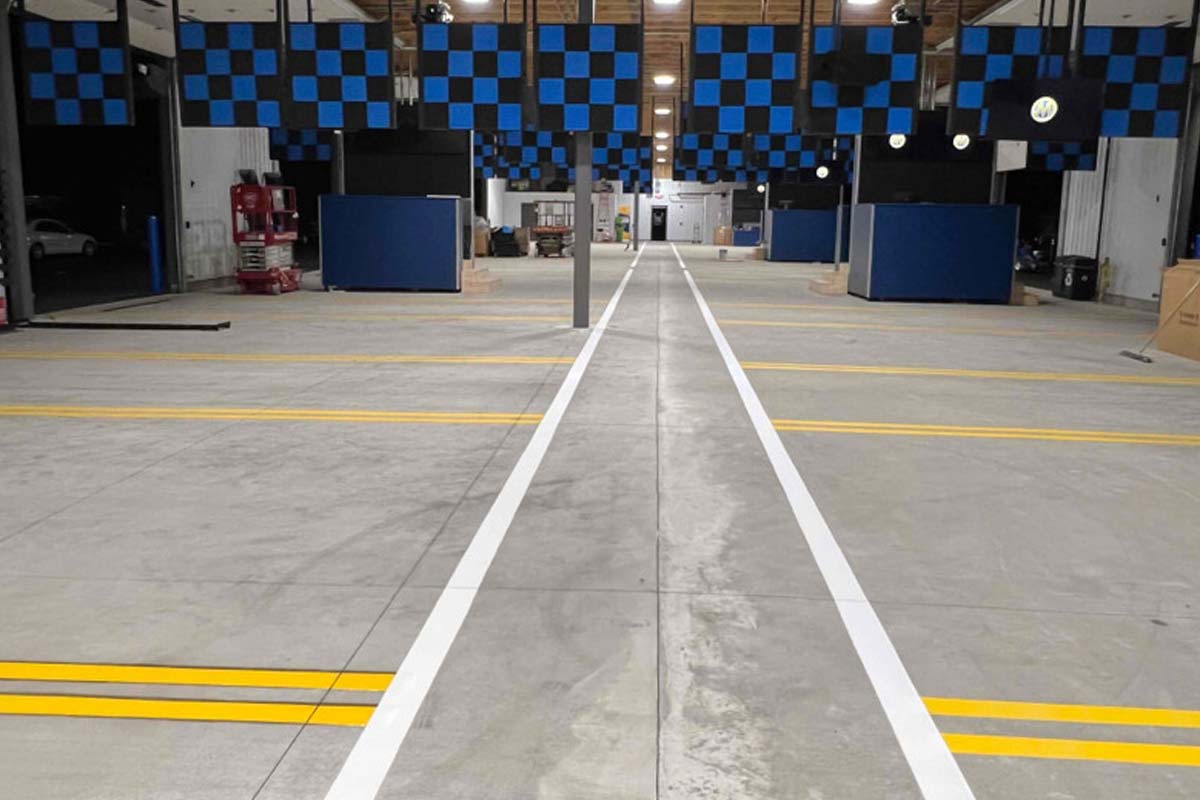
Every project starts with a layout that matches your floor plan: aisle lines, pedestrian walkways, forklift travel paths, staging lanes, and inventory grids, all marked to OSHA and ANSI color conventions. 1-800-STRIPER works in industrial parks, distribution centers, and manufacturing facilities across DeKalb, Clayton, Henry, Gwinnett, and the other south-metro counties. Epoxy goes down on high-traffic forklift lanes because it holds up; fast-dry traffic paint covers aisles and walkways that need periodic re-marking. That keeps foot traffic, forklift travel, and staged inventory separated on the floor — work backed by a 5.0-star Google rating from 9 local customers in the south metro.
OSHA & ANSI Standards We Mark To
Warehouse floor markings follow OSHA’s aisle-marking rules and ANSI’s safety color-code conventions.
The Occupational Safety and Health Administration (29 CFR 1910.22) requires permanent aisles and passageways in a workplace to stay clear and appropriately marked, and section 1910.22(b) adds that those same aisles and passageways be kept clean and orderly. Section 1910.176(a) applies that same marking requirement anywhere mechanical handling equipment — forklifts, mainly — moves through a facility. Floor-marking colors trace back to 29 CFR 1910.144, OSHA’s safety color-code standard, which assigns red to fire-protection equipment and danger and yellow to caution and physical-hazard marking; ANSI Z535.1 carries those same assignments forward and extends them across the full range of hazard and function categories. Match both standards and a facility’s markings line up with what OSHA inspectors and safety auditors expect to see on an industrial floor.
Aisle, Walkway & Forklift-Path Markings
Aisle and forklift-path lines separate pedestrian and vehicle traffic so both can move through the warehouse safely.
OSHA’s 1910.176(a) standard requires aisles and passageways to stay clear and marked at an “appropriate” width for the equipment and traffic using them — it doesn’t specify an exact measurement. Most industrial facilities land between 2 and 4 inches wide for aisle and forklift-lane lines. That’s wide enough to spot from a lift-truck seat or a loading cart, without eating into the usable aisle. Pedestrian walkways typically get marked in a distinct color or pattern from forklift travel paths, and lines extend through intersections and blind corners where forklifts and foot traffic are most likely to cross paths.
Aisle width isn’t only a traffic question, either. Where a marked lane also doubles as a means of egress, OSHA’s 1910.36 sets a 28-inch minimum clear width for that exit access route, so the striped boundary has to leave at least that much open path to the exit. Laying out aisle and walkway lines with egress in mind means a single set of markings keeps forklift lanes separated and the escape route clear at the same time — a point worth confirming against your facility’s egress plan before the lines go down.
Safety Zones, Hazard Areas & 5S Color Coding
Color-coded floor marking follows the 5S organization method and ANSI’s safety color conventions, so a color means the same thing throughout the facility.
| Color | Meaning | Typical Use |
|---|---|---|
| Yellow | Aisleways & traffic areas | Aisle lines, general floor marking |
| Red | Fire equipment & defective material | Fire-extinguisher zones, tag-out areas |
| White | Equipment & workstation boundaries | Machine footprints, workstation outlines |
| Orange | Energized or hazardous equipment | Points of exposure on machinery |
| Green | Safety & first-aid | First-aid stations, safety equipment |
| Black & white | Housekeeping boundaries | Staging areas, general housekeeping |
These color assignments follow ANSI Z535.1 and the safety color-code conventions historically set out in OSHA’s 29 CFR 1910.144. Applying them consistently is what makes a 5S floor-marking layout — Sort, Set in Order, Shine, Standardize, Sustain — actually work: any employee can read the floor and know what a zone means without needing a sign.
Epoxy vs. Traffic Paint — Choosing a Durable Coating
Epoxy and fast-dry traffic paint solve different problems. The right choice usually comes down to how much forklift and foot traffic a floor sees.
Two-part epoxy coatings cure into a hard, chemical- and abrasion-resistant surface that holds up well under constant forklift travel. Because that cured film shrugs off both the grinding wear of solid lift-truck wheels and incidental contact with oils, solvents, and battery acid, epoxy is the common choice for main aisles, forklift lanes, and dock approaches — anywhere traffic and chemical exposure are both high. Traffic paint comes in water-based and solvent-based versions; the fast-dry formulas go down faster, recoat more easily, and work well for walkways, staging zones, and areas that get re-marked often as a layout changes. The tradeoff is cure time: epoxy needs a longer window before it can safely carry forklift traffic, while fast-dry traffic paint reopens to traffic much sooner — worth weighing against how long a given aisle or lane can realistically sit idle. Matching the coating to both the traffic load and the chemical exposure in each zone, rather than picking one product for the whole floor, is what keeps lines readable longer. Many facilities mix both: epoxy on the highest-traffic, most chemical-exposed lanes, traffic paint everywhere else.
Floor Prep Before Painting
Line paint and epoxy only bond as well as the floor underneath them is prepared.
Before any line goes down, crews sweep and degrease the floor to remove oil, dust, and residue that would keep paint or epoxy from adhering. Epoxy asks for more than a sweep: it bonds to a mechanically profiled slab, so a floor slated for epoxy usually gets diamond-ground to open the surface and strip off any curing compound or old sealer left over from when the slab was poured. On concrete, a quick moisture test comes first too, since epoxy applied over a slab that’s still releasing moisture can blister or lift. Cracks and spalled concrete along a planned line path get patched, so the marking sits on a sound, even surface instead of failing early. Old, worn lines get cleaned or ground down rather than painted over, since a fresh coat over failing paint fails faster than one applied to bare, prepped concrete. A clean, profiled slab is what lets the coating actually grip — the prep is doing as much work as the paint.
Loading Docks, Staging & Inventory Grids
Dock and staging-area markings extend the same safety-color logic to the parts of a warehouse where pallets and freight move the most.
Dock approach lanes, staging bays, and pallet-position grids get laid out and marked so loaders, forklift operators, and receiving staff can see at a glance where freight belongs and where it doesn’t. Dock-approach guide lines steer a forklift squarely into the bay it’s headed for, and trailer-spot numbers on the floor tie each staging position to a specific dock door. Inventory grids — numbered or lettered floor squares — keep staged pallets organized and speed up cycle counts and put-away. Dock door numbers typically carry onto the floor grid closest to that door, lining up staging assignments with the door a shipment will actually go out through. The dock edge itself often gets hazard hatching — diagonal yellow-and-black striping — to flag the drop-off where a forklift could run off an open door. These markings use the same yellow, red, and white color conventions as the rest of the floor, so a dock worker reads the same color code they’d see in the aisles.
Scheduling Around Distribution & Fulfillment Operations
Line painting can be phased so a warehouse keeps shipping and receiving while the work is underway.
Rather than closing an entire floor at once, marking work typically gets broken into sections — one aisle, dock zone, or staging area at a time — so the rest of the facility keeps operating. Fast-dry traffic paint shortens the window before a freshly marked zone can handle forklift and foot traffic again, which helps on floors that can’t sit idle for long. South Atlanta’s hot, humid summers add another wrinkle: dock-door zones exposed to outside air can take longer to cure than the climate-controlled interior of the building, so those sections often get phased separately. Facilities can request off-peak or after-hours marking windows to fit around shift changes and peak fulfillment periods; call (404) 902-8202 to talk through a schedule that works for your operation.
For a full list of our pavement marking services, visit our parking lot striping in South Atlanta page.
Businesses We Serve




How it Works

GET A FREE ESTIMATE
Contact us today and we’ll have a quote to you in 24 hours

SCHEDULE A STRIPING
We’ll have your space restriped in less than 7 days, without affecting your business hours

GET A PARKING LOT THAT POPS
For a budget-friendly price, you’ll get a parking lot that looks like new
We proudly work with:


We proudly work with:

Frequently Asked Questions About Warehouse Line Painting in South Atlanta, GA
What paint is used for warehouse floor lines?
Warehouse floor lines typically get painted with two-part epoxy or fast-dry traffic paint, and the choice comes down to how much forklift traffic that section of floor sees. Epoxy cures into a hard, chemical- and abrasion-resistant coating that holds up better on main aisles and forklift lanes with constant traffic. Traffic paint applies faster and dries quicker — a better fit for walkways and areas that get remarked often. The traffic pattern in each zone drives the coating choice, not a single product for the whole floor.
How wide should warehouse aisle markings be?
OSHA’s 29 CFR 1910.176(a) requires aisles and passageways to be marked at an “appropriate” width for the equipment and traffic moving through them, without setting an exact measurement. In practice, most industrial facilities land between 2 and 4 inches wide for aisle and forklift-lane lines — visible from a lift-truck seat or a loading cart without narrowing the usable aisle. Actual traffic matters too: a lane fed by wide reach trucks needs more clearance than a narrow pedestrian walkway.
What do the 5S and safety floor colors mean?
Floor-marking colors follow ANSI Z535.1 safety color-code conventions paired with the 5S organization method: yellow marks aisleways and general traffic areas, red marks fire equipment and defective material, white marks equipment and workstation boundaries, orange flags energized or hazardous equipment, green marks safety and first-aid locations, and black-and-white marks general housekeeping boundaries. Applying the same colors throughout a facility means any employee, on any shift, can read a floor color and know what it means without a sign — and it gives a walking safety auditor a consistent standard to check against.
Can you paint lines in an operating warehouse?
Yes. Line painting is typically phased section by section, so most of the floor keeps operating while one aisle, dock zone, or staging area gets marked. Fast-dry traffic paint shortens the time before a freshly painted zone can handle forklift and foot traffic again, limiting how long any one section is out of service. Facilities can request off-peak or after-hours windows for the noisiest or most disruptive parts of the job, keeping the schedule out of the way of shipping and receiving.
How often should warehouse floor markings be re-painted?
Re-marking frequency tracks with traffic, not a fixed calendar — aisles and lanes that see constant forklift travel wear down faster than a rarely used walkway or storage-area boundary. Epoxy coatings generally hold up longer under heavy traffic than traffic paint, so many facilities save it for their busiest lanes. A good visual check is whether a line is still clearly readable at a glance; once colors fade or edges blur, it’s time to plan a re-mark before the floor’s color code becomes unreliable.
Does OSHA require aisle markings?
Yes. OSHA’s 29 CFR 1910.22(b) requires permanent aisles and passageways to be kept clear and appropriately marked, and 1910.176(a) applies that same marking requirement wherever mechanical handling equipment, like forklifts, moves through a facility. Both standards focus on keeping aisles marked and free of obstruction rather than specifying exact paint colors or line widths. That’s why ANSI Z535.1’s color-code conventions commonly get layered on top, standardizing what each marked zone means for anyone walking the floor, from a new hire to a visiting safety auditor.