Parking Lot Restriping
In South Atlanta, GA
Restripe Existing Lines and Markings
1-800-STRIPER provides professional parking lot restriping in South Atlanta, GA — refreshing faded stalls, ADA spaces, fire lanes, and directional arrows using Sherwin-Williams Fast-Dry traffic paint and Graco LineLazer equipment for commercial properties across DeKalb, Clayton, Henry, and Fayette counties.
1-800-STRIPER of Atlanta OTP South PROVIDes Restriping Services NEAR YOU
Need to brighten up your faded parking lot?
Keep your parking lot safe and attractive by restriping annually to freshen up lines and symbols that have faded from the sun, weather, and traffic. Nothing beats a fresh coat of paint!
Benefits:
Parking Lot Restriping Services in South Atlanta, GA
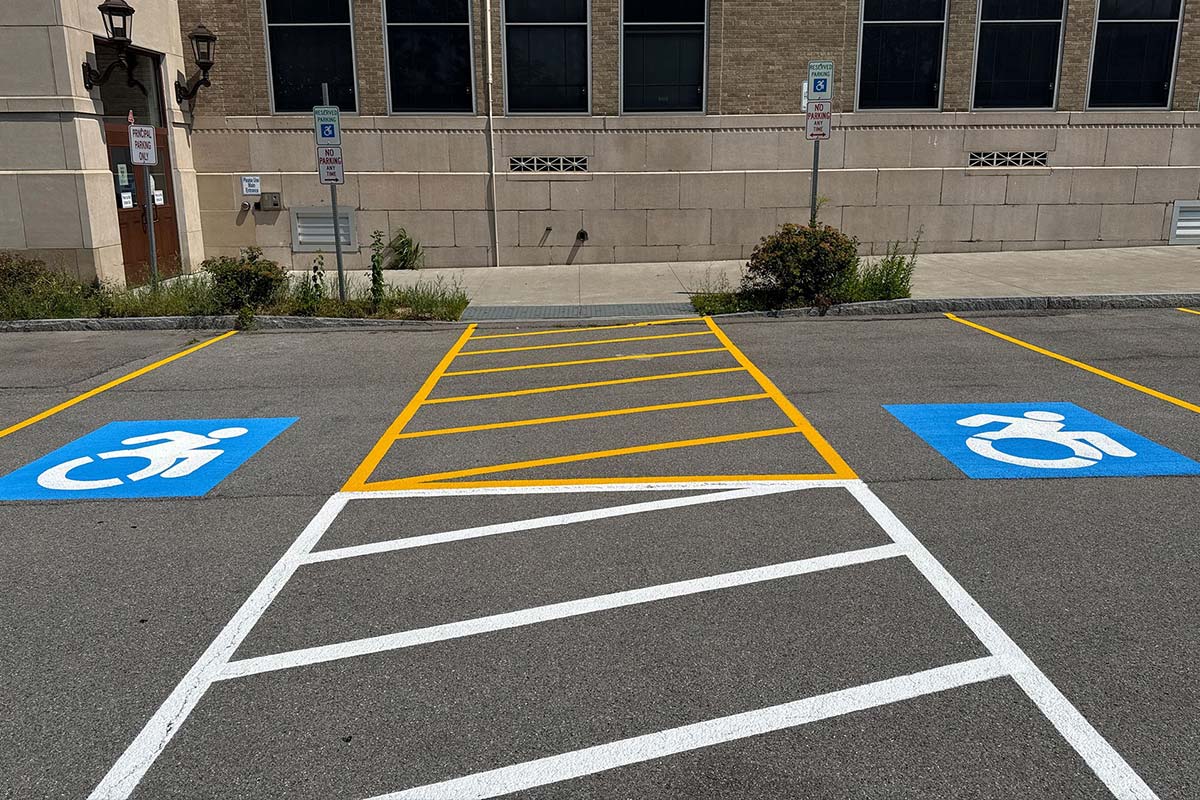
Restriping refreshes faded or worn pavement markings on an existing lot (stall lines, ADA spaces, fire lanes, and directional arrows) without repaving. It’s a maintenance and compliance service, not a construction project.
A full restripe typically covers the complete set of pavement markings on a lot, not just the most visible stall lines. That includes parking stall lines, ADA-accessible spaces with their access aisles and the ISA (International Symbol of Access), fire lanes and fire-lane curb markings, directional arrows, stop bars, crosswalks, no-parking zones, loading zones, and stall numbering where a lot uses it. Which of those a given restripe touches depends on the layout — a straightforward refresh repaints what’s already there, while a layout change adds or repositions markings as part of the same visit.
The restriping process follows five steps:
- Assess & measure — walk the lot and measure the existing stall count and layout.
- Prep & clean — clear debris and loose material from the lines to be repainted.
- Layout — mark stall lines, ADA spaces, fire lanes, and directional arrows to the current or corrected layout.
- Apply Fast-Dry paint — apply Sherwin-Williams Fast-Dry traffic paint with Graco LineLazer striping equipment.
- Cure & reopen — let the paint cure before reopening the section to traffic.
That same five-step process applies whether the layout stays the same or changes to add accessible spaces, a new fire lane, or corrected traffic flow.
When to Restripe — Fading, ADA & Layout Changes
Most South Atlanta lots need restriping when stall lines fade past clear visibility, when ADA markings no longer meet current code, or when a layout change adds accessible spaces, a new fire lane, or reconfigured traffic flow. Fading is a wear indicator driven by UV exposure and traffic volume. South Atlanta’s Köppen Cfa humid subtropical climate (hot, humid summers and freeze-thaw winters) accelerates that wear through repeated thermal cycling on the pavement. Warning signs include chalking or dulling paint, cracked or peeling lines, and markings that are hard to pick out at night or in wet weather, all of which make stall lines, ADA markings, and fire lane boundaries harder for drivers to follow. Repaving or sealcoating also removes existing lines entirely and requires a full restripe before the lot can reopen to normal traffic. Property owners often schedule the two together so the new layout goes down once, on fresh pavement.
Surface Prep & Old-Line Handling
How old markings get handled depends on whether the layout is changing. When the stall layout stays the same, existing lines just need a sweep to clear debris and loose material before new paint goes down; grinding or coating removal isn’t required unless old paint has built up unevenly over multiple repaints. Changing the layout is a different story — added ADA spaces, a relocated fire lane, or reconfigured aisles mean the old, conflicting lines get addressed first, so drivers don’t see two competing sets of markings once the lot reopens. Addressing those conflicting lines means grinding them off the pavement, water-blasting them out, or blacking them out with a matching pavement-color coating — whichever method fits the surface and how much of the old layout is changing. The goal either way is a clean base for the new markings, since paint applied directly over a conflicting line can telegraph through as the old line wears.
Sherwin-Williams Fast-Dry Paint & Graco LineLazer
1-800-STRIPER applies Sherwin-Williams Fast-Dry traffic paint with Graco LineLazer striping equipment for straight, evenly spaced lines that dry to traffic quickly. The paint is formulated for exterior asphalt and concrete, holding color and line definition through South Atlanta’s summer heat and UV exposure. Its Fast-Dry formulation shortens the window a freshly painted section has to stay closed. The LineLazer equipment guides each line as it’s applied, holding consistent width and spacing across long runs of stalls, aisles, and directional markings — a straighter result than hand-rolled application typically produces.
ADA & Fire-Lane Refresh
Restriping is also when accessible parking spaces and fire lanes get refreshed, since faded ADA markings and worn fire-lane curb paint are common code-visibility issues. Crews repaint accessible stalls, access aisles, and the ISA symbol to current markings, and refresh fire lane curb paint and “No Parking / Fire Lane” legends for legibility. Curb paint and stenciled legends typically fade faster than open-pavement stall lines because curbs take more direct sun and more tire contact — that’s why they get refreshed in the same visit instead of on a separate schedule. This applies across commercial properties in DeKalb, Clayton, Henry, and Fayette counties, where lot owners restripe on a maintenance cycle rather than waiting for a code complaint.
Directional Arrows & Traffic Flow (MUTCD)
Directional arrows and lane markings follow the pavement-marking guidance in the Manual on Uniform Traffic Control Devices, which sets arrow shape, placement, and one-way/two-way lane-marking conventions used on public and private roadways. That guidance covers straight-ahead, turn, and combined through/turn arrows, plus lane-line and stop-bar conventions where a lot connects to a public drive aisle. Restriping is the natural point to fix arrows that no longer match how traffic actually moves through the lot — a relocated entrance, a new one-way aisle, or an added drive lane. MUTCD Chapter 3B sets the specifics behind those markings: stall lines are commonly painted 4 inches wide, stop bars run 12 to 24 inches wide depending on the approach, and arrow and crosswalk shapes follow standardized patterns rather than ad hoc designs. Fast-Dry traffic paint is also applied with reflective glass beads embedded while the paint is still wet, so stall lines, arrows, and crosswalks stay visible under headlights at night — a detail that matters as much on a restripe as it does on new construction.
Minimizing Business Disruption
Restriping can be scheduled after hours, on weekends, or in phased sections so parking stays available during business hours. Painting one section of the lot at a time keeps the rest open to customers and employees while that section cures. Properties that need to avoid daytime closures altogether can opt for after-hours or weekend scheduling instead. Cones, barricades, or temporary signage mark off freshly painted sections during the cure window, keeping vehicles off wet paint while the rest of the lot stays in use.
For a full list of our pavement marking services, visit our parking lot striping in South Atlanta page.
Businesses We Serve




How it Works

GET A FREE ESTIMATE
Contact us today and we’ll have a quote to you in 24 hours

SCHEDULE AN INSTALLATION
We’ll have your installation scheduled in less than 7 days, without affecting your business hours

GET A PARKING LOT THAT POPS
For a budget-friendly price, you’ll get a parking lot that looks like new
We proudly work with:


We proudly work with:

Frequently Asked Questions About Parking Lot Restriping in South Atlanta, GA
What does restriping a parking lot mean?
Restriping means repainting the stall lines, ADA markings, fire lanes, and directional arrows on an existing parking lot without repaving the surface underneath. It’s a maintenance and compliance service: the pavement stays in place, and the job is limited to removing worn markings and applying new ones in the correct layout. Property owners typically restripe on a maintenance cycle, when markings fade past clear visibility, or after a layout change such as an added accessible space or a reconfigured fire lane.
How often should you restripe?
Most commercial lots in South Atlanta need restriping every 12 to 24 months, though high-traffic lots wear faster than low-traffic ones. South Atlanta’s Köppen Cfa climate (hot, humid summers and freeze-thaw winters) puts repeated thermal stress on painted lines, shortening the interval compared to drier, milder climates. Lots with heavy daily traffic, like retail centers and distribution facilities, typically sit at the shorter end of that range.
How long does the paint take to dry?
Sherwin-Williams Fast-Dry traffic paint typically reaches foot and light vehicle traffic in about 30 to 60 minutes under normal conditions. South Atlanta’s humid subtropical (Cfa) summers can extend that window on high-humidity days, since moisture in the air slows how quickly the paint sets. That’s the traffic-ready point, not full cure: the paint keeps bonding to the pavement over the following day or two. Crews keep sections closed until the paint has set enough to hold up to traffic without smearing or tracking.
Can you restripe directly over faded lines?
Yes, if the layout isn’t changing. Faded lines just need a sweep to clear debris and loose material before crews apply new paint in the same position, matching the existing layout. When the layout is changing (a relocated fire lane, added ADA spaces, or reconfigured aisles), crews address the old, conflicting lines first, so the reopened lot doesn’t show two competing sets of markings.
Do you work after hours to avoid disrupting business?
Yes. Restriping can be scheduled after hours, on weekends, or in phased sections so parking stays available during business hours. Painting one section of the lot at a time lets the rest stay open to customers and employees while that section cures. Call (404) 902-8202 to talk through scheduling for your property.
Does restriping trigger ADA updates?
Restriping counts as an alteration to an existing parking facility under the 2010 ADA Standards for Accessible Design, so newly painted accessible spaces need to meet current accessible-parking requirements instead of just reproducing older, non-compliant markings. That can include the required accessible-stall count, van-accessible stall dimensions, and access-aisle sizing. It’s a common reason ADA markings get updated during a restripe instead of repainted as-is.