
Fire Lane Striping
In South Atlanta, GA
Code-Compliant Fire Lane Markings
1-800-STRIPER provides professional fire lane striping in South Atlanta, GA — compliant fire lanes, curb striping, and no-parking zones per the Georgia State Minimum Fire Safety Standards (IFC §503) for commercial properties across Clayton, Henry, Fayette, and Rockdale counties.
1-800-STRIPER® of Atlanta OTP South PROVIDes Fire Lane Striping Services NEAR YOU
Is your parking lot ready for first responders?
Our team is well-versed in local fire regulations and will parter with you to design a fire lane striping plan that creates unobstructed emergency access to protect your customers and property.
Core Services:
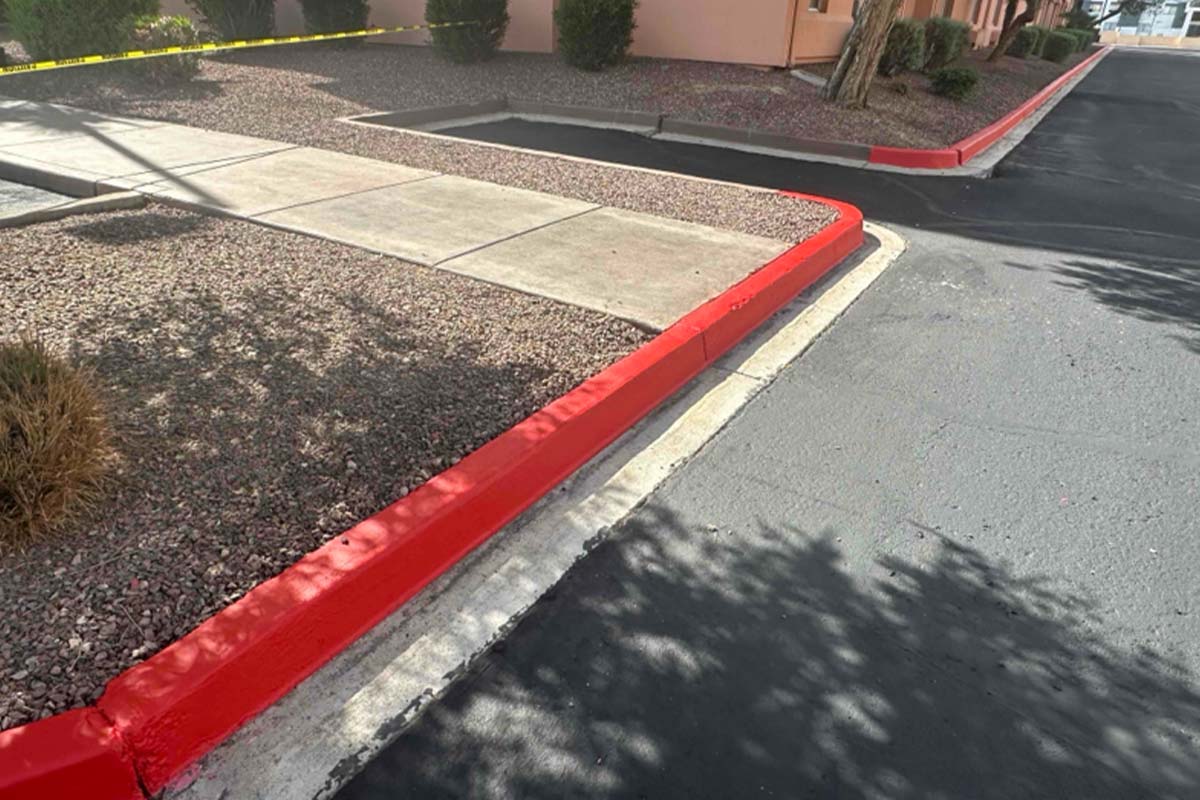
Fire Lane Striping Services in South Atlanta, GA
Fire lane striping keeps emergency access routes clear at shopping centers, medical offices, apartment communities, and industrial sites across the south metro. The work covers painted lane borders, red curb striping, “NO PARKING FIRE LANE” stenciling, and layout updates whenever a property’s fire access plan changes. Crews use Graco LineLazer striping equipment and traffic paint suited to South Atlanta’s Cfa climate, where hot, humid summers and freeze-thaw winters stress paint adhesion on curb faces and pavement edges over time.
Fire lane work is often scheduled alongside a full parking lot striping or restriping project, so the fire lane, drive aisles, and ADA-marked spaces read as one consistent layout. It’s also striped on its own when a property needs its emergency access route re-marked or brought back into compliance.
Georgia Fire-Code (IFC §503) Requirements
Georgia adopts the International Fire Code’s fire-apparatus-access-road rules through its own state fire regulation. Every fire lane 1-800-STRIPER stripes in South Atlanta follows those width, marking, and signage requirements.
Georgia adopts and enforces fire-apparatus-access and fire-lane provisions through the Georgia State Minimum Fire Safety Standards (Ga. Comp. R. & Regs. 120-3-3), which incorporates the International Fire Code (IFC) for use by local fire marshals statewide.
Not every commercial property needs a striped fire lane. IFC §503.1.1 requires a fire apparatus access road for every facility and building, but the AHJ can waive or modify that requirement based on building size, sprinkler coverage, and hydrant proximity — a small single-tenant building close to a hydrant may not need one, while a larger shopping center, medical campus, or industrial site across South Atlanta typically does. Appendix D of the IFC is the reference most local fire marshals lean on for the dimension, turning-radius, and turnaround guidance that shapes the final layout once a lane is required. The table below covers the core requirements that shape a South Atlanta fire lane layout:
| Requirement | Standard | Spec |
|---|---|---|
| Fire apparatus access road width | IFC §503.2.1 | Minimum 20 ft of unobstructed roadway |
| Vertical clearance | IFC §503.2.1 | Minimum 13 ft 6 in of unobstructed height above the access road |
| Fire lane marking | IFC §503.3 | Required where the local fire marshal (AHJ) determines a lane must be identified |
| Curb color & legend | AHJ-set | Commonly a red curb with white “NO PARKING FIRE LANE” lettering |
| Sign / legend spacing | AHJ-set | Set by the local fire marshal; no single statewide interval |
| Turning radius | IFC §503.2.4 | Set by the AHJ to match the turning geometry of local fire apparatus |
| Dead-end turnaround | IFC §503.2.5 | An approved turnaround is required once a dead-end access road exceeds 150 ft |
| Owner maintenance duty | IFC §503.3 | Required markings must be kept legible and visible by the property owner |
The road-width figure is fixed by code at 20 feet unobstructed with 13 ft 6 in of vertical clearance above it, but color, legend wording, spacing, turning radius, and turnaround dimensions are left to the local Authority Having Jurisdiction. That’s why the exact look of a fire lane can vary from one south-metro county to the next. Georgia’s code also puts the ongoing maintenance duty on the property owner under IFC §503.3 — once a fire lane is striped, keeping the paint and lettering legible is the owner’s responsibility, not a one-time requirement.
Curb Painting, Stenciling & “No Parking / Fire Lane” Legends
Most South Atlanta fire lanes get marked with a painted red curb and a stenciled “NO PARKING FIRE LANE” legend spaced along the access route — the identification method most local fire marshals require under IFC §503.3.
1-800-STRIPER curb-paints the fire lane boundary, then stencils the legend at intervals along the curb or pavement so the restriction reads clearly from a moving vehicle. Legend wording and curb color follow whatever the covering fire marshal’s office specifies for the property. Where a jurisdiction requires supplemental signage instead of pavement legends, crews lay out striping to match that requirement. Standard fire lane markings use durable traffic paint, though thermoplastic striping is available as a longer-wearing alternative on lanes that see heavy daily traffic. The paint holds up against South Atlanta’s humid summers and freeze-thaw winters, and a fire lane only works as intended while its markings stay legible.
The same red-curb treatment typically extends around fire hydrants and fire department connections (FDCs) on the property, since AHJs commonly require a no-parking clearance zone — often around 15 feet — so a pumper truck can reach the hydrant or hook into the FDC to feed a building’s standpipe or sprinkler system without a parked car in the way. On properties with a long dead-end access road, IFC §503.2.5 requires an approved turnaround once that dead-end exceeds 150 feet; 1-800-STRIPER stripes the turnaround area to match the fire marshal’s approved layout, so the full length of the access route — not just the through-lane — stays marked and usable for emergency apparatus.
Local Fire-Marshal AHJ Coordination
Because Georgia’s fire code leaves color, legend wording, and spacing up to the local Authority Having Jurisdiction, 1-800-STRIPER coordinates the exact fire lane layout with the fire marshal’s office covering the property before striping starts.
South Atlanta spans multiple jurisdictions: unincorporated county fire departments and smaller city fire marshals across Clayton, Henry, Fayette, and Rockdale counties. That means requirements for a shopping center in one county can differ from a warehouse a few miles away in another. If a property has an approved fire access plan on file with its fire marshal, crews lay out striping to match that plan. When none exists, crews confirm the applicable width, color, legend, and spacing requirements directly with the AHJ before marking begins. A final walkthrough after striping confirms the lane reads clearly and matches what the fire marshal’s office requires — including the marked turnaround and any hydrant or FDC clearance zone on the property, not just the through-lane.
Fire lane markings aren’t a one-time install. IFC §503.3 puts the ongoing maintenance duty on the property owner, so once red curb paint or “NO PARKING FIRE LANE” lettering starts to fade, the lane is technically out of compliance until it’s refreshed. 1-800-STRIPER handles that refresh work on the same schedule as a property’s routine parking lot restriping, keeping the fire lane legible year over year rather than waiting for a fire marshal citation to trigger the repaint.
For a full list of our pavement marking services, visit our parking lot striping in South Atlanta page.
Businesses We Serve




How it Works

GET A FREE ESTIMATE
Contact us today and we’ll have a quote to you in 24 hours

SCHEDULE AN INSTALLATION
We’ll have your installation scheduled in less than 7 days, without affecting your business hours

GET A PARKING LOT THAT POPS
For a budget-friendly price, you’ll get a parking lot that looks like new
We proudly work with:


We proudly work with:


Frequently Asked Questions About Fire Lane Striping in South Atlanta, GA
What color are fire lanes in Georgia?
Fire lane color and legend wording aren’t fixed by state or federal law. The local Authority Having Jurisdiction (AHJ), typically the county or city fire marshal, sets them instead. Most South Atlanta jurisdictions specify a red curb with white “NO PARKING FIRE LANE” lettering, the common convention across Georgia fire departments. 1-800-STRIPER confirms the exact color and legend requirement with the local fire marshal before striping a property in Clayton, Henry, Fayette, Rockdale, or any south-metro county.
How wide must a fire apparatus access road be?
Under IFC §503.2.1, adopted through Georgia’s fire safety standards, a fire apparatus access road must provide a minimum of 20 feet of unobstructed width. That clearance keeps the route open for fire trucks and other emergency apparatus. It’s also the baseline dimension 1-800-STRIPER uses when laying out or restriping a fire lane on a commercial property.
Who is the AHJ for fire lanes?
The Authority Having Jurisdiction for a fire lane is the local fire marshal’s office, whether county or city, depending on where the property sits. Across South Atlanta’s unincorporated county areas and smaller cities in Clayton, Henry, Fayette, and Rockdale counties, that’s typically a county fire marshal rather than a single citywide office. Requirements can vary from property to property.
What is the 120-3-3 code in Georgia?
Ga. Comp. R. & Regs. 120-3-3 is the Georgia State Minimum Fire Safety Standards, the state regulation that adopts the International Fire Code — including its fire-apparatus-access-road and fire-lane-marking provisions — for enforcement by local fire marshals statewide. It’s the code basis 1-800-STRIPER references when planning fire lane striping in South Atlanta.
How far apart are “Fire Lane” markings or legends?
Spacing between stenciled fire lane legends and curb markings isn’t set by a single statewide number. The local AHJ determines it based on the length and layout of the access route, and 1-800-STRIPER lays out legend spacing to match what the covering fire marshal’s office requires for the specific property.
How often should fire lane striping be refreshed?
Fire lane markings should be refreshed whenever the red curb paint or “NO PARKING FIRE LANE” lettering fades to the point of being hard to read — a marking only works if it’s clearly visible to drivers and enforceable by the fire marshal. South Atlanta’s Cfa climate (hot, humid summers and freeze-thaw winters) accelerates wear on curb paint, so lanes with heavy traffic or full sun exposure typically need a repaint sooner than shaded, low-traffic lanes.