Thermoplastic Striping
In South Atlanta, GA
Long-Lasting Pavement Markings
1-800-STRIPER provides professional thermoplastic striping in South Atlanta, GA — long-service-life stop bars, crosswalks, directional arrows, and lane lines applied hot per AASHTO M249 and Georgia DOT Section 653 specifications for high-traffic commercial lots and retail centers across the south metro.
1-800-STRIPER® of Atlanta OTP South PROVIDes Thermoplastics Services NEAR YOU
Want to reduce the maintenance requirements for your parking lot?
Thermoplastic pavement markings are a durable, weather and vehicle-resistant striping option for your parking lot or facility.
You can utilize them for stop bars, ADA stalls, no-parking zones, directional arrows, crosswalks, or your entire parking lot.
Benefits:
Thermoplastic Striping Services in South Atlanta, GA
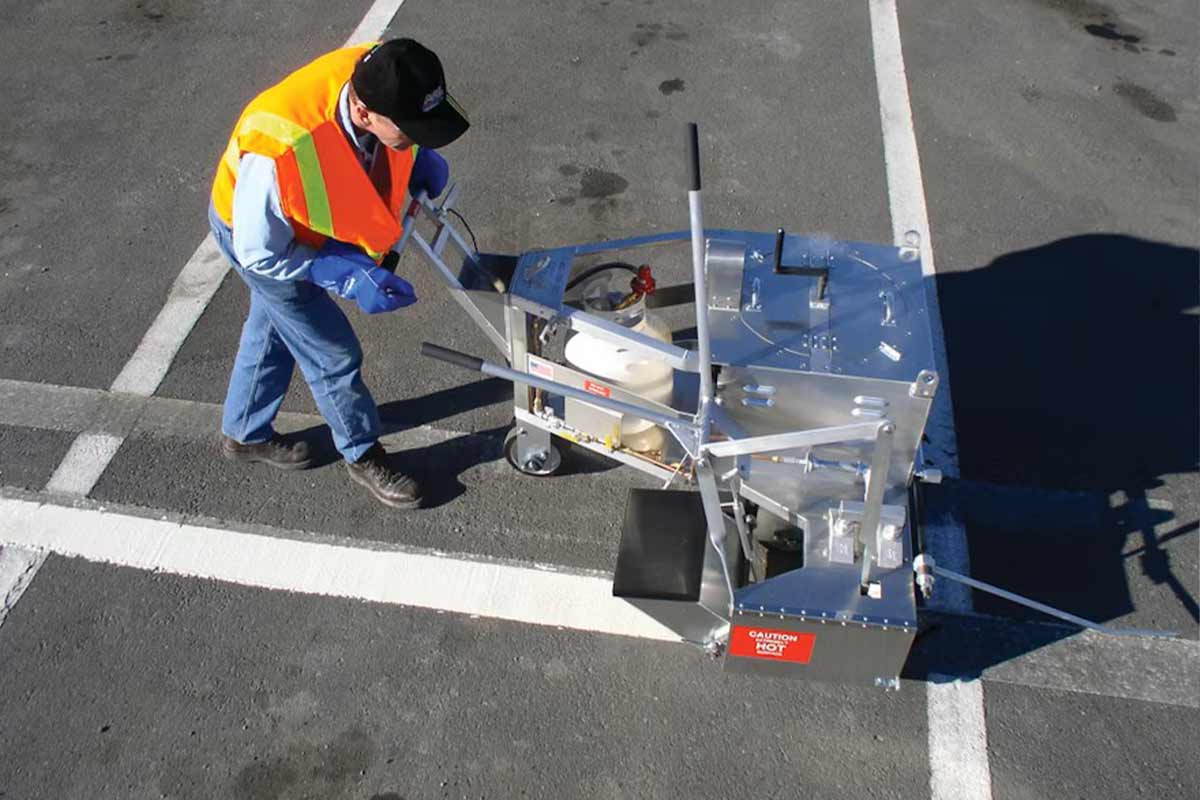
Thermoplastic marking is a solid material that’s melted and applied directly to the pavement, then cools into a hard, reflective line bonded to the surface. Crews use it for the highest-wear markings on a property (stop bars, crosswalks, directional arrows, and primary lane lines) rather than an entire lot’s stall grid. Retail centers, shopping plazas, and other high-traffic commercial properties across the south metro rely on it where standard traffic paint wears fastest: entry lanes, drive-thru queues, and pedestrian crossings that see thousands of tire and foot passes a week. Because it bonds to the pavement instead of sitting as a surface film, it holds its shape and reflectivity through far more traffic cycles than painted lines in the same spot.
Thermoplastic comes in two application forms. Preformed thermoplastic is cut to shape — arrows, legends, and ISA symbols — then heat-fused to the surface, while sprayed or extruded hot-melt handles continuous lines and stop bars. Both carry drop-on glass beads for retroreflectivity, the same AASHTO M247 bead standard that keeps a line readable in headlights at night. The pavement has to be clean, dry, and sound first, and a concrete surface usually needs a sealer or primer so the material grips. Georgia DOT Section 653 sets the finished thickness, commonly around 90 mils — many times thicker than a coat of paint, which is part of why it wears so much longer.
Thermoplastic vs. Paint — Durability & Cost of Ownership
Thermoplastic outlasts standard traffic paint by a wide margin, making it the better cost-of-ownership choice for markings that take heavy, repeated wear, even though it’s a more involved service to apply. Paint remains the right call for full stall grids and lower-traffic areas where frequent repainting is already part of routine lot maintenance. The table below compares the two by lifespan, durability, and where each performs best.
| Thermoplastic | Traffic Paint | |
|---|---|---|
| Typical lifespan | Several years under heavy traffic | Repainted on a routine maintenance cycle |
| Durability | Bonds into the pavement surface; resists abrasion and tire wear | Sits as a surface film; wears faster under heavy traffic |
| Best use | Stop bars, crosswalks, arrows, high-traffic lane lines | Full stall grids, lower-traffic markings |
| Application | Heated and melted onto the surface, then cools solid | Applied cold or fast-dry, cures at ambient temperature |
Application and durability follow AASHTO M249 and Georgia DOT Section 653, the specifications that govern thermoplastic pavement-marking material and installation. Choosing thermoplastic for high-wear zones and paint for the rest of the lot means fewer repaint visits on the markings that matter most for safety and visibility — that’s the real cost-of-ownership advantage over an all-paint approach.
For a full list of our pavement marking services, visit our parking lot striping in South Atlanta page.
Businesses We Serve




How it Works

GET A FREE ESTIMATE
Contact us today and we’ll have a quote to you in 24 hours

SCHEDULE AN INSTALLATION
We’ll have your installation scheduled restriped in less than 7 days, without affecting your business hours

GET A PARKING LOT THAT POPS
For a budget-friendly price, you’ll get a parking lot that looks like new
We proudly work with:


We proudly work with:

Frequently Asked Questions About Thermoplastic Striping in South Atlanta, GA
How long does thermoplastic striping last?
Thermoplastic typically lasts several times longer than standard traffic paint in the same spot, since it bonds into the pavement surface instead of sitting on top of it. In high-traffic spots like crosswalks and stop bars, that means far fewer repaint cycles over the life of the marking. Exact lifespan depends on traffic volume, sun exposure, and winter freeze-thaw cycling common to South Atlanta’s Cfa climate. Call (404) 902-8202 for a free estimate on which areas of your lot are the best fit.
What are the disadvantages of thermoplastic striping?
Thermoplastic needs a clean, sound pavement surface to bond correctly, so it isn’t a fit for lots with heavy cracking or loose surface material without prep work first. It’s applied hot, which makes it a more involved service than cold or fast-dry paint. It also isn’t practical for every marking on a property: full stall grids are typically still painted, with thermoplastic reserved for high-wear zones like crosswalks, stop bars, and arrows.
Where is thermoplastic striping worth it?
Thermoplastic delivers the most value on markings that take the heaviest, most repeated traffic: crosswalks, stop bars, directional arrows, and primary lane lines at entries and drive-thru lanes. These are the spots where standard paint wears fastest and needs the most frequent touch-ups. Retail centers and other high-traffic commercial properties across South Atlanta use it selectively on these zones rather than across an entire lot.
What temperature is thermoplastic applied at?
Crews heat thermoplastic material to roughly 400°F, melting it before application to the pavement, then it cools and hardens into a solid, bonded line. That hot-melt process lets it fuse into the surface instead of sitting as a thin coat on top, which is a big part of why it holds up longer than paint under heavy traffic.
What does Georgia DOT Section 653 cover?
Georgia DOT Section 653 is the state specification governing thermoplastic pavement-marking material and installation, covering material composition, application temperature, and finished-line requirements. Along with AASHTO M249, it’s the standard 1-800-STRIPER follows when applying thermoplastic markings on commercial properties across South Atlanta, ensuring the finished lines meet the same material and application benchmarks used on public roadways.
How is thermoplastic striping removed or changed?
Because thermoplastic bonds into the pavement surface, removing or relocating it isn’t as simple as repainting over an old line. Crews typically grind or scarify the material off the surface before applying a new layout. That’s a key reason to plan thermoplastic placement carefully during initial layout or a restriping project. Call (404) 902-8202 for a free estimate if you’re changing a layout that includes existing thermoplastic markings.