Temporary Parking Lot Striping
In South Atlanta, GA
Event and Construction Markings
1-800-STRIPER provides professional temporary parking lot striping in South Atlanta, GA — short-duration event markings, construction-zone striping, and overflow parking layouts on grass, gravel, pavement, or any surface using removable water-based traffic paint for festivals, venues, and worksites across the south metro.
1-800-STRIPER® of Atlanta OTP South PROVIDes Temporary Striping Services NEAR YOU
Need Temporary Stripes?
Use temporary stripes to direct traffic and create parking areas at your special event or to keep construction sites safe without a long-term commitment. We paint on grass, gravel, pavement, or any other surface where temporary striping is needed.
Striping solutions for:
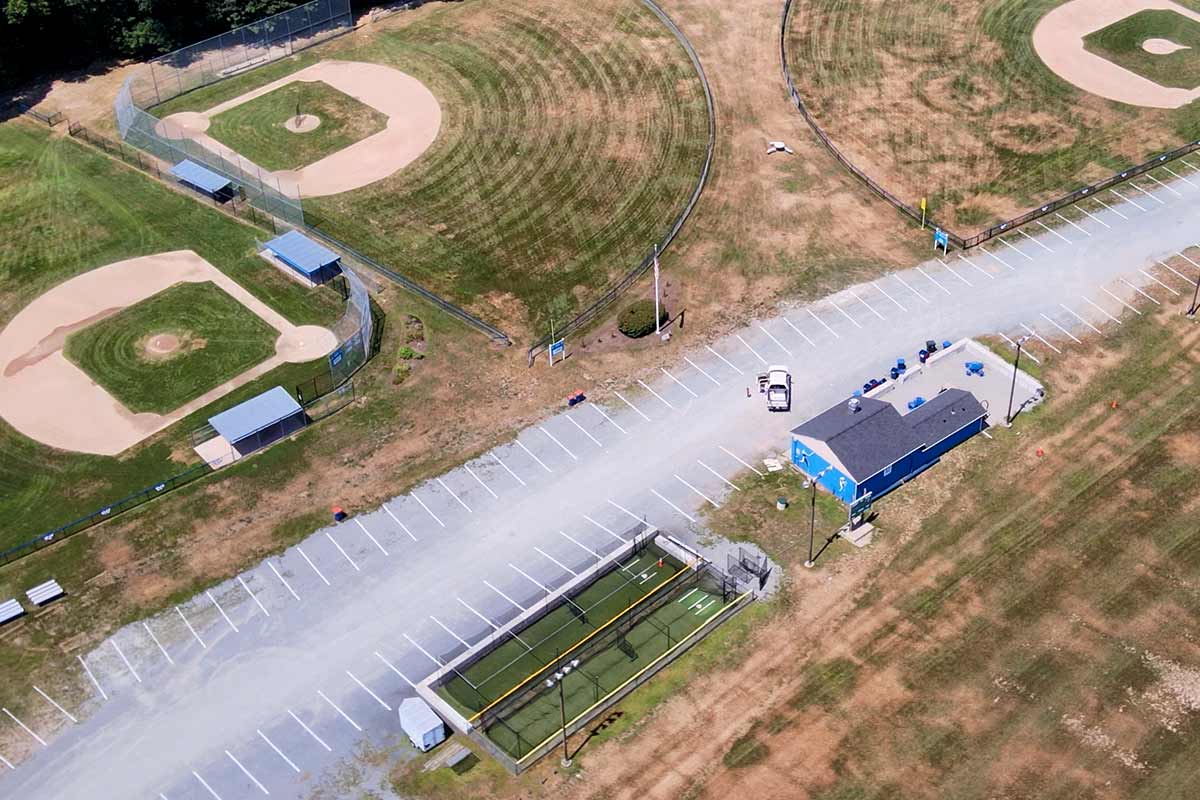
Temporary Parking Lot Striping Services in South Atlanta, GA
Temporary striping solves a different problem than a permanent restripe. The layout only has to hold up for a day, a weekend, or the length of a construction phase, and it often goes down on a surface that was never built for parking in the first place. 1-800-STRIPER lays out rows, aisles, directional arrows, and overflow parking for one-time events, recurring festivals, phased construction sites, and fields pressed into service when a permanent lot runs out of room. Typical projects run from festival and concert grounds to church and school events, fairground and expo lots, contractor staging areas, and overflow fields for venues that don’t have enough paved parking of their own.
Without marked rows and directional lines, an unpaved overflow field or a construction-site parking area tends to fill in unpredictably: vehicles parked at odd angles, no clear path for exit traffic, no consistent aisle width for emergency access. A temporary layout gives the site the same organized flow a permanent lot would have, minus the cost and downtime of permanent line work that would only need to be removed once the event ends or the project moves to its next phase.
Because the paint is designed to wear or wash off rather than cure into a permanent finish, the same grass field, gravel lot, or paved surface goes back to normal use once the event or project wraps. No grinding. No scarifying. No permanent line left behind.
Surfaces We Mark — Grass, Gravel, Pavement & Any Surface
Temporary parking layouts aren’t limited to asphalt or concrete. 1-800-STRIPER marks grass, gravel, pavement, and any other surface a site provides for overflow or event parking. Grass fields used for festival, church, or school-event parking take rows and directional lines the same way a paved lot does, adjusted for the softer, less uniform surface underneath. Gravel lots (common at fairgrounds, construction staging areas, and rural event sites across the south metro) hold temporary marks well enough to guide traffic for the length of an event or project. Paved surfaces, including construction-zone pavement and existing lots pressed into overflow duty, take the same removable water-based paint used on grass and gravel. That means a single site with mixed surface types gets one consistent layout, instead of clear lines on the pavement and no guidance in the field next to it.
Event & Festival Parking Layouts
Event parking runs on a layout plan sized to expected traffic volume, entrance and exit points, and how long the marking needs to hold, not a permanent restripe schedule. 1-800-STRIPER plans and lays out temporary parking for festivals, concerts, fairs, sporting events, and venue overflow across the south metro, sequencing the work so lines are down and dry before gates open. For events expecting heavy arrival or departure traffic in a short window (a concert load-in, say, or a fairground’s opening morning), the layout plan also accounts for one-way flow and clearly marked entrances and exits, so vehicles move through the lot instead of backing up at a single choke point.
An event striping job generally follows the same sequence regardless of surface or event size:
- Site walk — review the lot, field, or staging area and identify entrances, exits, traffic flow, and any obstacles.
- Layout plan — map rows, aisles, and directional markings to the site’s shape and expected volume.
- Temporary marking — apply removable water-based paint to grass, gravel, or pavement per the layout plan.
- Event — markings hold for the duration of the event or the current project phase.
- Removal or wear-off — lines fade naturally with traffic and weather, or can be washed off sooner where a faster reset is needed.
Multi-day festivals with several overflow fields and single-day events with one paved lot both run through this same five-step process, scaled to the size of the layout.
Construction-Zone & Phased Striping
Construction-zone striping marks parking and traffic patterns that shift as a project moves through phases, rather than locking in one fixed layout. 1-800-STRIPER stripes temporary parking and travel lanes around active construction sites in South Atlanta, updating the marks as staging areas, equipment zones, and completed sections change.
A site under construction rarely has one parking configuration for its entire timeline. The space available for contractor and visitor parking during site prep or excavation is usually different from what opens up once a building shell is standing or a phase of paving is complete. Phased sites also need parking areas that move with the work. An area used for material staging in one phase may become the visitor lot in the next. Restriping the temporary layout as each phase begins keeps parking and travel lanes matched to where work is actually happening, rather than leaving faded or contradictory lines from an earlier phase in place. Once the site reaches its final grade and layout, permanent restriping sized to the finished lot replaces the temporary marks.
Removable Water-Based Paint & Removal
Temporary striping uses removable water-based traffic paint rather than the durable traffic paint or thermoplastic applied to permanent lots, so the lines are built to fade instead of holding for years. 1-800-STRIPER applies this paint to grass, gravel, and pavement for events, construction phases, and overflow layouts across the south metro.
Because the paint is water-based, it breaks down with foot and vehicle traffic, rain, and (on grass) mowing, faster than a permanent line would. South Atlanta sits in a Köppen Cfa humid subtropical climate, with hot, humid summers and periodic winter freeze-thaw, and both rain and temperature affect how long a temporary mark holds between events and how quickly it fades once traffic moves on. Where a site needs a faster reset between bookings rather than waiting on natural wear, the paint can be washed or pressure-washed off ahead of the next layout. The paint is water-based rather than solvent-based, so any needed removal doesn’t call for the specialized solvents or grinding equipment permanent traffic paint sometimes requires, a factor that matters on a grass field or gravel lot that has to return to its regular use once an event or project wraps.
Turnaround & Same-Week Scheduling
Turnaround for temporary striping depends on the size of the layout and how far out the event or construction phase is planned. A single paved lot is generally easier to fit into an open week than a multi-day festival with several overflow fields. 1-800-STRIPER schedules temporary marking for event organizers, venues, and construction sites across South Atlanta’s south metro (DeKalb, Gwinnett, Rockdale, Fulton, Fayette, Henry, Clayton, Coweta, Spalding, Douglas, and Meriwether counties) around the event date or project timeline rather than a fixed weekly slot. Because temporary layouts use removable paint rather than a cured permanent line, turnaround from site walk to finished markings is typically faster than a full permanent restriping project, which needs dry-cure time before the lot can reopen to traffic.
Backed by a 5.0-star Google rating from 9 local customers, 1-800-STRIPER lays out temporary parking for festivals, venues, and worksites throughout the region. Call (404) 902-8202 for a free estimate and current scheduling availability in South Atlanta.
For a full list of our pavement marking services, visit our parking lot striping in South Atlanta page.
Businesses We Serve




How it Works

GET A FREE ESTIMATE
Contact us today and we’ll have a quote to you in 24 hours

SCHEDULE A STRIPING
We’ll have your space restriped in less than 7 days, without affecting your business hours

GET A PARKING LOT THAT POPS
For a budget-friendly price, you’ll get a parking lot that looks like new
We proudly work with:


We proudly work with:

Frequently Asked Questions About Temporary Parking Lot Striping in South Atlanta, GA
How do you make temporary parking lines?
1-800-STRIPER applies removable water-based traffic paint to lay temporary parking lines, rather than the durable paint or thermoplastic used on permanent lots. The crew marks rows, aisles, and directional markings on grass, gravel, or pavement with this paint, following the same site-walk-to-layout process used for any temporary job. Because the paint is water-based, it wears down with traffic, rain, and mowing rather than curing into a permanent finish. That’s what makes it suited to one-time events, festivals, and construction phases, not year-round parking areas that need to hold up for years.
Can you stripe on grass or gravel?
Yes. Grass and gravel are two of the most common surfaces for temporary parking layouts. Festival fields, church and school event parking, fairgrounds, and construction staging areas are frequently grass or gravel rather than pavement, and 1-800-STRIPER marks rows, aisles, and directional lines on any of these surfaces, plus pavement, using the same removable water-based paint. The layout adjusts to the surface’s texture and firmness, but the underlying process (site walk, layout plan, then marking) stays the same regardless of what’s underfoot.
How long does temporary striping last?
Temporary striping typically holds for weeks to a few months, depending on traffic volume, weather, and surface. Because the paint is water-based and designed to wear rather than cure permanently, lines fade faster on grass (especially with mowing) than on gravel or pavement. South Atlanta’s Köppen Cfa humid subtropical climate, with regular rain and hot, humid summers, speeds up the wear too, so a single-event layout fades sooner than markings used across a multi-week construction phase or a series of smaller repeat events.
How is temporary striping removed?
In most cases, temporary striping doesn’t need active removal. It wears away naturally with traffic, weather, and, on grass, mowing over the following weeks and months. Where a site needs a faster reset between events or before a construction phase changes, the removable water-based paint can be washed or pressure-washed off instead of waiting for it to fade on its own. Either way, the surface goes back to normal use without the grinding or scarifying that permanent traffic paint or thermoplastic removal calls for.
How much lead time do you need for event parking striping?
Lead time depends on the size of the layout and how many surfaces are involved. A single paved lot generally schedules faster than a multi-day festival with several grass or gravel overflow fields. 1-800-STRIPER works with event organizers and construction sites across South Atlanta’s south metro to plan the layout around the event date or project timeline rather than a fixed weekly slot. Call (404) 902-8202 for a free estimate and current scheduling availability for your event or project.
Does weather affect temporary paint?
Yes. Temporary striping uses removable water-based paint rather than a cured permanent line, so rain and temperature both affect how it applies and how long it lasts. South Atlanta’s Köppen Cfa humid subtropical climate brings hot, humid summers and periodic winter freeze-thaw. Wet weather can extend the time paint needs to set before an event opens, while heavy or repeated rain over a multi-week construction phase wears a temporary mark down faster than a dry stretch would.