Temporary Parking Lot Striping
In Charlotte, NC
Event and Construction Markings
1-800-STRIPER provides professional temporary parking lot striping in Charlotte, NC — short-duration event markings, construction zone striping, and overflow parking layouts on grass, gravel, pavement, or any surface using removable water-based traffic paint.
1-800-STRIPER® of Charlotte PROVIDes Temporary Striping Services NEAR YOU
Need Temporary Stripes?
Use temporary stripes to direct traffic and create parking areas at your special event or to keep construction sites safe without a long-term commitment. We paint on grass, gravel, pavement, or any other surface where temporary striping is needed.
Striping solutions for:
Temporary Parking Lot Striping in Charlotte
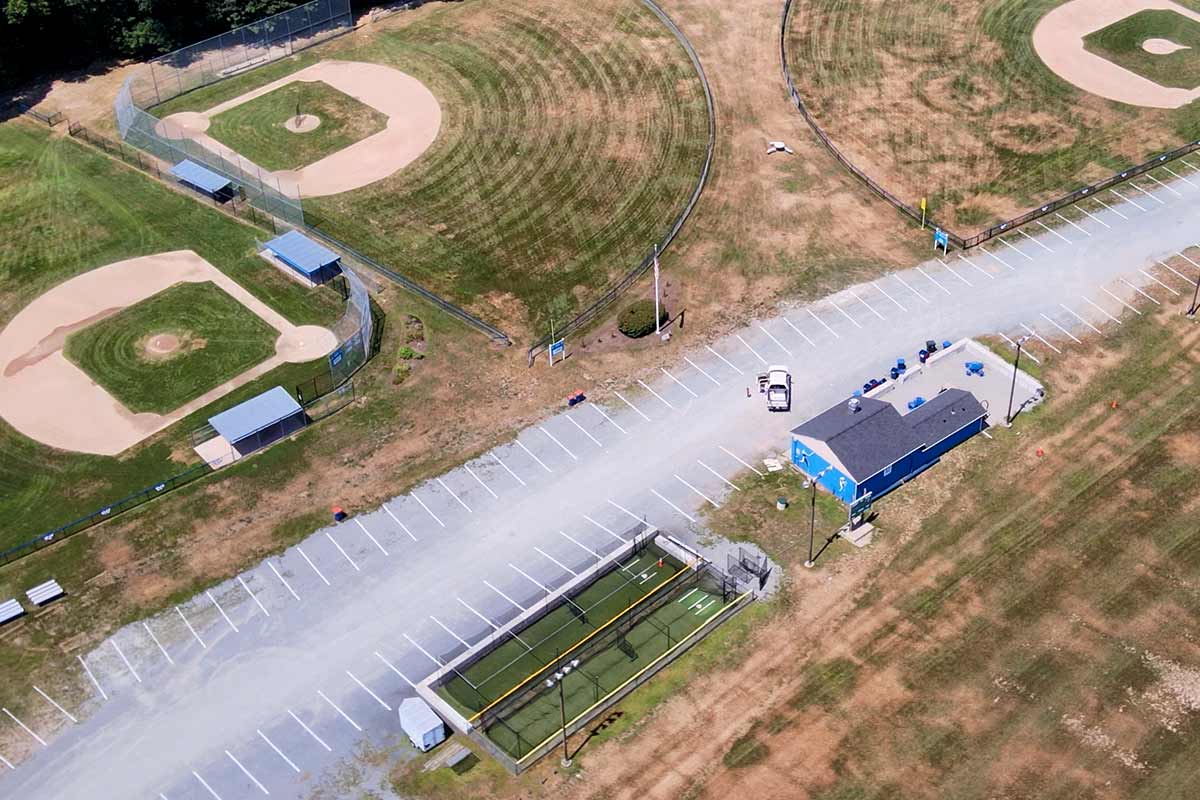
Temporary striping solves a specific problem: you need organized, visible parking right now, but not forever. Whether a stadium event is pulling thousands of cars into a grass field, a contractor has closed half a lot for utility work, or a Charlotte venue needs overflow capacity for a single weekend, removable markings let you run a safe, organized operation and leave no trace once the event ends.
This is a short-term tool, not a compromise. Properly applied water-based traffic paint lays down lines your attendants and drivers can actually follow, reads clearly at night under lighting, and holds up through a full event day. When the job is done, the paint weathers off or can be cleaned away — the lot goes back to its original condition.
1-800-STRIPER handles the layout planning, surface prep assessment, and paint application. Call (704) 828-9922 for a free estimate on temporary striping in Charlotte, Concord, Gastonia, or anywhere in the greater metro area.
When Temporary Striping Fits
Not every parking need calls for a permanent installation. Temporary striping makes sense when the job has a defined end date or the surface can’t support permanent marking.
Common situations where temporary striping is the right call:
- Outdoor events and festivals — concerts, sports tournaments, charity races, and fairs that draw crowds to fields or unconventional surfaces for one or two days
- Construction staging areas — active worksites where contractor vehicles, deliveries, and public access need to be separated safely
- Overflow parking — grass fields, gravel lots, and adjacent parcels pressed into service when a primary lot fills beyond capacity
- Phased lot renovations — an existing lot gets milled or resurfaced in sections; temporary lines keep traffic moving through the active zone while work continues
- Seasonal demand — a shopping center or church needs extra markings during peak weeks that would be unnecessary and expensive to paint permanently
If the situation has a clear end date or you’re working on a surface that may change soon, temporary striping avoids the cost and commitment of a permanent installation you’ll need to remove later.
Surfaces We Stripe (Grass, Gravel, Pavement, and Any Surface)
Temporary striping works on grass, gravel, asphalt, concrete, packed dirt, and mixed surfaces. Surface type affects how the paint holds and how long the lines stay visible, but it doesn’t limit where we can work.
Grass: Water-based traffic paint bonds to grass blades and dried-down turf. It’s the most common surface for festival overflow and sports-event parking. Lines typically last several days to a couple of weeks depending on rain, foot traffic, and how quickly the grass grows back. Mowing before application keeps lines sharper and more consistent.
Gravel and packed dirt: Gravel lots need a light sweep to clear loose stones from the stripe path. Once the surface is prepped, paint bonds to the compacted material underneath. Longevity is shorter than on pavement — heavy vehicle traffic will scatter loose aggregate — but for a weekend event, the lines hold well enough to direct drivers reliably.
Asphalt and concrete (paved surfaces): Water-based removable paint on pavement gives you the cleanest, most durable temporary lines of any surface. On existing pavement, lines can last weeks to months before they fade or wear — which makes this option useful for construction staging zones with a longer timeline. When you’re ready to remove them, a pressure wash takes most removable formulations off sealed asphalt and concrete.
Mixed and unconventional surfaces: Temporary markings also go on brick pavers, compacted gravel pads, clay, and event-venue hardscaping. The prep steps change by surface, but the core approach — removable water-based paint, proper application speed, adequate dry time — applies across the board.
No surface is off-limits for a temporary application. Call (704) 828-9922 and describe your surface; we’ll tell you what to expect in terms of visibility and longevity.
Removable Water-Based Paint
Removable water-based traffic paint is the standard material for temporary parking lot striping. It’s a latex-based formulation — lower VOCs than solvent-based paints, fast-drying, and designed to break down under weather and mechanical wear rather than cure into a permanent bond.
A few things to know about the material:
Dry time. Water-based paint dries to the touch within 15–30 minutes under normal Charlotte conditions (moderate humidity, no rain). Full cure before vehicle traffic depends on temperature and humidity; in warm, dry conditions it’s typically under an hour.
Durability. On pavement, removable water-based paint holds its visibility for weeks to a few months under normal wear. On grass and gravel, expect days to a few weeks. Direct sun, heavy rain, and high foot or vehicle traffic all shorten the window. That variability is by design — it’s what makes the paint removable.
Removal. On sealed pavement, pressure washing removes most removable formulations cleanly. On asphalt, natural weathering — UV exposure, rain, traffic abrasion — breaks the paint down over time without any intervention. On grass, the paint fades as the grass grows. Removal timelines vary by surface condition, paint film thickness, and weather; we can advise on what to expect for your specific site.
This is not a permanent marking material and should not be treated as one. If your project needs lines that last years, a permanent traffic paint or thermoplastic application is the right choice — see the comparison table in the Temporary vs. Permanent section below.
Event and Construction-Zone Striping
Two scenarios drive most of the temporary striping work 1-800-STRIPER handles in Charlotte: outdoor events and active construction zones.
Outdoor events. A concert venue borrowing a neighboring grass field, a church activating its back lot for a holiday weekend, a sports complex opening an unpaved overflow area — these all need the same thing: a clear grid of parking stalls, directional arrows, and an accessible-space zone if ADA-qualified patrons are expected. The layout has to work for attendants directing traffic and for drivers who have never parked there before.
Planning matters as much as the paint. Before we stripe, we calculate how many stalls fit the available footprint at standard 8.5 × 18-foot dimensions, where traffic flows in and out, and whether the access path to any accessible stalls is paved or if a portable solution is needed for the accessible route. The goal is a lot that runs smoothly on the day, not one that looks good in photos but jams up at arrival.
Construction-zone striping. Active construction sites in Charlotte often have WZ (work zone) needs that fall outside the scope of the general contractor’s lane: separating pedestrian routes from equipment staging, marking contractor-vehicle-only zones, or keeping public access to a partial lot organized while the other half is torn up. Temporary striping handles these needs without the contractor having to re-stripe when the work is done.
Reach out early in the project timeline — staging the lot before crews arrive is easier than working around active equipment.
Our Process
Getting temporary striping right starts before any paint hits the surface.
- Site assessment. We evaluate the surface type (grass, gravel, pavement, mixed), lot dimensions, drainage, and any obstacles — landscaping, curbs, utility covers — that affect the layout.
- Layout planning. We calculate the stall count, drive-aisle widths, accessible-space placement, and directional flow based on your expected capacity and access points. For events, we account for attendant positioning and exit flow.
- Surface prep. Grass gets mowed if time allows. Gravel is swept to expose the compacted base. Paved surfaces are blown clean of debris. Prep quality directly affects how well the paint holds.
- Application. We apply water-based traffic paint using line-striping equipment sized for the job — consistent width, straight lines, and correct dry time between coats where double-coat work is specified.
- Accessible-space layout. If the temporary lot serves the public, we mark accessible stalls and access aisles to standard dimensions. Portable signage may be needed if the space lacks permanent sign infrastructure.
- Post-event guidance. We advise on expected wear and removal approach for your surface so you’re not guessing when the time comes to restore the lot.
For a free estimate, call 1-800-STRIPER of Charlotte at (704) 828-9922 or email Charlotte@1800STRIPER.com.
Temporary vs. Permanent Striping
Choosing between temporary and permanent markings comes down to how long you need the lines, what surface you’re working on, and what happens to the lot afterward. The table below covers the key differences.
| Factor | Temporary Striping | Permanent Striping |
|---|---|---|
| Material | Removable water-based traffic paint | Traffic paint, epoxy, or thermoplastic |
| Intended lifespan | Days to a few months (weather/wear dependent) | 1–5+ years depending on material and traffic |
| Surfaces | Grass, gravel, asphalt, concrete, mixed, any surface | Asphalt, concrete (paved surfaces only) |
| Removal | Pressure wash (pavement) / natural weathering (grass/gravel) | Requires sandblasting, grinding, or blackout paint |
| Best use case | Events, overflow, construction staging, phased renovations | Primary lots, permanent ADA compliance, fire lanes |
| ADA compliance | Meets stall dimensions for temporary use; portable signage may be needed | Full ADA compliance with permanent signage infrastructure |
| Cost driver | Setup labor + material for a defined period | Higher material cost; durable finish; lower long-term cost per year |
| Surface damage risk | Minimal to none on grass/gravel; none on paved | None when applied correctly |
If your lot needs markings that last through multiple seasons, hold up to daily commercial traffic, or satisfy a permit requirement for permanent accessible parking, the right choice is permanent striping. If you need a working layout for a weekend, a month-long construction phase, or an overflow scenario, temporary is faster and costs less for what you actually need.
Not sure which fits your project? Call (704) 828-9922 — we’ll give you a straight answer.
For a full list of our pavement marking services, visit our parking lot striping in Charlotte page.
Businesses We Serve




How it Works

GET A FREE ESTIMATE
Contact us today and we’ll have a quote to you in 24 hours

SCHEDULE A STRIPING
We’ll have your space restriped in less than 7 days, without affecting your business hours

GET A PARKING LOT THAT POPS
For a budget-friendly price, you’ll get a parking lot that looks like new
We proudly work with:


We proudly work with:

Frequently Asked Questions About Temporary Parking Lot Striping in Charlotte, NC
How long does temporary parking lot striping last on grass?
On grass, removable water-based traffic paint typically stays visible for several days to two weeks, depending on rainfall, foot and vehicle traffic, and how quickly the grass grows back. A light rain won’t wash it out immediately, but a heavy storm shortly after application can reduce it faster than normal wear would. Mowing after application will shorten the visible window — schedule the mow after your event if the timeline allows. For events spanning a single day or weekend, grass striping holds well under normal Charlotte weather conditions.
Can you stripe a gravel lot for a one-day event?
Yes. Gravel lots can be striped for temporary use with water-based traffic paint. We sweep the stripe path before application to clear loose stones and expose the compacted base, which gives the paint a more stable surface to bond to. On gravel, lines hold up well for a day or weekend event under normal conditions. Heavy vehicle traffic moving perpendicular to the stripes — vehicles turning tightly or spinning in place — will disturb the lines faster. For multi-day events on gravel, plan on the lines fading toward the end of the run.
Do temporary markings satisfy ADA accessible-space requirements for an outdoor event?
Temporary striping can meet the dimensional requirements for accessible parking stalls and access aisles — 8-foot stall width, 5-foot access aisle for standard, 8-foot aisle for van-accessible — but ADA compliance for a public event also depends on signage and the accessible route from the stall to the facility entrance. Portable sign stands can satisfy the signage requirement where no permanent post is available. The route must be firm, stable, and slip-resistant; on grass or gravel that may require temporary matting or a paved path. If your event is open to the public, plan the accessible-space layout early so the route works, not just the stall dimensions.
How soon can vehicles drive on temporary striping after application?
Under typical Charlotte summer conditions — temperatures above 65°F, moderate humidity, no rain in the forecast — water-based traffic paint dries to the touch in 15–30 minutes and is safe for vehicle traffic within an hour of application. In cooler or more humid conditions, allow more time; paint that appears dry on the surface may still be tacky underneath, and tire contact too early will smear or lift the line. We schedule applications with enough lead time before your event to let the paint fully cure without rushing the dry window.
What is the difference between water-based removable paint and standard traffic paint?
Both are water-based latex formulations, but removable traffic paint uses a softer resin system designed to break down under UV exposure, weather, and mechanical wear rather than bond permanently to the surface. Standard traffic paint cures harder, bonds more aggressively to pavement, and resists weathering — that’s what makes it durable for permanent applications. The tradeoff is removal: standard paint requires sandblasting, grinding, or blackout coating to eliminate. Removable paint pressure-washes off sealed pavement and fades naturally on grass and gravel. For temporary use, removable is the right material; for a long-life installation, standard or thermoplastic is the better investment.
Can 1-800-STRIPER handle temporary striping for large outdoor events with thousands of vehicles?
Yes. Large outdoor events require more planning than a simple stall grid — traffic flow into and out of the field, attendant positioning zones, accessible-space clusters near the entrance, and often multiple arrival lanes. We work from your site dimensions and expected vehicle count to calculate stall layouts that maximize capacity without creating bottlenecks at the entrances. The larger the event, the more important it is to plan the layout before the day of — last-minute changes on the morning of an event with 2,000 cars inbound are hard to fix. Contact 1-800-STRIPER of Charlotte at (704) 828-9922 to discuss your event timeline and site constraints.