Temporary Parking Lot Striping
In Salt Lake City, UT
Event Markings and Temporary Striping Solutions
1-800-STRIPER provides professional temporary parking lot striping in Salt Lake City, UT — short-duration event layouts, construction-phase markings, and overflow parking on grass, gravel, pavement, or any surface using removable water-based traffic paint and marking tape.
1-800-STRIPER® of Salt Lake City PROVIDes Temporary Parking Lot Striping Services NEAR YOU
Need Temporary Stripes?
Use temporary stripes to direct traffic and create parking areas at your special event or to keep construction sites safe without a long-term commitment. We paint on grass, gravel, pavement, or any other surface where temporary striping is needed.
Striping solutions for:
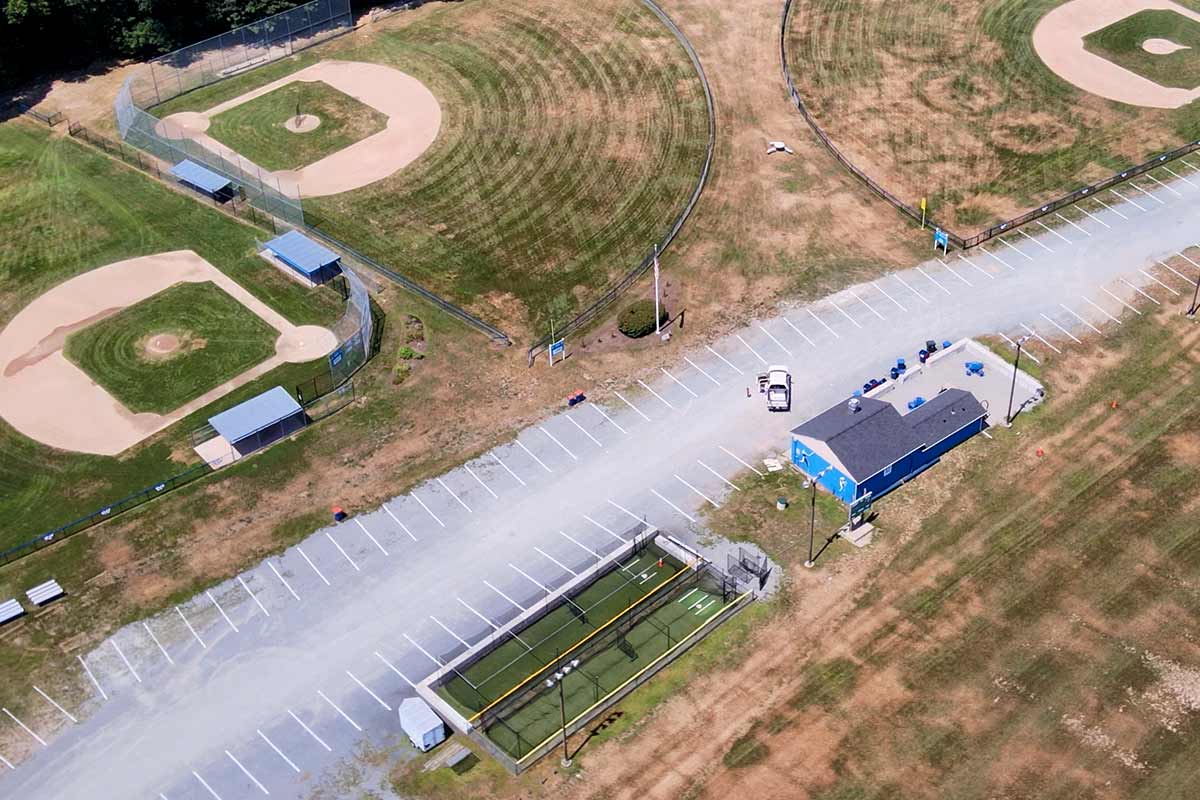
Events, Construction Phasing, and Overflow Lots
Temporary parking lot striping in Salt Lake City serves a wide range of short-term needs — from special events and construction reroutes to seasonal overflow and emergency staging. Unlike permanent markings, temporary striping uses removable or water-based paint that wears away naturally or can be pressure-washed off the surface after the job is complete.
Common temporary striping situations in the Salt Lake City area include overflow parking for concerts and festivals, university game days, church and community events, and holiday retail overflow lots. Construction sites along the I-15 corridor and in downtown Salt Lake City frequently need temporary traffic markings and parking layouts while permanent surfaces are under work.
The three jobs behave differently and it is worth separating them, because the right material follows from which one you have.
Events are duration-bounded and volume-driven. The layout exists to move a known number of vehicles onto a surface that was never designed to hold them, usually once. What matters is throughput and the accessible provision, and the markings need to survive exactly as long as the event and then stop being a problem.
Construction phasing is the opposite: the layout changes several times over months as work moves across the site, and each phase needs markings that can be overwritten by the next. Here the ability to remove cleanly matters more than durability, because the layout you paint in March is in the way by June.
Seasonal and overflow sits between them — a lot that is active part of the year, where permanent paint would simply weather through the months nobody is using it.
Marking Grass, Gravel, Pavement, and Other Surfaces
1-800-STRIPER paints temporary markings on any surface — asphalt, concrete, grass, gravel, and dirt. The paint type varies by surface: removable traffic paint for asphalt and concrete, chalk-based marking for grass surfaces, and water-based temporary paint for gravel and dirt. At Salt Lake City’s elevation, high-altitude UV accelerates even temporary paint fading, so material selection matters for jobs that need to last more than a few days.
| Surface | Typical method | Removal |
|---|---|---|
| Asphalt | Removable or water-based traffic paint | Natural wear, or pressure washing to accelerate |
| Concrete | Removable traffic paint, or tape | Pressure washing; tape peels clean |
| Grass | Chalk-based turf marking | Grows and mows out |
| Gravel | Water-based temporary paint | Wears with traffic and grading |
| Dirt or compacted fill | Water-based temporary paint | Wears with traffic |
| Any surface, short duration | Marking tape where the surface allows | Peeled |
The surface drives more than the material. Coverage rate changes — gravel and turf absorb far more product per linear foot than asphalt, so a field costs more to lay out than a paved lot of the same stall count. Adhesion changes with dust and moisture, which is why a compacted-fill lot gets walked before it gets quoted. And legibility changes: a line on gravel reads at a different distance than the same line on asphalt, which affects how the layout has to be drawn for drivers to follow it without a marshal at every row.
Most temporary striping jobs in Salt Lake City are completed in one day. Peak demand runs April through October — the construction season and outdoor event calendar overlap. For events, we recommend scheduling services at least 7 days in advance. Emergency and construction reroute work can often be accommodated within 48 hours. Call (385) 472-3389 for a free estimate on temporary parking lot striping services in the Salt Lake City area.
Our Temporary Striping Process
- Scope call — we discuss your event, duration, surface type, and expected vehicle count
- Surface assessment — we confirm the surface (asphalt, grass, gravel, or other) and select the right temporary paint
- Layout design — we plan stall positions, traffic flow arrows, and pedestrian paths for your specific job site
- Marking application — we stripe the temporary layout using removable or water-based paint appropriate for the surface
- Removal planning — we provide removal timeline and method (pressure wash for asphalt, natural wear for grass and gravel)
For a full list of our pavement marking services, visit our parking lot striping in Salt Lake City page.
Businesses We Serve




How it Works

GET A FREE ESTIMATE
Contact us today and we’ll have a quote to you in 24 hours

SCHEDULE A STRIPING
We’ll have your space restriped in less than 7 days, without affecting your business hours

GET A PARKING LOT THAT POPS
For a budget-friendly price, you’ll get a parking lot that looks like new
We proudly work with:


We proudly work with:

Frequently Asked Questions About Temporary Parking Lot Striping in Salt Lake City
What is the difference between temporary and permanent striping?
The material, not the method. Permanent striping uses durable traffic paint built to hold up for years on asphalt. Temporary striping uses water-soluble or low-adhesion marking paint formulated to fade and wash away on its own, or removable tape designed to peel clean. Application looks the same from the outside. Temporary is the right call when the layout is going to change, the surface is being used short-term, or construction has altered a traffic pattern that will be restored later.
How long does temporary marking last?
Long enough for the job and not much longer, which is rather the point. Weather drives it more than traffic does. A wet stretch shortens the window and a dry one extends it, and at this elevation UV works on the pigment faster than it would at sea level. Removable tape lasts as long as you leave it down and then comes up clean. If you need markings to hold for more than a couple of months, say so up front and we will put down a semi-permanent material instead, so you are not paying to redo it halfway through.
When should I use temporary instead of permanent?
Four situations. Construction, where the layout is disrupted during a build and will be reconfigured after. Events, where a field or overflow lot needs organized parking for a finite period. Testing a layout, where you want to trial a reconfiguration before committing to permanent paint — this one is underused and it is much cheaper than repainting a permanent layout you got wrong. And seasonal use, where a lot that is only active part of the year does not warrant markings that will weather through the off months.
Can it be removed, or does it just wear away?
Both, and you choose which. Temporary marking paint wears away through traffic, rain, and sun with no action from you. Removable tape peels off cleanly on a prepared surface. If your timeline moves, pressure washing accelerates removal on most asphalt. On grass and gravel there is nothing to remove: turf chalk mows out and gravel markings grade away.
Do temporary lots still need accessible parking?
Plan for them, yes. A public accommodation has to maintain the accessible features it is required to have — that duty sits at 28 CFR 36.211(a) — and the same regulation adds at 36.211(b) that it “does not prohibit isolated or temporary interruptions in service or access due to maintenance or repairs.” So a brief closure while work happens is one thing and a months-long build that quietly deletes the accessible stalls is another. The practical course on a construction-phase layout is to relocate equivalent spaces rather than drop them. Events using a field or overflow lot need the right number of accessible stalls with proper access aisles and signage, on a firm, stable route to the entrance — which on turf and gravel is a real design constraint rather than a paint question. We include accessible placement in every temporary layout.
What does temporary striping cost?
It moves on stall count, surface, and scope — how many stalls, whether the surface is paved or turf or gravel, and whether accessible stalls and directional arrows are in scope. Surface is the biggest single factor, because turf and gravel absorb far more material per foot than asphalt does. Event lots on irregular surfaces are quoted after a site walk. Free estimate within 24 hours, and most temporary jobs can be scheduled within a couple of days of approval. Call (385) 472-3389.