Parking Lot Pressure Washing
In Salt Lake City, UT
Surface Prep Before Restriping
1-800-STRIPER provides professional parking lot pressure washing in Salt Lake City, UT — removing oil, rubber, and traffic film before restriping while capturing wash water so it does not reach the storm sewer, for commercial properties across the Wasatch Front.
1-800-STRIPER® of Salt Lake City PROVIDes Parking Lot Pressure Washing Services NEAR YOU
Need to blast away years of grime?
If your parking lot or parking garage looks dull and dirty, our professional crew can wash away grime, oil, stains, and slippery buildup to restore the appearance of your property.
Benefits:
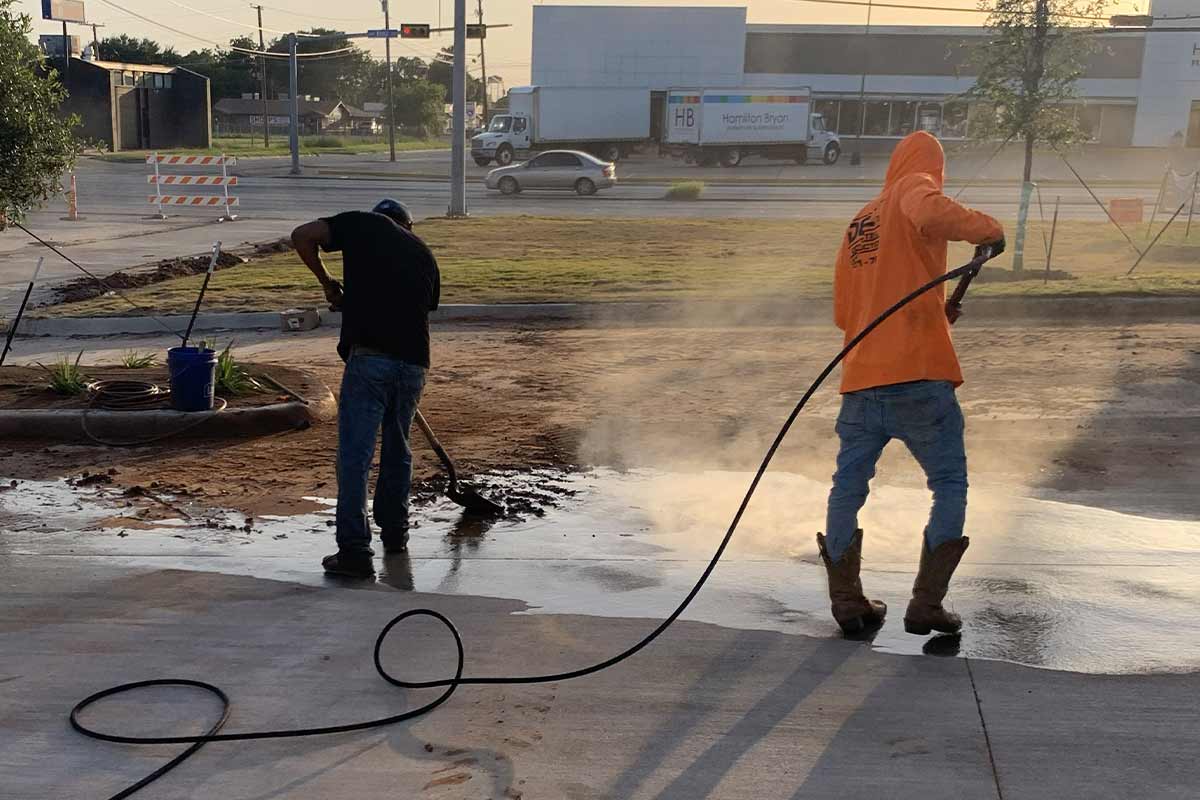
Parking Lot Pressure Washing in Salt Lake City, UT
Washing a commercial lot is two jobs wearing one name. The first is appearance: a lot covered in winter grime, salt residue, and oil stains reads as neglected regardless of how good the pavement underneath is. The second is preparation, and it is the one that actually costs money when it is skipped.
Why Washing Comes Before Restriping
Traffic paint bonds to pavement. It does not bond to what is sitting on the pavement, and on a Salt Lake City lot in spring, what is sitting there is a winter’s worth of salt residue, road film, tire rubber, and oil.
Paint applied over that contamination fails in a specific and recognizable pattern: not evenly across the lot, but in patches, and the patches are exactly where the contamination was. The classic case is a stall under a persistent oil drip. Restripe the lot without addressing it and that stall’s line fails first, every cycle, which reads as a paint problem and is actually a preparation problem. Repainting it again does not fix it. The stains have to come off before the line goes down.
That is why the order is not a preference:
- Assess — walk the lot, identify oil and grease concentrations, rubber deposits, and any failing existing paint.
- Wash — remove the film, stains, and loose material, with wash water captured rather than allowed to run.
- Dry — let the surface come fully dry; paint over a damp surface has the same bonding problem in a different form.
- Stripe — apply markings to a clean, sound, dry surface.
A lot washed and striped in the same visit is the efficient version of this, and it is what we schedule where conditions allow.
Wash Water and the Storm Sewer
This is the part of pressure washing that most contractors do not raise, and it is the part with regulatory weight behind it.
Wash water off a parking lot is not clean water. It carries oil, grease, heavy metals from brake and tire wear, sediment, and whatever de-icing chemicals were applied over winter. Storm drains on a commercial lot generally discharge to surface water without treatment, which is what makes them different from a sanitary sewer. Under the federal Clean Water Act, discharges of pollutants from a point source to waters of the United States are regulated through the National Pollutant Discharge Elimination System, and an industrial or commercial wash-water discharge into a storm sewer is the situation those requirements exist to address.
The practical consequence for a property manager is simple: a contractor who blasts your lot and lets the runoff find the nearest storm drain has handed you the exposure, not taken it on. Wash water gets contained, collected, and disposed of appropriately. We plan for the capture before the wash starts, because after it starts there is nothing to plan with.
What this page deliberately does not cite is the Salt Lake City municipal stormwater chapter. The city code library returns 403 to every retrieval tier we have, so the chapter number was never verified and is not published here. The federal framework above was verified; the local chapter number was not.
For a full list of our pavement marking services, visit our parking lot striping in Salt Lake City page.
Businesses We Serve


How it Works

GET A FREE ESTIMATE
Contact us today and we’ll have a quote to you in 24 hours

SCHEDULE AN INSTALLATION
We’ll have your installation scheduled in less than 7 days, without affecting your business hours

GET A PARKING LOT THAT POPS
For a budget-friendly price, you’ll get a parking lot that looks like new
We proudly work with:


We proudly work with:
Frequently Asked Questions About Parking Lot Pressure Washing in Salt Lake City
Where does the wash water go?
Into containment, not into the storm drain. Runoff from a lot wash is not clean water. It carries oil, grease, heavy metals off brake and tire wear, sediment, and whatever de-icing chemicals went down over winter. The reason that matters more than it sounds is what a storm drain is: on commercial property it typically discharges to surface water without treatment, which is exactly what separates it from a sanitary sewer. Under the Clean Water Act, discharges of pollutants from a point source into waters of the United States are regulated through the National Pollutant Discharge Elimination System, and a commercial wash-water discharge into a storm sewer is the situation those requirements exist to address. The practical version for a property manager: a contractor who blasts your lot and lets the runoff find the nearest drain has handed the exposure to you rather than carrying it. We plan capture before the first trigger pull, because once the water is moving there is nothing left to plan with.
Do I really need to wash before restriping?
If the lot is dirty, yes, and it is cheaper than the alternative. Traffic paint bonds to pavement, not to the salt film, rubber, and oil sitting on top of it. Paint over contamination fails in patches that map exactly onto where the contamination was — which looks like defective paint and is actually a prep failure. The stall under an oil drip is the standard example: it fails first every single cycle until the stain is removed.
Can you actually get oil and rubber out of asphalt?
Substantially, though “removed” is a more honest word than “erased”. Fresh surface oil comes up well. Old stains that have soaked into the binder may lighten rather than disappear, because asphalt is petroleum-based and oil that has penetrated is chemically at home in there. Rubber deposits from tire scrub come off readily. For striping purposes what matters is the surface film rather than a perfect cosmetic result: the goal is a surface paint can grip, and that is achievable even where a shadow stays visible.
How often should a commercial lot be washed?
Spring is the one that earns its cost in this market — a wash after plowing season clears the salt residue and grit that winter leaves behind, and it lines up with the restriping window. Beyond that it depends on use: properties with food service, heavy delivery traffic, or drive-through lanes accumulate grease and rubber faster and benefit from a second pass. Lots that are simply dusty rather than contaminated do not need it on a schedule.
Does washing make the surface slippery?
The opposite, once it is dry. What makes a lot slick is the film on it — oil, grease, and rubber polish, particularly in drive lanes and at turn points where tires scrub. Removing that improves traction. The one caution is timing: a wet surface is slick while it is wet, and in shoulder season a shaded section that stays damp can freeze overnight. We schedule around that rather than washing into a cold evening.
Hot water or cold?
Hot for grease and oil, cold for general dirt and film. Heat is what breaks down petroleum residue, so a drive-through lane or a dumpster pad wants it. Pressure is a separate dial from heat, and more is not better: too much on aged asphalt strips aggregate.
Does the lot have to close?
Only in sections, and only briefly. We work the lot in zones and move as each clears, so you lose part of your capacity rather than all of it. Pair a wash with restriping and the sequence extends, which is worth planning around your busiest hours.