
Temporary Parking Lot Striping
In Columbia, SC
Event and Construction Markings
1-800-STRIPER provides professional temporary parking lot striping in Columbia, SC — short-duration event markings, construction zone striping, and overflow parking layouts on grass, gravel, pavement, or any surface using removable water-based traffic paint.
1-800-STRIPER® of Columbia PROVIDes Temporary Striping Services NEAR YOU
Need Temporary Stripes?
Use temporary stripes to direct traffic and create parking areas at your special event or to keep construction sites safe without a long-term commitment. We paint on grass, gravel, pavement, or any other surface where temporary striping is needed.
Striping solutions for:
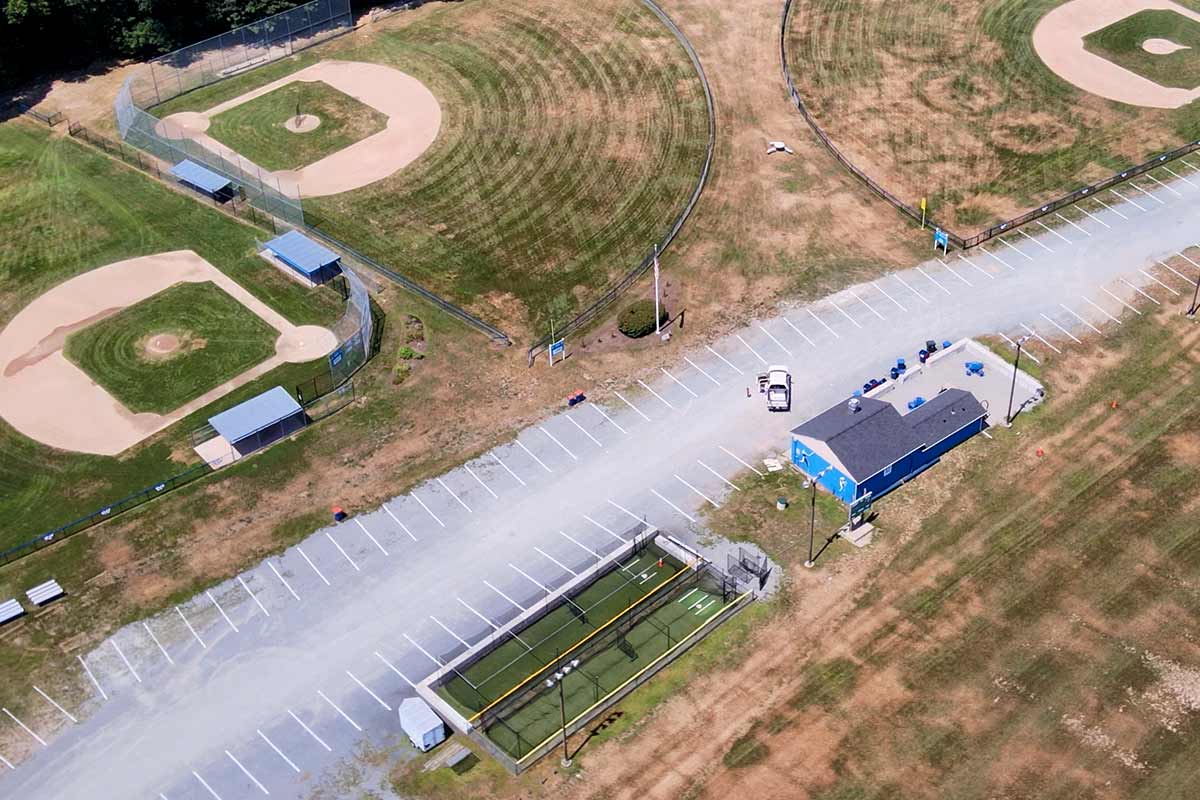
Temporary Parking Lot Striping in Columbia, SC
Temporary parking lot striping is marking that is meant to disappear. It goes down for a festival, a graduation, a game day, a church event, a construction phase, or an overflow lot that only exists for one weekend a year — and then it comes back up, leaving the property the way it was found.
That inverts everything that makes permanent striping good. A permanent marking succeeds by bonding hard to pavement and surviving years of vehicle traffic, weather, and sun. A temporary marking succeeds by doing the opposite: holding a clear, legible line for exactly as long as the event needs it, then releasing from the surface without grinding, without shadowing, and without leaving a ghost line that a property owner has to look at for a season. Judged as permanent work, temporary striping is a failure by design. That is what it is for.
The paint is what makes it possible. Removable water-based traffic paint sits on the surface rather than keying into it. On turf it colors the blade rather than the soil. On gravel it coats the stone. On pavement it forms a film thin enough to wash off under pressure. Nothing about it is engineered to last, which is precisely why it can be taken back off.
Property managers, event organizers, general contractors, schools, and churches across Richland, Lexington, Kershaw, and Orangeburg counties use it for the same reason: they need order in a field for a day and a clean field the day after.
Striping on Grass, Gravel, Pavement, and Any Surface
Most striping conversations assume asphalt. Temporary work does not, and that is its defining constraint — the surface is whatever the property happens to have where the cars need to go.
Grass. Overflow lots on turf are the most common request. Removable water-based paint coats the grass blade rather than the soil beneath it. The line reads clearly from a driver’s seat, holds through the event, and then mows off and weathers away as the turf grows.
Gravel. Gravel is the hardest surface to mark and the one that most needs marking, because there is nothing on a gravel lot to tell a driver where a row begins. Paint coats the top stone. The line survives as long as the stone underneath it does not get pushed around, which means gravel layouts are marked as close to the event as scheduling allows.
Pavement. On asphalt or concrete, removable water-based paint gives you a full temporary layout with no commitment. It is the right tool for a construction phase that will change again in six weeks, or for an event overflow area that has to revert to loading dock the following Monday.
Any surface. Compacted dirt, a stone lot, an unfinished pad, a field. If cars are going to park on it, it can be marked. The layout, the paint film, and the removal plan get set to the surface — not the other way around. We will tell you what a given surface will and will not hold before we quote it.
How Temporary Event Striping Works
- Walk the site. We meet you on the property, confirm the surface, and identify the entry, the exit, and the traffic flow. On turf and gravel we check drainage and grade, because water moving across a lot moves paint with it.
- Set the layout. We work out stall counts, aisle widths, and circulation for the vehicle mix you actually expect, then chalk the plan on the ground so you can see it before anything is painted.
- Confirm the calendar. Temporary markings are timed to the event, not to the crew’s convenience. Gravel and turf are marked as close to the date as the schedule allows, because both surfaces move under weather and traffic.
- Apply removable water-based paint. Lines, stall heads, arrows, and any no-park zones the site needs, laid down in a film formulated to release from the surface rather than bond to it.
- Remove after the event. Pavement markings are washed off. Turf markings mow off and weather away. Gravel is raked or the top stone is worked over. The property goes back to what it was.
Call 1-800-STRIPER of Columbia at (803) 679-4314 for a free estimate. We return estimates within 24 hours.
For a full list of our pavement marking services, visit our parking lot striping in Columbia page.
Businesses We Serve




How it Works

GET A FREE ESTIMATE
Contact us today and we’ll have a quote to you in 24 hours

SCHEDULE A STRIPING
We’ll have your space restriped in less than 7 days, without affecting your business hours

GET A PARKING LOT THAT POPS
For a budget-friendly price, you’ll get a parking lot that looks like new
We proudly work with:


We proudly work with:

Frequently Asked Questions About Temporary Parking Lot Striping in Columbia, SC
How long does temporary striping last?
Long enough for the event, and not much longer — that is the design goal, not a limitation. Removable water-based paint sits on the surface instead of bonding into it, so it degrades under weather, traffic, and mowing rather than resisting them. How fast depends entirely on what it is sitting on: turf loses its lines to growth and mowing, gravel loses them when the top stone shifts, and pavement holds longest of the three. If you need markings that survive years of vehicle traffic, you want permanent markings instead, and we will tell you that at the estimate.
Can you stripe grass or gravel for overflow parking?
Yes. Grass and gravel overflow lots are the core of this service. Removable water-based paint coats the grass blade or the top layer of stone, giving drivers a line they can read from the seat of a car. The two surfaces behave differently: turf holds a line predictably until it is mowed, while gravel depends on the top stone staying put, so gravel layouts get marked as close to the event date as scheduling allows. Both are marked to a layout we set on site — stall count and aisle width come from the vehicle mix you expect, not from a template.
How is the paint removed afterward?
By the method the surface calls for. On asphalt and concrete, the film is washed off under pressure — 1-800-STRIPER of Columbia also provides parking lot pressure washing, so removal is work we do rather than work we hand off. On turf, no removal is needed: the paint coats the grass blade, and mowing plus weather takes it out over the following weeks. On gravel, the marked top stone is raked or worked over. Because the paint never keys into the surface, none of these methods involve grinding, and none of them leave the shadow line that removing a permanent marking can.
How far ahead of an event should we call?
Call as soon as the date is set. The estimate is the fast part — we return estimates within 24 hours — but the marking itself is deliberately scheduled close to the event, particularly on turf and gravel, where growth, weather, and shifting stone all work against a line that goes down too early. Calling early lets us walk the site, work out the layout, and hold a slot near your date; it does not mean we paint early. For a large event, walking the property well before the day also surfaces the grade and drainage issues that would otherwise be discovered with cars already arriving.
How is this different from permanent striping?
Different paint, different surfaces, different purpose. Permanent markings are laid in durable traffic paint or thermoplastic that bonds to pavement and is built to survive years of vehicle traffic, sun, and weather; removing them later means grinding. Temporary markings use removable water-based paint that sits on the surface, works on grass and gravel as readily as on pavement, and is meant to come back off after the event. If your lot needs lasting, everyday markings — stalls, ADA spaces, fire lanes, arrows — that is permanent work, and it belongs on our main Columbia service page rather than here.