Parking Lot Sign Installation
In Columbia, SC
ADA, Fire Lane, and Directional Signage
1-800-STRIPER provides professional parking lot sign installation in Columbia, SC — installing ADA R7-8 accessible-space signs, fire lane no-parking signs, directional signage, and tow-away warning signs per the 2010 ADA Standards for Accessible Design, the MUTCD, and South Carolina private-property towing law for commercial properties.
1-800-STRIPER® of Columbia PROVIDes Signage Installations Services NEAR YOU
Are you communicating clearly?
We install new signs in adherence with local regulatory standards and can repair or replace damaged signs so you can clearly communicate your parking requirements.
Parking Lot Sign Installation in Columbia, SC
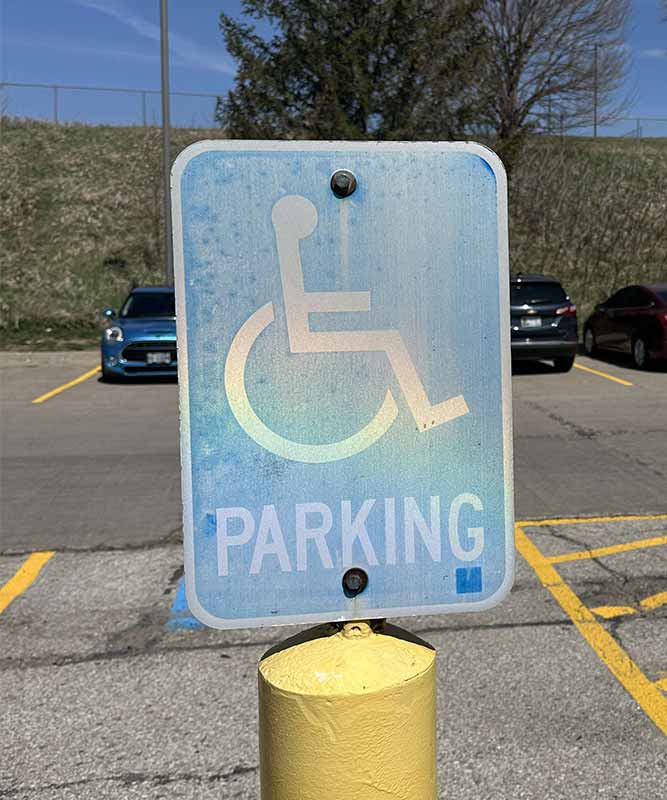
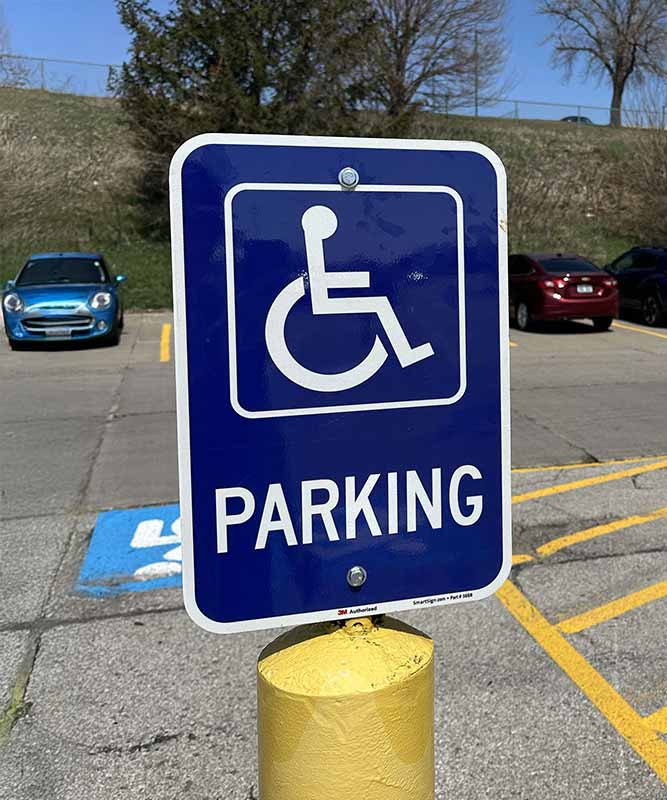
Signs are the post-and-panel half of a parking lot. Paint tells a driver where the stall is. A sign tells them who may use it, where they may not stop, and what happens to the vehicle if they ignore it. Both jobs land on the same property, but they are not the same trade. Striping is layout and coating. Sign installation is fabrication, post setting, and mounting a panel at a height and location a code official will accept.
1-800-STRIPER of Columbia installs the full regulatory set on commercial properties across Richland, Lexington, Kershaw, and Orangeburg counties: accessible-space signs at every ADA stall, van-accessible plaques where the space is sized for a van, no-parking signs along a marked fire lane, stop and directional signs that move traffic through the lot, and tow-away notices at the property entrances.
Most of the sign work we are called for is remedial. A lot gets restriped, the accessible stalls come back sharp, and nobody notices that two of the four accessible spaces have no sign at all, or that the sign is bolted to a bollard at knee height where a parked pickup hides it completely. Under the ADA, a surface decal painted inside the stall does not substitute for an upright sign. The sign has to be there, and it has to stay visible when a vehicle is parked in the space.
The other half is entrance signage. A commercial property owner in South Carolina who intends to have unauthorized vehicles towed has a posting obligation to meet before the tow truck is ever called, and the location of the notice matters as much as the panel itself.
We set posts, mount panels, replace faded or bent signs, and bring the accessible stalls on an existing lot back into a compliant condition. Call for a free estimate.
Required Signs: ADA, Fire Lane, and Tow-Away
Three separate authorities govern the signs on a typical Columbia commercial lot, and they do not overlap. Accessible-space signage is federal. Sign panel design and legend follow the Manual on Uniform Traffic Control Devices. Tow-away notice is South Carolina statute. Fire lane signage is set by the local fire authority.
| Sign | Designation | Legend | Mounting | Where it belongs |
|---|---|---|---|---|
| Accessible space | R7-8 | RESERVED PARKING above the International Symbol of Accessibility | Bottom edge at least 60 in. above the finished floor or ground | Every accessible space, visible while a vehicle is parked in it |
| Van-accessible plaque | R7-8P | VAN ACCESSIBLE | Directly below the R7-8, which stays at 60 in. minimum | Each van-accessible space |
| Fire lane no-parking | Set by the fire authority | No-parking legend | Per the fire authority | Along the marked fire lane, as directed |
| Tow-away notice | S.C. Code § 16-11-760 | Notice prohibiting parking | Conspicuous placement | On the borders of the property, near each entrance |
| Directional and traffic-guiding | MUTCD R-series | Stop, one-way, do not enter | Per the sign’s decision point | At the movement the sign governs |
The 2010 ADA Standards for Accessible Design require the accessible-space sign to carry the International Symbol of Accessibility, and require the van space’s sign to include the term “van accessible.” That is the whole federal content requirement. The Standards do not specify sign color, sign size, or additional wording such as “reserved” — state or local rules and the MUTCD may add those, but the ADA does not.
The “van accessible” designation is informative rather than restrictive. It marks the space that is better suited to a van; it does not reserve the space for van drivers only.
On the tow-away side, South Carolina Code Section 16-11-760 makes it unlawful to park on the private property of another without the owner’s consent, and it tells a commercial owner exactly what to do about it: post a notice, in a conspicuous place, on the borders of the property, near each entrance, prohibiting parking. Proof of that posting is conclusive notice against the driver who entered. The statute stops there. It sets no letter height, no panel dimension, and no required sentence.
Sign Mounting and Placement Standards
The 60-inch rule is the one most often missed. An accessible-space sign must sit at least 60 inches above the finished floor or ground, measured to the bottom edge of the panel, so that it is still readable once a vehicle occupies the stall. Measure to the bottom of the sign, not the top of the post, and not the center of the panel.
Signs can be post-mounted, or where feasible mounted to a wall or suspended from a ceiling. Where a sign is suspended above a circulation path people walk under, an 80-inch minimum headroom clearance applies.
Placement is constrained on the other side by the access aisle. No element — a bollard, a column, a pole — may encroach into the marked area of an access aisle. In practice that means a sign post goes at the head of the stall or behind the curb, never inside the striped hatching, and never where it narrows the accessible route running to the building entrance.
Post setting depends on what is under the panel. Driven U-channel posts work in most graded soil at the head of a stall. A post landing in asphalt or concrete gets cored and set, so the panel does not rock loose the first time a bumper touches it. We plumb every post, torque the fasteners, and check the finished height with a tape rather than an eye.
Where a lot’s regulatory signage is being installed as part of a striping project, the sequence matters: paint the layout, confirm the accessible stall and aisle land where the plan says, then set posts against the finished markings. Setting posts first invites a sign that ends up eight inches inside an access aisle.
For a full list of our pavement marking services, visit our parking lot striping in Columbia page.
Businesses We Serve




How it Works

GET A FREE ESTIMATE
Contact us today and we’ll have a quote to you in 24 hours

SCHEDULE AN INSTALLATION
We’ll have your installation scheduled in less than 7 days, without affecting your business hours

GET A PARKING LOT THAT POPS
For a budget-friendly price, you’ll get a parking lot that looks like new
We proudly work with:


We proudly work with:


Frequently Asked Questions About Parking Lot Sign Installation in Columbia, SC
Which sign is required at an accessible parking space?
An upright sign bearing the International Symbol of Accessibility. In MUTCD terms that is the R7-8, a white panel with a green border reading RESERVED PARKING above the blue accessibility symbol. Where the space is van accessible, a second plaque — the R7-8P, reading VAN ACCESSIBLE — is mounted with it. A symbol painted on the pavement does not count. The ADA Standards require the sign itself; the U.S. Access Board’s guide to those Standards adds the corollary that a marking on the parking surface, even where a state or local government requires one, cannot substitute for an above-ground sign that stays visible at all times.
How high does an accessible parking sign have to be mounted?
At least 60 inches, measured to the bottom edge of the sign, above the finished floor or ground surface. The height exists so the sign is readable when a vehicle is parked in the space — which is exactly when someone needs to read it. If the sign is suspended above a path people walk under, a separate 80-inch headroom clearance applies. Signs may be mounted on posts or, where feasible, on walls or suspended from ceilings.
What does a tow-away sign have to say in South Carolina?
Less than most owners expect, and the placement matters more than the wording. S.C. Code § 16-11-760(A) requires that where private property is for commercial use, the owner post a notice in a conspicuous place on the borders of the property near each entrance, prohibiting parking. Proof of that posting is conclusive notice against a person who enters. The statute prescribes no letter height, no panel size, and no particular sentence. Signs elsewhere in the country carry very specific towing language because other states legislate it; South Carolina’s statute does not. We install to the statute’s actual requirement — near each entrance, conspicuous — and we don’t invent a specification that isn’t there.
How is a van-accessible sign different from a regular accessible sign?
It is the same R7-8 sign with an extra plaque under it reading VAN ACCESSIBLE. That plaque is the only sign difference. Everything else about a van space is geometry, not signage: the space or its access aisle carries an additional three feet of width, and a 98-inch minimum vertical clearance is required at the van space, its access aisle, and the vehicle route to and from it. At least one of every six accessible spaces, or fraction of six, in a parking facility must be van accessible.
Does the City of Columbia require a permit for parking-lot signage?
It depends on what the sign is, and the ordinance — not us — decides. Columbia regulates signs under Sec. 17-5.10 of its Unified Development Ordinance. That section exempts, among other things, signs that direct and guide traffic where they sit on the same property as the destination they direct people to and carry no commercial message, and it separately exempts information or directional signs required by governmental bodies. Sign permits themselves are issued under Sec. 17-2.5(o) of the ordinance, not under the sign standards section. Because the exemptions turn on wording, size, sign type, and zoning district, we confirm the requirement with City of Columbia Unified Development Ordinance, Sec. 17-5.10 and the city’s planning staff before posts go in the ground. We don’t guess at a permit, and we don’t tell a client one isn’t needed until we’ve checked.
What happens if an accessible space has no sign?
The space stops being a compliant accessible space. Under the ADA Standards, accessible spaces must be identified by a sign carrying the International Symbol of Accessibility — a stall painted with the symbol and no upright sign does not satisfy that. Practically, an unsigned stall is also very hard to enforce: nobody can be told they parked in a reserved space that was never marked as reserved. There is one narrow exception. Where a site provides a total of four or fewer parking spaces, accessible and inaccessible combined, the required accessible space does not have to be identified by a sign — though every other requirement, including the access aisle, still applies.