Temporary Parking Lot Striping
In North Atlanta, GA
Event and Construction Markings
1-800-STRIPER provides professional temporary parking lot striping in North Atlanta, GA — short-duration event markings, construction-zone striping, and overflow parking layouts on grass, gravel, pavement, or any surface using removable water-based traffic paint for events across the OTP North area.
1-800-STRIPER® of Atlanta OTP North PROVIDes Temporary Striping Services NEAR YOU
Need Temporary Stripes?
Use temporary stripes to direct traffic and create parking areas at your special event or to keep construction sites safe without a long-term commitment. We paint on grass, gravel, pavement, or any other surface where temporary striping is needed.
Striping solutions for:
Surfaces We Stripe Temporarily
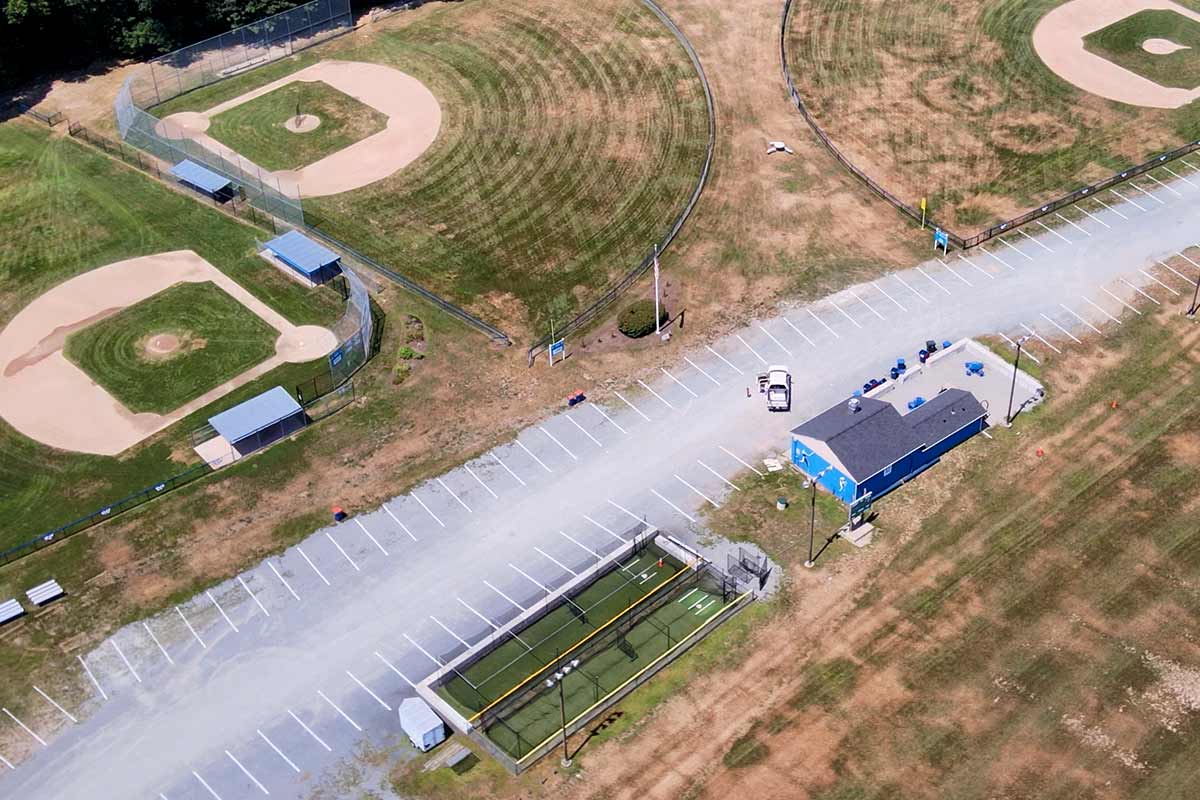
Temporary striping handles surfaces that permanent paint or thermoplastic can’t touch. The four most-common ones in North Atlanta:
Grass — fairground overflow, church-on-Easter overflow, festival parking, sports-tournament shuttle lots, HOA-event coverage. We use removable water-based traffic paint or chalk-marking lines that fade naturally over 4 to 8 weeks. Wet grass takes the paint better than dry; we time the application around the forecast.
Gravel — construction-site staging, fleet-vehicle yards, rural-property overflow, fire-department training facilities. Gravel doesn’t hold paint the way pavement does, but we use a heavier-build chalk or short-life traffic paint that reads clearly for the event window even if it doesn’t last past it.
Pavement (asphalt and concrete) — short-term event setups on permanent commercial lots where you don’t want the lines after the event ends. Water-based traffic paint applied at lower mil-thickness washes off or wears away within 60 to 90 days under normal traffic.
Any surface — gym floors for one-time tournaments, polished concrete on indoor-event-space floors, temporary-membrane construction barriers. We match the marking material to what the surface accepts and what the post-event removal requires.
Common Use Cases
The use-case mix across our temporary-striping bookings in North Atlanta breaks into a small set of recurring scenarios.
Festivals and outdoor events are the largest category — Cobb County BBQ Festival, Alpharetta food-truck events, Sandy Springs concerts, Roswell Memorial Day events. The work usually fits in a single afternoon-evening: arrival, layout, paint, dry-time, opening at gate time the next morning. Tear-down doesn’t happen at all — the temporary paint fades or washes off over the following weeks.
Construction-site staging is the steady-volume category — construction-trailer parking, equipment staging, sub-contractor truck parking on lots that haven’t been graded for permanent stripes yet. Project schedules drive the cycle; we re-stripe when the site grading or paving advances.
Religious-gathering overflow appears around major holidays — Easter Sunday at large churches, Christmas Eve services, Ramadan-Eid gatherings, Yom Kippur services. The overflow lot is usually grass or unimproved pavement on adjacent church-owned property.
Sports-tournament shuttle lots — youth sports complexes, high school regional tournaments, AAU and travel-ball weekends. Temporary stalls maximize a remote lot’s stall count for the tournament weekend.
HOA community events — Fourth of July, neighborhood holiday parties, vendor-fair weekends. Temporary striping converts a community-center lawn or pool deck into ordered guest parking.
Paint Selection: Removable Water-Based Traffic Paint
The paint we use for temporary work is the same Sherwin-Williams Fast-Dry water-based family as our permanent striping — applied at a lower mil-thickness (about half the standard build) so it wears off naturally rather than persisting as a faded permanent line. On grass and gravel, we substitute marking chalk where the surface won’t hold any paint film.
The reason we use diluted standard paint rather than a dedicated “temporary” formulation: dedicated temporary paints exist but tend to lift inconsistently on the wide range of surfaces (grass to polished concrete) we encounter. The Fast-Dry family, applied thin, gives consistent performance and wears off cleanly without leaving a “ghost” outline.
Setup and Turnaround Speed
A typical event-day setup runs 4 to 8 hours from arrival to paint-dry, depending on lot size and surface type. A 100-vehicle grass overflow lot at a church takes about 4 hours: site walk and layout (45 minutes), chalk-marking (30 minutes), paint application (90 minutes), dry-time before traffic (60 to 90 minutes). A 500-vehicle festival lot or sports-tournament shuttle yard stretches to 8 hours and sometimes splits across an evening-before / morning-of schedule.
Lead time from booking to event-day mobilization is typically 5 to 10 business days during peak event season (April through October in North Atlanta). Shorter lead times work when we can fit the job between scheduled commercial restripes.
Layout Planning for Event Capacity
Squeezing more vehicles into a lot is its own design problem. The standard 9-by-18-foot stall is a permanent-lot expectation; temporary event lots often run 9-by-17 or 8.5-by-17 stalls to maximize capacity in known light-vehicle conditions. We don’t go narrower than 8 feet for any temporary stall — emergency access and pedestrian-to-vehicle clearance still apply.
Drive-aisle widths follow the same logic. A permanent two-way aisle is 24 feet minimum; a temporary one-way event aisle can compress to 14 to 16 feet if signage and attendant direction enforces one-way movement. Two-way temporary aisles stay at 20 feet minimum for vehicle safety.
Accessible-space provision matters even on temporary lots. We strip in 1 to 2 accessible spaces per 25 to 50 vehicles based on the expected attendance profile, with a 60-inch access aisle and ISA pavement marking. Temporary doesn’t mean ADA-exempt.
Cleanup and Paint Removal Options
When the event ends, the temporary lines need to go. Three paths cover almost every case.
Natural wear-off — for water-based paint on permanent pavement, normal traffic and weather remove the lines over 60 to 90 days. No action required. This is the default for events on existing commercial lots where the lines will fade naturally during the post-event months.
Power-wash removal — for water-based paint on permanent pavement where the lines need to go faster than natural wear-off. Hot-water pressure washing lifts thin-build paint cleanly within hours. Common when an event ends on Sunday and the property opens for normal Monday operations.
No removal needed — for grass and gravel surfaces, the lines disappear naturally as the grass grows or the gravel shifts. Chalk-only markings often wash off in the next rainstorm.
Weather Considerations in North Atlanta
Atlanta’s climate runs from cool-dry winters (November-March) to hot-humid summers (May-September) with a peak-rain season in late spring and a secondary peak in November. Temporary striping schedules around the rain — water-based paint won’t bond to a wet surface, and the post-application dry window needs to stay rain-free for 30 minutes minimum.
Surface temperature matters. Below 50°F, paint cure slows and the bond suffers. Above 110°F (rare in Atlanta but possible in July-August asphalt sun), the paint dries too fast and produces a thin, brittle line. The 60° to 95°F sweet spot covers most of the calendar.
Hurricane-season tropical-storm remnants can disrupt events from August through October. We track the forecast and reschedule when major weather is inbound — moving a Saturday event setup to a Sunday-morning re-mobilization is a common late-week adjustment.
Pricing Structure
Temporary striping pricing scales with three inputs: surface type (pavement vs grass vs gravel), vehicle count, and the paint volume the layout calls for. We provide a free estimate after a site walk or aerial review of the planned event lot. Repeat-event pricing (the same church Easter Sunday, the same festival every May) typically lands at a discount to first-time pricing because the layout planning carries forward.
For a full list of our pavement marking services, visit our parking lot striping in North Atlanta page.
Businesses We Serve




How it Works

GET A FREE ESTIMATE
Contact us today and we’ll have a quote to you in 24 hours

SCHEDULE A STRIPING
We’ll have your space restriped in less than 7 days, without affecting your business hours

GET A PARKING LOT THAT POPS
For a budget-friendly price, you’ll get a parking lot that looks like new
We proudly work with:


We proudly work with:
Frequently Asked Questions About Temporary Parking Lot Striping in North Atlanta, GA
What surfaces can carry temporary striping?
Grass, gravel, asphalt, concrete, polished indoor concrete, and gym floors are the common ones. We match the marking material — diluted water-based traffic paint, marking chalk, or removable tape — to what the surface accepts and what the post-event removal requires. Per our content standard, temporary striping is not asphalt-only; the lot conditions drive the material choice.
How long does temporary striping last?
On grass and gravel, the markings fade naturally within 4 to 8 weeks. On permanent pavement, thin-build water-based paint wears off through normal traffic and weather over 60 to 90 days. Faster removal via power-washing brings the lines off within hours. The lifespan is event-bounded by design, not multi-year.
What types of events do you stripe for?
Festivals, outdoor concerts, religious-gathering overflow, sports tournaments and shuttle lots, construction-site staging, HOA community events, fleet-vehicle yards, training facilities. The common thread is a vehicle-density spike for a defined window followed by a return to the lot’s normal-use mode.
Will the lines damage the underlying surface?
No. Water-based traffic paint at temporary-build thickness lifts cleanly from pavement via wear or power-wash without surface damage. On grass, the paint sits on the blades and washes off with rain or the next mowing. On gravel, the markings shift as the gravel does. Solvent-based and thermoplastic materials aren’t used on temporary jobs because removal cleanliness matters.
How much lead time do you need for event-day striping?
Typical lead time in peak event season (April through October) is 5 to 10 business days from booking to event-day mobilization. Outside peak season, we can often turn shorter notice. Booking 2 to 4 weeks ahead during festival-heavy weekends — Memorial Day, Fourth of July, Labor Day — gives the best scheduling flexibility.
Can temporary striping be re-applied at the same site for recurring events?
Yes — and it’s the most efficient use of the layout planning. Once we’ve designed the temporary layout for a recurring event (annual festival, weekly farmers’ market, Sunday-service overflow), the re-application is a fast re-mark of the same pattern. The layout file carries forward; the mobilization cost stays similar but the planning cost compresses.