Parking Lot Pressure Washing
In North Atlanta, GA
Surface Prep Before Restriping
1-800-STRIPER provides professional parking lot pressure washing in North Atlanta, GA — removing oil stains, gum, tire marks, and accumulated grime before restriping using commercial hot-water equipment, with stormwater runoff handled per EPA NPDES and Georgia EPD MS4 requirements across the OTP North area.
1-800-STRIPER® of Atlanta OTP North PROVIDes Parking Lot Power Washing Services NEAR YOU
Need to blast away years of grime?
If your parking lot or parking garage looks dull and dirty, our professional crew can wash away grime, oil, stains, and slippery buildup to restore the appearance of your property.
Benefits:
Why Pressure Washing Before Restriping Matters
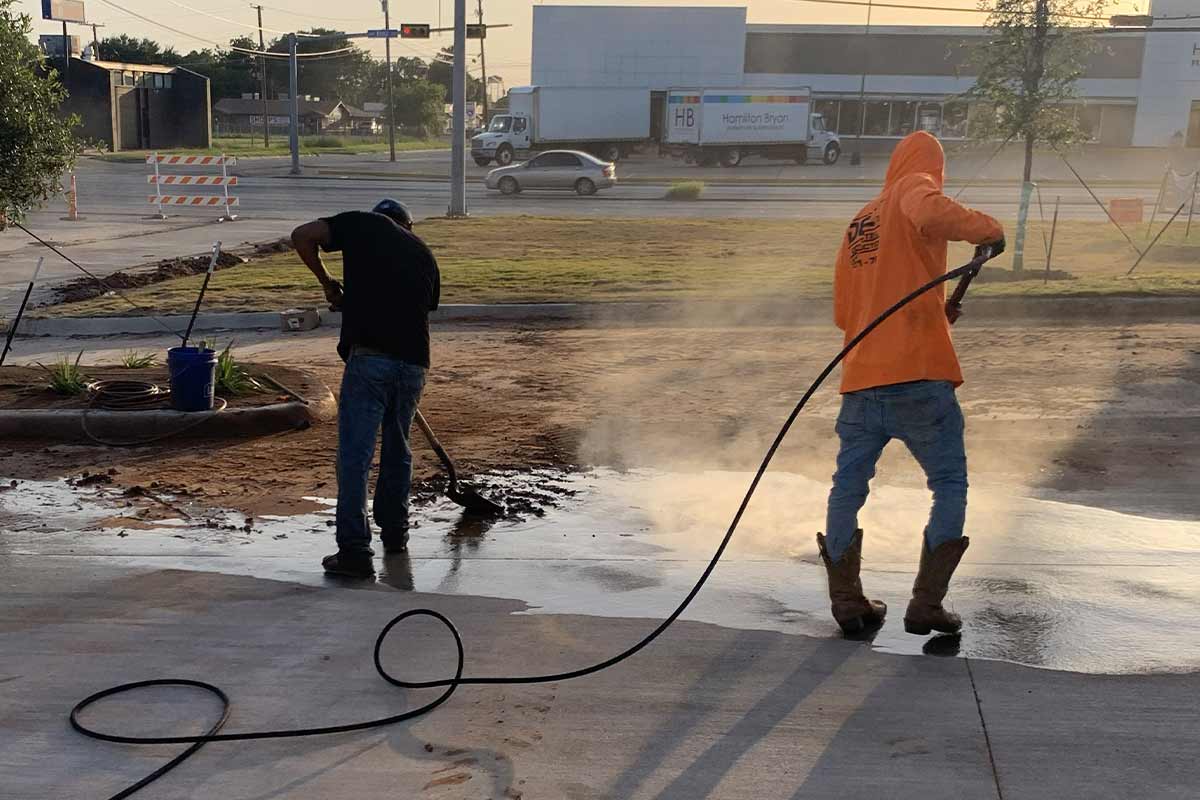
A clean pavement surface is the difference between a restripe that holds for the full 18-to-36-month cycle and one that lifts in patches within months. Traffic paint bonds to clean asphalt or concrete; it doesn’t bond to oil residue, gum buildup, or tire-rubber film. We pressure-wash before any restripe job where the existing surface shows enough contamination to threaten the paint bond.
The same logic applies to fresh thermoplastic installs on busy commercial lots and to ADA-symbol refreshes where the existing pavement under the symbol is darkened with foot-traffic oils. Pressure washing the symbol footprint clean before re-painting gives a sharper, longer-lasting result than painting over dirty pavement.
Our Equipment: Commercial Hot-Water Pressure Washers
Commercial pressure washing isn’t the same equipment most homeowners are renting from the hardware store. Our crews run hot-water pressure washers — gas-engine-driven units producing 3,500 to 4,500 PSI at 4 to 6 GPM with diesel-fired water heaters that deliver 180°F to 200°F at the wand.
Hot water dissolves oil, breaks down tire-rubber film, and lifts gum without aggressive chemicals. Cold-water washers (the residential rental class) struggle with oil stains on asphalt — the oil is bonded into the asphalt binder, and cold water can’t separate the two. Hot water at commercial pressure does the job in a single pass; cold water often requires multiple passes plus solvent-based pre-treatment.
Surface-cleaner attachments (the 16-to-24-inch flat-deck rotating units) cover open pavement efficiently. Wand attachments handle vertical surfaces (curbs, dumpster pads, building bases) and edges where the surface cleaner can’t reach.
What We Remove
The contamination profile on a typical commercial parking lot in North Atlanta breaks into a small set of common deposits:
Oil and grease stains — drip patterns under habitually-parked vehicles, larger pools at fluid-leak hot spots, line-of-traffic darkening along the most-used aisles. Hot water at 200°F lifts most oil within 1 to 3 minutes of contact.
Tire-rubber film — the dark “rubber line” that builds up along the wheel paths over months of traffic. Lifts cleanly with hot-water surface-cleaner work.
Gum — frozen with a chemical pre-treatment or melted with focused hot-water wand application. Removal is slower than oil but reliable.
Accumulated grime and pollen — Atlanta’s spring pollen load and the general atmospheric dust load both deposit on parking surfaces over months. Surface-cleaner passes lift it all.
Salt deposits — rare in metro Atlanta (limited freeze-event de-icing); common after the occasional January ice event when DeKalb or Cobb crews salt.
EPA NPDES + Georgia EPD Stormwater Compliance
Pressure-washing runoff is regulated. Wash water carrying oil, detergent, or other contaminants can’t legally discharge to a storm drain in most circumstances under the EPA National Pollutant Discharge Elimination System (NPDES) — the federal framework that governs stormwater discharges.
In Georgia, the federal NPDES program runs through the Georgia Environmental Protection Division (EPD) Watershed Protection Branch. Most North Atlanta jurisdictions also operate municipal separate storm-sewer system (MS4) programs that add local stormwater compliance requirements on top of the state and federal layers. Cobb County, Fulton County, and the City of Marietta each maintain MS4 ordinances.
The practical implication: we manage wash-water capture during the job. Methods include vacuum-recovery with the hot-water rig (water reclaimed at the wash and pumped to a waste tank), grass-buffer infiltration (wash water directed to a vegetated strip where soil filtration handles it), or contained-area washing where the runoff stays within a defined boundary. Discharge to a storm drain is the wrong answer; we engineer the capture method during the site walk.
Surface Considerations
Asphalt and concrete handle pressure washing differently, and the equipment settings change between them.
Asphalt is the more common parking-lot surface and the more sensitive one. Hot-water cleaning at 3,500 PSI is safe on intact asphalt; older or already-deteriorating asphalt can lose surface aggregate under aggressive cleaning. We dial pressure down on aging surfaces and increase dwell time to compensate.
Concrete is more durable under pressure — 4,000 to 4,500 PSI is the standard working range on sound commercial concrete. Surface staining (oil drips, tire rubber) lifts faster from concrete than from asphalt because concrete doesn’t absorb the contamination into its binder the way asphalt does.
Sealcoated asphalt sits in a third category. Recent sealcoat (less than 6 months old) can lift under aggressive pressure; older sealcoat (12+ months) handles standard commercial pressure-washing without damage.
Coordinating Wash with Restripe
The most efficient way to handle pressure-washing on a commercial lot is to schedule it as the prep stage of a restripe — wash on day one, allow 24 to 48 hours for the pavement to dry fully, then stripe on day two or three. The combined scope catches both jobs with a single mobilization fee and lets the new stripes go down on a properly prepared surface.
Standalone pressure-washing (without restripe) is also routine — bringing a lot back to clean appearance ahead of a property listing, an investor walk, a tenant event, or a seasonal refresh. We schedule those as single-day mobilizations.
For a full list of our pavement marking services, visit our parking lot striping in North Atlanta page.
Businesses We Serve




How it Works

GET A FREE ESTIMATE
Contact us today and we’ll have a quote to you in 24 hours

SCHEDULE AN INSTALLATION
We’ll have your installation scheduled in less than 7 days, without affecting your business hours

GET A PARKING LOT THAT POPS
For a budget-friendly price, you’ll get a parking lot that looks like new
We proudly work with:


We proudly work with:
Frequently Asked Questions About Parking Lot Pressure Washing in North Atlanta, GA
Is it illegal to pressure wash your driveway in Georgia?
Pressure washing itself isn’t illegal — but discharging the wash-water runoff to a storm drain is regulated. Georgia EPD enforces the NPDES stormwater program statewide, and most metro Atlanta jurisdictions (Cobb, Fulton, Marietta, others) operate MS4 programs that add local rules. Commercial-property pressure washing requires runoff capture or directed infiltration; residential driveway washing in low-volume situations typically falls under different regulatory thresholds.
What surfaces can you pressure wash?
Asphalt, concrete, sealcoated asphalt, brick, stamped concrete, and commercial-property exterior building surfaces. Each gets a different pressure setting and equipment configuration. Aging or already-deteriorating asphalt requires lower pressure and longer dwell time; sound concrete handles full working pressure.
What detergents or chemicals do you use?
We use biodegradable, EPA-compliant degreasers for oil-saturated areas and citrus-based solvent for stubborn gum or paint overspray. Hot water at commercial pressure does most of the cleaning on its own; chemical pre-treatment is targeted to specific contamination rather than applied across the whole lot. All chemical use is documented for the property file when requested.
How long does parking lot pressure washing take?
Square-footage-driven. A typical 50,000-square-foot commercial lot runs 4 to 6 hours of cleaning time plus mobilization and setup. Smaller properties (10,000 to 20,000 sq ft) finish in a single half-day; larger campuses (100,000+ sq ft) can split across two days. Pre-restripe cleaning often phases with the striping schedule.
Do you reclaim the wash water?
When the site doesn’t have a grass buffer or contained infiltration area for the runoff, yes — we deploy vacuum-recovery equipment that captures the wash water at the source and pumps it to an on-truck waste tank for proper disposal. Reclamation is the standard answer for paved-surrounding properties where there’s no permitted discharge path.
How often should I pressure wash my parking lot?
Annual cleaning is the default for most commercial properties — typically spring (post-pollen) or fall (pre-winter). High-traffic retail and medical sites benefit from twice-yearly cleaning. Restripe years bundle the wash with the stripe work as a single mobilization. Properties with specific contamination triggers (oil leak event, vandalism, weather-driven debris load) get scheduled as needed.