
Wheel Stop Installation
In SW Houston, TX
Concrete and Rubber Parking Stops
1-800-STRIPER provides professional wheel stop installation in SW Houston, TX — anchoring concrete wheel stops, parking bumpers, curb stops, and parking blocks at stall heads to protect sidewalks, storefronts, and accessible routes on commercial properties throughout Fort Bend County.
1-800-STRIPER of SW Houston PROVIDes Wheel Stop Installation Services NEAR YOU
Need to protect vehicles or walls from accidental damage?
Wheel stops (also called parking blocks) protect your property, enhance safety, and improve parking lot organization.
Benefits:
Wheel stops prevent vehicles from parking too far into a space or overextending into other spots, pedestrian walkways, and other areas, while also helping with vehicle alignment. They can prevent damage to buildings, curbs, or landscaping. Wheel stops also serve as clear visual cues for proper parking and are sometimes used on slopes to prevent cars from rolling.
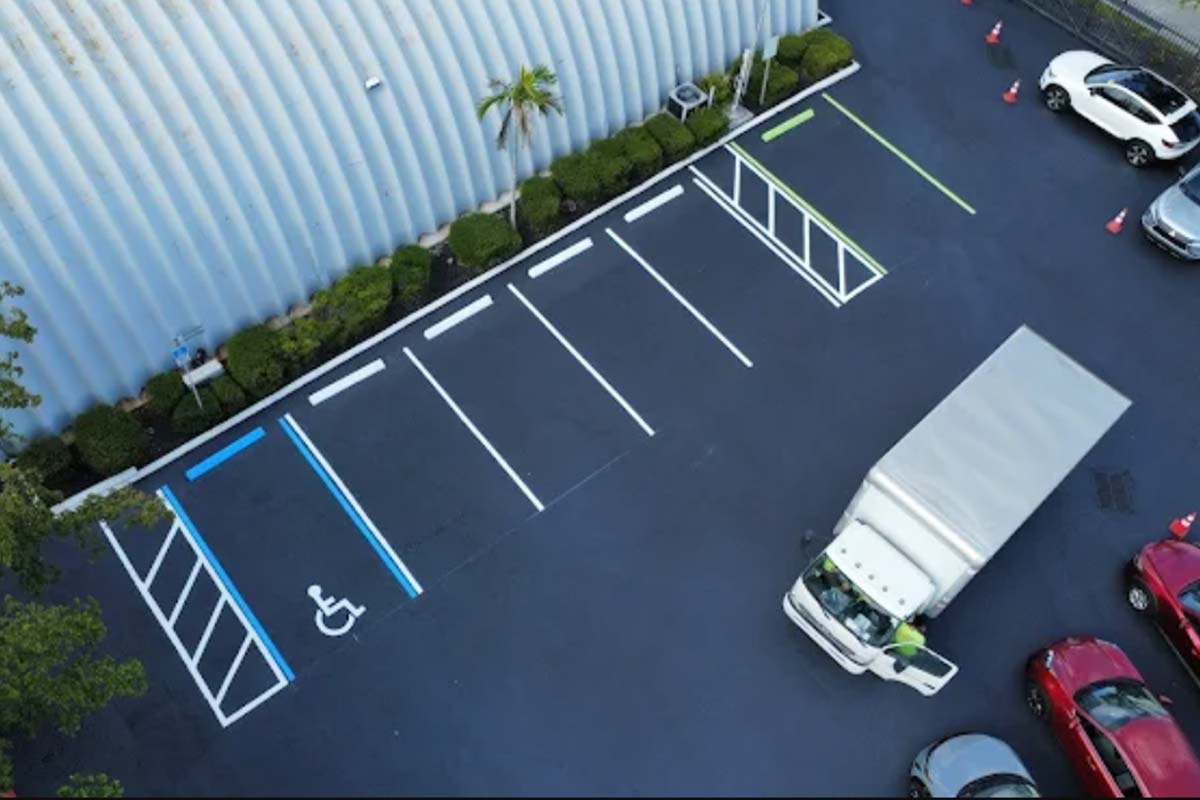
Wheel Stop Installation in SW Houston, TX
A wheel stop is the low barrier at the head of a parking stall that stops a vehicle before its front wheels do. It is the least glamorous item on a commercial lot and one of the most consequential, because what sits just past it is usually a sidewalk, a storefront, a person, or an accessible route.
We supply and install wheel stops on commercial properties across Fort Bend, Brazoria, Harris and Galveston counties — retail centers, medical and professional offices, multifamily communities, churches, schools and industrial sites. The work covers new installation, replacing broken or displaced units, and re-anchoring stops that have worked loose, on both asphalt and concrete.
Wheel Stops, Concrete Parking Bumpers, Curb Stops, and Parking Blocks — One Product, Four Names
This is worth settling first, because the naming causes real confusion when people are trying to buy.
Wheel stops, concrete wheel stops, parking bumpers, concrete parking bumpers, parking blocks and curb stops all describe the same thing: a precast barrier, typically around six feet long, anchored at the head of a parking stall. Which term someone uses tends to be regional or trade habit rather than a difference in product. Architects and site plans lean toward wheel stop; property managers and suppliers often say parking bumper or parking block; curb stop turns up on maintenance schedules.
There is one genuine distinction worth keeping straight, and it is not between those names. A wheel stop is a free-standing barrier anchored to the pavement inside a stall. A curb is a continuous cast or extruded edge along the perimeter of a parking area. They do different jobs: a wheel stop positions an individual vehicle within its stall, while a curb defines the edge of the driving surface. A site plan that calls for one is not satisfied by the other.
So if you have been quoted for parking blocks and specified concrete wheel stops, you are looking at the same item. Ask about length, material, and how it is anchored; those are the specifications that actually differ.
Where Wheel Stops Go and How They Are Anchored
Placement. Wheel stops sit at the head of a stall, set back from the obstruction they protect by enough distance to account for vehicle overhang (the part of the car that continues past the front wheels). Set too close to a sidewalk and a truck’s bumper still reaches it; set too far back and the vehicle intrudes into the drive aisle. The common positions are stalls facing sidewalks and building frontages, stalls at accessible spaces and along accessible routes, spaces facing landscaping, utility equipment or fencing, and stalls at a change in grade.
Anchoring. The method depends on the surface. On asphalt, stops are typically pinned with steel spikes or rebar driven through preformed holes into the pavement. On concrete, they are set with anchor bolts or dowels into drilled holes, often with adhesive. Concrete is the more secure fixing; asphalt is more forgiving to install but wants checking over time, especially where summer heat has softened the pavement and traffic has worked the pins.
Why they fail. Most failures are impact damage, where a vehicle hits a stop hard enough to crack it or shear the pins. After that come pins loosening in softened asphalt, and units that were under-anchored to begin with. A cracked or displaced stop is a trip hazard rather than a protective one, which is why replacement is worth doing promptly.
Accessible routes. Under §502.7 of the 2010 ADA Standards, parking spaces and access aisles must be designed so that parked cars and vans cannot obstruct the required clear width of adjacent accessible routes. Wheel stops are one recognized way to achieve that — see FAQ 2 for exactly how the standard frames it.
For a full list of our pavement marking services, visit our parking lot striping in SW Houston page.
Businesses We Serve




How it Works

GET A FREE ESTIMATE
Contact us today and we’ll have a quote to you in 24 hours

SCHEDULE AN INSTALLATION
We’ll have your installation scheduled restriped in less than 7 days, without affecting your business hours

GET A PARKING LOT THAT POPS
For a budget-friendly price, you’ll get a parking lot that looks like new
We proudly work with:


We proudly work with:


Frequently Asked Questions About Wheel Stop Installation in SW Houston, TX
What else is a wheel stop called?
Concrete wheel stop, parking bumper, concrete parking bumper, parking block and curb stop all refer to the same product — a precast barrier anchored at the head of a parking stall. The term you hear depends on trade and region rather than on any difference in the item. The one thing genuinely worth distinguishing is a wheel stop from a curb: a wheel stop is a free-standing barrier inside a stall, while a curb is a continuous edge along the perimeter of the paved area.
Are wheel stops required by code?
No code we can point to mandates a wheel stop as such, and it is worth being precise about why. The 2010 ADA Standards state an outcome at §502.7 — parking spaces and access aisles must be designed so that parked cars and vans cannot obstruct the required clear width of adjacent accessible routes. The standard’s own advisory then notes that “wheel stops are an effective way to prevent vehicle overhangs from reducing the clear width of accessible routes.” That is a recognized method of meeting a requirement, not a requirement itself.
What are wheel stops made of?
The units we install are precast concrete, which is what this page is written around: it is durable, heavy enough to stay put once anchored, and standard on commercial lots across this area. Concrete is also what most site plans and specifications in our market call for. Other materials exist in the wider market, and if your specification or property standard calls for something different, tell us what it names and we will quote against it rather than substitute.
How are wheel stops anchored on asphalt versus concrete?
On asphalt, wheel stop installation normally uses steel spikes or rebar driven through preformed holes in the unit into the pavement below. On concrete, anchor bolts or dowels are set into drilled holes, frequently with adhesive, which gives the more secure fixing of the two. Asphalt is quicker to install into but benefits from periodic checking, because Gulf Coast summer heat softens pavement and traffic can gradually work pins loose in a way concrete does not allow.
Do wheel stops do the same job as bollards?
No — they solve different problems and are not interchangeable. A wheel stop positions a vehicle within its stall and prevents overhang from reaching a sidewalk, storefront or accessible route; it is not designed to stop a moving vehicle. A bollard is a vertical post set in a concrete footing, designed to arrest a vehicle before it reaches what is behind it. Where a storefront, dock or utility cabinet needs genuine impact protection, that is bollard installation, and many properties need both.
Can a broken wheel stop be replaced without redoing the stall?
Yes, routinely — it is the most common wheel stop installation call we take. A cracked, shattered or displaced unit is removed, the old anchors are pulled or cut off, the surface is made good, and a new stop is set and anchored in the same position, usually without touching the stall striping around it. It is a short job per unit and most properties replace several at once. If the surrounding pavement has been damaged by the same impact, or the stall lines are faded, that is worth handling in the same visit.