Temporary Parking Lot Striping
In East Fort Worth, TX
Event and Construction Markings
1-800-STRIPER® provides professional temporary parking lot striping in East Fort Worth, TX — short-duration event markings, construction-zone striping, and overflow parking layouts on grass, gravel, pavement, or any surface using removable water-based traffic paint.
1-800-STRIPER® of East Fort Worth PROVIDes Temporary Striping Services NEAR YOU
Need Temporary Stripes?
Use temporary stripes to direct traffic and create parking areas at your special event or to keep construction sites safe without a long-term commitment. We paint on grass, gravel, pavement, or any other surface where temporary striping is needed.
Striping solutions for:
Temporary Parking Lot Striping in East Fort Worth, TX
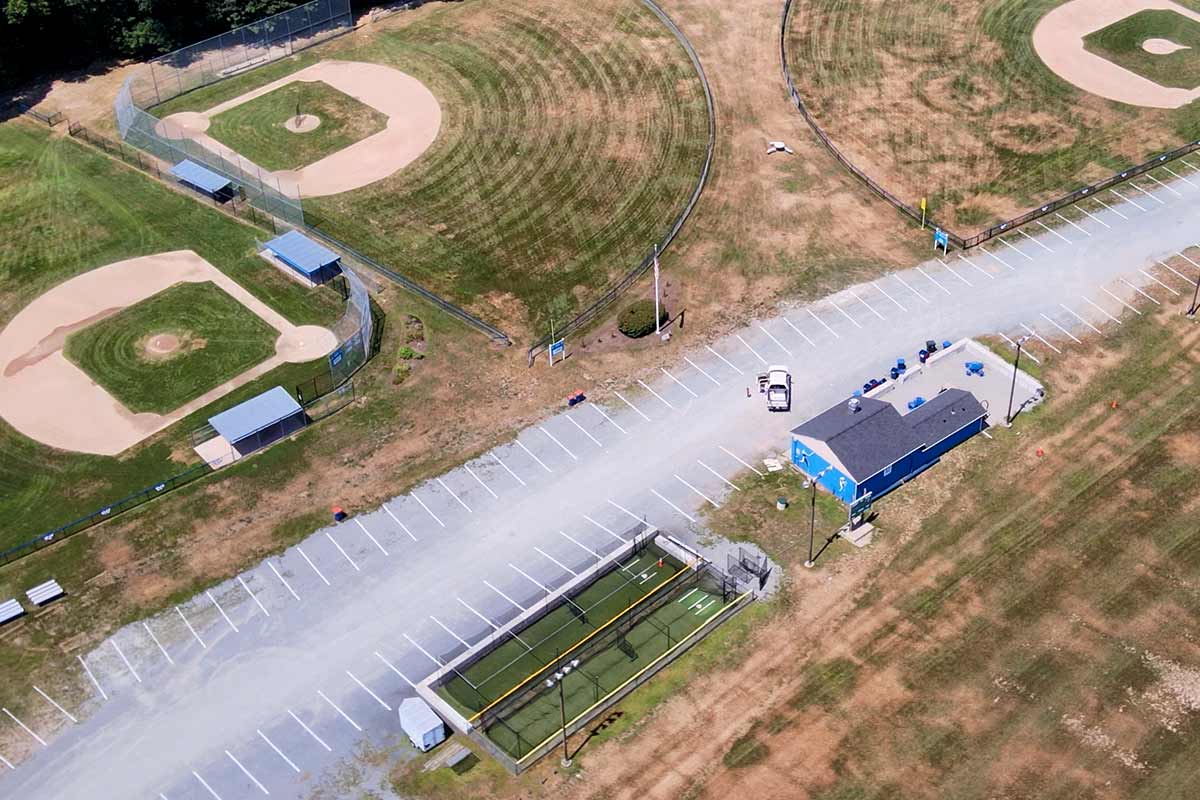
1-800-STRIPER® of East Fort Worth lays down markings that come back up when you are done with them: event parking, construction phasing and overflow lots across Fort Worth, Arlington and Tarrant County. We do it on grass. On gravel. On pavement. On surfaces a striping machine was never built for.
Permanent striping starts with what the pavement can hold. Temporary striping starts with whatever surface you have, then works out how to mark it. If you can park a car on it, we can mark where the car goes.
Surfaces We Stripe — Grass, Gravel, Pavement, Any Surface
All of them. The surface changes the method, not whether the job can be done.
| Surface | What it takes | What to expect |
|---|---|---|
| Grass and turf | Marking applied to a living, growing surface — stalls, aisles and arrows for an event field | Lines that read from a driver’s seat, so a field behaves like a lot. Growth and mowing work against the marking |
| Gravel and crushed aggregate | The hardest surface to hold a line on, because the surface itself moves | Honest expectations for how long a line keeps reading under traffic |
| Compacted dirt and overflow areas | Common behind warehouses and on construction staging — parking with no markings at all | A defined layout, with aisles and stalls where there was nothing |
| Asphalt and concrete | Removable water-based traffic paint rather than a permanent material | The layout discipline of a permanent stripe, specified to come back off |
| Sealed or previously marked pavement | An existing layout you need to override for a phase | New lines that read against the old ones, plus a plan to eliminate them |
Events, Construction Zones and Overflow Lots
Three jobs, one service. The deadline is the difference.
Events. Festivals, church and school lots on a peak Sunday, tournaments, fairs, retail holiday overflow. Throughput is the job: stalls that fit the vehicles, aisles wide enough to keep the queue off the street, direction clear enough that cars park themselves.
Construction and phased work. Temporary striping defines the phase: which rows are live, where the contractor lane runs, where pedestrians divert. Phase changes, markings change with it.
Overflow and seasonal parking. Capacity you need for weeks, not permanently. Give a gravel area behind a building a layout and it becomes usable parking, then goes back to being a field when the season ends.
Removal and Eradication
Getting the marking back off is its own operation, worth planning before the first line goes down. On pavement, TxDOT Item 677 covers eliminating existing pavement markings. It is a highway specification, so it carries no legal force on a private lot. It is the standard we work to, and it is why we specify the material at the front of the job against how it has to come off at the back.
Over-specify a marking for its duration and it is harder to remove than the job was worth. Under-specify it and it stops reading before the event is over. On grass, gravel and dirt, the surface decides removal rather than a specification.
The 15-Minute Dry-Pavement Test
Before paint goes onto pavement, the surface has to be genuinely dry, not dry-looking. TxDOT Item 666, the specification we work to, gives a field test that settles the question. We run it:
> “Place a 1-sq. ft. piece of clear plastic on the pavement and weigh down the edges. The pavement is considered dry if, when inspected after 15 min., no condensation has occurred on the underside.”
Condensation underneath means the slab is still giving up moisture, and paint laid on it will not bond. That same specification calls for a surface temperature of at least 50°F. Dallas–Fort Worth averages 79.3 days a year with measurable precipitation, and the freeze-free window at DFW runs from roughly March 12 to November 22. Give us the date early and we build in a dry-test gate and a fallback slot.
Get a Free Estimate
Tell us the surface, the date range and how many vehicles you need to park, and 1-800-STRIPER® of East Fort Worth will lay the lot out and give you a free estimate. Our Google rating is 4.6 stars from 9 reviews. Call (972) 543-1033.
For a full list of our pavement marking services, visit our parking lot striping in East Fort Worth page.
Businesses We Serve




How it Works

GET A FREE ESTIMATE
Contact us today and we’ll have a quote to you in 24 hours

SCHEDULE A STRIPING
We’ll have your space restriped in less than 7 days, without affecting your business hours

GET A PARKING LOT THAT POPS
For a budget-friendly price, you’ll get a parking lot that looks like new
We proudly work with:


We proudly work with:

Frequently Asked Questions About Temporary Parking Lot Striping in East Fort Worth, TX
What surfaces can you stripe temporarily?
Grass, gravel, compacted dirt, asphalt, concrete, and sealed pavement over an existing layout, including combinations of them on one site. The surface changes the method and the expectation, not whether the job can be done. Turf and gravel behave nothing like pavement. Before you commit to a layout, we will set out honestly what each will hold, and for how long.
How long does temporary striping last?
We specify it to your duration rather than to a fixed lifespan, and we would rather ask you than guess. A weekend event, a six-week construction phase and a full holiday season are three different jobs. Tell us the date range, the surface and the traffic you expect, and we specify the marking to last that window, then come back off cleanly at the end of it.
How is temporary striping removed?
On pavement, removal is its own operation. TxDOT Item 677 covers eliminating existing pavement markings, and it is the standard we work to when a temporary line has to come back off. On grass, gravel and dirt, the surface decides the method rather than a specification. Either way, we plan the removal before the first line goes down, not after your event has finished.
How much lead time do you need for an event?
As much as you can give us. Two things move the schedule: the layout and the weather. Send the date, the site, the surface and the vehicle count as early as you have them, and we build the plan around the dry window rather than against it. A last-minute call is not automatically a no. An early one gives you options.
Can you mark a construction zone or a phased lot?
Yes, and it is one of the most common uses of this service. When a lot is resurfaced, sealed or rebuilt in phases, temporary markings define which rows are live, where the contractor lane runs, where pedestrian routes divert, and where staging begins. When the phase changes, the markings change with it. Send the phasing plan and we mark each phase to it.
What happens if it rains before my event?
We do not paint a surface that is not dry, and we prove it rather than eyeball it. The specification we work to gives a field test: a one-square-foot piece of clear plastic, weighed down at the edges, checked after 15 minutes. No condensation underneath and the pavement is dry. Dallas–Fort Worth averages 79.3 days a year with measurable precipitation, so we build a fallback slot into event work.