Parking Lot Pressure Washing
In East Fort Worth, TX
Surface Prep Before Restriping
1-800-STRIPER® provides professional parking lot pressure washing in East Fort Worth, TX — removing oil, tire marks, and surface grime from lots, sidewalks, and loading docks with captured wash-water managed under TCEQ Texas Pollutant Discharge Elimination System stormwater rules.
1-800-STRIPER® of East Fort Worth PROVIDes Parking Lot Power Washing Services NEAR YOU
Need to blast away years of grime?
If your parking lot or parking garage looks dull and dirty, our professional crew can wash away grime, oil, stains, and slippery buildup to restore the appearance of your property.
Benefits:
Parking Lot Pressure Washing in East Fort Worth, TX
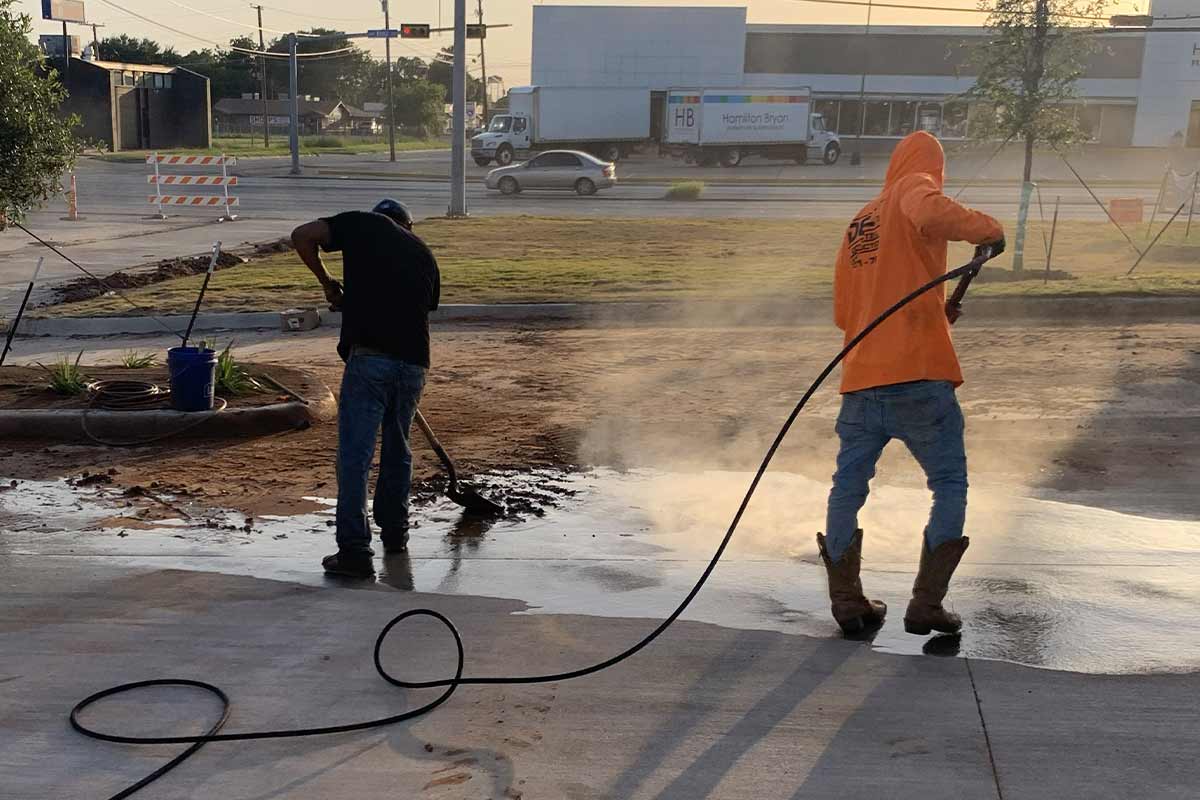
1-800-STRIPER® of East Fort Worth washes commercial lots, sidewalks, loading docks and dumpster pads across Fort Worth, Arlington and Tarrant County. Two things separate a professional wash from a rented machine. Where the water goes afterwards. And whether the surface you just cleaned is fit for what comes next.
Both come back to the surface. Oil, rubber and grime are bond breakers: paint will not stick to them, and a marking laid over them fails from the day it goes down.
What We Remove
Every one of these behaves differently under a pressure washer, so each gets its own approach.
- Oil and hydraulic stains. Concentrated in the same stalls every year. They need a dwell and a detergent step before pressure, not pressure alone.
- Tire marks and rubber. At turn-ins and drive-thru corners. Rubber is fused into the surface, not sitting on it.
- Gum. At entrances, on sidewalks, around trash enclosures.
- Algae, mildew and organic staining. Shaded stalls, north-facing sidewalks, anywhere water stands after rain.
- Grime, dumpster-pad residue and dock-face spills.
Where the Wash-Water Goes — TCEQ TPDES
Not down the storm drain. Texas regulates wash-water and pollutant discharge from commercial parking-lot pressure washing under the TCEQ Texas Pollutant Discharge Elimination System, and captured wash-water cannot enter the municipal storm-drain system untreated.
A storm drain in your lot is not a sewer. It is a pipe to a creek. Capture is part of the job, then, not an upgrade to it: we block and protect the drains inside the wash area before anyone pulls a trigger, recover the water rather than chase it toward a grate, and manage it under those TPDES rules.
Surfaces We Clean
Everything that gets walked on or driven on: lots and drive aisles, sidewalks and access aisles, loading docks and dock aprons, drive-thru lanes, dumpster pads and trash enclosures. Different surfaces take different pressure, nozzle standoff and chemistry. We set those to the surface in front of us.
Cleaning Is a Prerequisite to Compliant Striping — Not an Add-On
If a restripe is coming, the wash is the step that decides whether the striping holds. We work to TxDOT Item 666 Retroreflectorized Pavement Markings, which calls for markings to go down on a clean, dry surface at a surface temperature of at least 50°F. Highway spec, so not law on a private lot. It is the standard we hold ourselves to, and it also gives us a way to prove the surface is genuinely dry:
> “Place a 1-sq. ft. piece of clear plastic on the pavement and weigh down the edges. The pavement is considered dry if, when inspected after 15 min., no condensation has occurred on the underside.”
Wash first, prove the surface, then stripe. Then move on to parking lot restriping in East Fort Worth.
Our Process
- Walk the lot and read the surface. Stains, materials, drain locations, any marking already failing.
- Contain the drains inside the wash area before anyone pulls a trigger.
- Pre-treat what needs it. Oil, gum and organic growth get a dwell and a detergent step.
- Wash by surface. Pressure, nozzle and standoff set for the surface, adjusted around existing markings.
- Recover and manage the wash-water under the TPDES rules. Nothing goes to the drain untreated.
- Walk it back with you: what came up, what did not, what the surface is telling you.
- Hand off to striping: clean, dry (15-minute test) and at or above 50°F before paint.
Get a Free Estimate
Tell us the property, the surfaces, and whether a restripe follows the wash, and 1-800-STRIPER® of East Fort Worth will walk it with you. Our Google Business Profile rating is 4.6 stars from 9 reviews. Call (972) 543-1033 for a free estimate.
For a full list of our pavement marking services, visit our parking lot striping in East Fort Worth page.
Businesses We Serve




How it Works

GET A FREE ESTIMATE
Contact us today and we’ll have a quote to you in 24 hours

SCHEDULE AN INSTALLATION
We’ll have your installation scheduled in less than 7 days, without affecting your business hours

GET A PARKING LOT THAT POPS
For a budget-friendly price, you’ll get a parking lot that looks like new
We proudly work with:


We proudly work with:
Frequently Asked Questions About Parking Lot Pressure Washing in East Fort Worth, TX
Where does the wash-water go?
Not into the storm drain. Texas regulates wash-water from commercial parking-lot pressure washing under the TCEQ Texas Pollutant Discharge Elimination System, and captured wash-water cannot enter the municipal storm-drain system untreated. So we block and protect the drains inside the wash area before we start, recover the water rather than let it run toward a grate, and manage it under those rules.
Can you remove oil stains?
Usually. How much of it lifts depends on how long the oil has been sitting and what it soaked into. Oil that has penetrated asphalt behaves nothing like oil on sealed concrete. We pre-treat with a dwell and a detergent step before any pressure goes on it, because pressure by itself can drive a stain deeper rather than lift it. Before we begin, we will tell you what we expect to get out.
How often should a commercial lot be washed?
No universal interval exists, and we will not invent one. What drives it is your traffic volume, your dock and dumpster activity, your tree cover, and what tenants and customers see when they pull in. One piece of the timing is not a judgment call: wash before you restripe, every time. Clean and dry is what the marking has to bond to.
Will pressure washing damage my existing stripes?
Sound, well-adhered markings are not what we are trying to lift, and we adjust pressure and nozzle standoff over marked areas. Paint that is already delaminating can come up, because it went down on a dirty, damp or sealed surface in the first place. Call that information rather than damage: the line never properly gripped the pavement, and the lot is due for a restripe.
Should I wash the lot before restriping it?
Yes. TxDOT Item 666, the specification we work to, calls for markings to go down on a clean, dry surface at 50°F or above. Grime, oil and tire rubber are bond breakers. Paint laid over them starts failing immediately, and the line has to be done again far sooner than it should. Wash, prove the surface, then stripe.
Do you need to use our water supply?
Tell us what is available on site when you call. A usable spigot in the wash area and we plan around it. No spigot, and we plan the water and the wash-water capture accordingly. Either way, we contain the drains inside the wash area before we start, and we manage the recovered water under the TPDES rules.