Parking Lot Pressure Washing
In Greenville, SC
Surface Prep Before Restriping
1-800-STRIPER provides professional parking lot pressure washing in Greenville, SC — cleaning oil-stained stalls, entrance aprons, sidewalks, dumpster pads, and parking decks while controlling wash water so it does not enter the storm drain, for commercial properties across the Upstate.
1-800-STRIPER® of Greenville PROVIDes Parking Lot Pressure Washing Services NEAR YOU
Need to blast away years of grime?
If your parking lot or parking garage looks dull and dirty, our professional crew can wash away grime, oil, stains, and slippery buildup to restore the appearance of your property.
Benefits:
What Parking Lot Pressure Washing Includes
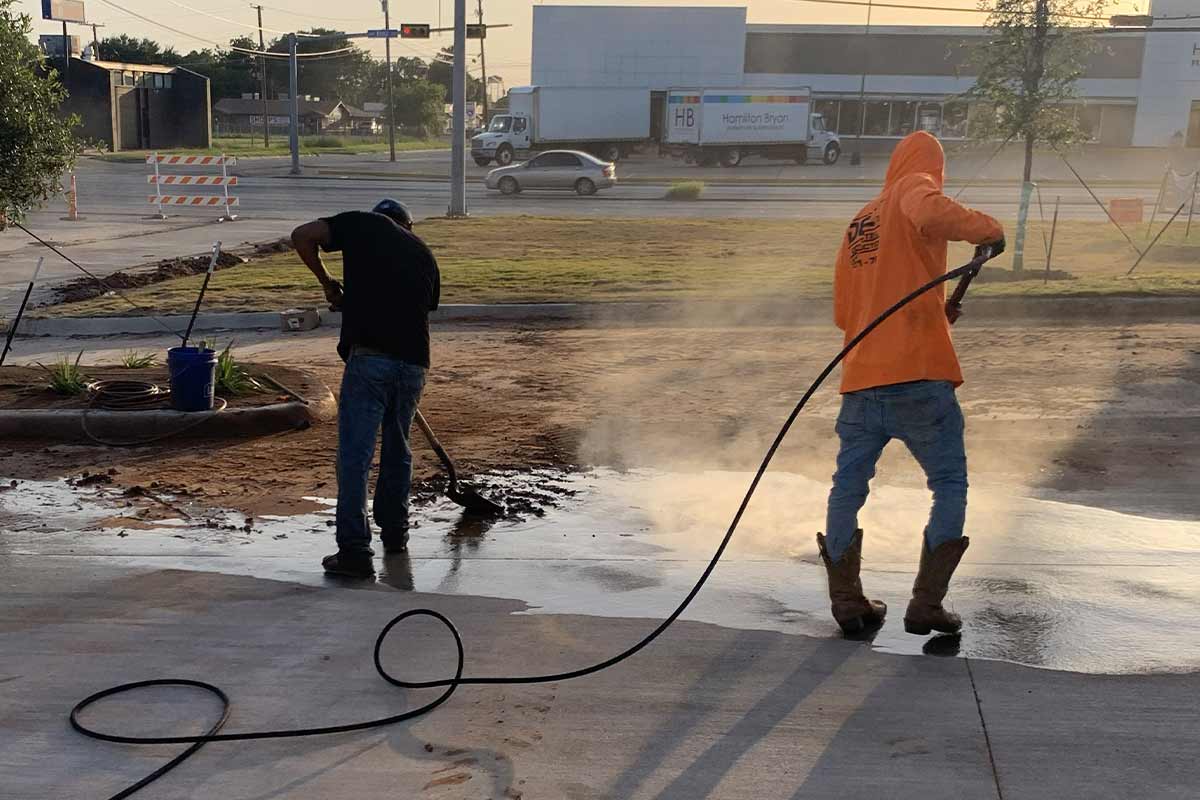
Pressure washing a commercial property covers the parking field, entrance aprons, drive aisles, sidewalks and walkways, dumpster pads and enclosures, loading dock aprons, and the decks and ramps of structured parking.
The scope includes the part most quotes leave out: what happens to the water. On a commercial property in Greenville County the wash water is a regulated discharge, not an afterthought, and controlling it is part of the job, not an optional extra.
Our Pressure Washing Process, Step by Step
- Walk and assess. Surface type, contamination, drainage direction, storm drain locations and any surface damage that pressure would worsen.
- Water-control plan. Where the wash water will go, how it will be contained, and which drains need protection before anything is switched on.
- Protect and isolate. Storm drain inlets covered or bermed; landscaping, signage and equipment protected; the work area coned off.
- Pre-treat. Oil, gum, rust and organic staining treated with the appropriate product before pressure is applied, because pressure alone drives many stains deeper.
- Wash. Pressure and nozzle selected against the substrate — enough to remove the contamination, not enough to erode the surface.
- Recover. Wash water collected or directed to the appropriate discharge point per the plan.
- Rinse and inspect. Final rinse, then a walk with you before demobilizing.
Wash Water and the Storm Drain: What the Rules Require
The point people miss is that a storm drain is not a sewer. It discharges to a creek or a river, generally without treatment. Anything that goes down it goes into the water.
That is why parking lot wash water — carrying oil, fuel residue, brake dust, detergent and sediment — is regulated. Stormwater discharges are governed under the federal Clean Water Act through the National Pollutant Discharge Elimination System administered by the U.S. Environmental Protection Agency, and locally through the ordinance below.
Practically, it means containment and collection instead of letting the water run to the nearest inlet, and it means the detergent choice is part of the specification.
Greenville County’s Illicit-Discharge Ordinance
Greenville County’s stormwater rules sit in the Code of Ordinances at Chapter 8, Article III, the Stormwater Management Ordinance, adopted under NPDES Permit No. SC230001, which is issued in accordance with the federal Clean Water Act and the South Carolina Pollution Control Act.
Section 8-91 governs illicit connections, illicit discharges and improper disposal, and one of the ordinance’s stated purposes is controlling the discharge to the Greenville County municipal separate storm sewer system and receiving waters of spills, dumping and disposal of materials other than stormwater.
Wash water from a commercial parking lot is exactly the category that provision exists to address. Properties inside a municipality may be covered by that municipality’s ordinance instead, so we confirm which applies to your address before the job.
Oil Stains, Gum, and Rust
These three account for most of what a property manager wants gone, and none of them responds to pressure alone.
Oil soaks into asphalt instead of sitting on it. Surface oil lifts with a degreaser and hot water; oil that has penetrated leaves a shadow, and setting that expectation up front beats a promise nobody can keep.
Gum is a mechanical problem concentrated at entrances and near doors, removed with heat and targeted pressure rather than by blasting the whole apron.
Rust from irrigation water, fertilizer or metal furniture needs a rust-specific treatment; pressure alone spreads it.
Parking Decks and Structured Parking
Decks are a different job because the water has nowhere to disappear to.
Drainage on a structured deck is engineered and often routes to a specific point, not to grade, so the water-control plan matters more here than anywhere else. Levels are washed in sequence so the building keeps parking, and expansion joints, drains and any applied deck coating get identified first — a traffic-bearing membrane can be damaged by pressure that is entirely safe on a slab on grade.
Sidewalks, Entrances, and Dumpster Pads
Sidewalks and entrances are the surfaces customers look at, and they respond well because the contamination is usually organic and surface-level.
Dumpster pads are the opposite: concentrated organic contamination, grease and odor, generally the dirtiest square footage on any commercial property. They need pre-treatment and containment, since the runoff is the most contaminated water produced on the job.
Pressure Washing Before Restriping
Where a lot is being restriped and the surface is broadly contaminated and not just dirty in spots, washing first is the right sequence — paint bonds to pavement, not to a film of oil, grit and pollen.
Two conditions apply. The surface must be fully dry before marking, and the paint manufacturer’s data sheet governs that. And a wash immediately before striping is a different specification from a general clean: the marking corridors are what matter, so that is where the effort goes.
Surface and Setting Reference Table
| Surface or setting | Main contamination | Key constraint |
|---|---|---|
| Asphalt parking field | Oil, tire residue, sediment | Pressure limited to avoid eroding the binder; penetrated oil may leave a shadow |
| Concrete aprons and drive lanes | Oil, tire marks, staining | Tolerates higher pressure than asphalt |
| Sidewalks and entrances | Organic growth, gum, foot traffic soil | Highest visibility; pedestrian control during work |
| Dumpster pads and enclosures | Grease, organic waste, odor | Most contaminated runoff; containment essential |
| Loading dock aprons | Oil, hydraulic fluid, rubber | Scheduling around delivery windows |
| Parking decks and ramps | Tire residue, sediment, salt | Engineered drainage; applied deck coatings can be damaged by pressure |
| Pre-restriping wash | Grit, pollen, oil in marking corridors | Surface must be fully dry before paint, per the paint data sheet |
For a full list of our pavement marking services, visit our parking lot striping in Greenville page.
Businesses We Serve




How it Works

GET A FREE ESTIMATE
Contact us today and we’ll have a quote to you in 24 hours

SCHEDULE AN INSTALLATION
We’ll have your installation scheduled in less than 7 days, without affecting your business hours

GET A PARKING LOT THAT POPS
For a budget-friendly price, you’ll get a parking lot that looks like new
We proudly work with:


We proudly work with:
Frequently Asked Questions About Parking Lot Pressure Washing in Greenville, SC
What do you need to pressure wash a parking lot?
Access to the area with vehicles cleared, a water source or our own supply, and agreement on where the wash water goes — which is the item that most often gets settled too late. We walk the property first to identify the surface type, the contamination, the drainage direction and the storm drain inlets, then build the containment plan around that. Scheduling matters too: most commercial lots are washed in sections, overnight or on a weekend, so the property keeps operating.
Where does the wash water go, and do the rules care?
They do. A storm drain discharges to a creek or river, generally untreated, so wash water carrying oil, fuel residue, brake dust, detergent and sediment is a regulated discharge — governed federally under the Clean Water Act through the EPA’s National Pollutant Discharge Elimination System, and locally by Greenville County Code Chapter 8, Article III, whose Section 8-91 addresses illicit connections, illicit discharges and improper disposal under NPDES Permit No. SC230001. In practice that means containing and collecting the water rather than letting it run to the nearest inlet.
Can oil stains be removed from asphalt?
Partly, and it depends on how long it has been there. Oil sitting on the surface lifts well with a degreaser and hot water. Oil that has soaked into the asphalt has changed the material itself, and no amount of pressure retrieves it — expect a lightened shadow, not a clean slate. Pressure alone makes things worse by driving oil deeper, which is why pre-treatment comes first. Where an oil spot sits under a planned stall line, we treat it before striping so the paint bonds.
How often should a commercial lot be pressure washed?
There is no interval that fits every property, because it depends on traffic, tree cover, whether there is a food tenant, and how visible the property is to its customers. A retail center with restaurants and heavy foot traffic accumulates far faster than a low-traffic office lot. The practical trigger is visible: organic growth in the pavement joints, dark tracking at entrances, gum accumulation near doors, or a dumpster pad you can smell. Dumpster pads and entrances usually need attention well before the parking field does.
Should a lot be pressure washed before restriping?
Where the surface is broadly contaminated rather than dirty in spots, yes — paint bonds to pavement, not to a film of oil, grit and pollen, and a wash is the difference between markings that last their expected cycle and markings that lift early. Two conditions matter. The surface must be fully dry before marking, on the timeline the paint manufacturer’s data sheet sets. And a pre-striping wash is specified differently from a general clean, concentrating on the marking corridors instead of the whole field. Call for a free estimate.