Parking Lot Pressure Washing
In NW Chicago, IL
Surface Prep Before Restriping
1-800-STRIPER® provides professional parking lot pressure washing in NW Chicago, IL — removing dirt, oil film, and residue so new striping bonds to the surface, with wash water managed to keep untreated discharge out of storm drains under the NPDES stormwater program.
1-800-STRIPER® of NW Chicago PROVIDes Parking Lot Pressure Washing Services NEAR YOU
Need to blast away years of grime?
If your parking lot or parking garage looks dull and dirty, our professional crew can wash away grime, oil, stains, and slippery buildup to restore the appearance of your property.
Benefits:
What Parking Lot Pressure Washing Covers
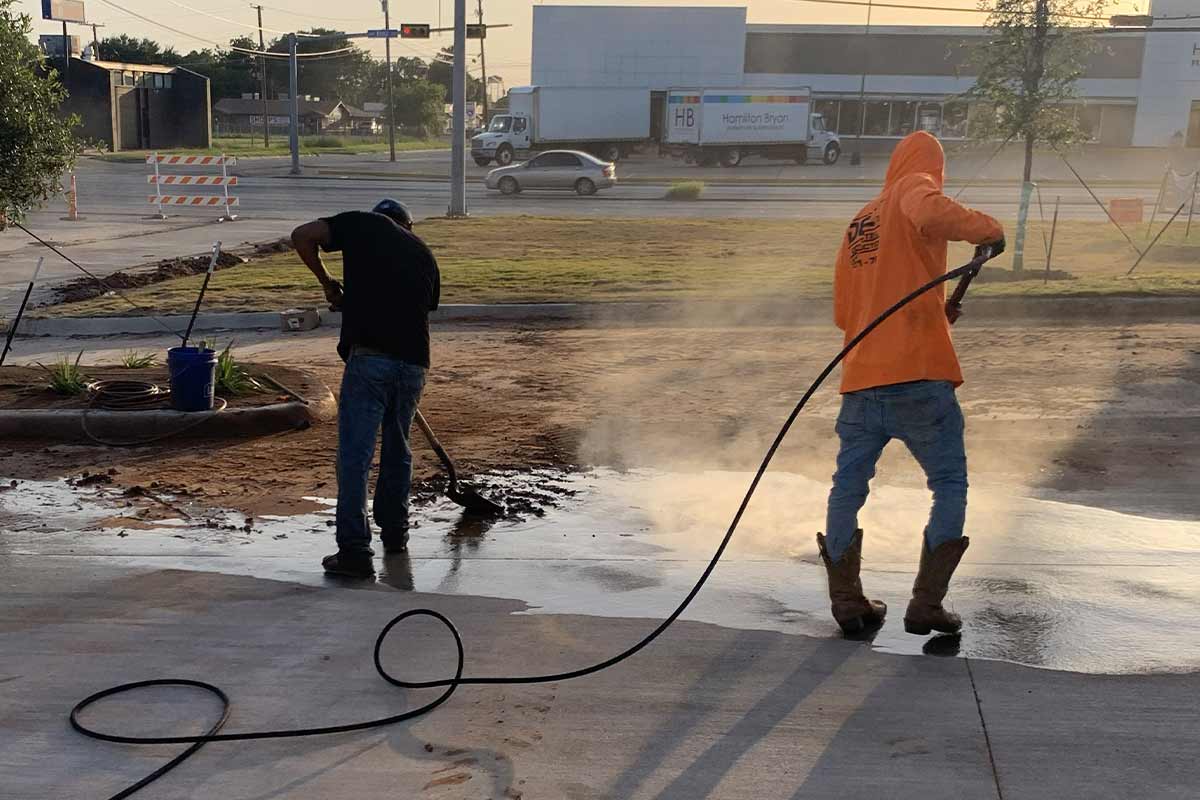
Parking lot pressure washing is cleaning the paved surface of a commercial lot: dirt and grit, oil and transmission film in the stall rows, tire marks in the drive aisles, gum and spills at entrances, salt residue after winter, and the general gray film that makes a well-maintained property look neglected.
We clean parking lots. Not parking garages — the search results for this kind of work are dominated by garage-deck cleaning, which is a different job with different drainage, different equipment access and different containment problems. Open commercial lots, drive-through lanes, loading areas and service yards are what this page is about.
Why Cleaning Comes Before Striping
Most pressure-washing companies cannot tell you this, because they do not stripe: paint bonds to pavement, not to what is sitting on top of it.
A stall row that has been collecting oil drip for two years has a film on it. Traffic paint applied over that film adheres to the film, and the film eventually lets go — so the line fails from underneath while still looking correct from above, usually within a season, and everyone blames the paint. The failure is nearly always adhesion, and adhesion is nearly always preparation.
That is why cleaning is scheduled as part of the striping job rather than sold as a separate service we hope you will also buy. On a repaint, we sweep at minimum; where there is oil film, heavy tire rubber, salt residue or embedded dirt, we wash. If your lot is going to be striped and it has not been cleaned, the honest sequence is wash first, stripe second — and we would rather tell you that than take a striping job that will not last.
The same logic runs in reverse. A lot being cleaned for appearance that is already due for a restripe should have both done on consecutive visits — six months apart costs you the disruption twice.
What We Clean: Lots, Drive Lanes, Loading Docks, Entrances
- Stall rows. Oil and transmission drip concentrated where vehicles sit, which is also exactly where stall lines and accessible markings need to bond.
- Drive aisles and drive-through lanes. Tire rubber and traffic film in the wear path.
- Loading docks and service yards. Grease, spills and industrial residue — the heaviest soiling on most commercial properties, in Wheeling, Niles, Skokie and the industrial parts of the territory particularly.
- Entrances and walkways. Gum, spills and pedestrian traffic film at the doors, which is the surface customers judge the property by.
- Dumpster pads and enclosures. The area most often skipped and most often complained about.
- Post-winter salt residue. Chicago-area lots carry months of deicing salt by March; washing it off is the usual first step of the spring maintenance round.
Wash Water and Storm Drains
Wash water from a parking lot is not clean water. It carries oil, grit, detergent and whatever was on the surface, and letting it run untreated into a storm drain puts all of that into the receiving water, because storm drains in this area generally discharge to waterways rather than to treatment.
That discharge is regulated. The National Pollutant Discharge Elimination System is the federal permitting framework for discharges to waters of the United States, and Illinois administers its own stormwater program under it — the Illinois EPA storm water permitting program is the state-level reference, and many municipalities layer their own ordinance on top of that.
Practically, this means containment and recovery are part of the job rather than an optional extra: managing where the water goes, blocking or protecting drains, and recovering wash water rather than letting it find the nearest inlet. If your property has a specific stormwater requirement in its permit or its lease, tell us before we schedule and we will work to it.
How a Pressure Washing Job Runs, Step by Step
- Walk the lot. We identify the soiled areas, the drainage layout, and where wash water would naturally run.
- Agree the scope. Full lot, or the areas that actually need it — stall rows, dock area and entrances is a common and cheaper scope than washing everything.
- Plan containment. Drains protected, recovery arranged, and any site-specific stormwater requirement confirmed.
- Section the property. As with striping, we work in sections so parking stays available on a live site.
- Wash. Surface cleaning, with spot treatment on oil-stained areas and heavier soiling.
- Recover and check. Wash water managed, drains cleared, and the finished areas walked with you.
For a full list of our pavement marking services, visit our parking lot striping in NW Chicago page.
Businesses We Serve



How it Works

GET A FREE ESTIMATE
Contact us today and we’ll have a quote to you in 24 hours

SCHEDULE AN INSTALLATION
We’ll have your installation scheduled in less than 7 days, without affecting your business hours

GET A PARKING LOT THAT POPS
For a budget-friendly price, you’ll get a parking lot that looks like new
We proudly work with:


We proudly work with:
Frequently Asked Questions About Parking Lot Pressure Washing in NW Chicago, IL
Do we need to pressure wash the lot before striping it?
Not always, but it is the single biggest factor in how long the new lines last. Traffic paint bonds to pavement, not to the oil film, tire rubber and dirt sitting on top of it — paint over a dirty surface adheres to the dirt and fails from underneath, usually inside a season. We sweep at minimum on every striping job and recommend washing wherever there is oil film, salt residue or heavy soiling.
Is it legal to pressure wash a parking lot in Illinois?
Yes, but what happens to the wash water is regulated. It carries oil, grit and detergent, and storm drains in this area generally discharge to waterways rather than to treatment, so untreated discharge into an inlet is the problem rather than the washing itself. Discharges are covered by the federal NPDES framework and the Illinois EPA stormwater program, with municipal ordinances layered on top.
What is involved in pressure washing a parking lot?
Parking lot pressure washing starts with a walk of the property to identify the soiled areas and the drainage layout, then an agreed scope and a containment plan so wash water is recovered rather than running into drains, then washing in sections so a live property keeps its parking. Oil-stained areas usually get spot treatment beyond the general surface clean. We finish by clearing the drains and walking the completed areas with you.
Do you clean parking garages as well as parking lots?
Our work is open parking lots, drive lanes, loading areas, service yards, entrances and dumpster pads. Garage decks are a genuinely different job — enclosed drainage, restricted equipment access and tighter containment requirements — and most of the search results for this kind of cleaning are garage specialists. If you have an open commercial lot, that is what we do, and we stripe it too.
How often should a commercial parking lot be cleaned?
Most properties in this area get real value from an annual spring wash, because Chicago-area lots carry months of deicing salt and winter grit by March and it is the natural first step of the seasonal maintenance round. High-traffic retail, medical and restaurant properties, and anything with a loading dock, generally want more than that. Pairing the wash with a restripe visit is the efficient combination.