
Fire Lane Striping
In Myrtle Beach, SC
Code-Compliant Fire Lane Markings
1-800-STRIPER provides professional fire lane striping in Myrtle Beach, SC — marking and signing fire apparatus access roads to the wording and legibility standards the 2021 South Carolina Fire Code sets, for commercial properties across Horry and Georgetown counties.
1-800-STRIPER® of Myrtle Beach PROVIDes Fire Lane Striping Services NEAR YOU
Is your parking lot ready for first responders?
Our team is well-versed in local fire regulations and will parter with you to design a fire lane striping plan that creates unobstructed emergency access to protect your customers and property.
Core Services:
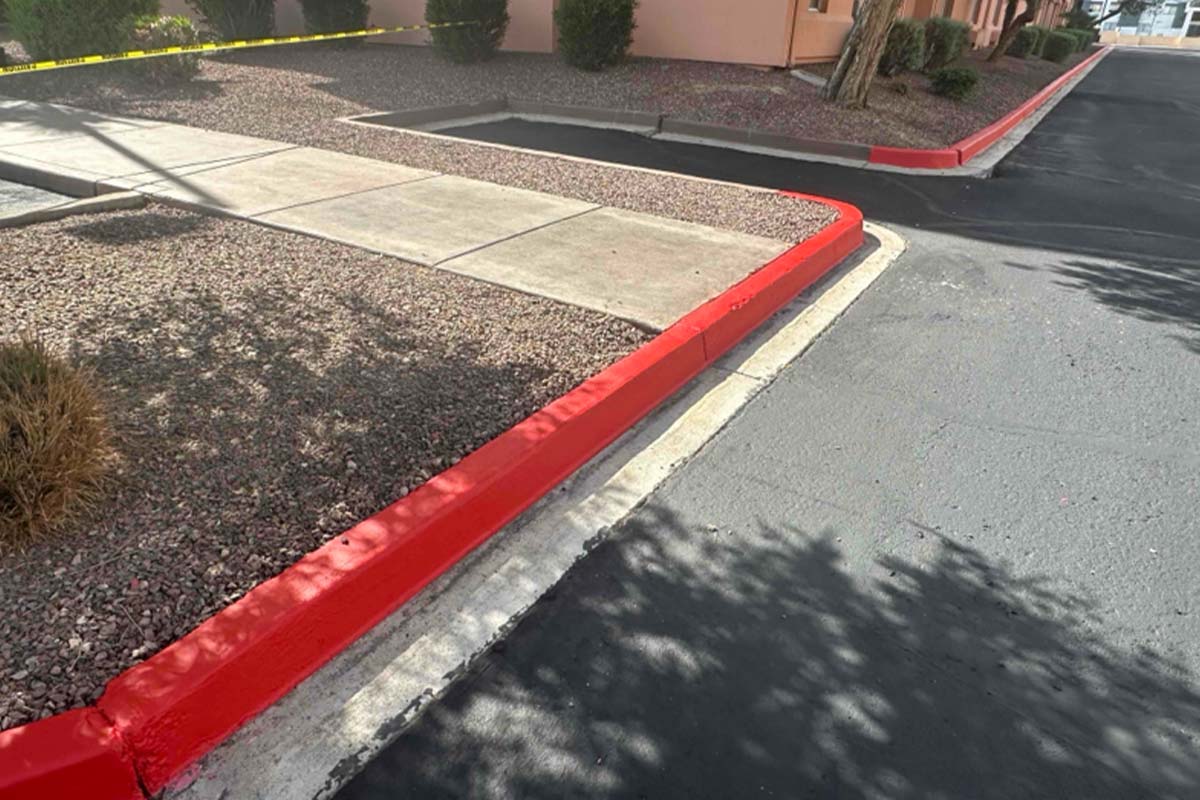
Fire Lane Striping in Myrtle Beach, SC
Fire lane striping in Myrtle Beach means marking and signing the fire apparatus access roads on a commercial property so that they stay clear and identifiable. It is the marking work with the most direct code content behind it, and also the work where the most confident misinformation circulates, so this page cites the adopted code section by section rather than repeating industry folklore.
This is the one service page in our set where a search returns no People Also Ask questions at all. That is not a sign of low demand; it is a sign that nobody has published a straight answer worth surfacing. The sections below are that answer.
Which Fire Code Applies in Myrtle Beach
South Carolina adopts its codes at state level. Under S.C. Code Title 6 Chapter 9, the South Carolina Building Codes Council adopts by reference the International Code Council family of codes, which is why the document governing your property is the 2021 South Carolina Fire Code — the 2021 International Fire Code as amended for South Carolina, effective 1 January 2023 — whether the lot is in Myrtle Beach, in Conway, or in unincorporated Georgetown County.
Two things are still local. First, the fire code official for your jurisdiction makes a long list of discretionary calls that the code expressly delegates, including whether fire lane marking is required on your property at all. Second, the code’s appendices are not automatically in force: Section 101.2.1 states that “provisions in the appendices shall not apply unless specifically adopted,” and S.C. Code Section 6-9-50 requires that “the specific appendix or appendices must be referenced by name or letter designation at the time of adoption.” That matters more than it sounds, and the next section explains why.
The practical consequence for a property owner is simple: the technical requirements come from a statewide document, and the discretionary ones come from your local fire department. Ask them. We will tell you which office that is for your address.
What the Code Says About Fire Lane Marking
Section 503.3 of the 2021 South Carolina Fire Code is the marking provision, and it is worth reading in full rather than in summary:
“Where required by the fire code official, approved signs or other approved notices or markings that include > the words NO PARKING—FIRE LANE shall be provided for fire apparatus access roads to identify such roads or > prohibit the obstruction thereof. The means by which fire lanes are designated shall be maintained in a > clean and legible condition at all times and be replaced or repaired when necessary to provide adequate > visibility.”
Three things follow, and the third is the one nobody publishes.
The requirement is conditional. Marking is required where the fire code official requires it. The code does not impose fire lane marking on every commercial lot in the state by its own force.
The wording is fixed. Where marking is required, it must include the words NO PARKING—FIRE LANE. That is the one element of the marking the body of the code specifies exactly.
The body of the code specifies no color, no stripe width and no letter height. Section 503.3 sets the words and the legibility duty and stops. There is a sign specification in the code’s Appendix D, at Section D103.6, which calls for permanent signs of at least 12 inches wide by 18 inches high with red letters on a white reflective background, posted on both sides of access roads 20 to 26 feet wide and on one side of roads wider than that. But an appendix binds only where it has been specifically adopted by letter designation, per Section 101.2.1 and S.C. Code Section 6-9-50. Whether Appendix D is in force on your property is a question for your fire code official, and it is worth asking before you buy signs.
And through all of it, nothing specifies the color or width of the painted fire lane stripe itself. A page that tells you South Carolina requires six-inch red fire lane stripes is telling you something the code does not say. Red on the curb and on the pavement is a widespread and sensible convention, and we will stripe to it gladly, but it is a convention.
Fire Apparatus Access Road Dimensions
The dimensional requirements sit in Section 503 rather than in the marking provision, and they determine how much of your lot the fire lane consumes before any stall is drawn.
| Requirement | Section | What the code says |
|---|---|---|
| Unobstructed width | 503.2.1 | Not less than 20 feet |
| Unobstructed vertical clearance | 503.2.1 | Not less than 13 feet 6 inches |
| Distance to the building | 503.1.1 | Access road must extend to within 150 feet of all portions of the facility and of all exterior walls of the first story, measured by an approved route around the exterior |
| Dead ends | 503.2.5 | Dead-end access roads longer than 150 feet require an approved turnaround area |
| Turning radius | 503.2.4 | Determined by the fire code official |
| Surface | 503.2.3 | Must support the imposed loads of fire apparatus and provide all-weather driving capability |
| Obstruction | 503.4 | Access roads must not be obstructed in any manner, including by parked vehicles; the minimum widths and clearances must be maintained at all times |
The 150-foot figure carries exceptions worth knowing: Section 503.1.1 authorizes the fire code official to increase it where a building is fully sprinklered to one of the listed standards, or where terrain or waterways make an access road impracticable and an approved alternative means of fire protection is provided.
Hydrant Clearance and No-Parking Zones
Hydrant clearance sits in a separate provision from fire lane striping and is a common source of failed inspections. Section 507.5.4 requires that unobstructed access to fire hydrants be maintained at all times, that the fire department not be deterred or hindered from immediate access to hydrants or fire protection equipment, and states plainly: “No parking shall be allowed within 15 feet of a fire hydrant.” Section 507.5.5 adds a 3-foot clear space around the circumference of the hydrant itself.
In layout terms that means the stalls adjacent to a hydrant are not stalls. Marking the exclusion zone rather than leaving it to good intentions is what keeps it clear, and it is far cheaper than losing an inspection or having a hydrant blocked when it matters.
Keeping Fire Lanes Legible
The maintenance duty in Section 503.3 has no grace period in its wording: the means by which fire lanes are designated must be “maintained in a clean and legible condition at all times.” A faded fire lane marking is not a cosmetic problem. It is a designation that has stopped doing the thing the code requires it to do.
On the Grand Strand this comes round faster than owners expect, for the same coastal reasons that shorten every marking’s life here: sun, salt air, wind-blown sand and standing water. The sensible approach is to fold fire lane markings into a parking lot restriping cycle rather than treating them separately, and to inspect them annually regardless of when the rest of the lot was last done.
For a full list of our pavement marking services, visit our parking lot striping in Myrtle Beach page.
Businesses We Serve




How it Works

GET A FREE ESTIMATE
Contact us today and we’ll have a quote to you in 24 hours

SCHEDULE AN INSTALLATION
We’ll have your installation scheduled in less than 7 days, without affecting your business hours

GET A PARKING LOT THAT POPS
For a budget-friendly price, you’ll get a parking lot that looks like new
We proudly work with:


We proudly work with:


Frequently Asked Questions About Fire Lane Striping in Myrtle Beach, SC
Which fire code applies to fire lane striping in Myrtle Beach?
The 2021 South Carolina Fire Code, which is the 2021 International Fire Code as amended for South Carolina and effective from 1 January 2023. South Carolina adopts codes at state level under S.C. Code Title 6 Chapter 9, so the same document governs whether your property is in the City of Myrtle Beach, in Conway or in unincorporated Georgetown County. What varies locally is enforcement and the discretionary decisions the code delegates to your fire code official.
What wording does a fire lane marking have to use in South Carolina?
Section 503.3 requires that approved signs, notices or markings “include the words NO PARKING—FIRE LANE.” That phrase is the one element the body of the code specifies exactly. Note the conditional attached to it: the requirement applies where the fire code official requires marking, rather than automatically on every commercial lot. Once a fire lane is designated, the designation must be kept clean and legible at all times.
What color and width does South Carolina require for fire lane stripes?
The code specifies neither for the painted stripe. Section 503.3 sets the required wording and the legibility duty and stops there. Appendix D does specify a sign, calling for at least 12 by 18 inches with red letters on a white reflective background, but appendices apply only where specifically adopted by letter designation, so ask your fire code official whether it is in force locally. Red pavement and curb marking is a widespread convention rather than a code requirement.
How wide does a fire apparatus access road have to be?
Section 503.2.1 requires an unobstructed width of not less than 20 feet and an unobstructed vertical clearance of not less than 13 feet 6 inches. Section 503.1.1 additionally requires the access road to reach within 150 feet of all portions of the building and of all first-story exterior walls, measured by an approved route around the exterior, though the fire code official may increase that distance for fully sprinklered buildings and in certain site conditions.
How close to a fire hydrant can vehicles park?
Section 507.5.4 states that no parking is allowed within 15 feet of a fire hydrant, and requires that unobstructed access to hydrants be maintained at all times so the fire department is never hindered from reaching them. Section 507.5.5 separately requires a 3-foot clear space around the circumference of the hydrant. In practice that means designing the exclusion zone into the layout and marking it, rather than relying on drivers to judge the distance.