Warehouse Line Painting
In NW Pittsburgh, PA
Indoor Line Striping for Warehouses and Facilities
1-800-STRIPER provides professional warehouse line painting in NW Pittsburgh, PA — OSHA-compliant aisle lines, pedestrian walkways, and safety zone markings per OSHA 1910.22 requirements using durable epoxy and traffic paint for industrial facilities along the I-79, I-376, and PA-65 distribution corridors.
1-800-STRIPER® of NW Pittsburgh PROVIDes Warehouse Line Painting in NW Pittsburgh, PA | 1-800-STRIPER Services NEAR YOU
Want your indoor space to operate more efficiently?
Warehouse and interior markings ensure clear traffic lanes, organized storage zones, and designated spaces designed to help your business operate safely and efficiently.
Benefits:
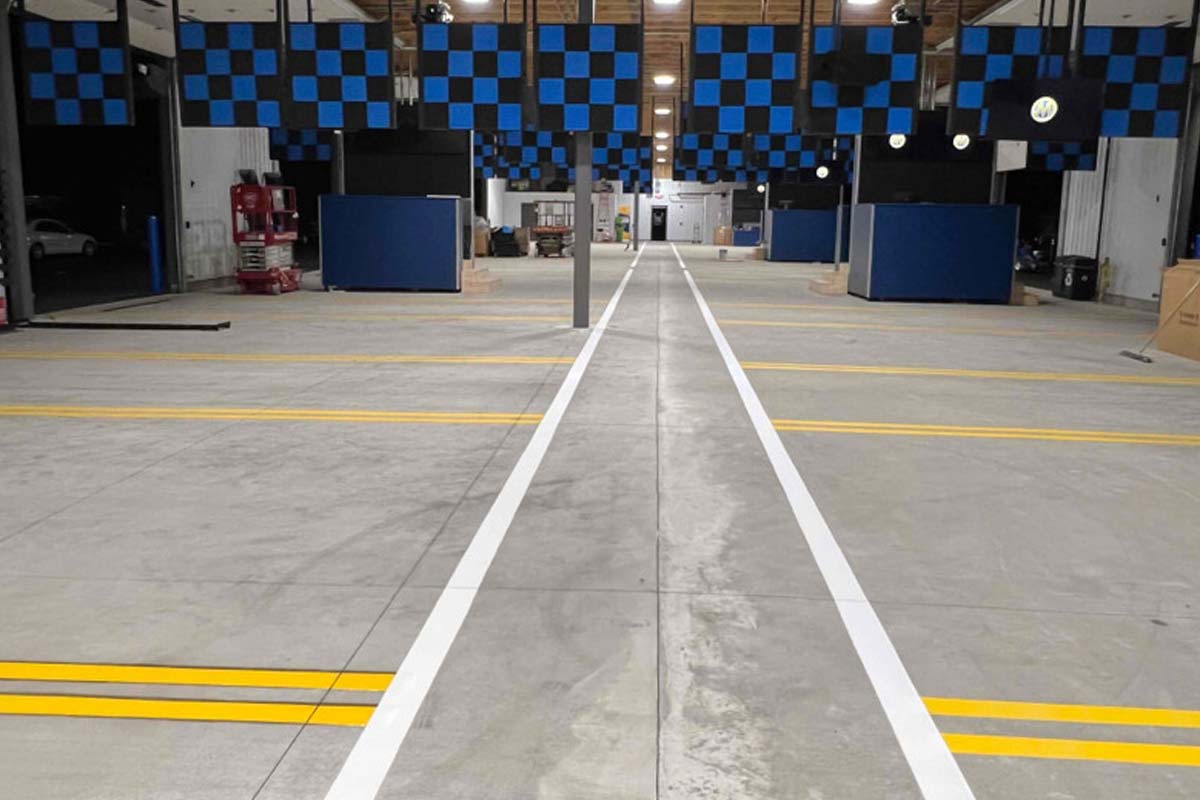
OSHA 1910.22 Aisle & Walkway Marking Requirements
OSHA 1910.22(b) requires that “permanent aisles and passageways shall be appropriately marked” in any warehouse or industrial facility. The standard does not specify color or width, but the de-facto industry standard, backed by ANSI Z535.1, is 4-inch yellow lines for vehicle (forklift and pallet jack) aisles and 4 to 6 inch white lines for pedestrian walkways. OSHA inspectors regularly cite NW Pittsburgh facilities with faded or absent aisle markings, especially after a forklift-related incident. The marking requirement pairs with OSHA 1910.144 color codes for safety zones, hazard areas, and fire equipment, plus ANSI Z535.1 for the consistent application of those codes across the facility. We design every warehouse marking project against the full OSHA + ANSI stack rather than just the minimum compliance line.
OSHA 1910.144 + ANSI Z535 Color Codes
OSHA 1910.144 sets the safety-color-coding standard, layered with ANSI Z535.1. Red marks fire equipment, emergency exits, and danger zones. Yellow marks caution areas, typically forklift aisles and pedestrian-cross zones. Green marks safety equipment (first-aid stations, eye-wash stations, AEDs, first-aid kits). Black-and-yellow stripe marks warning hazards (low overhead clearance, sharp turns, pinch points). Black-and-white stripe marks general housekeeping and traffic-control. White marks general-purpose passageways and pedestrian walkways. Following the color code consistently across the facility is what an OSHA inspector evaluates. Random or inconsistent use of the colors is itself a citation, not just the absence of marking.
Epoxy vs Traffic Paint vs Tape
Three materials cover almost every warehouse marking job in NW Pittsburgh. Two-part epoxy lasts 3 to 5 years, handles heavy forklift traffic, and bonds well to concrete, but cures over 24 hours and runs the highest material cost. Epoxy fits high-wear primary aisles, dock-door zones, and 5S floor marking that needs to survive constant traffic. Waterborne traffic paint lasts 12 to 18 months indoors, cures in 30 minutes, and fits the most common “annual refresh” workflow. Paint is the right choice for secondary aisles, low-traffic zones, and any layout that’s likely to change within 18 months. Industrial floor tape lasts 1 to 3 years with no cure time at all, an instant install, ideal for layout-changing operations like seasonal racking shifts or temporary kanban zones. Most Pittsburgh facilities we serve use a mix of all three.
Pittsburgh Industrial Corridor — I-79 / I-376 / PA-65
The I-79 / I-376 / PA-65 corridor through NW Pittsburgh is dense with distribution centers, light-manufacturing facilities, and last-mile logistics yards: Cranberry Township, Robinson, Moon Township, Coraopolis, and the Beaver County airport zone. Most facilities along the corridor run year-round 24/7 operations, which means continuous forklift wear on aisle markings and continuous OSHA compliance pressure. We handle annual or semi-annual refresh schedules across most of the corridor, often working overnight or weekend shifts to keep operations moving. Volume work tends to spike in spring (post-winter facility audits) and fall (pre-holiday inventory ramp).
5S Floor Marking & Lean Manufacturing
5S workplace organization (Sort, Set in order, Shine, Standardize, Sustain) relies heavily on visual floor marking — color-coded zones, equipment outlines, kanban replenishment positions, and visual queues for incoming material. We collaborate with the facility’s Continuous Improvement team to translate the 5S layout map into precise floor stripe and color blocks. For lean operations on the I-79 / I-376 / PA-65 corridor, this is one of our most-requested service combinations.
Service Areas Across 4 Counties
We paint warehouse and industrial floor markings across Allegheny, Butler, Washington, and Beaver counties. Highest demand comes from the I-79 / I-376 / PA-65 distribution corridor, the Beaver County airport zone, and the PA-19 / Route 228 commercial growth corridor through Cranberry Township and broader Butler County.
At a Glance
OSHA color-code table
| Color | Meaning | Typical use |
|---|---|---|
| Red | fire / danger | fire equipment, emergency exits, danger zones |
| Yellow | caution | forklift aisles, pedestrian-cross zones |
| Green | safety | first-aid, eye-wash, AED, safety equipment |
| Black-and-yellow stripe | warning hazard | low overhead, pinch points, sharp turns |
| Black-and-white stripe | housekeeping | general traffic control |
| White | general passageway | pedestrian walkways |
Comparison table
| Material | Service life | Cure time | Best use |
|---|---|---|---|
| Two-part epoxy | 3-5 yr | 24 hr cure | primary aisles, dock-door zones, high-traffic 5S |
| Waterborne paint | 12-18 mo | 30 min cure | secondary aisles, low-traffic zones |
| Industrial floor tape | 1-3 yr | no cure | layout-changing operations, seasonal kanban |
Process list
- (numbered): (1) Surface clean
- Pre-mark layout
- Apply per material spec
- Cure
- Walk-through with facility ops
- Touch-up
For a full list of our pavement marking services, visit our all NW Pittsburgh striping services page.
Businesses We Serve




How it Works

GET A FREE ESTIMATE
Contact us today and we’ll have a quote to you in 24 hours

SCHEDULE A STRIPING
We’ll have your space restriped in less than 7 days, without affecting your business hours

GET A PARKING LOT THAT POPS
For a budget-friendly price, you’ll get a parking lot that looks like new
We proudly work with:


We proudly work with:
Frequently Asked Questions About Warehouse Line Painting in NW Pittsburgh, PA
What does OSHA require for warehouse aisle markings?
OSHA 1910.22(b) requires that “permanent aisles and passageways shall be appropriately marked” in any warehouse or industrial facility. The standard does not specify color or width, but the de-facto industry standard — backed by ANSI Z535 — is 4-inch yellow lines for vehicle aisles and 4–6 inch white lines for pedestrian walkways. OSHA inspectors regularly cite facilities with faded or absent aisle markings, especially after a forklift incident.
What do the OSHA color codes mean on warehouse floors?
OSHA 1910.144 sets the color-coding standard, layered with ANSI Z535.1. Red marks fire equipment, emergency exits, and danger zones. Yellow marks caution areas — typically forklift aisles and pedestrian-cross zones. Green marks safety equipment (first aid, eye-wash stations, AEDs). Black-and-yellow stripe marks warning hazards (low overhead, sharp turns). White marks general-purpose passageways. Following the color code consistently across the facility is what an OSHA inspector evaluates.
Should I use epoxy, traffic paint, or tape on a warehouse floor?
Each material fits a different use case. Two-part epoxy lasts 3–5 years, handles heavy forklift traffic, but cures over 24 hours and runs the highest material cost. Waterborne traffic paint lasts 12–18 months indoors, cures in 30 minutes, and fits the most common “annual refresh” workflow. Industrial floor tape lasts 1–3 years with no cure time at all — instant install, ideal for layout-changing operations. We recommend a mix per zone.
How long is the facility shut down during line painting?
For a typical 100,000 sq ft NW Pittsburgh warehouse, we restripe in phases over 1–2 weekends or two overnight shifts so production never fully stops. Waterborne paint cures in 30 minutes, so an aisle is walkable immediately and forklift-ready within a couple of hours. Epoxy requires 24-hour cure — for epoxy work we coordinate with operations to phase by zone, completing one zone fully before staging the next.
Do you handle 5S floor marking and lean-manufacturing layouts?
Yes. 5S workplace organization (Sort, Set in order, Shine, Standardize, Sustain) relies heavily on visual floor marking — color-coded zones, equipment outlines, kanban replenishment positions, and visual queues for incoming material. We collaborate with the facility’s Continuous Improvement team to translate the 5S layout map into precise floor stripe and color blocks. For lean operations on the I-79 / I-376 / PA-65 corridor, this is one of our most-requested service combinations.
Why is warehouse line painting demand higher in NW Pittsburgh?
The I-79 / I-376 / PA-65 corridor is dense with distribution centers, light-manufacturing facilities, and last-mile logistics yards — Cranberry Township, Robinson, Moon Township, Coraopolis, and the Beaver County airport zone. Most facilities run year-round operations, which means continuous forklift wear on aisle markings and continuous OSHA compliance pressure. We handle annual or semi-annual refresh schedules across most of the corridor, often working overnight to keep operations moving.