Parking Lot Pressure Washing
In NW Pittsburgh, PA
Parking Lot Power Washing Services
1-800-STRIPER provides professional parking lot pressure washing in NW Pittsburgh, PA — high-pressure surface cleaning, oil-stain removal, and pre-restripe prep that captures rinse water per ALCOSAN stormwater requirements and PA Act 167 for commercial properties throughout Allegheny and Butler counties.
1-800-STRIPER® of NW Pittsburgh PROVIDes Parking Lot Pressure Washing in NW Pittsburgh, PA | 1-800-STRIPER Services NEAR YOU
Need to blast away years of grime?
If your parking lot or parking garage looks dull and dirty, our professional crew can wash away grime, oil, stains, and slippery buildup to restore the appearance of your property.
Benefits:
Why Pressure Wash Before Restriping
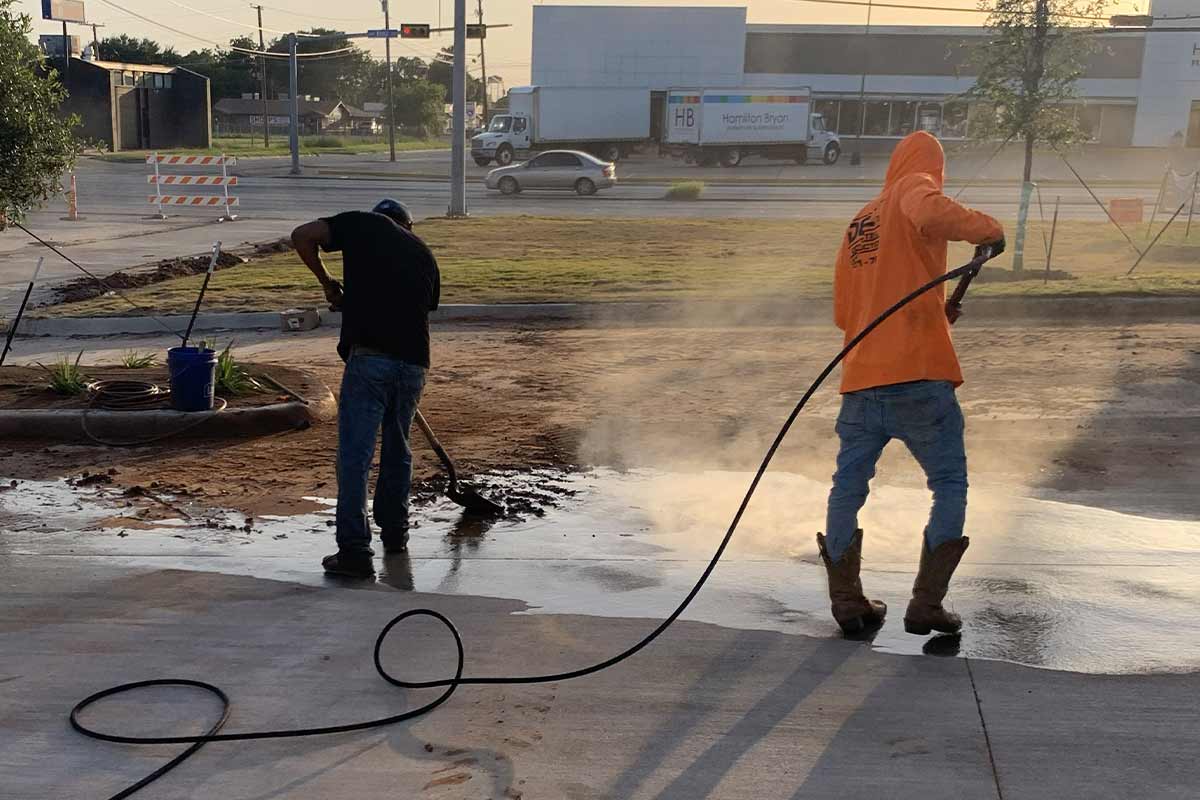
A clean surface is the single biggest factor in how long fresh paint actually lasts. Hot-water pressure washing pulls off oil residue, tire-rubber polish, organic debris, and surface dirt, and on a properly washed surface waterborne traffic paint typically lasts roughly 4 times longer than on an unwashed surface. The math is simple: a pressure wash adds a few hours to a project, and in exchange you skip an extra full restripe within the next 12 to 18 months. For thermoplastic and epoxy markings, surface prep moves from “strongly recommended” to “required” — adhesion failure on a dirty surface can void manufacturer warranties and trigger early delamination. Most Pittsburgh-area property managers we work with bundle a wash with their spring restripe and a second wash six months later as part of a recurring schedule.
ALCOSAN Stormwater Compliance
ALCOSAN‘s stormwater regulations and PA Act 167 require commercial parking-lot wash operations to capture rinse water before it reaches storm drains. Allegheny County has more than 3,500 commercial properties under MS4 permits, and a wash that lets oily detergent runoff into the storm system can trigger fines, abatement orders, and permit-renewal complications. Our protocol on every job: block storm-drain inlets with reusable mats during the wash, vacuum-recover rinse water with on-site equipment, use biodegradable detergents that meet EPA Safer Choice criteria, dispose of recovered wash water at approved off-site facilities. The capture-and-haul step is what keeps the property compliant, and it’s what separates commercial pressure washing from residential. We document the chain of custody for properties that need it for permit reporting.
Equipment & Process
We run trailer-mounted commercial pressure-wash systems with hot-water capability up to 200 degrees Fahrenheit, surface-cleaner attachments for uniform stripe-free cleaning, and on-board recovery equipment for stormwater compliance. Hot water dramatically improves oil-removal effectiveness compared to cold-water systems. At 200 degrees, oils emulsify with the detergent and rinse cleanly, while cold water often leaves a residue that re-deposits as the surface dries. Surface cleaners attach to the wand and produce an even cleaning pattern across asphalt and concrete without the streaks that hand-wand work leaves behind. After the wash, we vacuum the rinse water, give the surface 1 to 2 hours of drying time depending on humidity and wind, and either reopen the lot or hand off to the striping crew.
Asphalt vs Concrete Pressure Settings
Asphalt and concrete take different settings. For asphalt we run 3,000 to 3,500 PSI hot water at roughly 200 degrees with a surface-cleaner attachment to avoid pitting the asphalt binder; too much pressure on aging asphalt can lift fines and accelerate raveling. For concrete we step up to 4,000 PSI hot water with a higher-pressure tip for ground-in oil and tire marks. Concrete tolerates the higher pressure because the surface is much harder than asphalt, and the extra force gets into the surface pores where embedded oil and rubber sit. We adjust per zone within a single property — concrete loading dock at 4,000 PSI, adjacent asphalt parking at 3,200 PSI.
Service Areas Across Allegheny & Butler Counties
We serve commercial pressure washing across Allegheny and Butler counties, including Cranberry Township, Sewickley, Moon Township, Coraopolis, Robinson, McCandless, Wexford, Pine, and Marshall townships in Allegheny; and Adams, Cranberry, Forward, Jackson, and Penn townships in Butler. We also cover Beaver and Washington county properties on request, especially distribution-center and warehouse work. Most of our pressure-wash work pairs with restriping on the same property, so a single project covers prep and paint.
At a Glance
Process list
- (numbered): (1) Block storm-drain inlets
- Pre-rinse
- Apply biodegradable detergent
- Hot-water wash with surface cleaner
- Post-rinse
- Vacuum-recover rinse water
- Off-site disposal
Comparison table
(Cold-water vs Hot-water at 200°F): Hot-water removes ~3× more oil residue, requires ~40% less detergent, dries faster, and costs more per service hour to operate
For a full list of our pavement marking services, visit our all NW Pittsburgh services page.
Businesses We Serve


How it Works

GET A FREE ESTIMATE
Contact us today and we’ll have a quote to you in 24 hours

SCHEDULE AN INSTALLATION
We’ll have your installation scheduled in less than 7 days, without affecting your business hours

GET A PARKING LOT THAT POPS
For a budget-friendly price, you’ll get a parking lot that looks like new
We proudly work with:


We proudly work with:
Frequently Asked Questions About Parking Lot Pressure Washing in NW Pittsburgh, PA
Why pressure-wash a parking lot before restriping?
A clean surface is the single biggest factor in stripe adhesion and longevity. Hot-water pressure washing removes oil, tire-rubber polish, organic residue, and surface dirt — which typically extends paint life roughly 4× compared to striping over an unwashed surface. For thermoplastic and epoxy markings, surface prep is even more critical because adhesion failure on a dirty surface can void manufacturer warranties.
Are you compliant with ALCOSAN stormwater regulations?
Yes. ALCOSAN’s stormwater rules and PA Act 167 require commercial parking-lot wash operations to capture rinse water before it reaches storm drains. We block storm-drain inlets with reusable mats during the wash, vacuum-recover rinse water with on-site equipment, use biodegradable detergents that meet EPA Safer Choice criteria, and dispose of recovered wash water at approved off-site facilities — keeping your property compliant with Allegheny County MS4 permits.
What pressure and temperature do you use on asphalt vs concrete?
For asphalt, we use 3,000–3,500 PSI hot water at roughly 200°F with a surface-cleaner attachment to avoid pitting the binder. For concrete, we step up to 4,000 PSI hot water with a higher-pressure tip for ground-in oil and tire marks. The hot water dramatically improves oil-removal effectiveness compared to cold-water systems and reduces the volume of detergent needed for the same result.
How long does the lot need to be closed during pressure washing?
A typical NW Pittsburgh commercial lot of 50,000 sq ft (about 150–200 stalls) takes 4–6 hours to wash and another 1–2 hours to dry before any restriping work can begin. We schedule washes for off-hours — early morning, late evening, or weekends — to minimize disruption. For 24/7 facilities like hospitals and distribution centers, we can wash and stripe in phased sections so the lot stays partially open.
Will pressure washing remove old, faded stripes?
It can fade the most worn paint and clean off loose flakes, but pressure washing is not a stripe-removal service on its own. For full removal of old stripes — usually before a layout redesign — we combine pressure washing with paint-strip solution or shot-blasting equipment. If you only need a refresh of existing stripes (same layout), we’ll wash and then re-stripe over the cleaned surface.
Do you offer recurring pressure-wash schedules for property managers?
Yes. Most NW Pittsburgh property managers we work with put their commercial lots on an annual or semi-annual pressure-wash schedule — typically spring (post-winter salt residue) and fall (pre-winter restripe prep). Recurring schedules lock in pricing, secure preferred dates before peak season fills, and keep your property in continuous compliance with stormwater capture requirements without you having to chase down approvals each time.