Parking Lot Restriping
In NW Pittsburgh, PA
Restripe Existing Lines and Markings
1-800-STRIPER provides professional parking lot restriping in NW Pittsburgh, PA — refreshing faded lines, ADA stalls, fire lanes, and directional arrows using Sherwin-Williams Fast-Dry Traffic Paint and Graco LineLazer equipment for commercial properties across the Pittsburgh metro and the snowbelt freeze-thaw region.
1-800-STRIPER of NW Pittsburgh PROVIDes Restriping Services NEAR YOU
Need to brighten up your faded parking lot?
Keep your parking lot safe and attractive by restriping annually to freshen up lines and symbols that have faded from the sun, weather, and traffic. Nothing beats a fresh coat of paint!
Benefits:
Parking Lot Restriping in NW Pittsburgh, PA
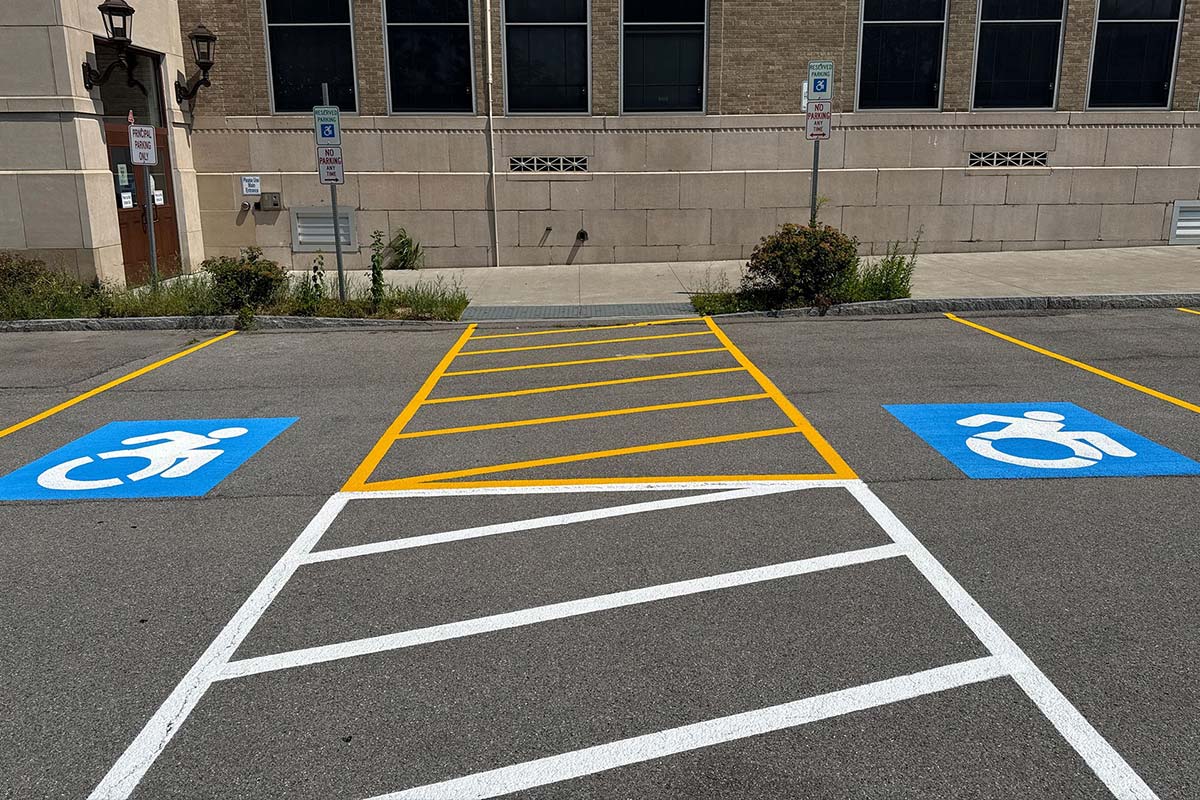
Parking lot restriping refreshes your existing stall layout instead of laying out a new one. We repaint faded lines, sun-worn ADA markings, and weather-damaged fire-lane paint over the same layout your lot was designed around, so drivers, delivery vehicles, emergency responders, and disabled visitors can still read it. Western PA’s freeze-thaw cycle, snowbelt plow scrape, and winter de-icing salt residue wear traffic paint faster than dry climates — most NW Pittsburgh commercial lots need a full restripe every 12 to 18 months when using waterborne traffic paint, vs 24 to 36 months in milder regions.
1-800-STRIPER of NW Pittsburgh handles the full scope in a single mobilization: assessment, paint selection, striping, and same-day cleanup. Our crews work across Allegheny, Butler, Washington, and Beaver counties — on distribution centers along the I-79 / I-376 corridor, retail strips, medical campuses, hospitals, and HOAs — following the pavement-marking standards set by the Manual on Uniform Traffic Control Devices on every job.
Why Pittsburgh Lots Need Restriping More Often
Three Pittsburgh-specific factors accelerate paint wear:
- Freeze-thaw cycles. Pittsburgh averages 30 to 40 freeze-thaw transitions every winter, and each cycle expands and contracts the asphalt enough to fatigue the paint film. Far more cycles than southern markets at the same latitude.
- Snowbelt plow-blade scrape. Allegheny County clears around 2,500 lane-miles per major storm. Plow blades scrape paint at every curb transition and stall-head edge, and the abrasion compounds over a full winter.
- Salt residue. Winter de-icing leaves a film that compromises adhesion of any fresh paint applied without a pre-wash. Spring restriping on un-washed lots typically lasts 4x shorter than on properly prepared surfaces.
Thermoplastic markings stretch the cycle to 3 to 5 years and are the right call on high-traffic stop bars, fire lanes, and accessible-stall outlines, but most stall fields stay on the annual paint cycle. We spec the right material for each marking on a per-property basis, not as a blanket policy.
What Gets Restriped
A standard restripe refreshes everything visible on the lot. Stall lines are the volume work, typically 4-inch white waterborne-paint lines re-applied directly over the existing layout. ADA stalls and access aisles include the white stall outlines plus the 36-inch ISA pavement symbol in the standard blue background, refreshed against the 2010 ADA Standards. Fire-lane stripes refresh the red curb paint plus the white “FIRE LANE NO PARKING” stencils. Directional arrows, hatching at striped islands, stop bars, crosswalks, and “STOP” / “NO PARKING” lettering all refresh on the same visit. We typically pre-mark over the existing layout (no layout change) unless the property has aged out of compliance, usually triggered by an ADA review, a fire-lane spec change, or a tenant-mix change that pushed the lot into a new use case.
Application Window & Fall Closing
The application window in NW Pittsburgh runs from May through October. Waterborne traffic paint cures best at 50°F+ ambient temperature on dry pavement, and the post-winter window (April through early May) often has too much salt residue and freeze-thaw debris to commit without a pressure-wash first. The peak season is June through September. Many property managers schedule fall closing in late September so the lot heads into winter with fresh, visible markings. Our calendar tightens by mid-July for the fall window, so book in early summer to lock in a September date.
Equipment & Paint
Our standard restripe paint is Sherwin-Williams Fast-Dry Traffic Paint, a waterborne acrylic engineered for commercial pavement use. Application is via Graco LineLazer IV 3900 airless line-striping equipment, which delivers consistent 4-inch line width with sharp edges. The paint cures in 30 minutes on a typical Pittsburgh summer day, and the lot is forklift-ready or vehicle-ready about 2 hours after the last line. For high-traffic markings (stop bars, fire lanes, arrows), we spec thermoplastic instead of paint for the longer service life. Glass beads are added on premium jobs for retroreflectivity, especially on lots adjacent to PennDOT routes where Publication 408 specs apply.
For the full pavement marking standard reference, see the Manual on Uniform Traffic Control Devices published by the Federal Highway Administration.
For a full list of our pavement marking services, visit our parking lot striping in NW Pittsburgh page.
Businesses We Serve


How it Works

GET A FREE ESTIMATE
Contact us today and we’ll have a quote to you in 24 hours

SCHEDULE AN INSTALLATION
We’ll have your installation scheduled in less than 7 days, without affecting your business hours

GET A PARKING LOT THAT POPS
For a budget-friendly price, you’ll get a parking lot that looks like new
We proudly work with:


We proudly work with:
Frequently Asked Questions About Parking Lot Restriping in NW Pittsburgh, PA
How often does a Pittsburgh parking lot need to be restriped?
NW Pittsburgh commercial lots typically need a full restripe every 12-18 months when using waterborne traffic paint, vs 24-36 months in dry climates. Three Pittsburgh-specific factors accelerate paint wear: 30-40 freeze-thaw cycles per year, snowbelt plow-blade scrape at curbs and stall heads, and salt residue from winter de-icing. Thermoplastic markings stretch the cycle to 3-5 years and are the right call on high-traffic stop bars and fire lanes.
What’s the best time of year to restripe?
The application window in NW Pittsburgh runs from May through October. Waterborne traffic paint cures best at 50°F+ ambient temperature on dry pavement, and the post-winter window (April-early May) often has too much salt residue and freeze-thaw debris to commit without a pressure-wash first. The peak season is June-September. Many property managers schedule fall closing in late September so the lot heads into winter with fresh, visible markings.
What gets restriped — just stall lines, or the whole layout?
A standard restripe refreshes everything visible: stall lines, ADA stalls and aisles, fire-lane stripes and curb paint, directional arrows, hatching, stop bars, crosswalks, and “STOP” / “NO PARKING” lettering. We typically pre-mark over the existing layout (no layout change) unless the property has aged out of compliance — usually triggered by an ADA review, a fire-lane spec change, or a tenant-mix change that pushed the lot into a new use case.
Do you pressure-wash before restriping?
We strongly recommend pressure washing on any lot that has been through a Pittsburgh winter — surface oil, salt residue, and tire-rubber polish all reduce paint adhesion. On a clean surface, paint typically lasts roughly 4x longer than on an unwashed surface. Pressure wash is offered as a paired service with restriping; for properties on a recurring schedule we typically wash in spring and stripe within a week of the wash.
How long is the lot closed during a restripe?
A typical 50,000 sq ft NW Pittsburgh commercial lot (about 150-200 stalls) takes one full day to restripe, plus 30 minutes per painted area for cure before vehicle traffic. We schedule the work in phases for 24/7 facilities — striping half the lot one night, the other half the next — so the property never fully closes. For weekend-flexible properties, we restripe Sunday morning and the lot is fully usable by Monday.
What paint do you use, and how is it applied?
Our standard restripe paint is Sherwin-Williams Fast-Dry Traffic Paint, a waterborne acrylic engineered for commercial pavement use. Application is via Graco LineLazer IV 3900 airless line-striping equipment, which delivers consistent 4-inch line width with sharp edges. For high-traffic markings (stop bars, fire lanes, arrows), we spec thermoplastic instead of paint for the longer service life. Glass beads are added on premium jobs for retroreflectivity.