Thermoplastic Striping
In Union, NJ
Long-Lasting Pavement Markings
1-800-STRIPER provides professional thermoplastic striping in Union, NJ — heat-applied stop bars, crosswalks, directional arrows, and fire lane markings in a thick retroreflective material that bonds into the pavement instead of drying on top of it, for high-traffic commercial lots across Union County.
1-800-STRIPER of Union PROVIDes Thermoplastic Striping Services NEAR YOU
Want to reduce the maintenance requirements for your parking lot?
Thermoplastic pavement markings are a durable, weather and vehicle-resistant striping option for your parking lot or facility.
You can utilize them for stop bars, ADA stalls, no-parking zones, directional arrows, crosswalks, or your entire parking lot.
Benefits:
Thermoplastic Striping in Union, NJ
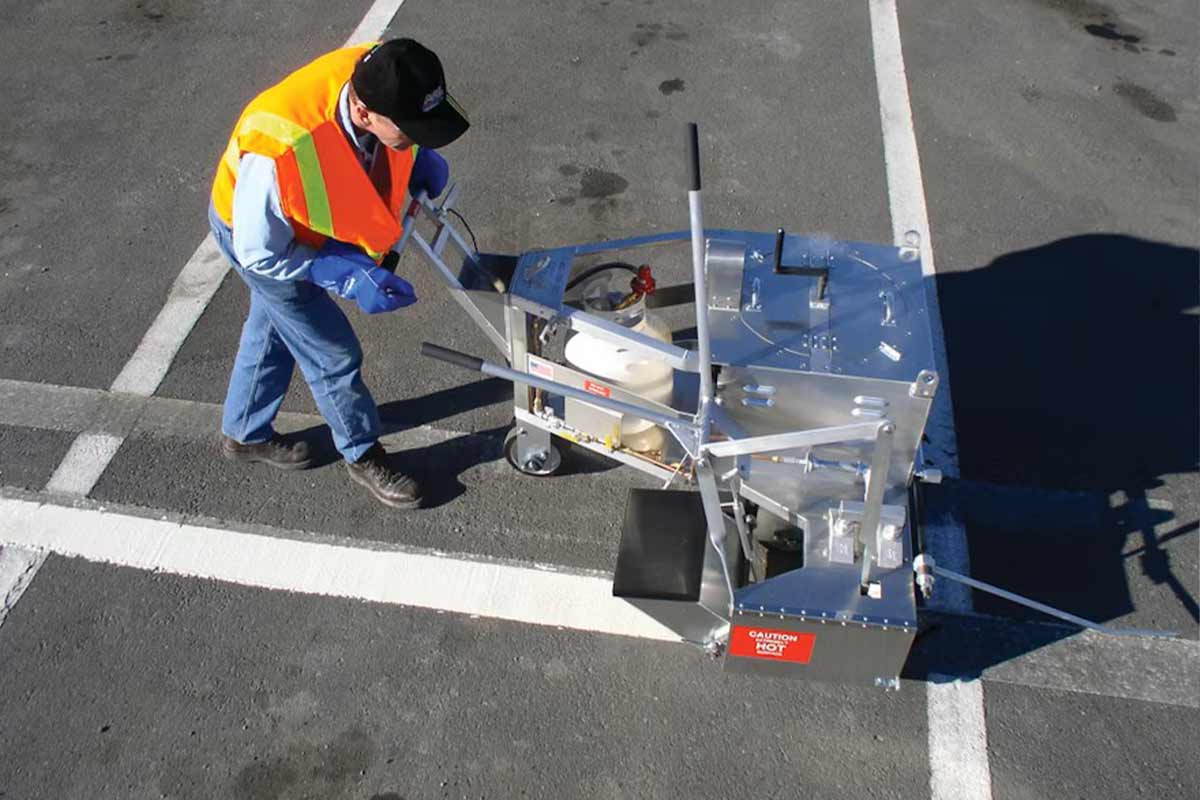
Paint dries on top of the pavement. Thermoplastic is applied hot and fuses into the asphalt surface, leaving a marking thick enough to feel underfoot, one that wears from the top down rather than lifting off. That makes it a different category of marking, not a better grade of the same one. 1-800-STRIPER of Union installs it on commercial properties across Union County and the six surrounding counties.
Because it costs more to install and needs specialist equipment, thermoplastic is not the right answer for a whole lot. It is the right answer for the specific markings that take the most abuse and matter the most when they disappear — and the interesting part of this page is working out which of your markings those are.
Thermoplastic vs. Traffic Paint
| Thermoplastic | Traffic paint | |
|---|---|---|
| How it bonds | Applied hot; fuses into the asphalt surface | Dries as a film on top of the surface |
| Thickness | Substantially thicker — a raised marking | Thin film |
| Service life under traffic | Considerably longer | Shorter; refreshed more often |
| Retroreflectivity | Glass beads embedded through the material | Beads applied to the surface of the wet film |
| Wear pattern | Wears down from the top, staying visible longer | Wears through, then loses definition quickly |
| Suitable substrate | Asphalt primarily; concrete needs assessment | Asphalt and concrete |
| Install cost and equipment | Higher; specialist heated equipment | Lower; standard striping equipment |
| Best use on a commercial lot | Stop bars, crosswalks, arrows, fire lanes, high-turn areas | Stall lines and the general layout |
The row that decides most projects is the wear pattern. A painted stop bar goes from readable to unreadable over a fairly short window once it starts to fail. A thermoplastic one keeps communicating while it thins, which is why it suits the markings whose disappearance actually creates a hazard.
How Thermoplastic Is Applied
The material arrives solid and is heated to a flowable state in dedicated equipment, then applied to the prepared pavement where it fuses to the surface and cools into place. Glass beads are incorporated so the marking is retroreflective under headlights rather than only visible in daylight.
Two conditions govern whether the install succeeds. The surface has to be clean, sound and dry — thermoplastic will not bond through dust, oil or moisture, and a marking that has failed to fuse will release as a sheet rather than wear gracefully. And the application parameters, including the temperature the material is worked at, come from the manufacturer’s written installation instructions for the specific product. We work to those instructions rather than to a general figure, because there is no primary standard that sets a single number for every product.
Cure is fast. Thermoplastic sets as it cools rather than drying over hours, so a marked area returns to traffic quickly — which on a busy lot is often a bigger practical advantage than the service life.
Service Life and Maintenance
Thermoplastic markings substantially outlast paint in the same location, and the honest answer about how long is that it depends on traffic volume, turning movement over the marking, plow activity and how well the surface was prepared. A stop bar at a busy exit takes far more punishment than a crosswalk on a quiet side of the same lot.
North Jersey adds the plow. A raised marking is more exposed to a plow blade than a flat painted line, so on lots that are plowed hard the thermoplastic markings are the ones to inspect first each spring. Maintenance is inspection rather than a schedule: we look at retroreflectivity and edge definition, and we replace individual markings rather than the whole set.
One thing thermoplastic does not do is tolerate a failing substrate. If the asphalt under it is cracking or delaminating, the marking goes with the pavement. On a lot in that condition, pavement repair comes first.
Where Thermoplastic Makes Sense on a Commercial Lot
The pattern we recommend most often is a mixed specification: thermoplastic on the markings that carry safety information and take the heaviest wear, traffic paint on the stall lines that make up the bulk of the layout.
Thermoplastic earns its cost on stop bars and yield lines at exits, crosswalks and pedestrian crossings, directional arrows in high-turn areas, fire-lane boundaries and lettering, loading and no-parking hatching that vehicles track over, and drive-through lane markings. Our fire lane striping page covers the fire-lane approval sequence, which is worth settling before installing a marking that is meant to last.
Two limits worth stating plainly. Thermoplastic is an asphalt material primarily; on concrete the bond needs assessing rather than assuming. And the New Jersey Department of Transportation Standard Specifications, which govern this material on state highway work, do not bind a private parking lot — they are a useful reference for what a durable installation looks like, not a requirement your lot has to meet. Where Union Township’s own section 266-83 requires that striping in a filed private parking area conform to the current Manual on Uniform Traffic Control Devices, that is the local requirement that does apply.
For a full list of our pavement marking services, visit our parking lot striping in Union page.
Businesses We Serve




How it Works

GET A FREE ESTIMATE
Contact us today and we’ll have a quote to you in 24 hours

SCHEDULE AN INSTALLATION
We’ll have your installation scheduled restriped in less than 7 days, without affecting your business hours

GET A PARKING LOT THAT POPS
For a budget-friendly price, you’ll get a parking lot that looks like new
We proudly work with:


We proudly work with:

Frequently Asked Questions About Thermoplastic Striping in Union, NJ
How long do thermoplastic pavement markings last?
Substantially longer than paint in the same location, and the honest answer on a specific figure is that it depends. Traffic volume, turning movement directly over the marking, plow activity and the quality of surface preparation all change it, so a stop bar at a busy exit and a crosswalk on a quiet side of the same lot will not age alike. In North Jersey the plow is often the deciding factor, because a raised marking is more exposed to a blade than a flat painted line.
How thick is thermoplastic striping?
Substantially thicker than paint — enough that the marking is raised and can be felt underfoot, which is part of how it works. The specific applied thickness is set by the manufacturer’s specification for the product and the application method used, so it is a product figure rather than a universal one, and we will give you the figure for the material going on your lot. What matters practically is that the extra thickness is what lets the marking wear down from the top while staying visible.
What is the temperature range for thermoplastic striping?
The material is heated to a flowable state before application, and the working temperature comes from the manufacturer’s written installation instructions for the specific product rather than from a single industry number. We follow those instructions. No primary standard sets one temperature for every thermoplastic product, so any contractor quoting a universal figure is quoting a product datasheet as though it were a code requirement. Ambient and pavement conditions on the day also affect whether an install should proceed.
Is thermoplastic striping reflective?
Glass beads are incorporated into the material, so the marking retroreflects headlight beams back toward the driver, which is what makes it visible at night and in rain rather than only in daylight. The difference from paint is where the beads sit: in thermoplastic they are distributed through the thickness of the material, so as the surface wears down fresh beads are exposed. On paint the beads are applied to the surface of the wet film, so reflectivity drops as soon as that surface starts to wear.
Can thermoplastic be applied over existing paint?
Not reliably, and this is a common cause of failure. Thermoplastic needs to bond to the pavement itself, and an existing paint film sits between the two — so the thermoplastic bonds to the paint, and the assembly is only as good as the paint’s grip on the asphalt. Existing markings in the same location generally need removing first, and the surface needs to be clean, sound and dry. We assess this before quoting rather than discovering it during the install.
Is thermoplastic worth it for a parking lot?
For part of a lot, usually yes. For a whole lot, usually not. The pattern that makes sense is a mixed specification: thermoplastic on the markings whose disappearance creates a hazard and which take the heaviest wear — stop bars, crosswalks, arrows in high-turn areas, fire lanes — with traffic paint on the stall lines that make up most of the layout. That gets the durability where it matters without paying for it across the whole surface.
Can thermoplastic be used for fire lanes and stop bars?
Yes. Both are among the best applications for it, because both are markings whose loss of legibility has real consequences, and both sit where traffic wears markings fastest. For fire lanes there is a sequencing point worth respecting: the location and specification come from your local fire official’s approval, so that should be settled before installing a marking intended to last for years. Our fire lane striping page covers how that approval works across the towns we serve.
What surfaces can take thermoplastic?
Asphalt primarily. The material is designed to fuse into an asphalt surface, which is where it performs as intended. On concrete the bond behaves differently and needs assessing for the specific slab rather than assumed, and there are locations where paint or an epoxy system is the better answer. In every case the surface must be clean, sound and dry, and a substrate that is cracking or delaminating will take the marking with it when it fails, so pavement repair comes first.