Parking Lot Pressure Washing
In Union, NJ
Surface Prep Before Restriping
1-800-STRIPER provides professional parking lot pressure washing in Union, NJ — removing oil, tire marks, and surface grime from asphalt and concrete so new striping bonds to a clean surface, for commercial properties across Union and Essex counties.
1-800-STRIPER of Union PROVIDes Parking Lot Pressure Washing Services NEAR YOU
Need to blast away years of grime?
If your parking lot or parking garage looks dull and dirty, our professional crew can wash away grime, oil, stains, and slippery buildup to restore the appearance of your property.
Benefits:
Parking Lot Pressure Washing in Union, NJ
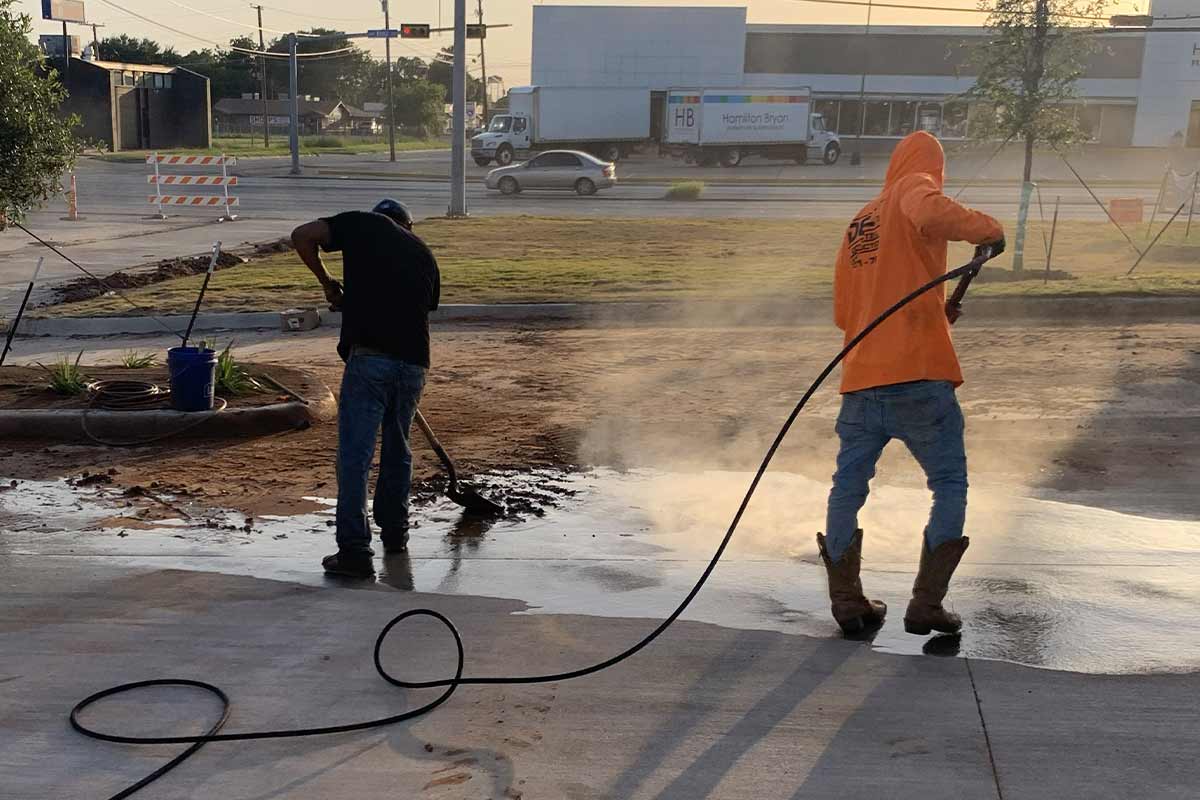
Paint bonds to the surface it lands on. Oil, tire rubber, sediment and organic film all sit between the coating and the pavement, which is why washing a commercial lot is only partly about appearance and mostly about adhesion. 1-800-STRIPER of Union washes commercial lots across Union and Essex counties and the five other counties we serve.
Surface Preparation Before Striping
This is the reason most of our washing work is booked, and the reason it is worth doing properly. Fresh striping over a contaminated surface does not fail visibly on day one — it fails early and unevenly, with edges lifting first, months after the invoice.
We wash the areas that need it rather than the whole lot by default: drive-through lanes, dumpster pads, delivery bays, entrances where sediment tracks in, and any long-standing oil staining. Our parking lot restriping page covers how the wash is sequenced into the striping visit so the lot closes once.
Oil, Grease and Tire Mark Removal
Oil and grease need a pre-treatment that breaks the contamination down before the water does the lifting; pressure alone drives them further into asphalt rather than off it.
Tire marks are different — they are rubber transferred onto the surface, and they respond to heat and agitation. Long-standing stains that have penetrated the binder may lighten rather than clear completely, and we say so before the work rather than after. A stain that will not fully lift is not a reason to skip the wash: adhesion improves regardless.
Wash Water and Stormwater Rules in New Jersey
Parking-lot wash water is not rainwater, and this is the part of the job that no competitor in this market mentions.
Water coming off a washed commercial lot carries oil, sediment, tire residue and any detergent used. Discharging that into a storm drain puts it into a regulated system: New Jersey’s stormwater program, administered by the Department of Environmental Protection, implements the federal National Pollutant Discharge Elimination System framework in this state. Storm drains discharge to surface water, which is why the water leaving your lot is treated differently from the water leaving your building’s plumbing.
We are not going to tell you a specific permit is required for your specific job, because that determination depends on the site and the activity and we have not verified it for yours. What we will say is that the framework exists, that it is a real consideration for a property manager, and that managing the wash water — containment, recovery, and appropriate disposal rather than letting it run to the nearest inlet — is part of doing this work properly. It is also the honest answer to why this is a contractor’s job rather than a maintenance crew with a hose.
Asphalt vs. Concrete Cleaning
The two surfaces need different treatment and the difference is not cosmetic. Asphalt is bound with a petroleum binder, so aggressive pressure and hot water can soften it, loosen aggregate and strip the surface. The damage looks like cleaning until it does not. Concrete tolerates more pressure but is porous and stains more permanently, so pre-treatment matters more and results on old staining are less complete.
We adjust pressure, temperature and dwell time to the surface rather than running one setting across a mixed site. On lots with both, the transition is where a single setting does visible harm.
Our Pressure Washing Process
- Inspection. Surface type, contamination, pavement condition, drainage paths and inlet locations recorded before anything is scoped.
- Pre-treatment. Oil, grease and organic staining treated so the contamination is broken down before washing.
- Wash. Pressure, temperature and dwell time set to the surface — asphalt and concrete handled differently.
- Wash-water management. Water contained and recovered rather than allowed to run to the nearest storm inlet, and disposed of appropriately.
- Dry. The surface brought to a state where a coating will bond, which on asphalt is a genuine wait rather than a formality.
- Stripe. Where the wash is preparation for marking, the striping crew follows directly.
Commercial Properties We Clean
Retail centers and strip malls, office parks, industrial and distribution properties, medical offices, restaurants and drive-throughs, gas stations and car washes, apartment and condominium communities, schools and municipal facilities.
Restaurants, drive-throughs and fuel sites are the heaviest users, because the contamination is continuous rather than incidental. Those are also the sites where washing before striping makes the largest difference to how long the markings last.
For a full list of our pavement marking services, visit our parking lot striping in Union page.
Businesses We Serve


How it Works

GET A FREE ESTIMATE
Contact us today and we’ll have a quote to you in 24 hours

SCHEDULE AN INSTALLATION
We’ll have your installation scheduled in less than 7 days, without affecting your business hours

GET A PARKING LOT THAT POPS
For a budget-friendly price, you’ll get a parking lot that looks like new
We proudly work with:


We proudly work with:
Frequently Asked Questions About Parking Lot Pressure Washing in Union, NJ
Is it illegal to pressure wash your driveway?
Washing is not the issue — where the water goes is. Wash water from a paved surface carries oil, sediment, tire residue and detergent, and a storm drain discharges to surface water rather than to treatment. That puts the discharge inside a regulated framework: New Jersey’s stormwater program, administered by the Department of Environmental Protection, implements the federal National Pollutant Discharge Elimination System in this state. We will not tell you what applies to your specific site, but managing the water rather than letting it run to the inlet is the responsible approach.
What do I need to pressure wash a parking lot?
Equipment that lets you control pressure and temperature rather than run one setting, because asphalt and concrete tolerate very different treatment. Pre-treatment products for oil, grease and organic staining, since pressure alone drives oil further into asphalt. A means of containing and recovering the wash water rather than discharging it to a storm inlet. And knowledge of the surface: aggressive pressure on asphalt strips aggregate and damages the binder, and the damage initially looks like cleaning.
Does the lot need washing before restriping?
Not always the whole lot, and often part of it. Paint bonds to whatever it lands on, so oil, tire rubber, sediment and organic film all sit between the coating and the pavement and cause early, uneven failure — edges lifting months later rather than an obvious fault on day one. The areas that usually need it are drive-through lanes, dumpster pads, delivery bays, entrances where sediment tracks in, and established oil staining. We assess and wash those rather than defaulting to the full area.
Where does the wash water go?
Not to the storm drain, if the job is being done properly. Storm drains discharge to surface water rather than to treatment, and wash water off a commercial lot carries oil, sediment, tire residue and detergent. New Jersey’s stormwater program, administered by the Department of Environmental Protection, implements the federal National Pollutant Discharge Elimination System framework here. Our process contains and recovers the water and disposes of it appropriately, which is a large part of why this is contractor work.
Will pressure washing damage asphalt?
It can, and this is the main risk of the wrong approach. Asphalt is bound with a petroleum binder, so excessive pressure or hot water can soften the binder, loosen aggregate and strip the surface — and the early stage of that damage looks like effective cleaning. Concrete tolerates considerably more pressure but is porous and holds stains more permanently. We set pressure, temperature and dwell time to the surface, and we adjust at the transition on sites that have both.
How long before we can restripe after washing?
The surface has to be genuinely dry, not just dry to the touch, because trapped moisture prevents the coating bonding. On concrete that can take longer than people expect, since the material holds water in its pores. On asphalt it depends on temperature, humidity, sun and how much water was used. We build the drying interval into the schedule rather than treating it as a formality, and where the weather will not allow it we move the striping rather than mark over a damp surface.
How often should a commercial lot be cleaned?
It depends far more on what happens on the lot than on the calendar. Restaurants, drive-throughs, fuel sites and dumpster areas accumulate contamination continuously and benefit from regular attention. A quiet office park may need nothing between restriping cycles. The practical trigger is visible oil staining, tire-mark accumulation in turning areas, or a planned restripe — the last being the most valuable moment, since the wash directly extends how long the new markings last.