
Temporary Parking Lot Striping
In Union, NJ
Event and Construction Markings
1-800-STRIPER provides professional temporary parking lot striping in Union, NJ — short-duration event markings, construction-staging layouts, and overflow parking on grass, gravel, pavement, or any surface using removable water-based traffic paint for commercial properties across Union County.
1-800-STRIPER of Union PROVIDes Temporary Parking Lot Striping Services NEAR YOU
Need Temporary Stripes?
Use temporary stripes to direct traffic and create parking areas at your special event or to keep construction sites safe without a long-term commitment. We paint on grass, gravel, pavement, or any other surface where temporary striping is needed.
Striping solutions for:
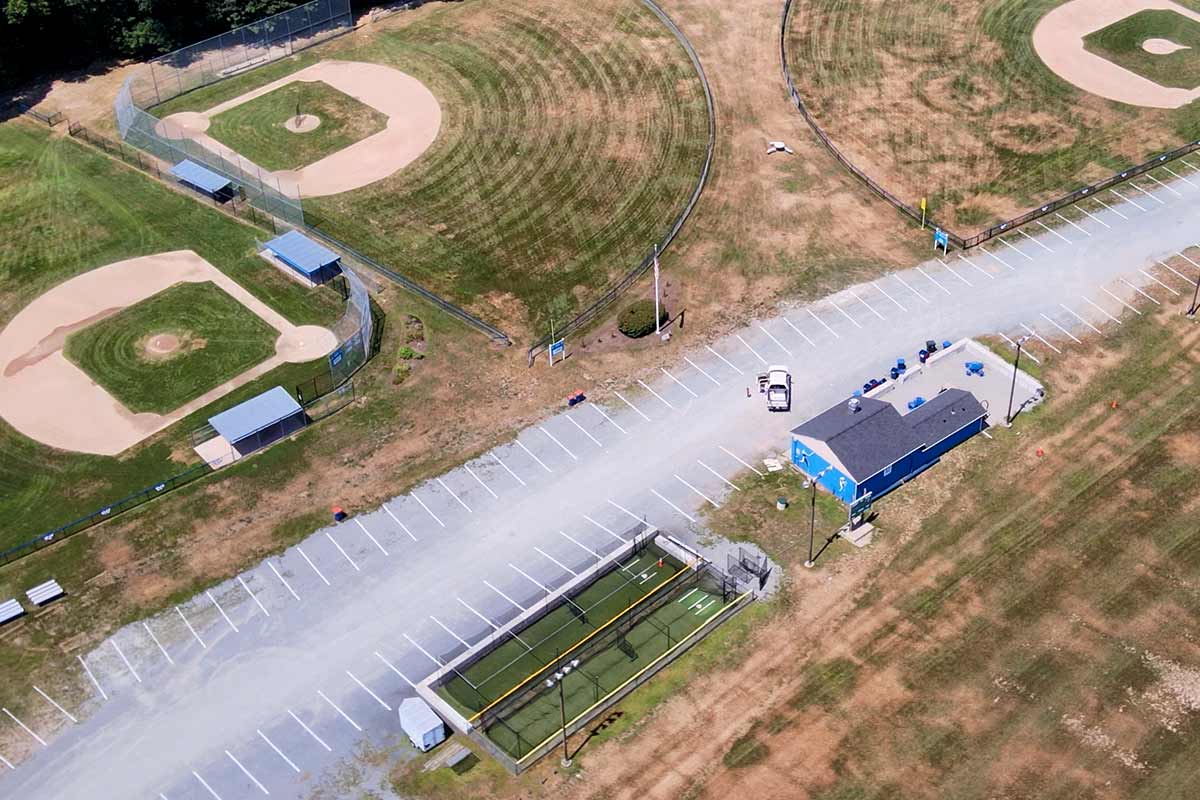
Temporary Parking Lot Striping in Union, NJ
Temporary striping solves a problem permanent striping cannot: you need organized parking for a week, a weekend or a construction phase, on ground that will go back to being something else afterwards. 1-800-STRIPER of Union does this work across Union County and the six surrounding counties, on paved lots and on ground that has never been a parking area at all.
The material is the difference. Temporary layouts are marked in removable water-based traffic paint rather than a durable coating, which is what makes them removable without damaging what is underneath. The layout discipline is the same as permanent work — measured rows, real aisle widths, defined entry and exit — because a temporary lot that confuses drivers creates exactly the congestion it was meant to prevent.
Event and Overflow Parking Layouts
Event parking is a capacity problem with a time limit. The field, the back lot or the adjacent parcel has to absorb several hundred vehicles in a compressed arrival window and release them in an even shorter one.
We lay out marked rows with aisles wide enough for the two-way movement an arrival surge actually produces, define the entry and exit points so inbound and outbound traffic do not meet, mark accessible parking closest to the entrance, and mark the pedestrian routes people will walk whether or not you provide them. Where attendants will be directing, we mark to the plan they are working to rather than leaving them to improvise.
Typical work: festivals and fairs, school and university events, houses of worship at high-attendance services, seasonal retail overflow, corporate events, sports tournaments and graduations.
Construction Staging and Phased Work Zones
On an active construction or renovation site the parking plan changes several times before the project ends, and each change needs marking that people will actually follow.
We mark staged layouts phase by phase: contractor parking separated from tenant or visitor parking, material and equipment staging zones bounded so they do not creep into circulation, delivery and crane positions marked, and haul routes defined across the site. When a phase ends we remove the previous markings and mark the next configuration, so there is never more than one live layout on the ground at a time — which is the failure that causes most construction-parking confusion.
Marking Grass, Gravel and Unpaved Surfaces
This is the differentiator, and it is the reason most temporary parking inquiries come to us. We mark grass, gravel, dirt, compacted stone, pavement and any surface a vehicle can park on.
Each behaves differently and needs a different approach. Grass takes marking well and holds it for the duration of a short event, and the marking grows out afterwards. Gravel and compacted stone need heavier application because the surface is broken rather than continuous, and the line reads as a band rather than a crisp edge — which is fine for its purpose. Dirt depends heavily on moisture at the time of marking. Pavement behaves like any striping surface and holds the crispest line.
What we do not do is guess. We walk the surface first and tell you what it will hold and for how long, because a marking that has faded before the event is worse than no marking at all.
How Temporary Markings Are Removed
- Site walk and surface assessment. We confirm what the surface is, how it will take marking, and how the marking will come off it afterwards. This happens before anything is quoted.
- Layout. Rows, aisles, entry and exit, accessible parking and pedestrian routes set out and measured.
- Temporary marking. Removable water-based traffic paint, applied at the weight the surface requires.
- Event or work phase. The layout is in use. On multi-phase construction work we return between phases.
- Removal. On grass and unpaved ground the marking weathers and grows out. On pavement it is removed rather than left to fade, so the surface is returned as it was found.
- Walk-through. We confirm the surface is clear with you before we close the job.
For a full list of our pavement marking services, visit our parking lot striping in Union page.
Businesses We Serve




How it Works

GET A FREE ESTIMATE
Contact us today and we’ll have a quote to you in 24 hours

SCHEDULE A STRIPING
We’ll have your space restriped in less than 7 days, without affecting your business hours

GET A PARKING LOT THAT POPS
For a budget-friendly price, you’ll get a parking lot that looks like new
We proudly work with:


We proudly work with:


Frequently Asked Questions About Temporary Parking Lot Striping in Union, NJ
What is temporary parking lot striping?
It is organized parking marked out for a defined period and then removed. The layout work is the same as permanent striping — measured rows, real aisle widths, defined entry and exit, accessible spaces and pedestrian routes — but it is marked in removable water-based traffic paint rather than a durable coating. That is what allows it to be taken off pavement afterwards, or to weather and grow out on grass, without leaving the surface changed.
Can you stripe parking on grass or a field?
Grass, gravel, dirt, compacted stone, pavement — any surface a vehicle can park on. Grass takes marking well for the duration of a short event and the marking grows out afterwards. Gravel and compacted stone need a heavier application because the surface is broken rather than continuous, so the line reads as a band rather than a crisp edge. We walk the surface before quoting and tell you what it will hold and for how long.
How long do temporary markings last?
Long enough for the event and not much longer, which is the point. Duration depends on the surface, the weather and the traffic over it — a marked grass field holds definition through a weekend comfortably, a gravel surface loses crispness faster under vehicle movement, and pavement holds longest. For multi-week construction phasing we plan refresh visits into the schedule rather than hoping the original marking survives. We give you a realistic duration for your specific surface before the work.
How are temporary markings removed?
It depends on the surface. On grass and unpaved ground the removable water-based paint weathers and the marking grows out with the surface, so no removal work is needed. On pavement we remove it rather than leave it to fade, so the lot is returned as it was found and there is no ghost layout confusing drivers later. On multi-phase construction sites we remove each phase’s markings before marking the next, so only one layout is ever live.
Can temporary striping be used for construction phasing?
It is one of the main uses. We mark each phase as its own configuration: contractor parking separated from tenant and visitor parking, staging zones bounded so material does not creep into circulation, delivery and equipment positions marked, and haul routes defined. When a phase ends the previous markings come off before the next go down. Having only one live layout on the ground at a time is what prevents most construction-parking confusion.
Do temporary markings damage the surface?
They are not intended to, and that is why the material is different from permanent striping. Removable water-based traffic paint is chosen so it can be taken off pavement or allowed to weather out of grass without changing what is underneath. The judgment that matters is surface-specific, which is why we assess the surface before quoting rather than after marking. If we think a surface will not release the marking cleanly, we tell you before the work rather than afterwards.
How much notice do you need for an event layout?
Less than most people expect. Commercial work in our area is usually scheduled within about a week of the estimate being approved, and event layouts are typically a single visit. What genuinely helps is early notice of two things: the surface we will be marking, so we can assess what it will hold, and your expected arrival pattern, so the aisles and the entry and exit points are sized for the surge rather than for the average. Contact us for a free estimate.