Temporary Parking Lot Striping
In East Louisville, KY
Event and Construction Markings
1-800-STRIPER provides professional temporary parking lot striping in East Louisville, KY — short-duration event markings, construction-phase layouts, and overflow parking on grass, gravel, pavement, or any surface, using removable water-based traffic paint.
1-800-STRIPER of East Louisville PROVIDes Temporary Striping Services NEAR YOU
Need Temporary Stripes?
Use temporary stripes to direct traffic and create parking areas at your special event or to keep construction sites safe without a long-term commitment. We paint on grass, gravel, pavement, or any other surface where temporary striping is needed.
Striping solutions for:
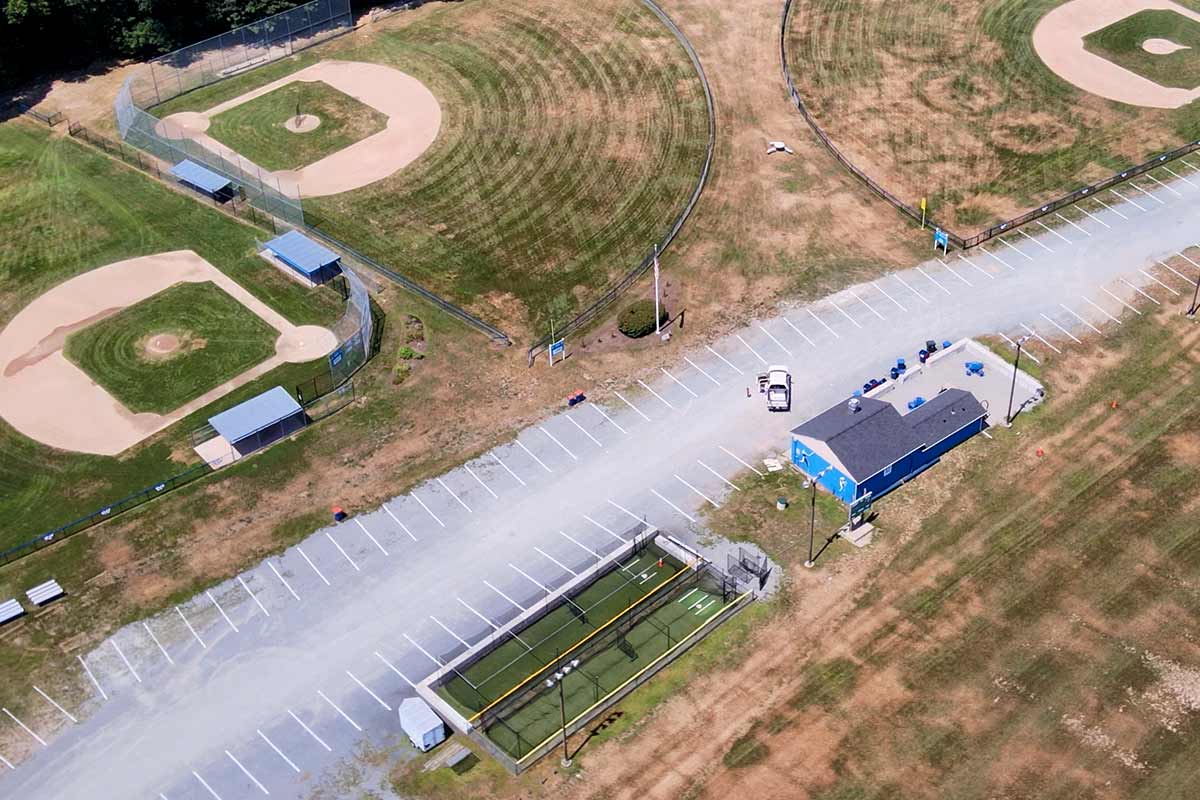
Temporary Parking Lot Striping in East Louisville, KY
Temporary striping solves a problem permanent striping cannot: you need organized parking for a while, in a place that is not a parking lot, and you need it gone afterward.
Three situations account for nearly all of it. Events, where a field, a fairground or a spare paved area has to hold several hundred cars for a weekend and then go back to being a field. Construction, where a working lot has to be re-laid in phases as the job moves across it. And overflow, where a property’s normal capacity is not enough for a seasonal peak and a secondary area has to be pressed into service.
All three have the same underlying requirement — get vehicles parked at a predictable density, in orderly rows, with clear circulation and a safe way for people to walk out — and the same underlying constraint, which is that whatever we put down has to come back off.
The material is removable water-based traffic paint instead of the durable coatings a permanent lot gets, and the layout work is the same discipline either way: measure, count, mark the ground, then paint.
Surfaces We Can Mark: Grass, Gravel, Pavement, and More
The most common assumption we correct is that this only works on asphalt. It does not.
Grass and turf. Field parking is the classic event case. Marking on turf is done with removable paint formulated for the purpose, and it holds a legible line long enough for the event while growth and weather take it out afterward. Row spacing on grass is usually more generous than on pavement, because drivers park less precisely on a surface with no hard edges and because you want a vehicle that gets stuck to be extractable.
Gravel and compacted stone. Gravel takes marking, though the line reads differently — the paint sits on the aggregate and the edge is less crisp. It works, and it works better with wider lines than you would use on asphalt.
Asphalt and concrete. The straightforward case, and the one where removal takes the most thought, because a hard surface holds the paint best and gives it up least willingly.
Dirt, compacted earth and mixed surfaces. Site-dependent, and this is where we would rather look before promising. Loose or dusty surfaces do not hold a line well, and if that is what you have, the honest answer may be cones and stakes rather than paint.
The brand rule we work to is simple: any surface, not just pavement. If you have somewhere to put cars, tell us what it is and we will tell you whether paint is the right tool for it.
Event, Construction, and Overflow Layouts
Event lots get laid out backward from the exit. Getting several hundred cars in over two hours is easy; getting them out in twenty minutes when everyone leaves at once is the actual design problem. Row direction, aisle width, the number and placement of exits, and where pedestrians walk relative to moving vehicles are the decisions that matter. We mark rows, aisles, entry and exit routing, pedestrian paths and any reserved or accessible areas.
Construction phasing is the opposite problem: the lot exists and is in use, and it has to keep working while shrinking and moving. That means a layout per phase, marked to be legible against whatever the previous phase left behind, and enough contrast that drivers follow the current arrangement rather than the ghost of the old one.
Overflow areas get treated as a permanent-quality layout with a temporary material, because they are usually used repeatedly across a season.
The point almost every event-parking page misses: accessible parking obligations do not disappear because the parking is temporary. If you are providing parking for an event or in an overflow area, accessible spaces, access aisles and an accessible route to the destination remain part of the plan — and on grass or gravel the route surface itself becomes a real design question, because a firm, stable, slip-resistant path is not something turf provides on its own. We raise this at layout rather than at the event.
For a full list of our pavement marking services, visit our parking lot striping in East Louisville page.
Businesses We Serve



How it Works

GET A FREE ESTIMATE
Contact us today and we’ll have a quote to you in 24 hours

SCHEDULE A STRIPING
We’ll have your space restriped in less than 7 days, without affecting your business hours

GET A PARKING LOT THAT POPS
For a budget-friendly price, you’ll get a parking lot that looks like new
We proudly work with:


We proudly work with:

Frequently Asked Questions About Temporary Parking Lot Striping in East Louisville, KY
How long does temporary striping last?
Long enough for the job and not much longer, which is the point. On pavement, removable water-based marking is formulated to come back off, so it holds a legible line for the duration of a typical event or phase and not much past it — how long depends on traffic volume, surface and weather. On grass, growth and mowing take it out faster, which is usually convenient. Weather is the biggest variable — heavy rain shortens it considerably. Tell us the duration you need when you call and we will match the material and line width to it.
Can you stripe grass or gravel for an event?
Yes. Turf and gravel are routine surfaces for event and overflow parking, and we mark them with removable paint formulated for the surface rather than the durable coatings used on a permanent lot. The layout differs a little: rows are usually spaced more generously than on pavement because drivers park less precisely without hard edges, and lines go on wider on gravel so they read against the aggregate. Loose or dusty surfaces are the case where we want to look first.
How is temporary paint removed afterward?
On grass it mostly removes itself — growth and mowing take it out within a normal cycle. On gravel it weathers off and gets disturbed by traffic. On pavement, which is the case that needs planning, removal options include pressure washing and mechanical methods, and which one applies depends on the surface and how long the marking has been down. We agree the removal method as part of the original scope, so it never becomes a separate problem afterward.
Do temporary or overflow lots still need accessible spaces?
Accessible parking obligations do not evaporate because parking is temporary, and this is the single most overlooked part of event-lot planning. If you are providing parking, the plan should include accessible spaces, access aisles and an accessible route to the destination. On grass or gravel the route surface becomes a genuine design question, because a firm, stable and slip-resistant path is not something turf provides on its own. We raise it at layout, when it is still cheap to solve.
How far ahead do you need to schedule an event lot?
Earlier than most people call, and the constraint is usually weather, and weather does not negotiate. Marking needs a dry surface and a dry window afterward, so a job that needs one day of work realistically needs a two or three day window to land in. For a fixed-date event we want to be scheduled well in advance with flexibility on which day inside that window we put paint down. Construction phasing is easier, since the dates move with the job.
Can you re-use the same layout for a recurring event?
Yes, and it is worth doing. Once a layout has been measured, tested and marked once, we keep the dimensions, row counts and routing on file, so the second time is faster and produces an identical result. That matters for recurring events where staff and attendees learn the arrangement. If something did not work the first time — an exit that backed up, an aisle that was too tight for the vehicles that turned up — we adjust it instead of repeating it.