
Temporary Parking Lot Striping
In Central Miami, FL
Event and Construction Markings
1-800-STRIPER provides professional temporary parking lot striping in Central Miami, FL — short-duration event markings, construction zone striping, and overflow parking layouts on grass, gravel, pavement, or any surface using removable water-based traffic paint.
1-800-STRIPER® of Central Miami PROVIDes Temporary Striping Services NEAR YOU
Need Temporary Stripes?
Use temporary stripes to direct traffic and create parking areas at your special event or to keep construction sites safe without a long-term commitment. We paint on grass, gravel, pavement, or any other surface where temporary striping is needed.
Striping solutions for:
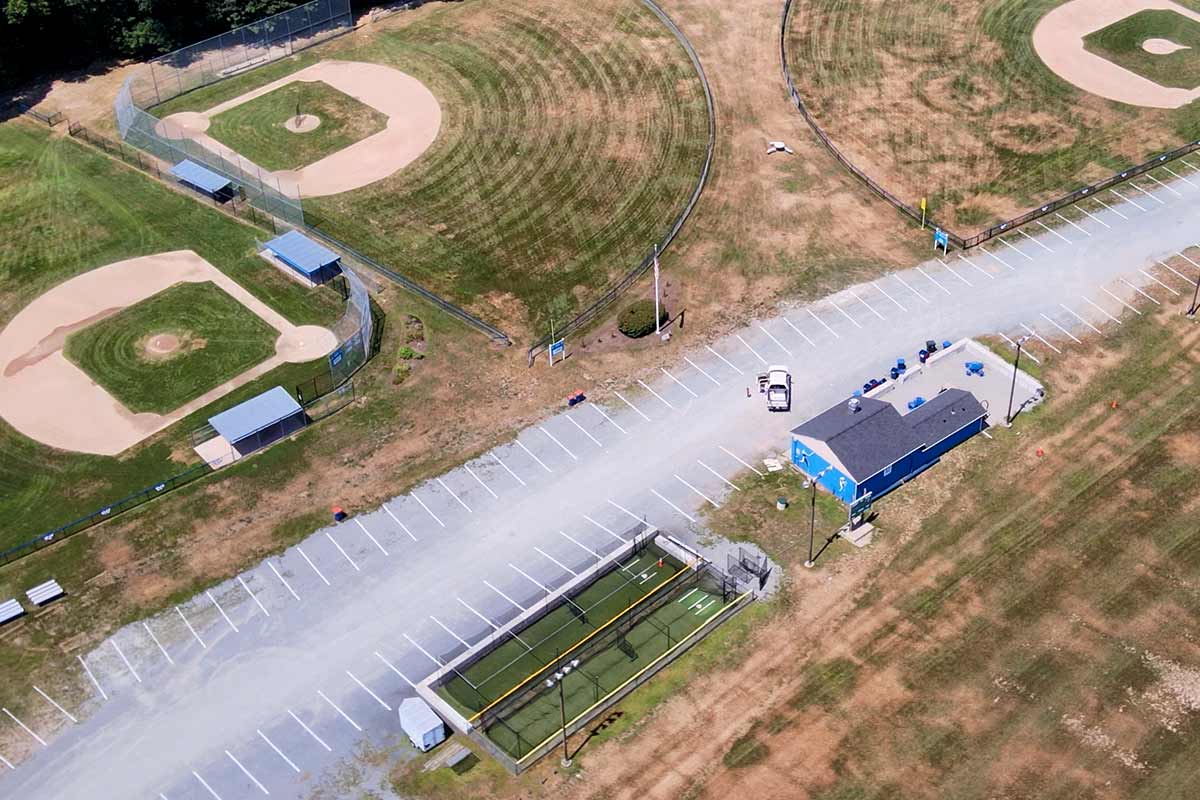
Temporary Parking Lot Striping in Central Miami, FL
Temporary striping solves a problem permanent striping cannot: a parking layout that has an end date. The markings go down for a weekend, a season, or a construction phase, they organize traffic and stalls while they are needed, and then they come up or wear away without leaving a ghost of themselves on your pavement.
That end date changes every decision on the job. The product is chosen for how it comes off rather than how long it lasts. The layout is planned around a traffic pattern that will not exist next month. And the surface is frequently not asphalt at all, because the ground being pressed into service as parking is usually the ground that was not paved for it.
We do this work across Miami-Dade County — event venues, stadium and arena overflow, convention and cruise-terminal support parking, festival grounds, church and school lots on high-attendance weekends, construction sites phasing traffic through a build, and commercial properties that need extra organized parking for part of the year. Call (786) 434-8020 and tell us the dates first; the dates drive everything else.
Events, Construction Phasing, and Overflow Parking
Events. A field, a vacant lot, or an underused corner of an existing lot becomes parking for a few days. What it needs is not really stalls — it is a system: an entry point that does not back traffic onto the road, a one-way circulation route, marked rows that let attendants fill the space efficiently, pedestrian paths that keep people out of drive lanes, accessible parking placed close to the entrance on the firmest ground available, and a clear exit. Stall lines alone will not deliver any of that.
Construction phasing. A live construction project on an occupied commercial property is a moving target. The contractor takes a section of the lot, tenants keep trading, and the traffic pattern has to be re-cut every time the work zone moves. Temporary markings let you re-stripe the affected area at each phase rather than committing permanent paint to a layout with a three-week life. On a phased job we plan the sequence with the site manager up front so each phase change is a scheduled visit, not an emergency call.
Overflow and seasonal capacity. Retail centers in the run-up to the holidays, houses of worship with a high-attendance calendar, schools on graduation and event days, hotels and venues in season — properties that need a functioning second lot for part of the year and do not want it permanently marked the rest of it.
Where these overlap in Miami-Dade is unpaved ground. The county’s event calendar is dense and its venues are surrounded by land that gets used as parking without ever being built as parking. That is why the surface question below is the one we ask first.
Striping on Grass, Gravel, Pavement, and Unpaved Ground
Most striping companies quote temporary work as though it were permanent work with a shorter warranty, and that assumption breaks the moment the ground is not asphalt. It is worth being specific about what changes.
| Surface | What it takes | What to expect |
|---|---|---|
| Grass and turf | Water-based marking products applied at a rate the turf tolerates; layout set from stakes or a measured grid rather than from existing lines | Markings weather and mow out over time; the turf recovers |
| Gravel and compacted aggregate | Heavier application because loose stone scatters the line; wider lines to stay readable as aggregate shifts | Requires refresh on multi-week jobs as traffic redistributes the surface |
| Dirt and compacted soil | Surface has to be firm and dry enough to hold a line; damp ground takes the paint unevenly | Weather-dependent, and the most schedule-sensitive of the surfaces |
| Asphalt and concrete | Removable water-based product chosen so it lifts or wears without ghosting | The permanent-paint mistake shows here — a durable product on a temporary job leaves a shadow for years |
| Existing marked pavement | New temporary layout applied over or alongside permanent markings, usually in a contrasting color | Requires a plan for how drivers read two layouts at once |
The single most useful thing you can do when you call is describe the ground. Grass at a fairground, gravel at a construction laydown yard, and a sealed asphalt lot behind a retail center are three different jobs, and the product choice is made before the crew is scheduled rather than on arrival.
How Temporary Striping Is Applied and Removed
- Site walk and surface check. We look at the ground, the drainage, the expected vehicle count, and where traffic will enter and leave. On unpaved sites we check how firm the ground is and how it behaves wet, because South Florida weather will test it.
- Layout planning. Entry and exit routing, aisle direction, row spacing, pedestrian paths, accessible parking placement, and any drop-off or rideshare zone. For events this is done against the expected arrival pattern, not just the available area.
- Marking out. Rows and reference points are set from measurements so the layout stays square across a large open area — the failure mode on an unmarked field is a layout that drifts and wastes a row.
- Application. Removable water-based traffic paint, applied at the rate the surface requires.
- During the event or phase. On longer jobs we schedule refresh visits, because gravel shifts and turf grows.
- Removal or wear-off. Planned at the start, not improvised at the end. On turf and unpaved ground the markings weather away. On pavement, they are removed mechanically or allowed to wear, depending on how long they were down and what the surface will tolerate.
Two practical notes. Temporary striping is weather-dependent in a place where the afternoon forecast is a real variable, so booking early buys you a window with room to move rather than a single fixed date. And the accessible parking in a temporary layout is not optional or informal — it needs to be on firm ground, close to the entrance, with a route someone can actually use. That is the part of an event layout most often got wrong, and it is the part people notice.
Book Temporary Striping for Your Central Miami Event
Dates first: call (786) 434-8020, or send them through the estimate form on this page. We will also want the site address, the surface, and roughly how many vehicles you expect, and we will walk the ground and plan the layout with you. Estimates are free. For large events we would rather see the site than quote from a map.
For a full list of our pavement marking services, visit our parking lot striping in Central Miami page.
Businesses We Serve




How it Works

GET A FREE ESTIMATE
Contact us today and we’ll have a quote to you in 24 hours

SCHEDULE A STRIPING
We’ll have your space restriped in less than 7 days, without affecting your business hours

GET A PARKING LOT THAT POPS
For a budget-friendly price, you’ll get a parking lot that looks like new
We proudly work with:


We proudly work with:


Frequently Asked Questions About Temporary Parking Lot Striping in Central Miami, FL
What is temporary parking lot striping used for?
Three situations account for most of it: events that need overflow or directional parking for a few days, construction phasing where traffic patterns change as work progresses, and seasonal capacity where a property needs extra organized parking for part of the year. The common thread is that the layout has a known end date, so a permanent marking would be the wrong tool.
Can you stripe on grass or gravel, not just pavement?
Yes. Temporary markings can be applied to grass, gravel, dirt, and compacted unpaved ground as well as asphalt and concrete — which matters in Miami-Dade, where overflow parking for events frequently lands on unpaved lots and open ground. The product and application method change with the surface, so tell us what you are working with when you call.
How is temporary striping removed?
It depends on what was used and what it was applied to. Removable water-based products on unpaved ground generally weather away; on pavement, markings may be removed mechanically or allowed to wear off, depending on how long they need to last and what the surface can tolerate. We will match the product to your timeline so removal is planned rather than improvised.
How far in advance should I book temporary striping for an event?
The earlier the better, because temporary striping is weather-dependent and event dates are not. Booking ahead lets us hold a window with room to move if the forecast turns, and gives us time to walk the site and plan the layout. For large events we prefer to see the ground and the expected traffic flow before quoting.
Will temporary markings damage my pavement or turf?
The point of a temporary product is that it does not become permanent. On pavement, removable markings are chosen so they can be taken up or wear away without leaving the ghosting a permanent product would. On turf, products are selected for the same reason. Tell us the surface and how long the markings need to last and we will match the product to it.
Can you handle directional flow, not just stalls?
Yes. For events and construction phasing, the directional layout is usually the harder problem — entry and exit routing, one-way aisles, pedestrian crossings, drop-off zones, and accessible parking placement. Stall lines alone rarely solve an event traffic problem. We plan the flow with you and mark it as one layout.