
Parking Lot Sign Installation
In Central Miami, FL
ADA, Fire Lane, and Directional Signage
1-800-STRIPER provides professional parking lot sign installation in Central Miami, FL — installing accessible-space signs, fire lane no-parking signs, directional signage, and tow-away warnings per the 2010 ADA Standards for Accessible Design and Florida Statute 553.5041 for commercial properties across Miami-Dade County.
1-800-STRIPER® of Central Miami PROVIDes Signage Installations Services NEAR YOU
Are you communicating clearly?
We install new signs in adherence with local regulatory standards and can repair or replace damaged signs so you can clearly communicate your parking requirements.
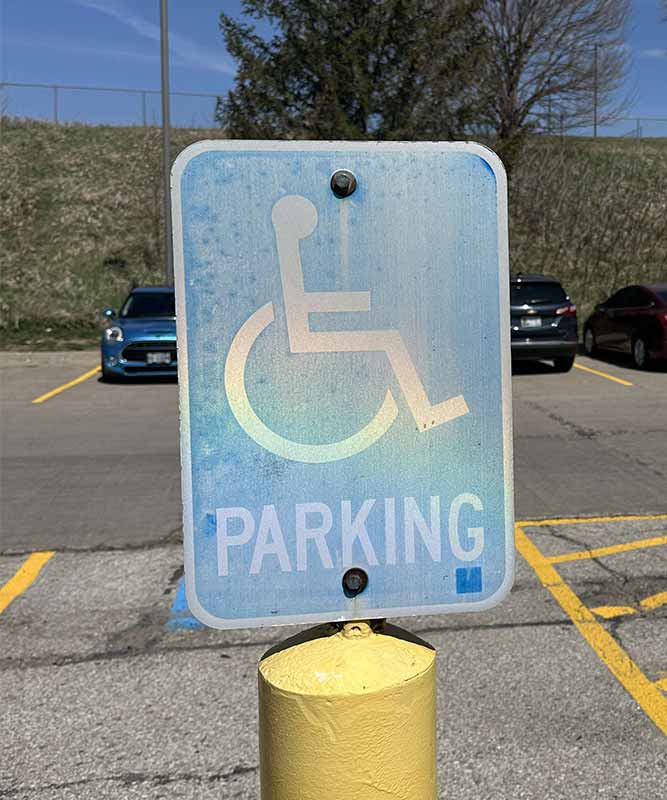
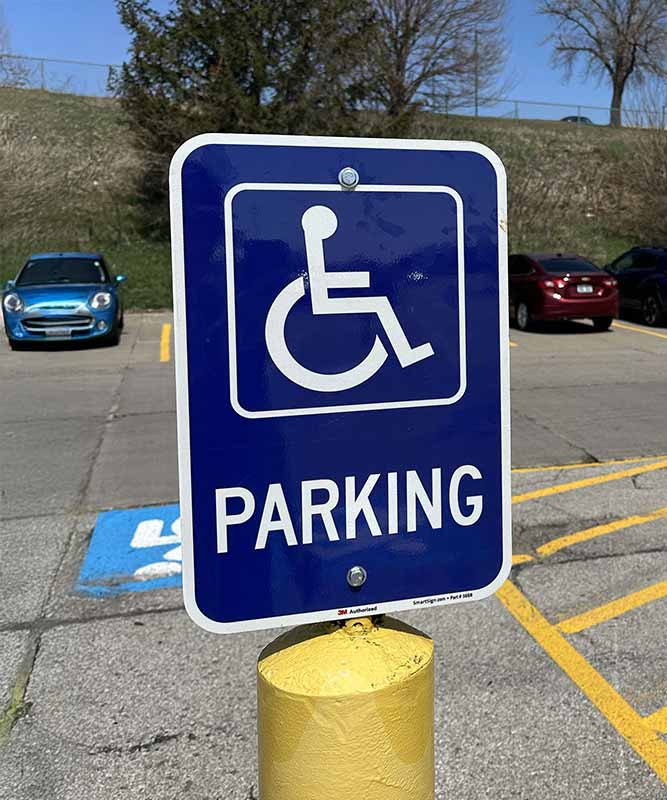
Parking Lot Sign Installation in Central Miami, FL
Pavement markings tell drivers where to put the car. Signs tell them what the rules are, who they apply to, and what happens if they are ignored. On many commercial properties the striping gets attention and the signage does not, which is why we walk the signs as carefully as the paint.
The four categories that matter on a commercial lot in Florida:
- Accessible-space signage at every accessible stall. This is the category Florida treats differently, setting requirements the federal standard does not.
- Fire lane and no-parking signage where the fire code official requires it.
- Tow-away warning signage, which is what makes enforcement possible at all.
- Directional and wayfinding signage — entry, exit, one-way, speed, visitor and reserved parking, loading, and pedestrian direction.
We install, replace, and re-post signage across Miami-Dade County, and we do it alongside striping more often than not, because a stall and its sign are one compliance question rather than two jobs.
Accessible-Space Signage Under Florida Law
Florida does not simply adopt the federal accessible-parking rules. Florida Statute 553.5041 layers state requirements on top of the 2010 ADA Standards for Accessible Design, and a lot signed to the federal standard alone can still fall short here. These are the state provisions that bear directly on signage and stall marking:
| Requirement | What Florida Statute 553.5041 provides |
|---|---|
| Sign mounting height | The sign is placed on or at least 60 inches above the finished floor or ground surface, measured to the bottom of the sign |
| Sign content | Bears the International Symbol of Accessibility and the caption “PARKING BY DISABLED PERMIT ONLY” |
| Penalty notice | A sign erected after October 1, 1996 must indicate the penalty for illegal use of the space |
| Space outlining | Accessible spaces are prominently outlined with blue paint, and repainted when necessary |
| Space width | Each accessible parking space must be at least 12 feet wide |
| Access aisle | Parking access aisles must be at least 5 feet wide, striped diagonally to designate them as a no-parking zone |
Two things are worth drawing out of that table, because they are the two that catch properties out.
The 60-inch dimension is measured to the bottom of the sign, not the top or the center. A sign mounted at what looks like a reasonable height frequently sits below the requirement once measured correctly, and it is one of the easiest findings to correct.
The penalty notice is a signage requirement, not a striping one. If your accessible-space signs went up after October 1996 and carry only the symbol and the caption, they are missing an element the statute calls for. We will tell you what the notice has to convey; we do not publish the amount, because dollar figures are not something this page will ever carry.
One more distinction worth having straight: the 12-foot space and 5-foot aisle above are Florida’s configuration. The federal 2010 ADA Standards give two van configurations, not one: an 11-foot space beside a 5-foot aisle, or an 8-foot space beside an 8-foot aisle (§502.2 and §502.3.1). Florida’s 12-foot space is wider than either. Applying the federal figures to a Florida lot produces something that looks properly sourced and is wrong for the jurisdiction it is in.
Fire Lane, Directional, and Tow-Away Signage
Fire lane signage is set by your local fire code official rather than by a single statewide specification you can look up once. Florida adopts the Florida Fire Prevention Code statewide and it is enforced locally, which in this county means the City of Miami, Miami Beach, Hialeah, and Coral Gables each apply it through their own fire departments, while Miami-Dade Fire Rescue covers unincorporated county and the municipalities it serves. Sign wording, spacing along the lane, and mounting all come from that authority. We confirm which one governs your address before ordering anything.
Tow-away signage is the practical enforcement layer. Without conforming signage, a property’s ability to have a vehicle removed is limited — which turns fire lanes, accessible spaces, and reserved stalls into markings with no consequence attached. Requirements for what the sign must say and where it must be posted come from state law and local ordinance, and we will point you to the current requirement for your property rather than reciting one here that may have moved.
Directional and wayfinding signage covers entry and exit, one-way aisles, stop and yield, speed, pedestrian crossings, loading zones, reserved and visitor parking, EV charging, and rideshare pickup. None of it is glamorous, and all of it is what stops a lot from generating complaints. Note that the federal MUTCD does not govern a private parking lot — the sign faces are conventional rather than mandated, and choosing the conventional face is still the right call, because drivers read what they already recognize.
Mounting, Posts, and Placement
- Confirm the requirement. Accessible-space signage against the statute; fire lane signage against the AHJ; everything else against the property’s own needs.
- Select the post and hardware. Galvanized or aluminum posts set into pavement or a concrete footing, or wall, bollard, and column mounts where the location suits it. Corrosion resistance is a real specification in this county, not an upgrade — salt air reaches well inland, and a fastener chosen for a dry climate will streak a facade.
- Locate the sign. Accessible-space signs go where they are visible from the stall and cannot be obscured by a parked vehicle. Fire lane signs go at the spacing the AHJ requires along the marked lane.
- Set the height. Measured to the bottom of the sign for accessible-space signage.
- Install. Post set plumb, footing where the substrate requires it, sign fixed with tamper-resistant hardware where the location warrants it.
- Check against the markings. A sign and the stall it labels are one thing; if the pavement marking says one thing and the sign says another, the mismatch is the finding.
Damaged and knocked-down signage is routine replacement work. In a lot with delivery traffic, signs at aisle ends and stall heads get hit regularly, and a missing accessible-space sign is a compliance gap from the day it comes down.
Request Sign Installation in Central Miami
Start with a call to (786) 434-8020, or the estimate form on this page if that suits you better. We will want the property address and what prompted the call — an inspection, a tenant complaint, a sign that has been down for a while, or an accessible-parking review. We will walk the lot, check the signage against the markings, and tell you what is missing. Estimates are free.
For a full list of our pavement marking services, visit our parking lot striping in Central Miami page.
Businesses We Serve




How it Works

GET A FREE ESTIMATE
Contact us today and we’ll have a quote to you in 24 hours

SCHEDULE AN INSTALLATION
We’ll have your installation scheduled in less than 7 days, without affecting your business hours

GET A PARKING LOT THAT POPS
For a budget-friendly price, you’ll get a parking lot that looks like new
We proudly work with:


We proudly work with:


Frequently Asked Questions About Parking Lot Sign Installation in Central Miami, FL
What signs does a commercial parking lot in Florida need?
It varies with the property, but most commercial lots carry accessible-space signage at each accessible stall, fire lane and no-parking signage where the fire code official requires it, tow-away warning signage, and directional or wayfinding signs for circulation. Accessible-space signage is where we start, because Florida’s requirements go beyond the federal baseline.
Does Florida have stricter accessible-parking sign rules than federal ADA?
Yes. Florida Statute 553.5041 sets state requirements for accessible parking that layer on top of the federal 2010 ADA Standards for Accessible Design — covering how accessible spaces are marked and how their signage is mounted and worded. Meeting the federal standard alone does not automatically satisfy Florida, which is worth checking on any lot that was signed years ago.
Is an accessible space still compliant if the sign is missing or knocked down?
Generally no — the signage is part of what makes the space an accessible space, not an accessory to it. A pavement symbol without a properly mounted sign is one of the easier problems to correct. Missing, faded, damaged, and knocked-down signs are routine replacement work for us.
Who decides what fire lane signage my property needs?
Your local fire code official. Florida adopts the Florida Fire Prevention Code statewide, and it is enforced locally — by Miami-Dade Fire Rescue across unincorporated county and many municipalities, or by your city’s own fire department where one operates. Requirements for sign placement, spacing, and wording are applied by that authority, so we work to what your AHJ requires.
How are parking lot signs mounted?
Most commonly on galvanized or aluminum posts set into the pavement or into a concrete footing, and sometimes on existing walls, bollards, or building faces where that placement suits the stall. Height is not a matter of preference: Florida Statute 553.5041 requires accessible-space signs to sit at least 60 inches above the ground, measured to the bottom of the sign. Posts in a coastal environment also need corrosion resistance, which affects material choice.
Can you replace signs without redoing the striping?
Yes — signage and striping are separate scopes and either can be done on its own. That said, if the accessible-stall signage is out of date, the pavement markings frequently are as well, since both were usually installed at the same time under the same standards. We will tell you what we see on the walkthrough so you can decide whether to address both.