
Parking Lot Pressure Washing
In Central Miami, FL
Surface Prep Before Restriping
1-800-STRIPER provides professional parking lot pressure washing in Central Miami, FL — removing oil staining, tire rubber, algae, and surface grime from parking lots, garage decks, and pedestrian walkways for commercial properties across Miami-Dade County.
1-800-STRIPER® of Central Miami PROVIDes Parking Lot Power Washing Services NEAR YOU
Need to blast away years of grime?
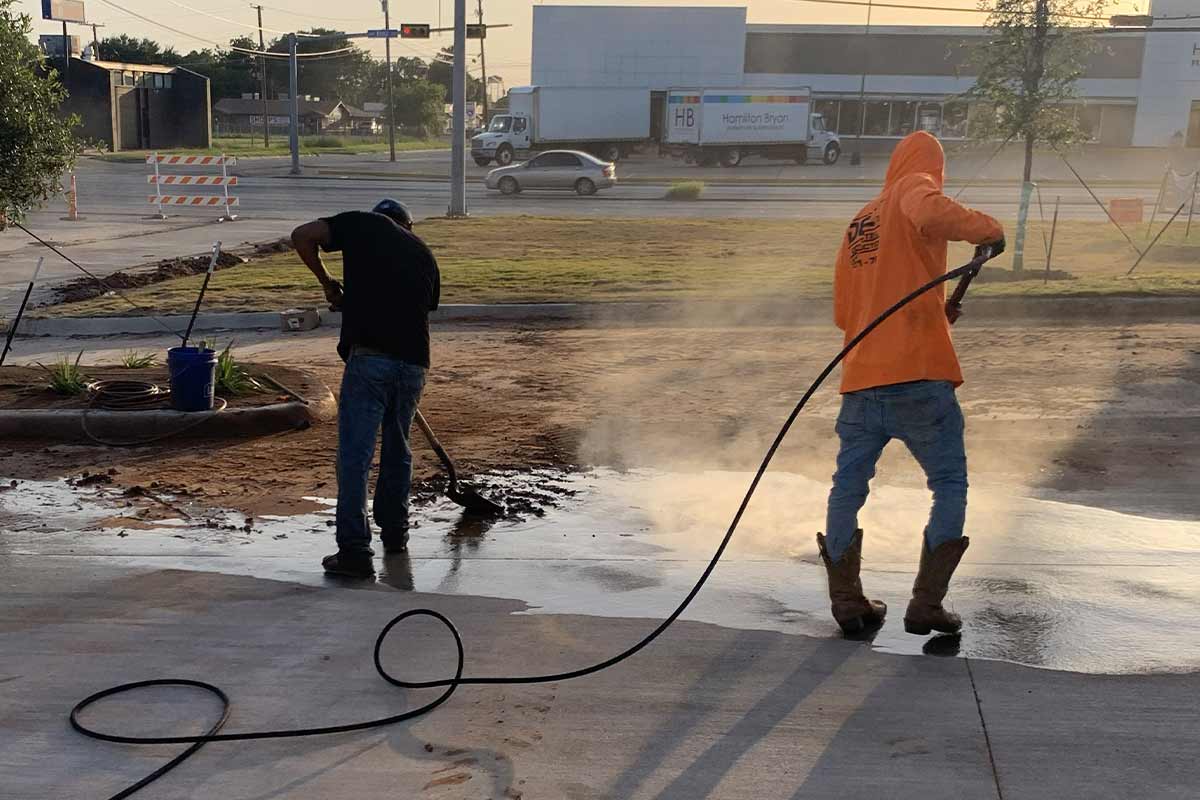
If your parking lot or parking garage looks dull and dirty, our professional crew can wash away grime, oil, stains, and slippery buildup to restore the appearance of your property.
Benefits:
Parking Lot Pressure Washing in Central Miami, FL
A commercial lot collects three things continuously: what vehicles leave behind, what the climate grows, and what people drop. Oil and transmission fluid stain the surface at every stall head. Tire rubber builds up in the turning areas. In a subtropical climate with more than sixty inches of annual rainfall, algae and biological growth take hold anywhere that stays damp — the shaded side of a building, under a canopy, along a curb line where water sits.
Pressure washing addresses all of it, and it does one more thing that matters more than appearance: it prepares the surface for markings.
We wash open lots, parking structures and garage decks, loading and dock areas, sidewalks and pedestrian walkways, drive-through lanes, and dumpster enclosures for commercial properties across Miami-Dade County — retail, office, industrial, medical, hospitality, HOA and condominium, and municipal facilities. Some customers call it power washing; in commercial practice the terms are used for the same service, and the distinction is explained below.
Why Pressure Washing Comes Before Restriping
Cleaning a parking lot is often sold as a cosmetic service, and treating it that way is how properties end up repainting markings twice as often as they should.
A marking bonds to the surface it is applied to. If that surface carries oil, algae, dust, or a loose layer of degraded pavement, the paint bonds to the contaminant rather than to the asphalt or concrete underneath. It looks correct on the day. It fails early, and it fails first exactly where the contamination was heaviest — which is to say at the stall heads, in the drive aisles, and around the trash enclosure, the places that were already the highest-wear areas on the lot.
So the order of operations is not arbitrary:
- Assess. We look at what is on the surface and how sound the pavement underneath is.
- Clean to the level the surface needs. Loose grit may only require sweeping or blowing. Oil staining, algae, gum, and heavy soiling require washing.
- Let it dry. Markings need a dry surface, which in this climate is a scheduling constraint rather than a footnote.
- Stripe. The paint now bonds to pavement.
Not every lot needs washing before a restripe, and we do not attach it to every estimate by default. What we do is look and tell you which category your lot is in. If sweeping is enough, sweeping is what we will say.
A note on runoff. Parking lots accumulate oil, fuel residue, and sediment from ordinary vehicle use. The Miami-Dade County Stormwater Utility describes reducing pollution from silt, oil, gasoline, fertilizers, pesticides and other litter carried by stormwater into the drainage systems and canals, and the Florida DEP Stormwater Program describes runoff picking up pollutants that reach rivers, lakes and estuaries. That is the environmental context every paved commercial property in this county sits inside. We plan for where the water goes as part of the job and will walk you through our approach for your site.
Parking Garages, Decks, and Covered Structures
Structured parking is common in Brickell, Downtown, Coral Gables, and the Doral office corridor, and it is a different job from an open lot in almost every respect.
- Drainage is engineered and finite. An open lot sheds water across its whole surface. A deck routes it to a defined number of drains, and those drains are sized for rain, not for a wash crew working a full level.
- Runoff has somewhere to fall. Water leaving an elevated deck lands on the level below, on landscaping, on vehicles, or on a sidewalk. Containment and routing are planned before anything is switched on.
- The structure is occupied. Levels are staged and worked in sections so tenants and visitors keep parking, usually overnight or on a weekend rotation.
- Ventilation and confinement. Enclosed levels change how equipment is selected and how the crew works.
- Surfaces differ. Structural concrete, applied deck coatings, and expansion joints each tolerate different pressures, and a deck coating can be damaged by an approach that an asphalt lot would shrug off.
We assess a structure before quoting it rather than pricing it like an open lot with a roof.
Pressure and surface. Asphalt and concrete tolerate different pressures, and asphalt that is already ravelling, cracked, or losing its binder needs a gentler approach — or a repair rather than a wash. Matching the pressure to the surface is the whole of what prevents damage. Where washing is the wrong tool for a lot, we will say so and tell you what the surface actually needs.
Request a Pressure Washing Estimate in Central Miami
Reach us on (786) 434-8020, or through the estimate form on this page. Useful to know up front: the property type, roughly how large the area is, what you are trying to remove, and whether a restripe is coming — that last one changes the recommendation more than anything else. Estimates are free.
For a full list of our pavement marking services, visit our parking lot striping in Central Miami page.
Businesses We Serve




How it Works

GET A FREE ESTIMATE
Contact us today and we’ll have a quote to you in 24 hours

SCHEDULE AN INSTALLATION
We’ll have your installation scheduled in less than 7 days, without affecting your business hours

GET A PARKING LOT THAT POPS
For a budget-friendly price, you’ll get a parking lot that looks like new
We proudly work with:


We proudly work with:

Frequently Asked Questions About Parking Lot Pressure Washing in Central Miami, FL
Why does a parking lot need pressure washing?
Two reasons. Appearance is the obvious one — oil staining, tire rubber, algae, gum, and general grime make an otherwise sound lot look neglected. The less obvious one is adhesion: markings bond to the surface they are applied to, so a contaminated surface produces markings that fail early. If a restripe is coming, cleaning is preparation, not cosmetics.
Is pressure washing required before restriping?
Not on every lot, but often enough that we always assess it. Loose dirt may only need sweeping or blowing. Oil staining, algae growth, and heavy soiling are different — those actively interfere with bond. We look at the surface and tell you honestly whether washing is warranted for your lot, rather than attaching it to every estimate by default.
What happens to the runoff when you clean a lot?
We plan for it as part of the job rather than letting it find its own way to the nearest drain. Parking lots accumulate oil, fuel residue, and sediment — among the pollutants Miami-Dade County’s stormwater program describes stormwater carrying into the drainage systems and canals. We will walk you through our approach for your site.
Can you clean a parking garage or covered deck?
Yes. Garage decks and covered structures are common in Brickell, Downtown, and Doral, and they bring their own considerations — drainage routing, ventilation, staging around occupied levels, and containment on an elevated deck where runoff has fewer places to go. We assess these before quoting rather than pricing a garage like an open lot.
Is pressure washing the same as power washing?
In everyday commercial use the two terms are used interchangeably, and most customers searching for one mean the other. Strictly, power washing uses heated water while pressure washing does not, and heat helps on certain contaminants such as heavy grease. When you call, describe what you are trying to remove and we will tell you which approach the surface actually needs.
Will pressure washing damage my asphalt?
Not when it is done at the right pressure for the surface. Asphalt and concrete tolerate different pressures, and asphalt in poor condition — already ravelling, cracked, or with a failing binder — needs a gentler approach or a different remedy entirely. Assessing the surface first is what prevents damage. If washing is the wrong tool for your lot, we will say so.