
Thermoplastic Striping
In West Broward, FL
Long-Lasting Pavement Markings
1-800-STRIPER provides professional thermoplastic striping in West Broward, FL — heat-applied markings for stop bars, crosswalks, arrows, and fire lanes that bond into the pavement instead of drying on top of it, the material Miramar’s fire code specifies around hydrants and fire department connections.
1-800-STRIPER of West Broward PROVIDes Thermoplastic Striping Services NEAR YOU
Want to reduce the maintenance requirements for your parking lot?
Thermoplastic pavement markings are a durable, weather and vehicle-resistant striping option for your parking lot or facility.
You can utilize them for stop bars, ADA stalls, no-parking zones, directional arrows, crosswalks, or your entire parking lot.
Benefits:
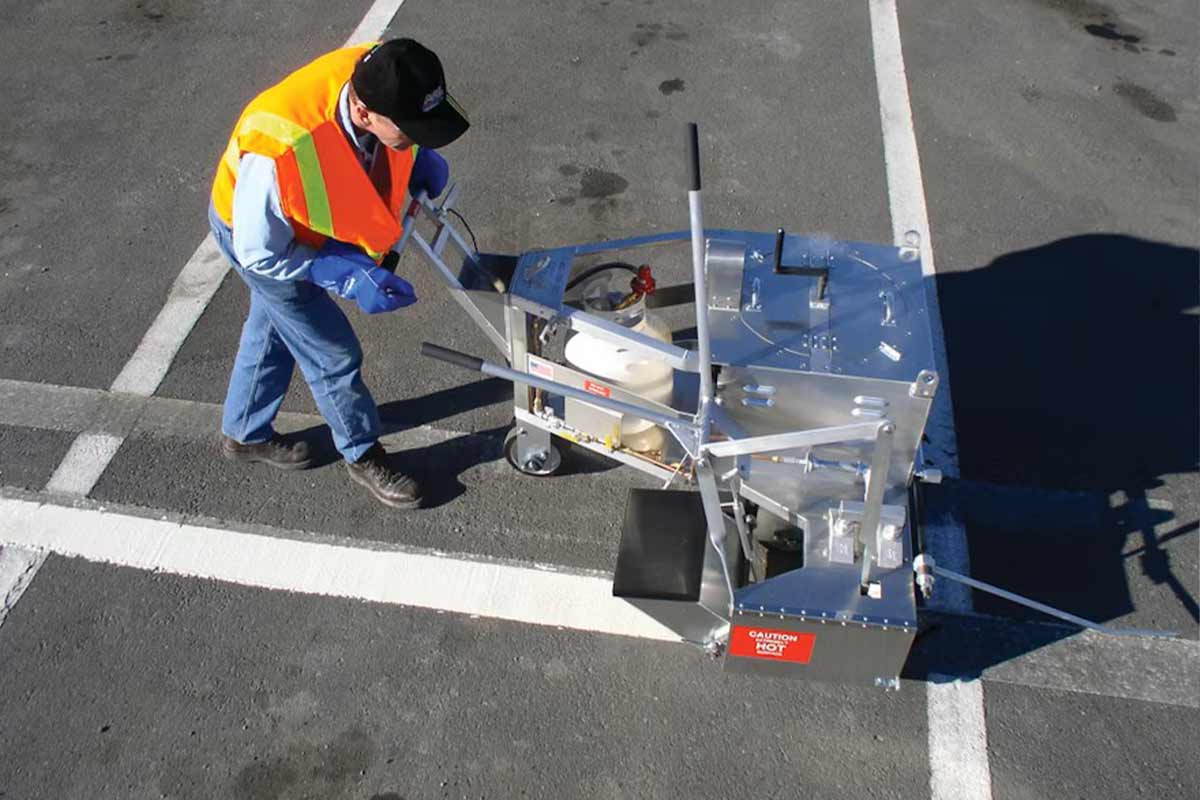
Thermoplastic Striping in West Broward, FL
Thermoplastic is a heat-applied marking material that fuses into the pavement surface rather than drying on top of it. That single difference explains most of its behavior: it lasts considerably longer than traffic paint under traffic, it carries retroreflective glass beads through the body of the material, not only on its surface, and it costs more to install and more to remove. Thermoplastic earns its place on high-wear, high-consequence markings and is the wrong choice for ordinary stall lines on a low-traffic lot. On this page we are specific about which is which, including where a local code in our own territory actually requires it.
How Thermoplastic Differs From Traffic Paint
Traffic paint is applied cold and cures by evaporation, leaving a film that adheres to the surface. Thermoplastic is applied hot as a molten material that bonds into the pavement as it cools, so the marking has real thickness and a mechanical grip, not merely an adhesive one. The practical consequences follow from that.
| Thermoplastic | Traffic paint | |
|---|---|---|
| Application | Applied hot, bonds into the pavement | Applied cold, cures by evaporation |
| Beads | Carried through the body of the material | Rest on the surface |
| Abrasion from turning traffic | Resists it far better | Wears faster |
| Install cost and time | Higher, lot back in service later | Lower, lot back in service sooner |
| Removal | Difficult and expensive | Straightforward |
| Where it belongs | Stop bars, crosswalks, arrows, fire lanes | Ordinary stall lines |
Thermoplastic resists abrasion from turning traffic far better, holds its retroreflectivity longer because the glass beads are distributed through the material, and stays legible under standing water more effectively. Traffic paint installs faster, costs less, returns the lot to service sooner, and is far easier to change.
Where One Broward City Requires Thermoplastic
Miramar’s fire code amendments, filed with the Florida State Fire Marshal local amendments to the Florida Fire Prevention Code, state twice that pavement markings are to be of thermoplastic paint. The scope of that requirement is the important part. Both subsections carrying the sentence deal with a specific context: visibility and access to fire hydrants, and fire department connections. So the requirement attaches to markings in those locations, not to every marking in the city. Miramar’s fire lane provisions separately name yellow striping with thermoplastic as the preferred material. We read the requirement to the scope the ordinance gives it.
Service Life and What Shortens It
Thermoplastic markings outlast traffic paint substantially, but service life is set by conditions, not by the material alone. The variables that matter most here are traffic volume and the proportion of turning movements over the marking, whether the pavement underneath is sound, how well the surface was prepared and how dry it was at installation, ultraviolet exposure, and standing water. South Florida contributes heat, intense sun, and heavy seasonal rain, all of which work on markings continuously. We do not publish a service-life figure for a lot we have not seen, because the honest range is wide enough that a single number would mislead.
The Trade-Offs Nobody Mentions
Thermoplastic is sold as the premium option, so the drawbacks are worth stating plainly. It costs more to install than traffic paint. It requires a sound, clean, dry substrate, so a deteriorating surface has to be addressed first rather than marked over. It is difficult and expensive to remove, which makes it a poor choice anywhere the layout might change, including lots that reconfigure for tenants or seasons. It is genuinely overkill for ordinary stall lines on a low-traffic property. The strongest cases for it are stop bars, crosswalks, arrows at turning points, and fire lane markings.
For a full list of our pavement marking services, visit our parking lot striping in West Broward page.
Businesses We Serve




How it Works

GET A FREE ESTIMATE
Contact us today and we’ll have a quote to you in 24 hours

SCHEDULE AN INSTALLATION
We’ll have your installation scheduled restriped in less than 7 days, without affecting your business hours

GET A PARKING LOT THAT POPS
For a budget-friendly price, you’ll get a parking lot that looks like new
We proudly work with:


We proudly work with:


Frequently Asked Questions About Thermoplastic Striping in West Broward, FL
What is thermoplastic line striping?
Thermoplastic line striping uses a heat-applied marking material that is laid down molten and bonds into the pavement surface as it cools, instead of drying on top of it the way traffic paint does. The result is a marking with real thickness and a mechanical grip on the pavement, with retroreflective glass beads carried inside the material instead of resting on its surface. Contractors specify it where markings take heavy wear and where legibility matters most, such as stop bars, crosswalks, directional arrows, and fire lanes, and not for every line on a parking lot.
How long does thermoplastic striping last?
Considerably longer than traffic paint, but we do not publish a year figure for a lot we have not inspected, because the honest range is wide. Service life is driven by traffic volume and how much of it turns across the marking, whether the pavement underneath is sound, how well the surface was prepared and how dry it was at installation, ultraviolet exposure, and standing water. South Florida adds heat, strong sun, and heavy seasonal rain to all of that. A marking on a sound, well-prepared surface in a low-turn location will outlast the same material laid on a deteriorating one by a wide margin.
What are the disadvantages of thermoplastic paint?
There are four worth knowing before specifying it. It costs more to install than traffic paint. It needs a sound, clean, dry substrate, so a deteriorating surface has to be dealt with first instead of being marked over. It is difficult and expensive to remove, which makes it a poor fit for any lot whose layout might change for a new tenant or a seasonal reconfiguration. And it is simply more material than ordinary stall lines on a low-traffic property need. Those drawbacks are why we do not recommend it for a whole lot by default.
Thermoplastic or traffic paint for a commercial lot?
Usually both, applied to different markings on the same lot. Thermoplastic earns its place on the markings that take the most wear and carry the most consequence when they fade: stop bars, crosswalks, directional arrows at turning points, and fire lane markings. Traffic paint is the sensible choice for ordinary stall lines, which see far less abrasion, cost much less to refresh, and benefit from being easy to change when a layout moves. The deciding questions are how much traffic crosses the marking, how bad it is if the marking fades, and how likely the layout is to change.
Does any local code require thermoplastic?
Yes, in one city in our territory and in two specific contexts. Miramar’s filed fire code amendments state that pavement markings are to be of thermoplastic paint, and the two subsections carrying that sentence deal with visibility and access to fire hydrants and with fire department connections. So the requirement attaches to markings in those locations rather than to every marking in the city, and reading it more broadly than the ordinance does would be wrong. Miramar’s fire lane provisions separately name thermoplastic as the preferred material for yellow lane striping. Elsewhere in West Broward it is a durability choice.