
Bollard Installation
In West Broward, FL
Safety and Security Bollards
1-800-STRIPER provides professional bollard installation in West Broward, FL — setting concrete bollards, precast bollards, and steel pipe bollards at storefronts, drive-through lanes, utility cabinets, and pedestrian walkways for commercial properties across Broward and Miami-Dade counties.
1-800-STRIPER of West Broward PROVIDes Bollard Installation Services NEAR YOU
Want to prevent accidents and protect your property?
Bollards provide physical protection for your customers and your property.
Safety and security:
Bollards create a physical barrier between vehicles and pedestrians, protecting people in walking areas from accidental or intentional vehicle intrusions.
Bollards act as a protective barrier around storefronts, gas stations, and other vulnerable areas, minimizing the risk of costly damage from vehicle impacts.
Strategic Placement Locations:
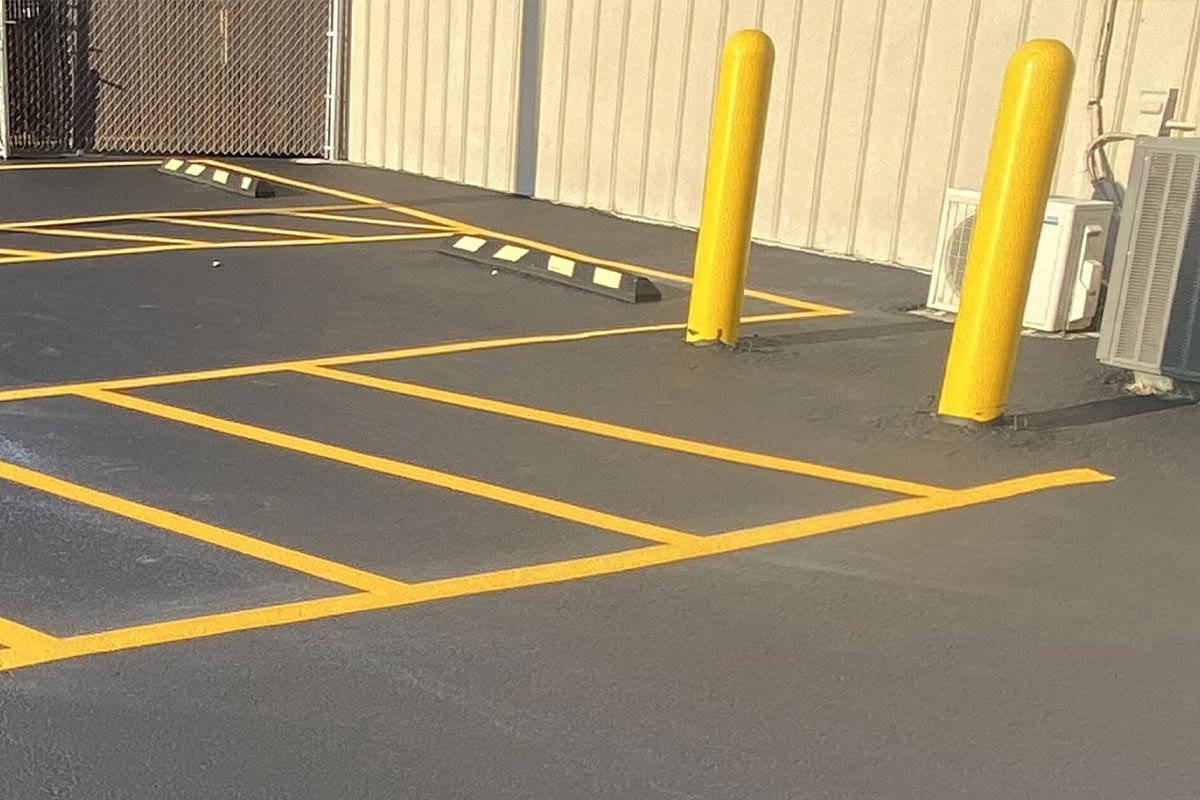
Bollard Installation in West Broward, FL
A bollard is a short vertical post that stops a vehicle from reaching something behind it. On commercial property in West Broward that is usually a storefront, a drive-through lane, a utility cabinet, a gas meter, or a walkway where people line up. The category is easy to get wrong because the marketing language around it borrows from perimeter security, where the threat model and the test standards are entirely different. Most commercial lots need a well-anchored post that survives a low-speed impact and stays visible at night. We install to that requirement and are direct about where the heavier engineering is genuinely warranted. Placement matters as much as the post itself, and in this territory placement is constrained by fire access rules that are easy to overlook until an inspection finds them.
Concrete and Precast Bollards
Concrete bollards are the default for storefront and parking lot protection in South Florida, and they come in two forms. A cast-in-place bollard is formed on site over a footing, which suits an irregular location or a spot where the depth has to be adapted to what is already underground. A precast bollard arrives finished and is set on a prepared base or over anchors, which makes installation faster and the finish more consistent across a row. Precast also gives you decorative profiles, which matters where a property has an architectural review requirement, and it makes replacement straightforward after an impact because the replacement matches. Both draw their real capacity from the footing, not from the post. A handsome bollard on a shallow pad is decoration. Concrete resists the corrosion that coastal air drives, which is a genuine consideration this close to the Atlantic, but it chips visibly and does not deform and recover the way steel does. Where a bollard is expected to take repeated low-speed nudges from delivery vehicles, that difference in failure mode is the thing to weigh.
Steel Pipe Bollards
A steel pipe bollard is a schedule-rated pipe set in a footing and usually filled with concrete, then sleeved or painted. It is the standard choice where a post has to be both protective and highly visible, which is why it dominates loading docks, drive-through lanes, and equipment protection. The pipe deforms under impact rather than shattering, so it often survives a strike that would visibly damage concrete, and it is straightforward to reface with a new sleeve instead of replacing it. Corrosion is the trade-off in a coastal environment. A steel bollard that is scraped down to bare metal and left will show rust quickly here, so the finish becomes an ongoing maintenance item, not a one-time decision. Removable and collapsible variants exist for openings that need to be opened for access, and those are the correct product where a fire official requires a route to be clearable rather than permanently blocked.
Bollard Types Compared
| Type | How it is set | Failure mode under impact | Best fit |
|---|---|---|---|
| Cast-in-place concrete | Formed on site over a footing | Chips and cracks visibly; does not recover | Irregular locations, adapted depth |
| Precast concrete | Set on a prepared base or over anchors | Chips visibly; replacement matches the row | Rows, decorative or architectural-review sites |
| Steel pipe, concrete-filled | Schedule-rated pipe set in a footing | Deforms rather than shattering; can be resleeved | Loading docks, drive-throughs, equipment |
| Removable or collapsible | Socketed for clearing | Designed to be opened, not to resist | Routes a fire official requires clearable |
All four draw their real capacity from the footing, not from the post.
Where Bollards Protect a Property
The recurring West Broward cases are consistent. Storefronts facing a parking row, where a pedal misapplication puts a vehicle through the glass. Drive-through lanes, where the menu board, canopy column, and order window all take repeated low-speed contact. Utility infrastructure, including gas meters, backflow preventers, transformers, and electrical cabinets, which are expensive to repair and can force a shutdown. Walkways and queuing areas where people stand between parked cars and a building. Loading docks and dumpster enclosures, where reversing vehicles do most of their damage. Selecting the right product starts with what is behind the bollard and how fast a vehicle could be moving when it arrives. ASTM F3016 is the standard written for exactly this population of low-speed vehicle impacts in parking and storefront conditions, which makes it the relevant reference for most commercial work.
Where Bollards Are Not Allowed
Bollards can create a code problem as easily as they solve a safety one, and in this territory there is a published example. Miramar’s fire code amendments, filed with the Florida State Fire Marshal local amendments to the Florida Fire Prevention Code, require gated community entrance roads to provide a minimum single lane of 14 feet or 20 feet for a double lane, with 14 feet of clear height, and state that those entrances must remain unobstructed from bollards, medians, or any other type of devices unless approved by the fire chief or designee. The same section requires access points to stay free of obstructions including speed humps, barricades, and planters. That is a local rule constraining the product we sell, and it is worth stating plainly. A bollard installed across a fire access route or a gated entrance without the fire official’s approval is a violation regardless of how well it is anchored. Fire lanes, hydrant clearances, and designated access roads are checked before placement is finalized. Where protection is genuinely needed in one of those locations, a removable or collapsible bollard approved by the fire official is usually the resolution.
For a full list of our pavement marking services, visit our parking lot striping in West Broward page.
Businesses We Serve




How it Works

GET A FREE ESTIMATE
Contact us today and we’ll have a quote to you in 24 hours

SCHEDULE AN INSTALLATION
We’ll have your installation scheduled in less than 7 days, without affecting your business hours

GET A PARKING LOT THAT POPS
For a budget-friendly price, you’ll get a parking lot that looks like new
We proudly work with:


We proudly work with:


Frequently Asked Questions About Bollard Installation in West Broward, FL
Do you need a permit to install a bollard?
It depends on the city and on what the installation actually involves. A permit question is really three questions: are you trenching or excavating, are you working within a fire access route or gated entrance, and are you altering something that was shown on an approved site plan. Each of the eleven municipalities we serve handles this through its own building and zoning departments, so there is no single West Broward answer. What is consistent is that touching a fire lane or a gated entrance engages the fire official regardless of whether a building permit is required. We confirm the path before scheduling.
What type of contractor installs bollards?
Bollard installation sits with contractors who work on parking lot surfaces and site safety infrastructure, because the work is core drilling or excavation, setting a footing, and finishing the surface around it. That is the same skill set and the same equipment used for wheel stops, sign posts, and pavement markings, which is why it is commonly handled alongside striping instead of by a general building contractor. What matters more than the trade label is whether the installer sets the footing correctly and checks the location against fire access and accessible route requirements before drilling.
What is the difference between concrete, precast, and steel pipe bollards?
Concrete cast in place is formed on site over its footing, which suits irregular locations and variable depths. Precast concrete arrives finished and is set on a prepared base, which gives faster installation, consistent appearance across a row, decorative profile options, and easy matching when one is replaced. Steel pipe is a rated pipe set in a footing and usually filled with concrete, chosen where high visibility and repeated low-speed contact are expected, because it bends instead of breaking and can be resleeved. In coastal air, concrete resists corrosion while steel needs its finish maintained. All three depend on the footing for actual capacity.
How much does it cost to install a bollard?
We quote per site, not per post, because the variables move the number more than the bollard does. The drivers are the surface being cut, whether the work is core drilling into existing pavement or excavating, footing depth, what is underground at the location, the material and finish selected, how many are being set in one visit, and whether traffic control or phased access is needed to keep the property operating. Placement near a fire access route can also add a review step. Call us for a free estimate and we will walk the locations with you.
Can a bollard block a fire lane or a gated entrance?
No, and one city in our territory says so explicitly. Miramar’s filed fire code amendments require gated community entrance roads to provide a minimum single lane of 14 feet or 20 feet for a double lane, with 14 feet of clear height, and require those entrances to remain unobstructed from bollards, medians, or any other type of devices unless approved by the fire chief or designee. The same section requires access points to stay free of obstructions including speed humps, barricades, and planters. Where protection is needed at such a location, a removable or collapsible bollard approved by the fire official is the usual resolution.