Fire Lane Striping
In West Broward, FL
Code-Compliant Fire Lane Markings
1-800-STRIPER provides professional fire lane striping in West Broward, FL — marking fire lanes, curbs, and no-parking zones to the Florida Fire Prevention Code and the local fire-code amendments that apply in your city, from Pembroke Pines and Miramar to Plantation, Davie, and Weston.
1-800-STRIPER of West Broward PROVIDes Fire Lane Striping Services NEAR YOU
Is your parking lot ready for first responders?
Our team is well-versed in local fire regulations and will parter with you to design a fire lane striping plan that creates unobstructed emergency access to protect your customers and property.
Core Services:
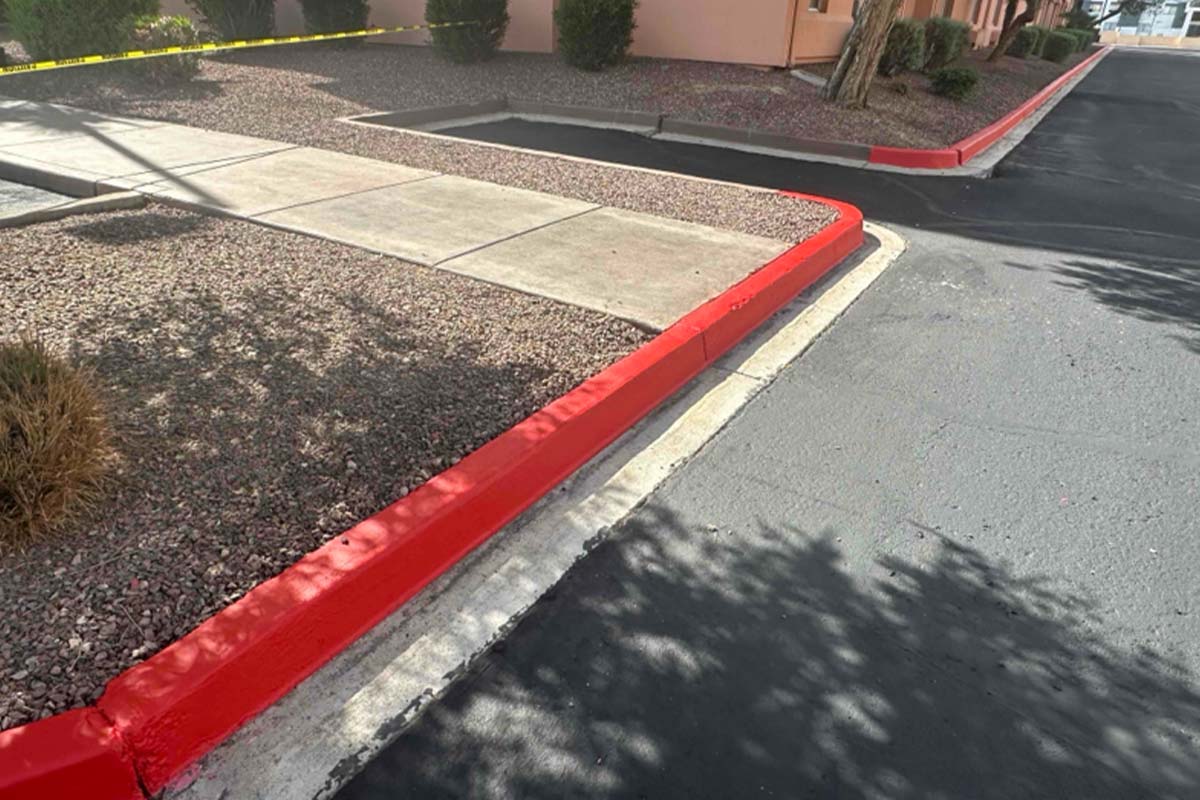
Fire Lane Striping in West Broward, FL
Fire lane striping is the one parking lot marking where the rules change when you cross a city line. Our territory spans eleven municipalities in two counties, and the requirement that governs your property depends on which fire official has jurisdiction over it. Some of those cities have filed their own amendments to the state fire code and publish exact dimensions, colors, and sign intervals. Others apply the statewide code unamended and leave the specifics to the fire marshal. We identify which applies to your address before any paint is ordered, because a lane striped to the wrong city’s specification still fails inspection.
When Florida Requires a Fire Lane
Florida runs fire prevention through a single statewide instrument. Under Florida Statute 633.202, the State Fire Marshal adopts the Florida Fire Prevention Code, and subsection (4) makes that code effective statewide without any adopting action by local governments. So the baseline duty exists everywhere in Broward and Miami-Dade, whether or not your city has passed a fire lane ordinance of its own. Subsection (3) is the channel through which a municipality files local amendments that add to the statewide baseline. That is where the per-city differences on this page come from.
Pembroke Pines Fire Lane Requirements
Pembroke Pines regulates fire lanes through Chapter 93 of its Code of Ordinances, not through a filed amendment. Section 93.11(B) sets the trigger: a fire lane is required where a building sits more than 150 feet back from a public road, or where it exceeds 30 feet in height and sits more than 50 feet back. The lane must be at least 20 feet wide, and the edge of the road nearest the building must be at least 10 feet off it. A dead-end road longer than 300 feet needs a turnaround at least 80 feet in diameter.
Miramar Fire Lane Requirements
Miramar is the only city in our territory with fire code amendments on file with the Florida State Fire Marshal local amendments to the Florida Fire Prevention Code, and its filing is unusually specific. Section 9-86(b)(6) sets the same trigger Pembroke Pines uses, then adds what most codes leave open: fire lanes are marked with yellow striping, with thermoplastic named as the preferred material, or by marking the curb, and signs are posted at 75-foot increments along the lane. That sign interval is a real number a property manager can plan against, and almost no other municipality publishes one.
Plantation, Davie, and the Cities Without Local Amendments
Plantation and Davie each run their own fire departments, and neither has amendments on file with the State Fire Marshal. The statewide Florida Fire Prevention Code therefore applies to them unamended, and the city fire marshal is the authority having jurisdiction over where a lane goes and how it is marked. One caution about that finding: absence from the state’s amendment index is evidence about filed amendments only. Pembroke Pines proves the point, since it regulates fire lanes in detail through its own ordinance while filing nothing. We never read a blank entry as an absence of local rules.
Weston, Cooper City, and Southwest Ranches
Weston, Cooper City, and Southwest Ranches do not operate municipal fire departments. All three contract fire protection to Broward Sheriff’s Office Fire Rescue, so the reviewing official for a fire lane on a property in any of those three cities comes from the same organization. For a property manager running sites across all three, that is useful: one point of contact instead of three, and one consistent reading of the statewide code.
Fire Lanes on Miami-Dade Properties
Our territory crosses the county line into Miami Lakes, Miami Gardens, Opa-locka, and Hialeah Gardens. Fire protection in those cities is provided by Miami-Dade Fire Rescue, which serves a large share of the county’s municipalities alongside unincorporated areas. Properties there are reviewed against the statewide code plus the county’s own filed amendments, which is a different combination from anything on the Broward side. Portfolios that straddle the county line get both readings from us, never one stretched to cover both.
Who Reviews a Fire Lane in Each City
| City or area | Reviewing fire authority | Published fire-lane specification |
|---|---|---|
| Pembroke Pines | City Fire Chief | Code Ch. 93 — trigger, 20-foot width, signs required |
| Miramar | City fire department | Filed state amendment — yellow, thermoplastic preferred, signs at 75 feet |
| Plantation | Municipal fire marshal | Statewide code unamended |
| Davie | Municipal fire marshal | Statewide code unamended |
| Weston | Broward Sheriff’s Office Fire Rescue | Statewide code unamended |
| Cooper City | Broward Sheriff’s Office Fire Rescue | Statewide code unamended |
| Southwest Ranches | Broward Sheriff’s Office Fire Rescue | Statewide code unamended |
| Miami Lakes, Miami Gardens, Opa-locka, Hialeah Gardens | Miami-Dade Fire Rescue | Statewide code plus county amendments |
Fire Lane Width and Access
Width is set by the reviewing authority, and where a local number exists it is usually the binding one. Pembroke Pines specifies at least 20 feet. Countywide, Broward County Board of Rules & Appeals amendment F-109.9.1 addresses what the lane is built on, not how wide it is: fire access roads must be surfaced to carry apparatus weighing a minimum of 32 tons, and the amendment expressly permits solid pavement, grass turf reinforced by concrete grids, or similar surfaces approved by the authority having jurisdiction. Access is a structural question before it is a striping question.
Fire Lane Marking Color
Florida imposes no single statewide fire lane color mandate. The Florida Fire Prevention Code leaves the marking method to the authority having jurisdiction, which is why the answer genuinely differs between two neighboring cities. Miramar’s amendments specify yellow. Other municipalities in the territory do not name a color at all, leaving it to the fire official reviewing the site. Red is the convention many property owners expect from other states, and assuming it here is a common way to end up repainting. We confirm the color with the jurisdiction instead of defaulting to habit.
Fire Lane Signs and Spacing
Paint alone rarely satisfies a fire lane requirement. Pembroke Pines requires signs to be posted and delegates their specification to the City Fire Chief. Miramar publishes an interval rather than a sign: Section 9-86(b)(6) calls for proper signage at 75-foot increments along the lane, and fixes no size, color, or legend for it. Miramar does publish a full sign specification, but in a different section and for a different feature — Section 9-85(c) covers fire department connections, where the sign face is 24 inches high by 18 inches wide with red letters on a white background reading No Parking Tow-Away Zone, mounted 7 feet from the roadway to the top of the sign. Those are two different signs in two different sections, and borrowing the connection spec for a fire lane is a mistake we see made. Where a city publishes a dimension we match it; where it does not, we ask the fire official.
Curb Marking and Hydrant Clearances
Curb marking is often the practical way a fire lane reads from a driver’s seat, and Miramar’s amendments contemplate curb marking as an alternative to lane striping. Hydrant clearance is a separate duty that survives regardless of how the lane itself is marked. Pembroke Pines makes parking within 15 feet of a fire hydrant unlawful, and Florida traffic law carries the same 15-foot hydrant clearance at Florida Statute 316.1945(1)(b)2. That clearance is worth marking on the pavement even where no fire lane is required, because it is enforceable on its own terms.
Who Signs Off on Your Fire Lane
The designating official is the fire authority for your city, not the county and not the state. Pembroke Pines states it plainly: fire lanes are designated as specified by the City Fire Chief. In Plantation and Davie it is the municipal fire marshal, in Weston, Cooper City, and Southwest Ranches it is Broward Sheriff’s Office Fire Rescue, and in the Miami-Dade municipalities it is Miami-Dade Fire Rescue. Maintaining the lane afterward is the property owner’s job. Pembroke Pines assigns maintenance of all designated fire lanes and fire zones to the owner of the private property as a sole responsibility.
For a full list of our pavement marking services, visit our parking lot striping in West Broward page.
Businesses We Serve




How it Works

GET A FREE ESTIMATE
Contact us today and we’ll have a quote to you in 24 hours

SCHEDULE AN INSTALLATION
We’ll have your installation scheduled in less than 7 days, without affecting your business hours

GET A PARKING LOT THAT POPS
For a budget-friendly price, you’ll get a parking lot that looks like new
We proudly work with:


We proudly work with:


Frequently Asked Questions About Fire Lane Striping in West Broward, FL
Do Florida’s striping rules change from city to city?
No single Florida striping code covers a whole parking lot. The rules arrive in layers. Fire lanes come from the Florida Fire Prevention Code, which the State Fire Marshal adopts under Florida Statute 633.202 and which applies statewide without any adopting action by local governments. Accessible parking comes from Florida Statute 553.5041 together with the 2010 ADA Standards. Everything else, including where a fire lane is required on your particular site, comes from your city. That is why the same lot can be compliant in one municipality and not in the next.
Is a yellow lane a fire lane?
Not automatically, and Florida does not impose one statewide fire lane color. Miramar’s filed fire code amendments do specify yellow striping, with thermoplastic named as the preferred material, so in Miramar yellow is the expected treatment. Other cities in West Broward name no color and leave the marking method to the fire official with jurisdiction. Many property owners assume red because that is the convention where they came from. A yellow line may also be a loading zone or a no-parking curb, so the sign and the designation decide what a lane is, not the color alone.
What counts as parking in a fire lane?
More than leaving a parked car. Pembroke Pines makes it unlawful to park on, or to obstruct in any way, method, or manner by whatever means, a designated fire zone or fire lane, and it applies the same prohibition within 15 feet of a fire hydrant. That obstruction language reaches deliveries staged in the lane, dumpsters, valet stacking, and equipment left overnight. Florida traffic law carries the same 15-foot hydrant clearance at Florida Statute 316.1945(1)(b)2. For a property manager the practical reading is that anything blocking apparatus access counts, whether or not it is a vehicle.
Can you wait in your car in a fire lane?
The ordinance language does not turn on whether the vehicle is occupied. Pembroke Pines prohibits parking on or obstructing a designated fire lane in any way, method, or manner by whatever means, and an occupied car sitting in the lane obstructs it exactly as an empty one does. Drivers often assume that staying behind the wheel converts parking into standing and puts them outside the rule. It does not, and enforcement on private property is carried out by the same fire officials who designated the lane. Signs are what make that enforceable.
When does my building actually need a fire lane?
Two cities in our territory publish the same trigger independently, which makes it a reliable planning number for West Broward. Pembroke Pines and Miramar both require a fire lane where a building is set back more than 150 feet from a public road, or where it exceeds 30 feet in height and is set back more than 50 feet. Pembroke Pines adds the geometry: at least 20 feet wide, the road edge nearest the building at least 10 feet off it, and a dead-end road longer than 300 feet needing a turnaround at least 80 feet across. Your fire official confirms it for your site.
Who decides where the fire lane goes and how it’s marked?
Your city’s fire authority. Pembroke Pines specifies that fire lanes are designated as specified by the City Fire Chief, and requires signs to be posted. Miramar publishes its specification instead, including signs at 75-foot increments. Countywide, Broward County amendment F-109.9.1 requires fire access roads to be surfaced to carry apparatus weighing a minimum of 32 tons, and permits solid pavement, grass turf reinforced by concrete grids, or similar surfaces approved by the authority having jurisdiction. Maintaining the lane once it exists is the property owner’s responsibility, which is the part most often missed.