
Temporary Parking Lot Striping
In Myrtle Beach, SC
Event and Construction Markings
1-800-STRIPER provides professional temporary parking lot striping in Myrtle Beach, SC — short-duration event layouts, construction-phase markings, and overflow parking grids marked on grass, gravel, pavement, or any surface, then removed when the event or phase ends.
1-800-STRIPER® of Myrtle Beach PROVIDes Temporary Parking Lot Striping Services NEAR YOU
Need Temporary Stripes?
Use temporary stripes to direct traffic and create parking areas at your special event or to keep construction sites safe without a long-term commitment. We paint on grass, gravel, pavement, or any other surface where temporary striping is needed.
Striping solutions for:
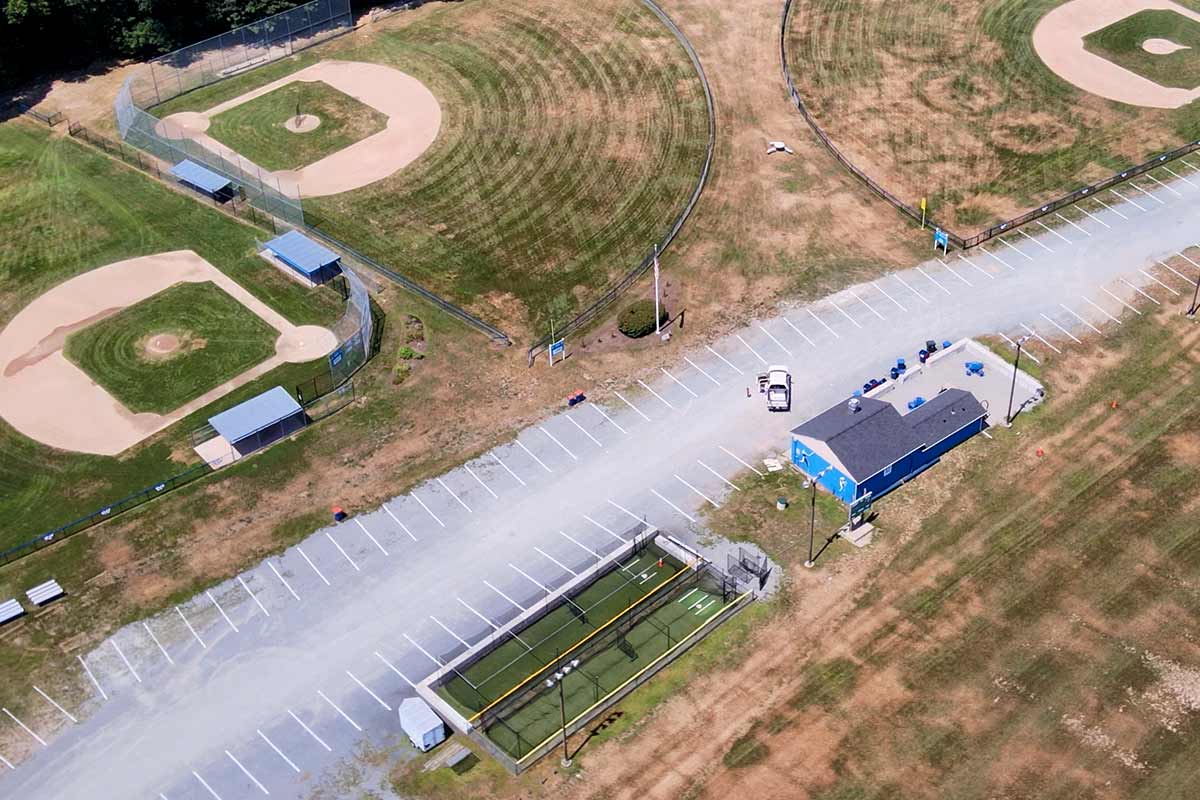
Temporary Parking Lot Striping in Myrtle Beach, SC
Temporary parking lot striping in Myrtle Beach is exactly what it sounds like: markings laid down for a defined period and then removed. It is the service for events, for construction phasing and for overflow capacity that a property needs on a handful of weekends a year rather than permanently.
The Grand Strand generates more of this work than most markets, because so much of the demand here is seasonal. A property that needs 200 spaces in July and 60 in February does not want a permanent 200-space layout painted onto it.
Event and Festival Parking Layouts on the Grand Strand
Event parking is a logistics problem before it is a striping problem. The questions that matter are how vehicles enter and leave, how you keep the entry queue off the public road, where staff and vendor parking sits relative to the public, and where the accessible spaces go — because accessibility is not suspended because an event is temporary.
We lay out event grids on paved lots, on grass overflow fields and on gravel, marking stall rows, aisle direction, entry and exit routes and pedestrian paths. The layout is designed to be read by drivers who have never been to the site before and who are being directed by staff, which usually means fewer, bolder markings than a permanent lot would carry.
Construction-Phase and Detour Markings
When a property is under construction or renovation, the parking arrangement changes repeatedly and each arrangement needs to work. Temporary striping handles the phases: reduced stall counts around a work zone, re-routed circulation, contractor and delivery areas, relocated accessible spaces, and pedestrian routes that keep people away from plant and materials.
Relocated accessible spaces are the part that gets overlooked. If construction takes out the accessible spaces nearest the entrance, they have to go somewhere that still sits on an accessible route to an accessible entrance. That is a design decision, and it is worth making deliberately rather than discovering it after the barriers are up.
Overflow Parking on Grass, Gravel, and Unpaved Ground
Overflow parking is rarely on asphalt, and the surface changes the approach. We mark overflow layouts on grass, on gravel, on compacted dirt, on pavement, and on any surface a property actually has — the material and the technique change with the substrate, but the service does not stop at the edge of the asphalt.
On unpaved ground the markings are doing a slightly different job. Rather than defining a stall precisely, they are establishing rows, aisle widths and direction of travel so that the field fills in an orderly way and empties without gridlock. Getting the aisle width right matters more here than the stall width does, because a field that cannot empty is the failure mode everyone remembers.
How Temporary Markings Come Back Up
The removal is the point. Temporary markings are specified so that they can be taken back off the surface at the end of the period without leaving a shadow of the layout behind, which is what separates the service from simply painting a lot twice.
Method depends on substrate and on how long the markings have been down. Timescale matters: a marking left in place for a season behaves differently from one down for a weekend, particularly under Grand Strand sun. We agree the removal at the same time as the installation, so the plan covers the whole life of the layout rather than half of it.
Temporary or Permanent: When Each Makes Sense
| Situation | Usually the right call |
|---|---|
| Layout needed for a single event or weekend | Temporary |
| Overflow field used a few times a year | Temporary |
| Parking arrangement changing through construction phases | Temporary, re-marked per phase |
| Testing a new layout before committing to it | Temporary |
| Seasonal capacity on unpaved ground | Temporary |
| Everyday layout on a paved commercial lot | Permanent |
| Accessible spaces in their final positions | Permanent |
| Fire lanes on a designated access road | Permanent |
| Layout expected to last more than a season | Permanent |
The line between them is duration and permanence of intent, not the surface. If the arrangement is the one the property will use from now on, it should be striped permanently even if it is new.
For a full list of our pavement marking services, visit our parking lot striping in Myrtle Beach page.
Businesses We Serve




How it Works

GET A FREE ESTIMATE
Contact us today and we’ll have a quote to you in 24 hours

SCHEDULE A STRIPING
We’ll have your space restriped in less than 7 days, without affecting your business hours

GET A PARKING LOT THAT POPS
For a budget-friendly price, you’ll get a parking lot that looks like new
We proudly work with:


We proudly work with:


Frequently Asked Questions About Temporary Parking Lot Striping in Myrtle Beach, SC
Can temporary striping go on grass or gravel?
Yes. Temporary markings can be applied to grass, gravel, compacted dirt, pavement or any surface a property has, which is what makes the service useful for overflow fields that are not paved at all. The technique changes with the substrate. On unpaved ground the markings define rows, aisle widths and travel direction rather than precise stalls, because the goal is a field that fills in order and empties without gridlock.
Do you need a permit to restripe or temporarily stripe a parking lot?
For repainting an existing private commercial lot, usually not — but it depends on your jurisdiction and on what is changing. Altering circulation, changing the stall count, or laying out event parking that affects access to a public road can bring other requirements into play, and events themselves frequently have their own permitting separate from the striping. Because Horry County and the City of Myrtle Beach administer this differently, check with your local authority before the work is scheduled.
What is the going rate for striping a parking lot?
There is not one. For temporary work the schedule often matters as much as the area: markings that have to go down overnight before a Saturday event are a different proposition from the same layout installed on a quiet Tuesday. Beyond timing, it is area, paved or unpaved ground, how many stalls and aisles the layout needs, how long it stays down, and whether removal is in scope. Tell us the date and we will estimate it free.
What drives the cost of having lines painted for an event or overflow lot?
Substrate first, because marking a grass field is a genuinely different operation from marking asphalt and the two do not price alike. Area and stall count come next, then how complicated the circulation needs to be, how many accessible spaces are involved, and whether we are working around an active site. The installation window matters too. We quote the whole life of the layout including removal, not just the day it goes down, and the quote is free.
How do you stripe your own parking lot?
Honestly, the marking is the easy part; the setting out is not. You need a measured baseline off a fixed edge, a squared grid, correct stall and aisle dimensions together rather than separately, and the accessible spaces positioned first because their geometry is fixed by federal standard and measured from the centerline of the markings. Most do-it-yourself lots fail on the accessible spaces or on a grid that drifts out of square across a long row.