Fire Lane Striping
In Union, NJ
Code-Compliant Fire Lane Markings
1-800-STRIPER provides professional fire lane striping in Union, NJ — marking fire lanes, curbs, and no-parking zones to the New Jersey Uniform Fire Code as enforced by your local fire official, for commercial properties across Union, Essex, and Morris counties.
1-800-STRIPER of Union PROVIDes Fire Lane Striping Services NEAR YOU
Is your parking lot ready for first responders?
Our team is well-versed in local fire regulations and will parter with you to design a fire lane striping plan that creates unobstructed emergency access to protect your customers and property.
Core Services:
Fire Lane Striping in Union, NJ
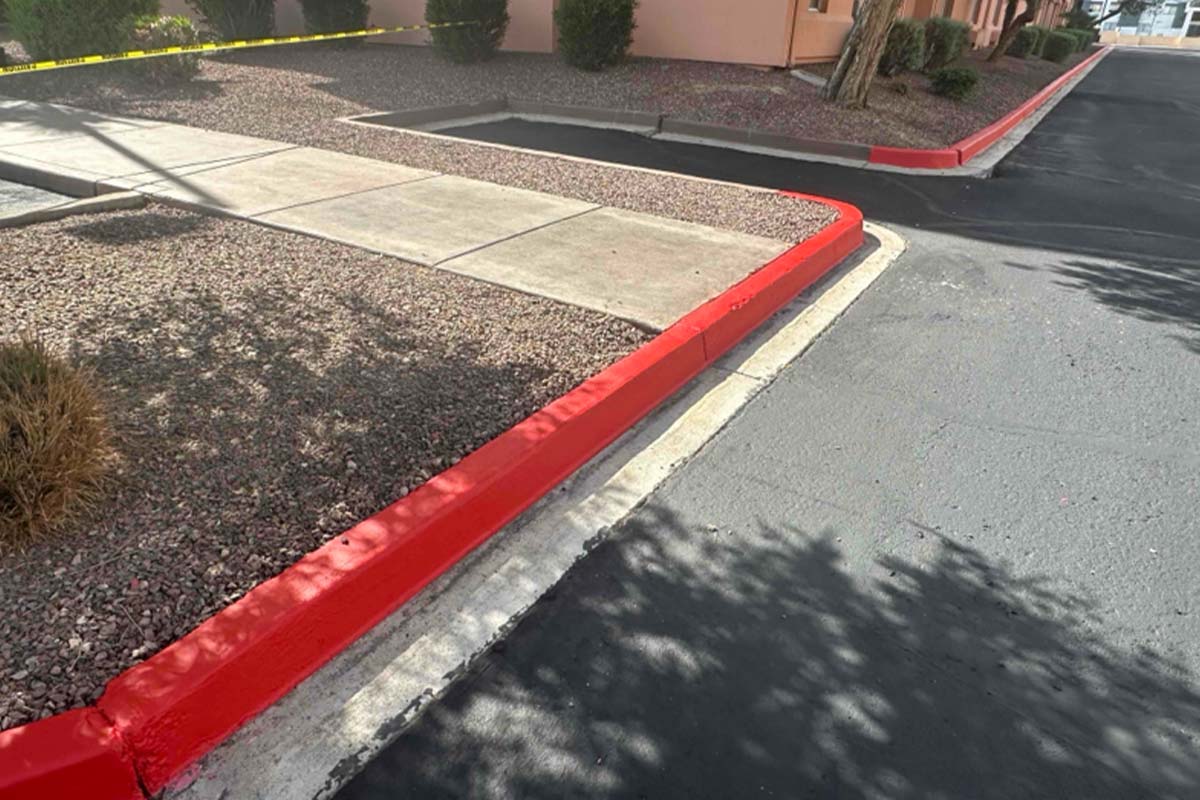
Everything else in the lot can fill up. The fire lane cannot, and marking it is what makes that enforceable: paint and signs together, in the locations your fire official has approved. 1-800-STRIPER of Union marks fire lanes on commercial properties across Union, Essex and Morris counties and the four other counties we cover.
What New Jersey’s Fire Code Requires
New Jersey does not write its own fire code from scratch. Under NJAC 5:70-3.1, the Commissioner adopts the model code of the International Code Council — the 2018 International Fire Code — by reference as the State Fire Prevention Code for New Jersey, subject to the modifications set out at NJAC 5:70-3.2.
That adoption changed recently and it is worth knowing which edition applies. The 2018 edition was adopted effective April 2024, with a transition period during which violations continued to be cited under the previous edition until October 2024. From that date all violations are cited under the 2018 edition as amended. New Jersey is an International Fire Code state, and the model code some contractors cite in this space is not the one adopted here.
Who Approves a Fire Lane in Your Town
New Jersey has no county fire marshal deciding this. New Jersey delegates fire-prevention enforcement largely to local enforcing agencies and municipal fire officials, which means the authority over your fire lane is in your own town.
That matters here more than in most markets, because 1-800-STRIPER of Union serves 79 towns across seven counties. No single approving official covers that footprint. We work to the determination of the fire official with jurisdiction over your specific property, and if you do not know who that is, your municipal fire prevention bureau is the place to start. In the Township of Union itself, the Fire Prevention Bureau is directly in the plan-filing loop with the Chief of Police for private parking areas.
In practice the sequence on a Union Township property runs like this:
- Get the fire official’s determination first. The location and extent of the lane are theirs to designate, so this comes before any layout work and ideally in writing.
- The plan goes on file. The Fire Prevention Bureau files an individual plan with the Chief of Police, who designates the directional lanes and the prohibited-parking areas.
- The completed plan is filed with the record-holders. Copies go to the Township Clerk, Police Records and the New Jersey Department of Transportation.
- Confirm the marking specification with the official. Color, lettering and the extent of the marked area are settled for your site rather than carried over from another town.
- Mark the lane. Curb paint, the boundary line along the pavement, and lettering or hatching within the lane all go down to the approved designation.
- Set the signage to match. Wording and placement follow the same approval, and in the Township of Union the sign itself runs through Article 14.
Fire Lane Markings and Curb Painting
Fire-lane marking is usually a combination of a painted curb, a marked boundary line along the pavement, and lettering or hatching within the lane, with signage above it.
We do not assume the specification. The adopted state code, as modified for New Jersey, is applied on the ground by your local fire official, and the color, the lettering and the extent of the marked area are confirmed with that official before we mark rather than copied from another jurisdiction. Fire officials across our service area conventionally specify red, and that is what we most often install — but we confirm it for your site instead of publishing a figure that may not be yours.
No Parking Fire Lane Signage
Paint on its own is rarely the whole requirement. Fire lanes are normally signed as well, so the prohibition is visible to a driver who is looking at eye level rather than at the pavement.
Sign wording, size, mounting height and spacing are set through your fire official’s approval for the site. In the Township of Union, Article 14 of the township code also governs the sign itself: a Construction Department permit is required before a sign is erected or altered, with an application and two sets of plans showing the proposed construction and method of attachment. Section 170-1403 then exempts official traffic and directional signs, and signs required by any provision of law, from that permit requirement — so whether your fire-lane sign needs one is worth settling with the Construction Department rather than assumed either way. Our parking lot sign installation page covers that.
Fire Apparatus Access Roads
A fire apparatus access road is the route that has to be provided and kept usable so fire department apparatus can reach the building. On many commercial sites the marked fire lane and the apparatus access road are the same pavement.
The dimensional requirements — width, vertical clearance, turning provision and surface capability — come from the adopted code as modified for New Jersey, and they are applied to your specific site by your fire official. We mark to that determination. Where a site has an access road that has never been marked, getting the official’s designation in writing first is the step that saves the work being redone.
Where Parking Is Prohibited in a Union Lot
Union Township puts this in plain terms in its own zoning code rather than leaving it to the fire code alone. Section 170-2601 provides that no parking of vehicles shall be permitted in fire lanes, landscaped areas, aisles, buffer areas, sidewalks or turning areas.
That is a useful sentence for a property manager, because it makes the fire lane one of a set of prohibited areas the township already treats as off-limits — and marking the others clearly is part of what keeps the fire lane clear in practice.
Maintaining Fire Lane Markings
Marking a fire lane is a maintenance commitment, not a one-time install. Faded lettering and a washed-out curb stop communicating the prohibition, and they stop supporting enforcement at exactly the moment enforcement is needed.
In the Township of Union the cost of that upkeep is assigned. Section 266-83 provides that the cost of signing and striping in a filed private parking area shall be borne by the operator. It is the operator’s line item, not the township’s and not a tenant’s by default.
Fire Lanes on Multi-Tenant and Retail Properties
Multi-tenant retail is where fire lanes are hardest to keep clear, because the lane usually runs directly in front of the storefronts — which is also the most convenient place for a delivery van or a customer collecting an order.
Two things help. The first is marking that leaves no ambiguity about where the lane starts and ends, so a driver cannot claim not to have known. The second is coordinating the marking with your tenants’ delivery patterns, so a designated loading position exists somewhere that is not the fire lane. We mark both in one visit.
Commercial Properties We Mark
Retail centers and strip malls, office parks, industrial and distribution facilities, medical and dental offices, schools and houses of worship, municipal buildings, apartment and condominium communities, hotels and self-storage sites.
Across Union, Essex, Morris, Somerset, Passaic, Bergen and Middlesex counties, in 79 towns — which means we are used to working to a different fire official’s determination from one job to the next, and to asking rather than assuming.
For a full list of our pavement marking services, visit our parking lot striping in Union page.
Businesses We Serve




How it Works

GET A FREE ESTIMATE
Contact us today and we’ll have a quote to you in 24 hours

SCHEDULE AN INSTALLATION
We’ll have your installation scheduled in less than 7 days, without affecting your business hours

GET A PARKING LOT THAT POPS
For a budget-friendly price, you’ll get a parking lot that looks like new
We proudly work with:


We proudly work with:


Frequently Asked Questions About Fire Lane Striping in Union, NJ
What code governs fire lanes in New Jersey?
The State Fire Prevention Code for New Jersey. Under NJAC 5:70-3.1 the Commissioner adopts the model code of the International Code Council — the 2018 International Fire Code — by reference, subject to the modifications set out at NJAC 5:70-3.2. That edition was adopted effective April 2024, with violations cited under the previous edition until October 2024 and under the 2018 edition thereafter. New Jersey is an International Fire Code state, so model codes from other adoption schemes do not apply here.
Who decides where a fire lane goes on my property?
Your local fire official. New Jersey delegates fire-prevention enforcement largely to local enforcing agencies and municipal fire officials, so the determination is municipal rather than county-level. Because 1-800-STRIPER of Union serves 79 towns across seven counties, there is no single approving authority across our footprint and we work to whichever official has jurisdiction over your site. In the Township of Union, the Fire Prevention Bureau is also in the plan-filing loop with the Chief of Police for private lots.
What color are fire lane markings in New Jersey?
The State Fire Prevention Code adopted at NJAC 5:70-3.1 does not itself prescribe a paint color for a fire lane, and we would rather say that than invent a figure. In practice, fire officials across our service area conventionally specify red for the curb and the lane boundary, and that is what we most often install. Because the specification comes through your fire official’s approval for your specific site, we confirm the color and the marked extent with that official before marking.
Do fire lanes need signs as well as paint?
Normally yes. Pavement and curb markings tell a driver who is looking down; signage tells a driver looking at eye level, and fire lanes are usually required to be identified both ways. The wording, size, mounting height and spacing come from your fire official’s approval rather than from a figure we can publish for every town. In the Township of Union, Article 14 adds a Construction Department permit step for signs generally, with section 170-1403 exempting official traffic and directional signs from it — worth settling before you order.
Can vehicles ever stop in a fire lane?
Not on a Union Township lot. Section 170-2601 of the township code provides that no parking of vehicles shall be permitted in fire lanes, landscaped areas, aisles, buffer areas, sidewalks or turning areas. The practical problem on retail properties is that the fire lane is usually the most convenient place for a short delivery stop, which is why marking a designated loading position elsewhere on the site tends to do more for compliance than signage alone.
Who is responsible for repainting a faded fire lane?
The property operator. Section 266-83 of the Township of Union code provides that appropriate signs and striping shall be provided in each individual private parking area for which a plan is filed, and that the cost of such signing and striping shall be borne by said operator. It is not a township cost and it does not fall to a tenant by default. Faded fire-lane markings are therefore an operator maintenance obligation, not a discretionary appearance item.
Are fire lanes required on every commercial property?
No, not automatically. The requirement is triggered by the site — how fire department apparatus can reach the building, and what the adopted code as modified for New Jersey requires of that access for your specific property. That determination is made by your local fire official, not by a blanket rule we can state for all properties. If your site has never been assessed, the fire prevention bureau in your municipality is where that determination comes from.
What is a fire apparatus access road?
It is the route that must be provided and kept usable so fire department apparatus can reach a building. On many commercial sites it is the same pavement as the marked fire lane. Its dimensional requirements — width, vertical clearance, turning provision and surface capability — come from the code adopted for New Jersey as modified, and are applied to your site by your fire official. We mark to that determination rather than to a general figure, and we recommend getting the designation in writing first.
How often should fire lane markings be repainted?
Condition is the better test than calendar, and no fixed interval fits every lane. Markings are due when the lettering or the boundary line is no longer legible from a moving vehicle, when the curb paint has weathered to patches, or when a plow season has scarred the lane. In North Jersey the plow is usually what decides it. Because the marking is what supports enforcement, letting it fade past legibility removes the practical basis for keeping the lane clear.
Does the fire official need to approve the layout before marking?
For fire-lane work, yes — the designation is theirs to make and marking to an unapproved location risks doing the job twice. In the Township of Union there is a related requirement for private parking areas generally: the Fire Prevention Bureau files an individual plan with the Chief of Police, the Chief designates directional lanes and prohibited-parking areas, and the completed plan is filed with the Township Clerk, Police Records and the New Jersey Department of Transportation.
Do fire lane requirements differ between towns in our service area?
In practice yes, and this is the single most important thing to know about fire lanes in North Jersey. The State Fire Prevention Code is statewide, but enforcement is delegated largely to local enforcing agencies and municipal fire officials, so the determinations that actually govern your markings are made town by town. We serve 79 towns across seven counties, and we confirm the requirement with the official having jurisdiction over each property rather than carrying one town’s specification to another.
Can a fire lane be marked on an unpaved surface?
Permanent fire-lane marking assumes a paved surface, because the paint needs something to bond to and the lane needs to hold its definition under traffic. Where access has to be kept clear across grass, gravel or a construction area, that is temporary marking work rather than fire-lane striping, and it should be coordinated with the fire official as an access-maintenance measure. Our temporary parking lot striping page covers marking grass, gravel and unpaved surfaces.