
Temporary Parking Lot Striping
In Northwest Houston, TX
Event and Construction Markings
1-800-STRIPER provides professional temporary parking lot striping in Northwest Houston, TX — short-duration event markings, construction-phase lanes, and overflow parking layouts on grass, gravel, pavement, or any surface using removable water-based traffic paint.
1-800-STRIPER® of NW Houston PROVIDes Temporary Parking Lot Striping Services NEAR YOU
Need Temporary Stripes?
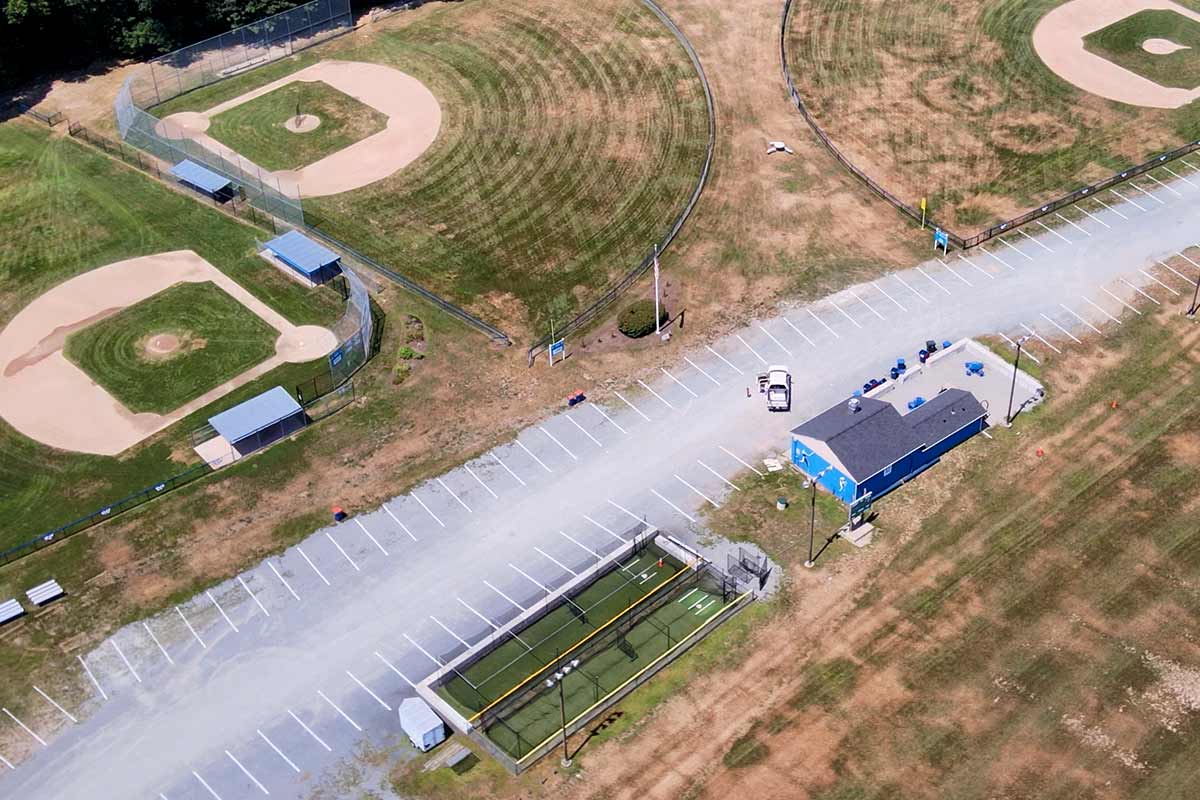
Use temporary stripes to direct traffic and create parking areas at your special event or to keep construction sites safe without a long-term commitment. We paint on grass, gravel, pavement, or any other surface where temporary striping is needed.
Striping solutions for:
Surfaces We Can Mark
A church in Magnolia needs 400 cars parked on a hayfield for one Saturday. That is the job, and asphalt has nothing to do with it.
Temporary striping goes on grass, gravel, dirt, pavement, and effectively any surface a vehicle can be parked on. Each behaves differently and it is worth knowing which you have.
Grass and turf take marking paint well for short-duration use and the lines disappear as the field grows out and gets mown. Gravel and crushed base hold a line less crisply because the surface moves under tires, so we mark heavier and accept some wander. Dirt and compacted soil work for short events, though rain is the limiting factor. Asphalt and concrete give the sharpest result and the most control over how long the marking stays.
We are not limited to hard surfaces, and that is the main thing people are surprised by when they call.
Events, Construction Phasing, and Overflow Parking
Three situations account for almost all of this work.
Events. Festivals, church services, school functions, sports days, weddings, markets. The brief is usually a field or an overflow lot, a target vehicle count, and one date. We lay out rows, aisles, entry and exit routes, accessible parking near the entrance, and any reserved areas, then mark it so volunteers can direct traffic without arguing with drivers.
Construction phasing. An active site where the parking arrangement changes as the build progresses. Contractor parking, staging, delivery routes, pedestrian separation, and the lanes that keep the public away from the work. These get remarked several times over a project rather than once.
Overflow parking. A property whose regular lot is fine most of the year and undersized for a season, a sale, a holiday period or a one-off. Marking the overflow area properly turns a chaotic field into usable capacity and keeps vehicles off the parts you need to protect.
Application and Removal
- Walk the ground. Surface type, drainage, slope, access points, and where vehicles will enter and leave.
- Lay out the plan. Rows, aisle widths for the vehicles expected, accessible spaces close to the destination, and the circulation that keeps traffic moving one way where possible.
- Mark it. Water-based traffic paint applied for the duration you need — heavier on loose surfaces, lighter where you want it gone quickly.
- Take it away. On grass, the marking grows and mows out. On gravel and dirt it weathers and gets disturbed by traffic. On pavement, we can remove markings mechanically where you need the surface clean before the paint would fade on its own.
Duration is a dial, not a fixed setting. Tell us whether you need the lines to survive one afternoon or one construction season and we adjust the application accordingly.
For a full list of our pavement marking services, visit our parking lot striping in Northwest Houston page.
Businesses We Serve




How it Works

GET A FREE ESTIMATE
Contact us today and we’ll have a quote to you in 24 hours

SCHEDULE A STRIPING
We’ll have your space restriped in less than 7 days, without affecting your business hours

GET A PARKING LOT THAT POPS
For a budget-friendly price, you’ll get a parking lot that looks like new
We proudly work with:


We proudly work with:


Frequently Asked Questions About Temporary Parking Lot Striping in Northwest Houston, TX
What surfaces can temporary striping go on?
Grass, gravel, dirt, pavement, and essentially any surface you can park a vehicle on. This is not an asphalt-and-concrete-only service. Grass and gravel are two of the most common requests we get for event parking around Magnolia, Tomball and Brookshire, where the overflow area is a field rather than a lot.
How long does temporary striping last?
As long as you need it to, within reason, because we apply it for the duration. A single-day event needs a marking that is legible on the day and gone soon after. A construction phase running through a season needs a heavier application. Surface type and weather do most of the work in deciding actual life — loose surfaces move, grass grows, and heavy rain shortens everything. We match the application to the window you give us.
How is temporary striping removed?
Often it is not removed so much as it goes away. Marked grass grows out and is mown off. Gravel and dirt get disturbed by traffic and weather within a few weeks. On pavement, where you need the surface clean on a schedule rather than whenever the paint fades, we remove markings mechanically. Tell us at the estimate which of those you need — a marking meant to vanish on its own is applied differently from one we will come back and take off.
Can you stripe an overflow lot for a single-day event?
Yes, and it is one of the most common calls we take. Give us the date, the expected vehicle count and access to the ground beforehand and we will lay out rows, aisles, entry and exit routes and accessible parking near the entrance. Booking early matters more than the size of the job — event dates cluster, and weather can move an install by a day.
What do you need from us before an event install?
Access to the area with nothing parked on it, a mown field if the surface is grass, the vehicle count you are planning for, where you want people to enter and leave, and where the entrance or venue is so accessible parking goes in the right place. If a fire lane or emergency access route has to stay clear, tell us where it is before we lay out rather than after.
Can temporary markings be made permanent later?
The layout can, and often that is the smart sequence. Marking an overflow area temporarily is a cheap way to find out whether the circulation actually works before committing to permanent striping. If the layout proves itself over a season, we can come back and lay it out permanently on a prepared surface.