Warehouse Line Painting
In West Fort Worth, TX
OSHA-Compliant Safety Markings
1-800-STRIPER provides professional warehouse line painting in West Fort Worth, TX — OSHA-compliant aisle lines, pedestrian walkways, and safety zone markings per OSHA 1910.22 requirements using durable epoxy and traffic paint for industrial facilities.
1-800-STRIPER® of West Fort Worth PROVIDes Warehouse Floor Markings Services NEAR YOU
Want your indoor space to operate more efficiently?
Warehouse and interior markings ensure clear traffic lanes, organized storage zones, and designated spaces designed to help your business operate safely and efficiently.
Benefits:
What We Mark Inside a Warehouse
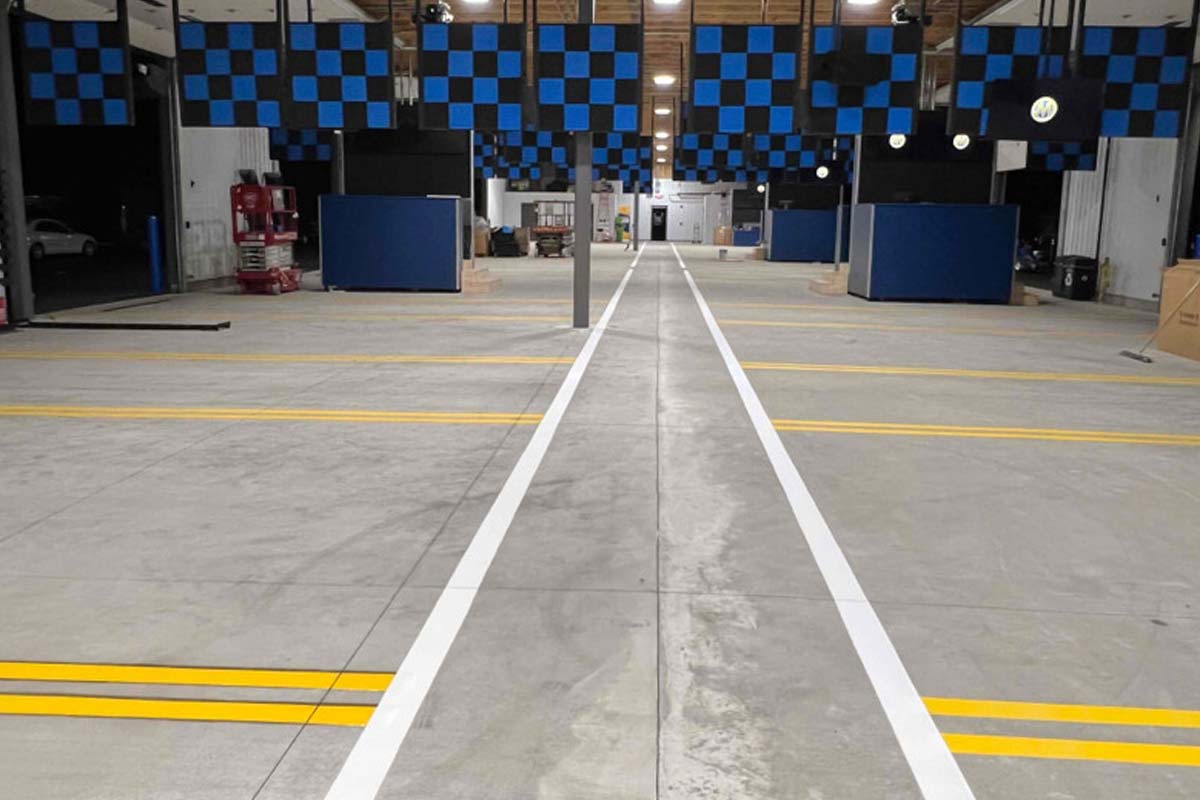
Warehouse line painting covers every floor marking that keeps people, forklifts, and freight moving safely through the building. We lay out forklift aisle lines, pedestrian walkways, safety and hazard zones, equipment and staging areas, dock and loading lanes, and the clearance around fire-equipment.
Each marking does a specific job on the floor. Forklift aisle borders separate vehicle traffic from foot traffic, walkways give workers a protected path across the floor, and staging zones tell crews exactly where pallets stack and where they don’t. Dock and loading lanes guide trucks and pallet jacks at the busiest, most congested point in the building.
The clearance painted around fire extinguishers, hose stations, and electrical panels is just as important as the aisle lines. Those zones have to stay open and visible, and a painted boundary on the floor is what keeps a pallet from creeping into the space. We mark all of it in one coordinated layout so the floor reads clearly from the moment a worker steps onto it.
How OSHA 29 CFR 1910.22 Shapes the Layout
OSHA sets the baseline for warehouse floor marking, and the layout starts there. Under OSHA 29 CFR 1910.22, aisles and passageways must be kept clear, in good repair, and have no obstruction that could create a hazard.
That standard drives two practical decisions on the floor: where the lines go and how wide they are. Aisles need enough width for the equipment that runs them, and the border lines have to stay visible under heavy forklift traffic and constant pallet movement. Common industry practice is a 2-inch to 4-inch line for aisle borders — wide enough to read from a moving forklift, narrow enough to keep the floor plan clean.
We map the building before we paint a single line. The walk-through identifies forklift routes, pinch points at dock doors, and the clearance that has to stay open around fire and electrical equipment. Then we mark widths and boundaries that keep aisles, passageways, and clearances clear and visible the way the standard requires.
Reading the Safety Color Code
Color is a language on a warehouse floor, and it follows a published standard. The ANSI Z535.1 Safety Color Code assigns meaning to each color so a worker reads the floor the same way in any facility, and we paint to that code so your markings match what crews already recognize.
Here is how the core colors map to floor and zone markings:
| Color | Meaning on the Floor |
|---|---|
| Yellow | Caution — aisle borders, physical-hazard zones, traffic lanes |
| Red | Fire and emergency equipment, fire-equipment clearance, stop zones |
| Orange | Dangerous machine parts, energized equipment areas |
| Blue | Caution against starting, equipment under repair or out of service |
| Green | Safety and first-aid equipment, safety stations |
| White | General housekeeping, equipment and staging zones, fixture locations |
Using the right color for the right zone is not a style choice — it is how the floor communicates risk at a glance. Yellow aisle borders read as caution, red around an extinguisher reads as fire equipment, and a worker doesn’t have to stop and think about it. We confirm your color plan against the standard before the first line goes down.
Surface Prep on Sealed and Coated Concrete
Surface prep decides whether the paint lasts, and warehouse floors make it harder than a parking lot. Most distribution-center slabs are sealed or carry an existing floor coating, and traffic paint will not bond to a slick, sealed surface without preparation.
We start by sweeping and cleaning the slab to pull up dust, tire rubber, and forklift residue along the line path. On sealed or coated concrete, the line areas get abraded or profiled so the new marking has something to grip — paint adheres to a clean, profiled surface and peels off a glossy one. Any failed or flaking existing stripe gets removed before the new line is laid so the fresh marking doesn’t ride on a layer that’s already lifting.
That prep step is the most common difference between a stripe that survives two years of forklift traffic and one that scuffs off in a few months. We size the prep to the floor in front of us, not to a generic checklist.
Durable Epoxy Versus Traffic Paint for Forklift Wear
The coating choice comes down to how hard the line gets hit. Forklift wheels, pallet-jack casters, and constant pivoting at intersections grind floor lines far faster than passenger tires ever touch a parking stall, so the wear math is different inside a warehouse.
Two-part epoxy is the durable end of the range. It bonds tight to prepared concrete, holds a sharp edge, and stands up to the abrasion and chemical exposure of high-traffic forklift lanes and dock approaches — the zones that fail first. The trade-off is a longer cure window before the floor reopens to traffic.
Traffic paint is the faster, lower-cost option, and it fits walkways, staging-zone outlines, and lower-traffic borders where wheels cross but don’t grind. On most floors the smart plan is a mix: epoxy on the forklift-aisle and dock lines that take the beating, traffic paint on the markings that don’t. We walk the floor and match the coating to the wear so you’re not overpaying on the light zones or under-building the heavy ones.
Warehouse Striping Across the West Fort Worth Distribution Corridor
West Fort Worth sits inside one of North Texas’s busiest distribution-and-warehouse corridors, and that shapes the work we do here. The Alliance, Haslet, and Saginaw industrial belt is packed with distribution centers, fulfillment buildings, and cross-dock facilities, and every one of them needs floor markings that hold up to round-the-clock forklift traffic.
1-800-STRIPER serves industrial and commercial properties across western Tarrant, Parker, Johnson, and Hood counties and the surrounding North Texas towns — Aledo, Weatherford, Willow Park, Hudson Oaks, Granbury, Cleburne, Azle, Benbrook, Saginaw, Crowley, Haslet, and Justin. Warehouse operators in this corridor run high-throughput buildings where floor layout directly affects safety and pick speed.
We schedule warehouse work around your operation, painting in sections or off-shift so racking stays loaded and the floor stays productive while the lines go down. For a free estimate on warehouse floor marking, call (682) 262-7612 and we’ll walk the building with you.
For a full list of our pavement marking services, visit our parking lot striping in West Fort Worth page.
Businesses We Serve




How it Works

GET A FREE ESTIMATE
Contact us today and we’ll have a quote to you in 24 hours

SCHEDULE A STRIPING
We’ll have your space restriped in less than 7 days, without affecting your business hours

GET A PARKING LOT THAT POPS
For a budget-friendly price, you’ll get a parking lot that looks like new
We proudly work with:


We proudly work with:

Frequently Asked Questions About Warehouse Line Painting in West Fort Worth, TX
How wide should warehouse aisle lines be?
Common industry practice runs aisle border lines in the 2-inch to 4-inch range. The line has to read clearly from a moving forklift while keeping the floor plan clean, so 2-to-4 inches hits that balance for most buildings. We confirm width against your forklift routes and the clearance requirements in OSHA 29 CFR 1910.22, then mark widths that keep aisles and passageways clear and visible the way the standard expects.
What do the safety colors on a warehouse floor mean?
Floor colors follow the ANSI Z535.1 Safety Color Code so a worker reads them the same way in any building. Yellow marks caution zones and aisle borders, red marks fire and emergency equipment, orange flags dangerous machine areas, green marks safety and first-aid stations, and white handles general housekeeping and staging. We paint to that code so your markings match what crews already recognize on sight.
Should I use epoxy or traffic paint in my warehouse?
It depends on the wear. Two-part epoxy bonds tight to prepared concrete and stands up to the grinding from forklift wheels and pallet jacks, so it fits high-traffic aisles and dock approaches. Traffic paint is faster and lower-cost, which suits walkways and lower-traffic borders. Most floors get a mix — epoxy where wheels pivot and grind, traffic paint where they don’t. We match the coating to the traffic on each part of your floor.
Do you mark fire-equipment clearance zones?
Yes. We paint the clearance boundaries around fire extinguishers, hose stations, and electrical panels so those areas stay open and visible. OSHA 29 CFR 1910.22 requires aisles and passageways stay clear and unobstructed, and a painted floor boundary is what keeps a pallet from creeping into the space. The ANSI Z535.1 Safety Color Code assigns red to fire and emergency equipment, so those clearance zones get marked in red.
Can you paint lines on a sealed or coated concrete floor?
Yes, but the prep matters. Traffic paint and epoxy won’t bond to a slick, sealed surface without preparation, so the line areas get cleaned and then abraded or profiled to give the marking something to grip. Any failed or flaking existing stripe gets removed first so the new line doesn’t ride on a layer that’s already lifting. That prep step is the main reason a warehouse line lasts years instead of months.
Will you paint around our operation so we don’t have to shut down?
Yes. Warehouse operators in the West Fort Worth distribution corridor run high-throughput buildings, so we schedule the work in sections or on an off-shift to keep racking loaded and the floor productive. We sequence the layout around your busiest lanes and dock doors, marking the open areas first and the active zones during slower windows. The goal is fresh, code-compliant floor lines without a full operational shutdown.