Parking Lot Sign Installation
In West Fort Worth, TX
ADA, Fire Lane, and Directional Signage
1-800-STRIPER provides professional parking lot sign installation in West Fort Worth, TX — installing ADA R7-8 accessible-space signs, fire lane no-parking signs, directional signage, and tow-away warning signs per the 2010 ADA Standards for Accessible Design and the Texas Manual on Uniform Traffic Control Devices for commercial properties throughout Tarrant and Parker counties.
1-800-STRIPER® of West Fort Worth PROVIDes Signage Installations Services NEAR YOU
Are you communicating clearly?
We install new signs in adherence with local regulatory standards and can repair or replace damaged signs so you can clearly communicate your parking requirements.
Which Parking Lot Signs We Install
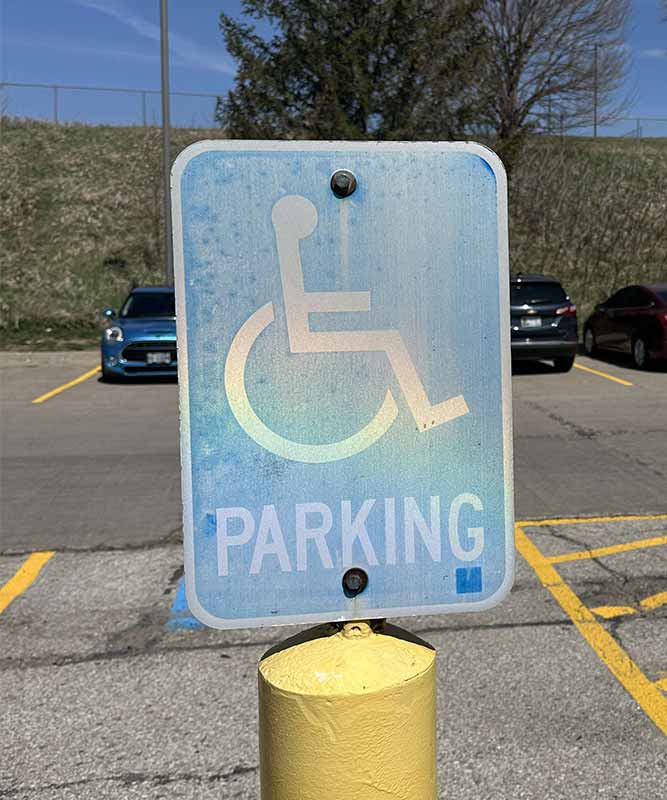
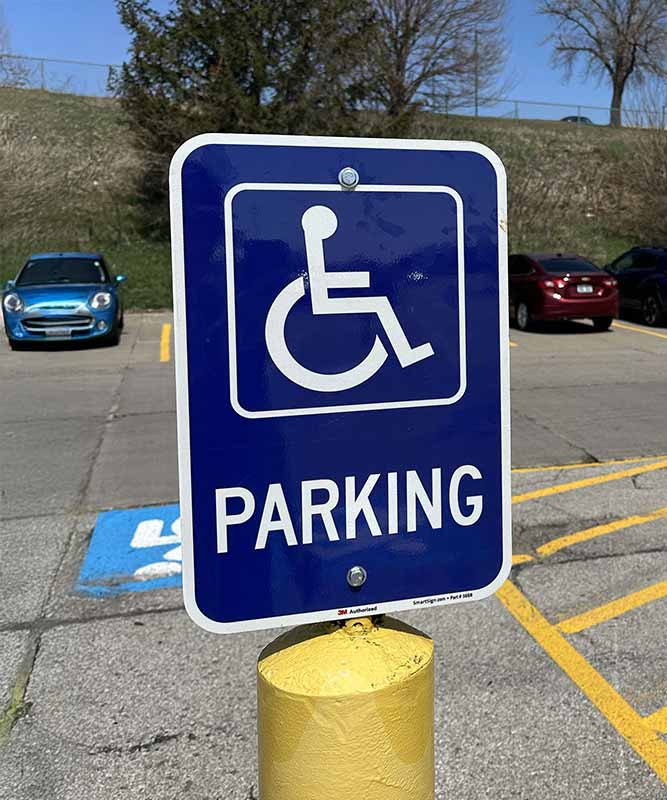
We install the full set of regulatory parking-lot signs a commercial property needs to stay compliant and safe. That starts with ADA R7-8 accessible-parking signs — the blue-and-white panel that marks every accessible stall — and the matching R7-8a “van accessible” plate mounted below it where the layout calls for one. From there we add fire-lane and tow-away signage, directional and one-way panels, stop signs at internal drive intersections, and reserved or customer-only signs that keep your traffic moving the way you intend.
Each sign carries a specific legend, color, and shape that the regulating authority defines — owners don’t get to improvise these. The accessible-parking sign is a vertical white panel with the International Symbol of Accessibility (ISA); the fire-lane sign is a red-and-white “FIRE LANE — NO PARKING” panel; directional and stop signs follow the standard MUTCD shapes. We install the panel that matches the rule, on a post set to the right height, in the spot the code requires.
Here is the working set we install most often across West Fort Worth lots, with the controlling reference for each:
| Sign type | Legend / format | Where it goes | Reference |
|---|---|---|---|
| ADA accessible-parking | R7-8, white panel + ISA symbol | At each accessible stall | 2010 ADA Standards §502.6 |
| Van-accessible plate | R7-8a “VAN ACCESSIBLE” | Below R7-8 at van stalls | 2010 ADA Standards §502.6 |
| Fire lane / tow-away | “FIRE LANE — NO PARKING,” red on white | Along designated fire lanes | Fort Worth Code of Ordinances + TMUTCD |
| Directional / one-way | One-way arrow, R6 series | Drive aisles, entrances, exits | Texas Manual on Uniform Traffic Control Devices |
| Stop | R1-1 octagon, white on red | Internal drive intersections | Texas Manual on Uniform Traffic Control Devices |
| Reserved / customer-only | Custom regulatory panel | Tenant or customer stalls | Property-specific |
ADA Mounting and Sign Requirements
The single rule that catches most properties is mounting height. Under the 2010 ADA Standards for Accessible Design, the bottom edge of an accessible-parking sign must sit at least 60 inches above the ground surface, measured to the bottom of the lowest panel, so the sign stays visible above a parked vehicle. We set every R7-8 post to clear that 60-inch minimum, then add the van-accessible plate below the main panel without dropping the bottom edge under the line.
The sign itself has to display the ISA — the white-on-blue wheelchair symbol — and van stalls need the “van accessible” designation called out on the R7-8a plate beneath the main sign. The sign has to be located so it can’t be obscured by a vehicle parked in the space, which is why height and placement go together. A sign that meets the legend requirement but sits too low still fails an ADA review.
Placement, count, and stall geometry tie back to the same standard. The number of accessible stalls scales with the total stall count on the lot, and each accessible stall — standard or van — gets its own posted sign. When we lay out signage, we confirm the stall already meets the §502 width and access-aisle requirements before we set the post, so the sign and the stall pass together rather than one passing and the other flagging.
Regulatory Sign Design and the Texas MUTCD
Beyond ADA, the design of every regulatory sign on a Texas parking lot traces to the Texas Manual on Uniform Traffic Control Devices. The TMUTCD is the state adoption of the federal manual, and it fixes the legend, color, shape, and reflective-sheeting class for regulatory signs — including the R-series panels that show up on private commercial lots. The R7-8 accessible-parking sign, the R6 one-way arrows, the R1-1 stop sign, and the parking-restriction panels all draw their format from this manual.
This matters because a sign that looks “close enough” but uses the wrong color or a non-standard legend doesn’t carry the same enforcement weight. A fire marshal or code officer reads a “FIRE LANE — NO PARKING” sign as enforceable because it matches the recognized regulatory format; a homemade panel in the wrong color is just a suggestion. We spec each sign to the TMUTCD format so the signage you pay for actually does its job when a vehicle gets towed or a citation gets written.
Reflectivity is part of the spec too. Regulatory signs use a defined retroreflective sheeting so the legend reads at night under headlights, not just in daylight. We install signs that meet the sheeting requirement, which is the difference between a sign that works at 9 p.m. in a dark back-lot fire lane and one that disappears after dark.
Post Installation, Footings, and the City Permit Layer
A regulatory sign is only as reliable as the post holding it. We install signs on galvanized steel U-channel or square-tube posts set in a concrete footing, sized so the post resists wind load and the day-to-day bumps of a working parking lot. Industry practice is to set the footing roughly 24 to 36 inches deep depending on soil and post height, with the concrete crowned at grade so water sheds away from the post rather than pooling at the base. In areas where a sign sits close to a drive lane, breakaway or impact-resistant mounting is the consideration — a post that yields predictably on impact is safer than one that doesn’t.
Here is how a typical sign install runs:
- Confirm placement. We mark each sign location against the ADA stall layout and the TMUTCD format, so the post lands where the code wants it.
- Dig and set the footing. Auger the hole, set the post plumb, and pour the concrete footing crowned at grade.
- Mount the panel. Fasten the R7-8 (and R7-8a plate where required) so the bottom edge clears the 60-inch ADA minimum.
- Verify and clean up. Re-check height, plumb, and legibility, then haul off spoil so the lot reopens clean.
The permit layer is where we save owners a headache. Commercial signage in the city runs through the Fort Worth Code of Ordinances, which governs sign permitting for commercial properties. Regulatory parking signage and permitting requirements vary by sign and location, so we flag what applies to your lot up front rather than installing first and sorting out paperwork later.
Striping Plus Signs Beat a Pure Sign-Permit Shop
The reason properties call 1-800-STRIPER for sign work is that we stripe the lot and install the signs as one coordinated job. A pure sign-permit shop pulls a permit and plants a post, but it doesn’t touch the pavement marking that the sign is supposed to reinforce. An accessible-parking sign over a faded stall with no ISA painted on the pavement is half a compliance package — the ADA stall needs both the posted sign and the ground marking to read as compliant.
Because we handle the striping and the signage together, the access aisle, the ISA pavement symbol, the fire-lane red curb, and the posted R7-8 sign all get installed to match. One crew, one site visit, one set of measurements pulled from the same ADA and TMUTCD references. That coordination is what keeps a parking lot in Aledo, Weatherford, Willow Park, Benbrook, Saginaw, or Crowley passing on the first look instead of getting flagged for a mismatch between the paint and the post.
If you manage commercial property across western Tarrant, Parker, Johnson, or Hood counties and need parking-lot signage installed right the first time, call 1-800-STRIPER at (682) 262-7612 for a free estimate. We cover the surrounding North Texas markets from Hudson Oaks and Granbury out to Azle and Cleburne.
For a full list of our pavement marking services, visit our parking lot striping in West Fort Worth page.
Businesses We Serve




How it Works

GET A FREE ESTIMATE
Contact us today and we’ll have a quote to you in 24 hours

SCHEDULE AN INSTALLATION
We’ll have your installation scheduled in less than 7 days, without affecting your business hours

GET A PARKING LOT THAT POPS
For a budget-friendly price, you’ll get a parking lot that looks like new
We proudly work with:


We proudly work with:


Frequently Asked Questions About Parking Lot Sign Installation in West Fort Worth, TX
How high does an ADA parking sign have to be mounted?
Under the 2010 ADA Standards for Accessible Design, the bottom edge of an accessible-parking sign must sit at least 60 inches above the ground, measured to the bottom of the lowest panel. The height keeps the sign visible above a parked vehicle so it can’t be blocked by the car in the space. When we add a “van accessible” plate, it mounts below the main R7-8 panel without dropping the bottom edge under that 60-inch minimum.
What is the difference between a standard accessible sign and a van-accessible sign?
A standard accessible stall gets the R7-8 panel with the International Symbol of Accessibility. A van-accessible stall gets the same R7-8 panel plus an R7-8a “van accessible” plate mounted below it, and the stall itself carries a wider access aisle. The plate is how a code reviewer tells a van stall apart from a standard accessible stall, so it has to be posted, not just painted on the pavement.
Do I need a city permit to install parking lot signs in Fort Worth?
Commercial signage permitting runs through the Fort Worth Code of Ordinances, and whether a given sign needs a permit depends on the sign type and the property. Regulatory parking and fire-lane signs follow the ADA and Texas MUTCD format, while the permitting step is a separate city layer. We review what applies to your specific lot before installation so the paperwork side is handled up front rather than after the posts are already in the ground.
Why does the Texas MUTCD matter for a private parking lot?
The Texas Manual on Uniform Traffic Control Devices fixes the legend, color, shape, and reflective sheeting for regulatory signs, including the R7-8 accessible panels, one-way arrows, and stop signs that appear on commercial lots. A sign in the correct format carries enforcement weight; a homemade panel in the wrong color often does not. We spec each sign to the TMUTCD so your fire-lane and tow-away signage actually holds up when a vehicle gets towed or a citation gets issued.
How deep do you set the sign posts?
We set sign posts in a concrete footing, typically around 24 to 36 inches deep depending on post height and soil, with the concrete crowned at grade so water sheds away from the base. Galvanized steel U-channel or square-tube posts handle wind load and routine parking-lot bumps. Where a sign sits close to a drive lane, we consider impact-resistant or breakaway mounting so a struck post yields predictably instead of becoming a hazard.
Can you install the signs and stripe the lot at the same time?
Yes — that is the main reason properties call us instead of a pure sign-permit shop. We pull the striping and the signage from the same ADA and Texas MUTCD measurements, so the posted R7-8 sign, the ISA pavement symbol, the access aisle, and the fire-lane curb all match. One crew handles both in a single visit across Tarrant, Parker, Johnson, and Hood counties, which keeps the paint and the post from getting flagged for a mismatch.