
Parking Lot Sign Installation
In North Dallas, TX
ADA, Fire Lane, and Directional Signage
1-800-STRIPER provides professional parking lot sign installation in North Dallas, TX — setting accessible-parking signs, fire lane no-parking signs, tow-away warnings, and directional signage to the 2010 ADA Standards for Accessible Design and the Texas Manual on Uniform Traffic Control Devices for commercial properties across Collin, Dallas, and Denton counties.
1-800-STRIPER® of North Dallas PROVIDes Signage Installations Services NEAR YOU
Are you communicating clearly?
We install new signs in adherence with local regulatory standards and can repair or replace damaged signs so you can clearly communicate your parking requirements.
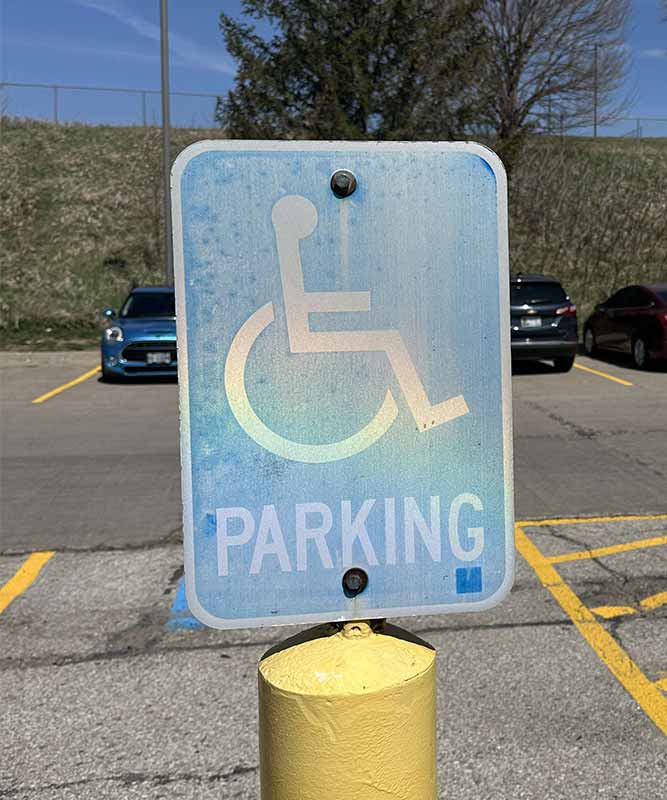
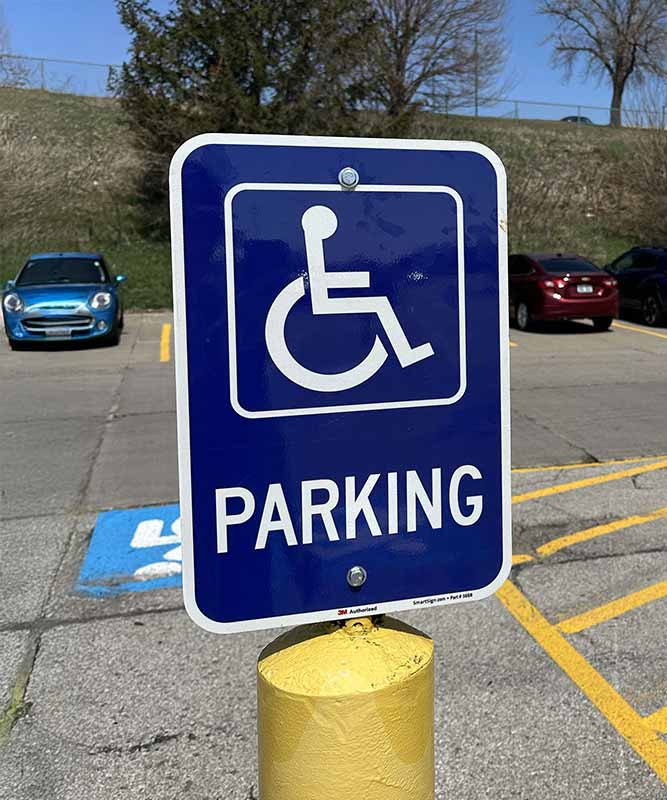
What Parking Lot Sign Installation Covers
Signs are the half of a parking lot that paint cannot do. We install the full regulatory set, replace signs that have been hit, faded, or vandalized, straighten leaning posts, and re-sign after a restripe changes the layout.
| Sign type | Where it goes | What sets the requirement |
|---|---|---|
| Accessible parking, with the accessibility symbol | One per accessible space | 2010 ADA Standards; van spaces carry an added designation |
| Van accessible designation | Van spaces only | 2010 ADA Standards |
| Fire lane and no-parking | Along the marked fire lane | Your city’s adopted fire code |
| Tow-away notice | Usually paired with fire lane and reserved signage | Local ordinance and property policy |
| Stop, one-way, directional, speed | Internal intersections and drive aisles | Property owner; Texas Manual on Uniform Traffic Control Devices conventions |
| Reserved, visitor, permit, EV charging | Assigned stalls | Property policy |
Accessible Parking Signs: Height, Mounting, and the ISA
This is the sign with real dimensional requirements attached, and the one most often installed slightly wrong.
Each accessible space needs a sign carrying the International Symbol of Accessibility, with an added van accessible designation at van spaces. The mounting height is what catches people: the bottom of the sign has to sit at least 60 inches above the ground — measured to the bottom edge, not the top, because a sign any lower disappears behind a parked vehicle. The face follows the accessible parking series in the Texas Manual on Uniform Traffic Control Devices.
Sources: 2010 ADA Standards for Accessible Design; Texas Manual on Uniform Traffic Control Devices.
Fire Lane and Tow-Away Signs
Fire lane signage is set by your city, not by a national spec. The adopted fire code determines wording, size, mounting height, and spacing along the lane, and Texas has no statewide code to fall back on. Tow-away notices are usually paired with them, under local ordinance and your enforcement policy. We install to your fire marshal’s requirement, as the lane is striped.
Directional, Speed, and Stop Signs on Private Lots
On a private lot, stop signs, speed signs, and directional arrows are the owner’s decision, not a state requirement. What matters is that they read the way drivers expect: the familiar shape and color, an arrow pointing the way traffic flows, a one-way aisle signed at both ends. We follow the standard conventions because familiarity is the whole point of a traffic sign.
Installation, Not Fabrication — Posts, Footings, and Sleeves
This is where we differ from half the results you will find searching for this.
Sign shops print faces. We put them in the ground. Those are different jobs, and the second is where lots go wrong: a correct sign on a post set shallow in soft ground leans within a season, and a post driven through pavement without a sleeve becomes a water intrusion point.
We install on the mounting that suits the location — driven or concreted posts in landscape and islands, core-drilled and sleeved installations through paving, wall and column mounts inside structures, and protected placements where a post would otherwise be struck. Call (940) 298-0200 for a free estimate.
For a full list of our pavement marking services, visit our parking lot striping in North Dallas page.
Businesses We Serve




How it Works

GET A FREE ESTIMATE
Contact us today and we’ll have a quote to you in 24 hours

SCHEDULE AN INSTALLATION
We’ll have your installation scheduled in less than 7 days, without affecting your business hours

GET A PARKING LOT THAT POPS
For a budget-friendly price, you’ll get a parking lot that looks like new
We proudly work with:


We proudly work with:


Frequently Asked Questions About Parking Lot Sign Installation in North Dallas, TX
What signs do you install on a commercial parking lot?
Accessible parking signs at every accessible stall with the van designation where it applies, fire lane and no-parking signage, tow-away notices, reserved and visitor stalls, directional and one-way signs, stop signs at internal intersections, and speed and pedestrian-crossing signs. We also replace faded, damaged, or vandalized signs and straighten leaning posts.
Do you install signs you did not fabricate?
Yes. Installation is the job we do, and it is a separate trade from fabrication. If you have already bought faces from a sign shop, we will set them properly — posts, footings, sleeves, heights, and placement. If you have not, we will source them. Much of what ranks here is a fabrication franchise.
How high does an accessible parking sign have to be mounted?
At least 60 inches from the ground to the bottom of the sign. Measured to the bottom edge, not the top, because a sign any lower disappears behind a parked vehicle. Each accessible space needs a sign carrying the International Symbol of Accessibility, and van-accessible spaces carry an additional designation on the face.
What fire lane and tow-away signs does my property need?
Whatever your city’s adopted fire code requires — wording, size, mounting height, and spacing along the lane are all set locally, and Texas has no single statewide fire code to fall back on. Tow-away notices are usually paired with fire lane signage, and their content is a matter of local ordinance and your enforcement policy.
What are the mounting options through asphalt or concrete?
It depends where the sign goes. In landscape islands and soft ground, posts are driven or set in concrete. Through asphalt or concrete paving we core-drill and set a sleeve, which lets a struck post be replaced later without breaking up the pavement again. Inside structures, signs go on walls or columns.
Do private lots need regulatory-standard signs?
On private property, stop signs, speed limits, and directional arrows are the owner’s decision rather than a state requirement. What matters is that they read the way drivers already expect — the familiar shape and color, an arrow pointing the way traffic flows, a one-way aisle signed at both ends. Accessible parking signage is the exception.