Warehouse Line Painting
In Central Dallas, TX
OSHA-Compliant Safety Markings
1-800-STRIPER provides professional warehouse line painting in Central Dallas, TX — OSHA-compliant aisle lines, pedestrian walkways, and safety zone markings per OSHA 1910.22 requirements using durable epoxy and traffic paint for industrial facilities across the DFW metroplex.
1-800-STRIPER® of Central Dallas PROVIDes Warehouse Floor Markings Services NEAR YOU
Want your indoor space to operate more efficiently?
Warehouse and interior markings ensure clear traffic lanes, organized storage zones, and designated spaces designed to help your business operate safely and efficiently.
Benefits:
OSHA 1910.22(b) Aisle Marking Requirements
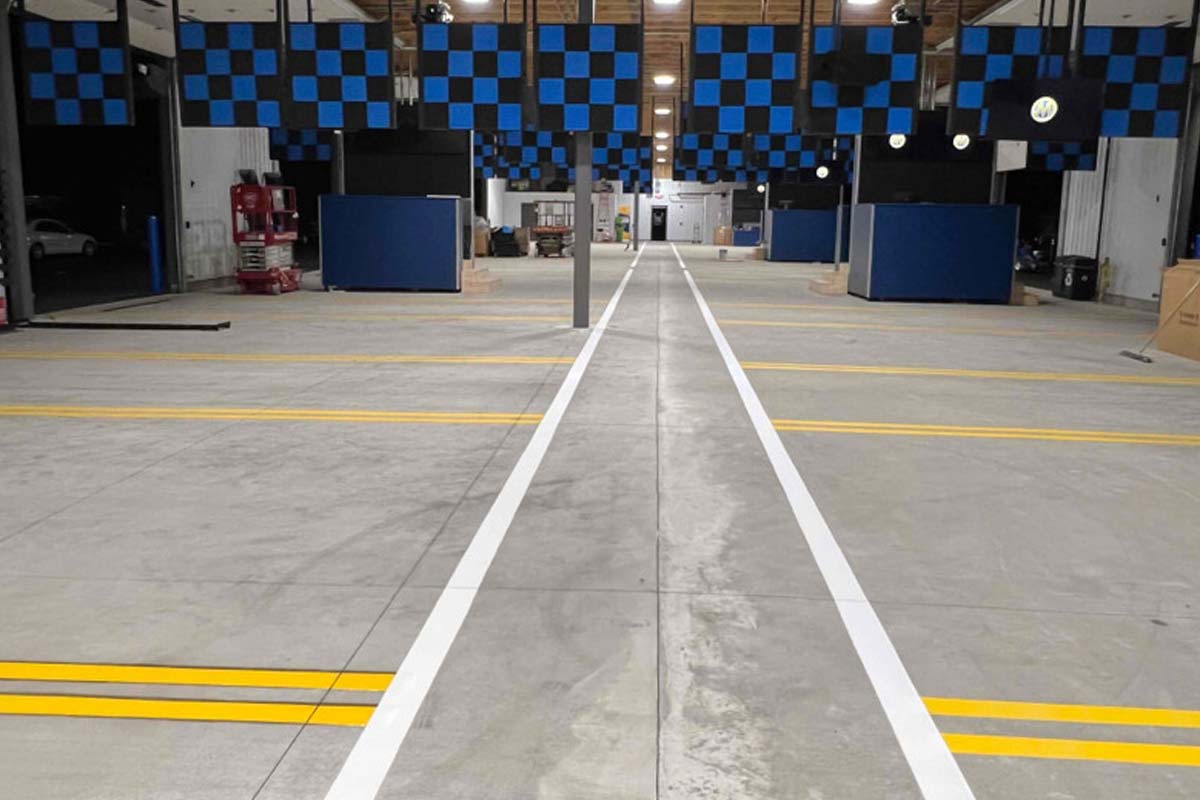
Federal workplace safety standards require that aisles and passageways in warehouses, storage facilities, and manufacturing floors be clearly marked and kept in safe condition. Under OSHA 29 CFR 1910.22(b), permanent aisles must be appropriately marked, with lines kept visible and in good repair at all times.
Minimum aisle widths depend on equipment use: at least 3 feet wider than the largest equipment in use, or a minimum of 4 feet where no mechanical equipment operates. Lines must remain visible against the floor surface — typically white or yellow — with sufficient contrast to guide pedestrian and forklift traffic clearly.
1-800-STRIPER measures and lays out aisle lines to meet these minimums, applies markings with high-visibility paint, and documents the completed layout so facility managers have a reference for future compliance inspections and repainting cycles.
Pedestrian Walkway and Crosswalk Marking
Separating pedestrian traffic from forklift and material-handling equipment routes is one of the most effective ways to reduce injury risk on a warehouse floor. Dedicated walkway markings create a visual boundary that operators and workers recognize at a glance.
Standard pedestrian walkways use white striping, consistent with ANSI color-coding conventions for normal safe movement. Crosswalk markings — typically alternating white transverse lines — signal intersections where foot traffic crosses vehicle lanes. Green markings are used in some facilities to designate first-aid stations or emergency egress paths.
Line width, spacing, and crosswalk dimensions are sized to the facility’s traffic volume and layout. 1-800-STRIPER reviews the existing floor plan before layout, positions walkway lines at safe standoff distances from racking and equipment, and applies a consistent width throughout the facility so the network reads as a unified system rather than a patchwork of repairs.
Safety Zone and Hazard Marking
Color-coded floor markings communicate risk levels without requiring workers to read a sign. The table below reflects industry-standard ANSI Z535.1 color conventions used in warehouse and industrial environments:
| Color | Purpose |
|---|---|
| Yellow | Caution — aisle boundaries, traffic lanes, equipment operating zones |
| White | Normal operations — pedestrian walkways, storage areas |
| Green | Safety — first-aid stations, emergency exits, safe corridors |
| Red | Danger — fire equipment, emergency stop locations, prohibited areas |
| Black/Yellow | Physical hazard — low overhead clearances, floor-level obstructions |
1-800-STRIPER applies these color codes using durable paint suited to your floor type, keeping consistent width and edge definition so markings stay legible under forklift and foot traffic.
Epoxy vs Traffic Paint for Warehouse Floors
Two primary coating types are used for warehouse line painting. The right choice depends on floor conditions and traffic intensity.
Epoxy floor paint bonds chemically to concrete, producing a hard, smooth surface that resists fork-truck tires, chemical spills, and heavy cleaning equipment. It’s the preferred choice for high-traffic aisles, loading docks, and areas exposed to oil, hydraulic fluid, or cleaning solvents. Cure time runs longer than traffic paint, but the finished line holds its edge and color significantly longer in demanding environments.
Traffic paint — water- or solvent-based — applies quickly and dries fast, making it practical for large-area aisle marking where the floor sees moderate use or where turnaround time is the primary constraint. 1-800-STRIPER recommends the appropriate product after assessing your floor surface, traffic volume, and facility operating schedule.
Our Warehouse Line Painting Process
- Surface preparation — Sweep, degrease, and dry the floor surface; identify cracks or spalling that could affect adhesion.
- Layout — Measure aisles, walkways, and safety zones against the facility floor plan; snap chalk lines to mark positions before paint touches the floor.
- Application — Apply epoxy or traffic paint with line striping equipment calibrated to the specified width and edge definition.
- Cure — Allow adequate drying or cure time per product specifications before foot traffic is permitted on freshly painted lines.
- Forklift-traffic readiness — Conduct a final walkthrough to confirm line visibility, color accuracy, and edge quality before releasing the floor to full operations.
For a full list of our pavement marking services, visit our parking lot striping in Central Dallas page.
Businesses We Serve




How it Works

GET A FREE ESTIMATE
Contact us today and we’ll have a quote to you in 24 hours

SCHEDULE A STRIPING
We’ll have your space restriped in less than 7 days, without affecting your business hours

GET A PARKING LOT THAT POPS
For a budget-friendly price, you’ll get a parking lot that looks like new
We proudly work with:


We proudly work with:

Frequently Asked Questions About Warehouse Line Painting in Central Dallas, TX
What OSHA standard governs warehouse floor marking requirements?
OSHA 29 CFR 1910.22 (Walking-Working Surfaces) requires that all permanent aisles and passageways in a facility be clearly and appropriately marked. Compliant aisle lines are typically 2 to 6 inches wide and must visually define pedestrian walkways, traffic lanes, and equipment zones from the surrounding floor. 1-800-STRIPER of Central Dallas marks warehouse floors to these federal specifications for facilities throughout the DFW metroplex.
What do the standard warehouse floor marking colors mean?
Industry-standard color coding follows OSHA 29 CFR 1910.144 guidelines: yellow marks pedestrian aisles, traffic lanes, and caution zones; red designates fire protection equipment, emergency stop controls, and hazardous material storage; white outlines equipment staging and storage positions; green indicates first aid stations and safe areas; orange marks inspection points and material-in-process zones. 1-800-STRIPER of Central Dallas applies color schemes that match your facility’s safety plan and OSHA requirements.
What type of paint or coating is used for warehouse floor markings?
Paint selection depends on floor substrate, traffic intensity, and forklift exposure. Water-based traffic paint is suitable for light foot-traffic areas and is lower in VOCs. Two-part epoxy or urethane coatings are recommended for high-traffic forklift aisles and dock areas — they bond harder to sealed concrete, resist abrasion, and maintain visibility under heavy equipment cycles. 1-800-STRIPER of Central Dallas recommends the appropriate product for each zone based on an on-site assessment.
How do warehouse floor markings improve forklift and pedestrian safety?
Clearly marked pedestrian aisles and forklift lanes physically separate foot traffic from equipment travel paths — one of the most effective single interventions for reducing struck-by incidents in distribution and manufacturing environments. Marked staging zones and dock-door queue lines also reduce congestion that contributes to near-miss events. 1-800-STRIPER of Central Dallas designs traffic-pattern layouts before marking to ensure forklift turning radii and pedestrian corridors do not conflict.
Can warehouse floor markings be applied without shutting down operations?
Most warehouse marking projects can be phased or scheduled around facility operations — working sections at a time, during low-volume shifts, or over a weekend. Water-based paint dries quickly enough to allow foot traffic return in a matter of hours; epoxy coatings require longer cure windows before heavy equipment resumes. 1-800-STRIPER of Central Dallas coordinates scheduling with facility managers to minimize disruption. Call (214) 884-3669 to discuss your operational constraints.
What interior warehouse markings does 1-800-STRIPER of Central Dallas apply?
Services include pedestrian aisle striping, forklift traffic lanes, dock-door staging lines, racking bay outlines, kanban/5S storage zone boundaries, safety zone demarcation (red hazard zones, first-aid green zones), crosswalk markings at pedestrian-equipment intersections, column guard outlines, and custom stenciling for bay numbers, directional arrows, and OSHA-required warning text. Contact us at (214) 884-3669 for a free estimate on your DFW facility.
How long do warehouse floor markings last before repainting is needed?
Durability depends on floor coating, paint product, and forklift traffic volume. Water-based traffic paint in moderate-traffic aisles typically holds 1 to 2 years before noticeable fading; two-part epoxy in heavy-forklift zones can last 3 to 5 years under normal industrial conditions. Texas facilities with climate-controlled interiors see less thermal cycling, which benefits adhesion longevity. Regular visual inspections help identify when a touch-up or full repaint is warranted.
How is pricing for warehouse line painting determined?
Warehouse marking quotes factor in total linear footage to be painted, zone complexity, paint product selected, number of stencils, and access coordination requirements with facility operations. Because no two distribution or manufacturing facilities in the DFW area have the same floor plan or traffic pattern, 1-800-STRIPER of Central Dallas provides free on-site estimates for every project. Call (214) 884-3669 or request a quote online.