Fire Lane Striping
In Central Dallas, TX
Code-Compliant Fire Lane Markings
1-800-STRIPER provides professional fire lane striping in Central Dallas, TX — marking compliant fire lanes, curbs, and no-parking zones per International Fire Code (IFC §503) requirements for commercial properties across Dallas, Tarrant, Denton, and Rockwall counties.
1-800-STRIPER® of Central Dallas PROVIDes Fire Lane Striping Services NEAR YOU
Is your parking lot ready for first responders?
Our team is well-versed in local fire regulations and will parter with you to design a fire lane striping plan that creates unobstructed emergency access to protect your customers and property.
Core Services:
Fire Lane Striping Requirements Under the IFC
The Dallas Fire Code adopts the 2021 International Fire Code (IFC), which establishes minimum requirements for fire apparatus access roads and fire lane markings. These requirements are the foundation of any compliant fire lane striping project in Dallas.
Under IFC §503.2.1, fire apparatus access roads must maintain a minimum unobstructed width of 20 feet to allow fire trucks and emergency equipment to reach any structure on a property. Where overhead clearance is a factor, the minimum vertical clearance is 13 feet 6 inches. These dimensions must be maintained at all times — meaning striped fire lanes, posted signage, and curb markings all work together to prevent parking or obstruction.
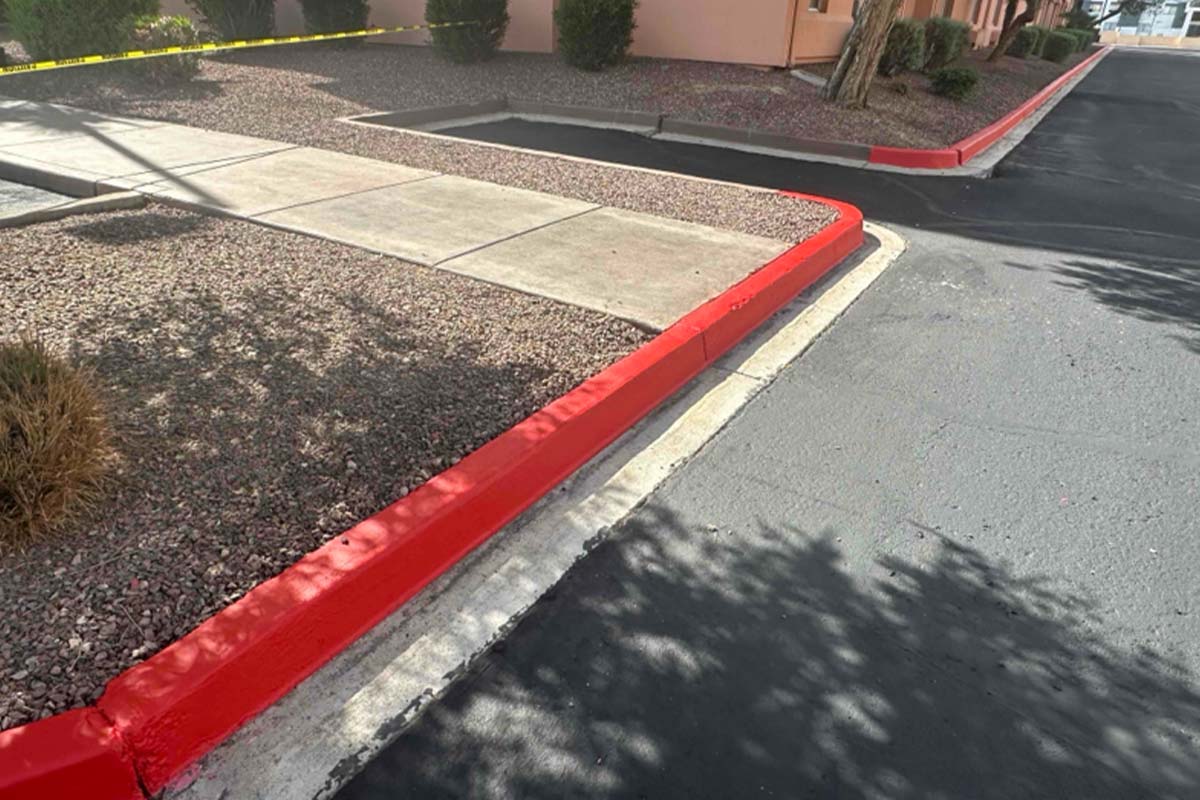
Curb painting is the most visible component of fire lane compliance. The accepted standard is red curb paint, signaling no-parking and no-stopping at any time. Where curbs are absent or where surface markings supplement them, the pavement is marked with “NO PARKING — FIRE LANE” in letters legible from a moving vehicle. Current practice calls for these legends at intervals not exceeding 25 feet along the designated zone, keeping the message continuously visible regardless of where a driver enters the lane.
IFC §503.2.5 also covers dead-end access roads: any dead-end road exceeding 150 feet must provide a turnaround area that accommodates fire apparatus — typically a hammerhead or cul-de-sac configuration. Where such turnarounds exist, the approach and turnaround boundaries must be clearly marked as part of the fire lane striping package.
Routine re-striping is essential. Paint fades from UV exposure, tire abrasion, and weather. Faded fire lane markings are treated by inspectors the same as absent markings, so scheduling periodic re-striping keeps the property in continuous compliance.
Texas Fire Code and Dallas-Specific Requirements
Texas adopts the International Fire Code (IFC) as the basis for statewide fire protection requirements. The Texas State Fire Marshal’s Office incorporates IFC provisions into the Texas Fire Code, which all local jurisdictions then administer. Dallas operates under this framework with additional local amendments enforced by Dallas Fire-Rescue and the Dallas Fire Marshal’s Office.
Dallas Fire-Rescue conducts fire code inspections for commercial properties, including review of fire apparatus access roads and fire lane markings. During an inspection, inspectors verify that access roads meet the 20-foot minimum width, that curbs are painted red where required, and that pavement markings and signs are present, legible, and properly spaced. Properties that fail receive a notice of violation and a deadline to achieve compliance before reinspection.
The Dallas Development Code supplements fire code requirements by specifying sign placement standards for fire lanes. Signs must be posted at the entrance to any fire lane and at intervals along its length per the approved site plan. Sign height, mounting, and legend content (typically “FIRE LANE — NO PARKING” with a tow-away notice) follow city standards. Where a property has multiple access points, each one serving a fire lane requires signage.
For larger commercial developments — shopping centers, medical campuses, logistics facilities, and multitenant office parks — fire lane striping plans are commonly reviewed during permitting and must match the approved site plan. Changes to fire lane layouts require updated plan approval before re-striping begins. 1-800-STRIPER works from existing approved site plans and coordinates with property management teams to confirm markings match plan specifications before any paint is applied.
Our Fire Lane Striping Process in Central Dallas
1-800-STRIPER follows a consistent process on every fire lane striping project in Central Dallas to ensure markings meet the Dallas Fire Code and local requirements from the first day of installation.
- Site Assessment — We walk the property with the site plan or as-built drawing in hand, noting existing curb conditions, pavement surface, current marking locations, and any areas where fading or damage requires grinding or cleaning before new paint is applied.
- Layout and Measurement — Using the approved site plan, we measure and chalk-line the fire lane boundaries, confirming lane widths meet the 20-foot minimum and that legend placement intervals will be 25 feet or less. Turnaround areas and access road terminations are flagged at this stage.
- Surface Preparation — Where old markings have degraded to the point that new paint won’t adhere properly, we pressure-wash or mechanically prepare the surface. Clean, dry pavement is required for maximum paint adhesion and longevity.
- Paint Application — We apply traffic-grade paint in the specified color — red for curbs, white or yellow for pavement legends depending on surface color and local practice. Multiple coats are applied where required for visibility and durability.
- Signage Verification — After striping, we confirm that all required “FIRE LANE — NO PARKING” signs are present at the correct mounting heights and intervals. Missing or damaged signs are noted in the project close-out report for property management follow-up.
- Annual Maintenance Recommendation — Fire lane markings wear from weather, UV exposure, and vehicle traffic. We recommend annual inspection and re-striping as needed to keep markings legible and the property in continuous compliance with Dallas Fire-Rescue requirements.
For a full list of our pavement marking services, visit our parking lot striping in Central Dallas page.
Businesses We Serve




How it Works

GET A FREE ESTIMATE
Contact us today and we’ll have a quote to you in 24 hours

SCHEDULE AN INSTALLATION
We’ll have your installation scheduled in less than 7 days, without affecting your business hours

GET A PARKING LOT THAT POPS
For a budget-friendly price, you’ll get a parking lot that looks like new
We proudly work with:


We proudly work with:


Frequently Asked Questions About Fire Lane Striping in Central Dallas, TX
What code governs fire lane requirements for commercial properties in Central Dallas?
Fire lane requirements in Texas are based on the International Fire Code (IFC), adopted in Dallas as the Dallas Fire Code. Local enforcement is handled by each city’s Authority Having Jurisdiction (AHJ) — typically the municipal fire marshal’s office. Dallas Fire-Rescue references these national codes and applies them through the Dallas Fire Code, so the AHJ is your first stop for jurisdiction-specific dimensions and layout approvals. 1-800-STRIPER is familiar with the compliance markings these codes require.
What curb color is required for a fire lane, and what do other curb colors mean?
Red is the standard curb color designating a no-parking fire lane and is required under most Texas AHJ interpretations of the IFC. Yellow curbing typically marks a general no-parking or loading-zone restriction. White or bare curbing usually signals passenger loading and short-term stopping is permitted. Painting the curb red with the correct stencil text is the primary visual cue that emergency vehicle access must remain clear at all times.
What stencil text is required inside a fire lane?
The standard stencil reads “FIRE LANE — NO PARKING.” Under Dallas Fire Code guidelines, the lettering must be stenciled in white or yellow at intervals of approximately 20–25 feet along the lane. Letter height is typically 18–24 inches, depending on local AHJ specifications. Repeating the stencil at consistent intervals ensures visibility from any approach direction and is one of the first things inspectors check during a fire code compliance review.
What properties are required to have designated fire lanes?
Most commercial properties are required to have fire lanes, including retail shopping centers, office buildings, multifamily apartment complexes, healthcare facilities, warehouses, and schools. Any building where the exterior walls of the first story extend more than 150 feet from a public street or fire department access point typically must provide a designated fire lane. Your local fire marshal’s office is the definitive authority on whether your specific property type is required to maintain marked lanes.
How wide does a fire lane need to be?
The Dallas Fire Code generally requires fire lanes to be a minimum of 20 feet wide with at least 13 feet 6 inches of vertical clearance. The surface must be capable of supporting fire department apparatus, which can exceed 75,000 pounds. Turnarounds are required when a fire lane dead-ends — approved configurations are specified in Dallas Fire Code Appendix D. 1-800-STRIPER can assess your existing lane dimensions and recommend compliant layouts.
How often do fire lane markings need to be repainted?
There is no universal fixed interval mandated by code — the requirement is that markings remain clearly visible and legible at all times. In practice, heavy traffic and DFW’s sun exposure typically degrade pavement-applied stencils and curb paint within one to three years. Most property managers in the Dallas, Tarrant, Denton, and Rockwall county area schedule re-striping every one to two years as a proactive measure. Faded or illegible markings carry the same code liability as missing markings, so do not wait for a violation notice.
What signage is required alongside fire lane pavement markings?
In addition to red curb paint and “FIRE LANE — NO PARKING” stencils on the pavement, reflective vertical signs reading “NO PARKING — FIRE LANE” must be posted at regular intervals along the lane. Signs must be permanently mounted between 4 and 6 feet off the ground and must remain legible and unobstructed. Signage and pavement markings work together; a property is generally not considered compliant if either element is missing or in disrepair.
What happens if fire lane markings are not maintained?
Under both state code and most local Dallas-area ordinances, failure to maintain visible fire lane markings can result in code violations, fines, and delays or denial of occupancy permits. In a fire or emergency, inaccessible lanes can also create liability exposure for the property owner. The fire marshal may issue a notice of noncompliance requiring correction before a scheduled inspection will pass. Keeping lanes freshly marked with 1-800-STRIPER of Central Dallas ensures your property is inspection-ready year-round. Call for a free estimate: (214) 884-3669.