Wheel Stop Installation
In Long Island, NY
Concrete and Rubber Parking Stops
1-800-STRIPER® provides wheel stop installation in Long Island, NY — setting and anchoring concrete and rubber parking stops at stall heads to keep parked vehicles clear of sidewalks, storefronts, and accessible routes across Suffolk County.
1-800-STRIPER® of Long Island PROVIDes Wheel Stops Services NEAR YOU
Need to protect vehicles or walls from accidental damage?
Wheel stops (also called parking blocks) protect your property, enhance safety, and improve parking lot organization.
Benefits:
Wheel stops prevent vehicles from parking too far into a space or overextending into other spots, pedestrian walkways, and other areas, while also helping with vehicle alignment. They can prevent damage to buildings, curbs, or landscaping. Wheel stops also serve as clear visual cues for proper parking and are sometimes used on slopes to prevent cars from rolling.
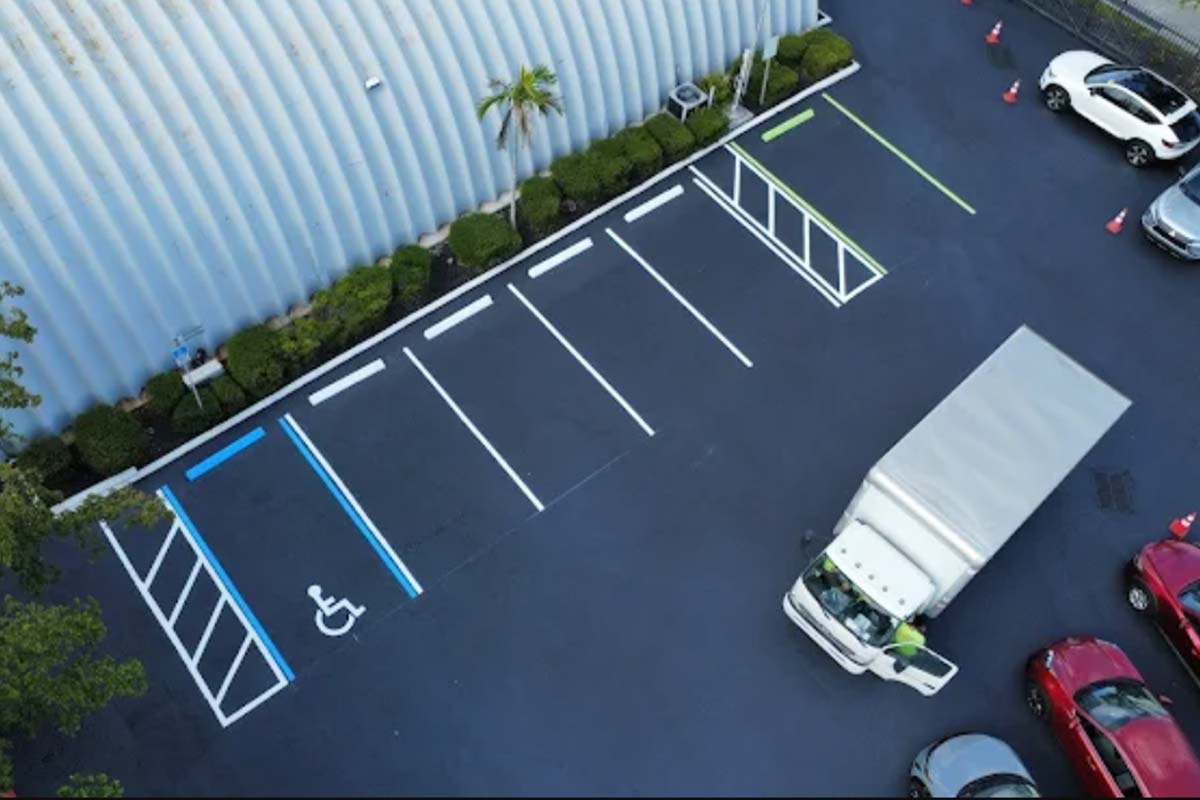
Wheel Stop Installation in Long Island, NY
A wheel stop is the low block at the head of a parking stall that a car’s front tires come to rest against. You will hear them called parking blocks, parking bumpers, curb stops, parking stoppers, and wheel stoppers — all the same object.
They do one job: they stop a parked vehicle overhanging where it should not. That matters most at the head of a stall facing a sidewalk, a storefront, a building wall, landscaping, or an accessible route, where an overhanging bumper is either a hazard, an obstruction, or expensive contact with the building.
We supply and install concrete and rubber wheel stops for commercial properties across Suffolk County, on new installations and as replacements for stops that have cracked, shifted, or been broken by plows.
Are Wheel Stops Required, or Just a Good Idea?
Worth answering directly, because it is the question we are asked most and the answer is not what most people expect: no code mandates a wheel stop.
The provision people reach for is section 502.7 of the 2010 ADA Standards for Accessible Design, and it is worth reading what it actually says. It states that parking spaces and access aisles shall be designed so that cars and vans, when parked, cannot obstruct the required clear width of adjacent accessible routes. That is an outcome, not a device. It tells you what must not happen; it does not tell you what to install.
The advisory note published alongside it says that wheel stops are an effective way to prevent vehicle overhangs from reducing the clear width of accessible routes. Note the wording — an effective way. That is advisory language recommending one solution, not a requirement to use it. You could equally satisfy section 502.7 by making the walkway wide enough that an overhang does not eat into the required clear width, or by laying out the stalls so they do not face the route at all.
So the honest position is this. Where a stall faces an accessible route, you have an obligation about the result, and a wheel stop is the cheapest and most reliable way to meet it — which is why they are near-universal. But if someone tells you code requires a wheel stop at every stall, that is not in the standard. Elsewhere on a lot, wheel stops are a property decision: protecting a storefront, a wall, landscaping, or a sidewalk from bumper contact.
Your local building department may apply requirements of its own through site plan approval, and that is between you and them.
Concrete vs. Rubber Parking Stops
Concrete is the traditional choice and the heavier one. It is rigid, it does not move once pinned, it holds up under repeated contact, and it is generally the lower material cost. Its weaknesses are that it cracks — from a hard strike, from freeze and thaw cycles, or from a plow blade catching an edge — and once cracked it usually needs replacing rather than repairing. Its weight also makes installation more involved.
Rubber, typically recycled, is lighter and more forgiving. It flexes on impact rather than cracking, which makes it far more durable against plow contact and against the freeze and thaw cycling a Long Island winter delivers. It is easier to handle and reposition, and it usually comes with molded-in reflective striping for visibility. The trade-offs are a higher material cost and, because it is lighter, a greater dependence on being properly anchored — an under-anchored rubber stop will walk out of position.
Which to choose: rubber generally wins on lots that get plowed, which on Long Island is most of them, and where visibility matters. Concrete generally wins where cost is the driver, where the stops face heavy or repeated contact, and where plows are not a factor. We will give you a straight recommendation for your lot.
Where Wheel Stops Go in a Parking Lot
Accessible stalls and access aisles — where a stall head faces the accessible route to the building. This is the placement that carries an actual obligation behind it, under the outcome required by ADA section 502.7.
Stalls facing a sidewalk or walkway — where an overhanging bumper narrows the usable path or catches pedestrians at shin height.
Stalls facing a building wall or storefront — where the stop prevents contact with glass, brick, and doorways.
Stalls facing landscaping, planters, or islands — protecting both the planting and the vehicle.
Stalls at a grade change or drop — and stalls facing fencing, utility equipment, electric vehicle chargers, bollards, or light poles.
Where they should not go — across a pedestrian route where they become a trip hazard, and inside an access aisle, which must stay clear.
Placement within the stall matters as much as which stalls get them. Set too far forward and vehicles still overhang; too far back and shorter vehicles never reach them while longer ones stop short of the stall.
For a full list of our pavement marking services, visit our parking lot striping in Long Island page.
Businesses We Serve




How it Works

GET A FREE ESTIMATE
Contact us today and we’ll have a quote to you in 24 hours

SCHEDULE AN INSTALLATION
We’ll have your installation scheduled restriped in less than 7 days, without affecting your business hours

GET A PARKING LOT THAT POPS
For a budget-friendly price, you’ll get a parking lot that looks like new
We proudly work with:


We proudly work with:


Frequently Asked Questions About Wheel Stop Installation in Long Island, NY
Are parking stoppers required by code?
No code mandates a wheel stop. The provision usually cited, section 502.7 of the 2010 ADA Standards, states an outcome: parking spaces and access aisles must be designed so parked cars and vans cannot obstruct the required clear width of an adjacent accessible route. Its advisory note says wheel stops are an effective way to achieve that — advisory wording recommending one solution, not requiring it. A wider walkway or a different stall orientation satisfies the same requirement. Your town may add its own conditions through site plan approval.
Where should wheel stops be installed?
The priority placements are stalls whose heads face an accessible route, a sidewalk, a storefront or building wall, or landscaping — anywhere an overhanging bumper narrows a path or makes contact. Also stalls at a grade change and stalls facing chargers, bollards, fencing, or light poles. They should not cross a pedestrian route, where they become a trip hazard, and never sit inside an access aisle, which has to stay clear. Position within the stall matters as much as which stalls get them.
What is a wheel stopper called?
All the same object, and the names are used interchangeably: wheel stop, wheel stopper, parking stop, parking stopper, parking block, parking bumper, curb stop, and car stop. Specifications and code commentary tend to say wheel stop, suppliers often say parking block or parking bumper, and customers most often say parking stopper. If you are getting quotes and the terms differ between them, they are quoting the same product — compare the material, the length, and the anchoring method instead.
Concrete or rubber wheel stops — which holds up better?
Rubber holds up better on a lot that gets plowed, which on Long Island is most of them. It flexes on impact instead of cracking and shrugs off the freeze and thaw cycling that splits concrete, and it usually has molded-in reflective striping. Concrete is more rigid, cheaper as a material, and better where contact is heavy and plows are not a factor — but once it cracks it gets replaced, not repaired. Rubber costs more and depends more on being properly anchored.
How are wheel stops anchored?
On asphalt, typically with steel spikes or rebar pins driven through pre-formed holes in the stop into the pavement below. On concrete, with anchor bolts or masonry anchors set into drilled holes, since spikes will not hold in a slab. Rubber stops depend on the anchoring more than concrete ones do, because they are light enough to shift if pinned poorly. Either way the stop is positioned and squared to the stall before anchoring — correcting a pinned stop means re-drilling.