Parking Lot Pressure Washing
In Long Island, NY
Surface Prep Before Restriping
1-800-STRIPER® provides parking lot pressure washing in Long Island, NY — power washing asphalt and concrete to lift dirt, oil stains, tire marks, and worn paint residue, the surface prep step that lets fresh striping bond properly before a restripe.
1-800-STRIPER® of Long Island PROVIDes Parking Lot Power Washing Services NEAR YOU
Need to blast away years of grime?
If your parking lot or parking garage looks dull and dirty, our professional crew can wash away grime, oil, stains, and slippery buildup to restore the appearance of your property.
Benefits:
Parking Lot Pressure Washing in Long Island, NY
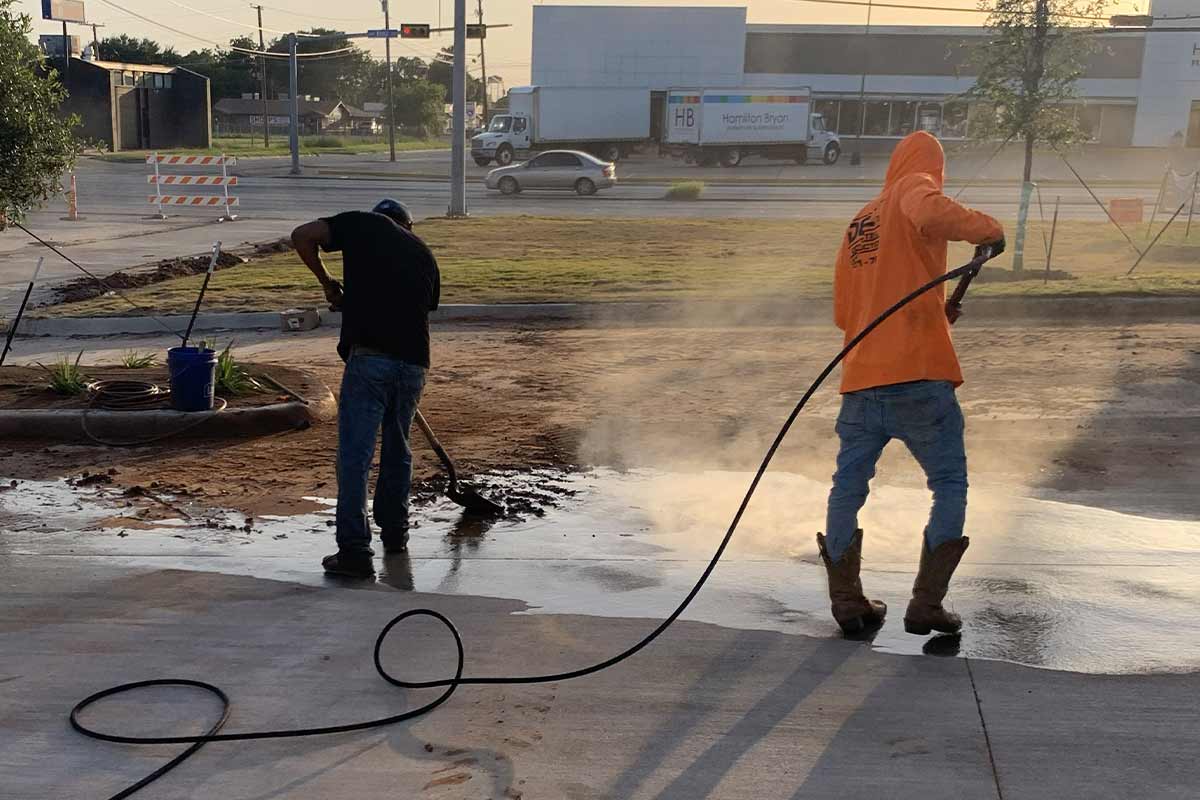
Pressure washing a commercial lot does two things. It makes the property look maintained rather than neglected, which is the reason most people call. And it is the surface preparation step that decides how long fresh striping lasts, which is the reason it matters more than most people realize.
We pressure wash asphalt and concrete parking areas, drive aisles, loading and dock areas, sidewalks and walkways, and dumpster pads for commercial properties across Suffolk County — as standalone cleaning, and as the preparation stage before striping or restriping.
Why Surface Prep Comes Before Restriping
Paint bonds to the pavement, not to what is sitting on top of the pavement. Put a line down over dust, oil film, algae, or the chalky residue of old failing paint and the bond is to that layer — and that layer is already coming off.
The failure looks distinctive once you know it: lines that appear crisp on the day and start lifting in sheets or flaking at the edges within a season, usually worst in the drive aisles and around the entrances where traffic is heaviest. That is almost always a preparation failure rather than a paint failure, and repainting without fixing the cause simply repeats it.
So on any lot that has not been cleaned in years, washing is not an upsell attached to the striping quote — it is the difference between markings that last and markings that need doing again next year. Our parking lot restriping page covers the striping side of the same job.
There is one sequencing point worth knowing: the surface has to dry before paint goes down. On a large lot that usually means washing and striping are different visits rather than the same afternoon, and we will schedule them accordingly.
What Power Washing Removes
Dirt, grit, and general accumulation — the layer that makes a lot look tired even when the pavement underneath is sound.
Oil and transmission fluid staining — concentrated in the stalls where cars sit longest and at the dumpster pad. Heavier deposits need degreasing before washing rather than pressure alone.
Tire marks and rubber deposits — at entrances, turns, and anywhere drivers accelerate.
Algae, moss, and organic growth — a bigger factor on Long Island than in drier climates, especially on shaded lots and edges under tree cover, and it makes pavement genuinely slippery when wet as well as leaving it green.
Chalky, oxidized old paint residue — and loose failing markings, so new lines go onto a sound surface.
Leaf and organic staining — which sets into asphalt over a winter if it is left.
Gum, spills, and general grime — on walkways and around entrances.
What washing does not do is repair pavement. It will not fill a crack or a pothole, and it will not restore asphalt that has failed structurally — it cleans the surface you have.
Wash Water and Storm Drains
This is the part of the job that separates a contractor who has thought about it from one who has not, and it is worth asking about before you hire anyone.
Parking lot wash water is not clean water. It carries oil, fuel residue, heavy metals from brake dust, sediment, and detergent, and a parking lot storm drain generally discharges to surface water rather than to a treatment plant. Wash water sent down a storm drain is therefore a discharge to the environment, which is what the federal framework administered through the EPA National Pollutant Discharge Elimination System exists to regulate. In New York that program is administered at state level by the New York State Department of Environmental Conservation.
How this affects the work in practice: wash water is contained and kept out of the storm drain rather than allowed to run into it, drains in the work area are protected before washing begins, and collected water and solids are disposed of appropriately. Heavily contaminated areas such as dumpster pads and fueling or maintenance areas are handled with more care than an open parking bay.
Requirements vary by municipality and by what your property discharges to, and your town or your own stormwater permit conditions govern the specifics for your site. We will work to them. What we will not do is hose a lot into the nearest catch basin and call it done.
For a full list of our pavement marking services, visit our parking lot striping in Long Island page.
Businesses We Serve



How it Works

GET A FREE ESTIMATE
Contact us today and we’ll have a quote to you in 24 hours

SCHEDULE AN INSTALLATION
We’ll have your installation scheduled in less than 7 days, without affecting your business hours

GET A PARKING LOT THAT POPS
For a budget-friendly price, you’ll get a parking lot that looks like new
We proudly work with:


We proudly work with:
Frequently Asked Questions About Parking Lot Pressure Washing in Long Island, NY
What do you need to pressure wash a parking lot?
On the contractor side: commercial-grade equipment with appropriate pressure and flow for pavement, a water supply, degreasers for oil-stained areas, and the means to contain wash water and protect storm drains. On your side, mainly access — the area needs to be clear of parked vehicles while we work, which is usually the only thing that has to be arranged. On larger properties we work in sections so the lot never fully closes.
Is it legal to pressure wash a parking lot?
Washing the lot is fine. What is regulated is where the water goes. Parking lot wash water carries oil, brake dust, sediment, and detergent, and a lot’s storm drain usually discharges to surface water rather than to treatment — so letting it run into the drain is a discharge, which is what the EPA National Pollutant Discharge Elimination System framework governs, administered in New York by the state environmental conservation department. We contain wash water and protect drains. Local requirements vary by municipality.
Does a parking lot need washing before restriping?
If the lot has not been cleaned in years, yes — and it is the single biggest factor in how long the new lines last. Paint bonds to pavement, not to the dirt, oil film, algae, or chalky old-paint residue sitting on it, and lines applied over that layer lift and flake within a season. On a lot that is already reasonably clean, spot cleaning of the stained and residue-heavy areas may be enough. Which of the two applies is a judgment we make on site.
What does power washing remove?
Dirt and general accumulation, oil and transmission fluid staining, tire and rubber marks at entrances and turns, algae and moss — a significant one here, especially on shaded lots, where it also makes pavement slippery — chalky oxidized paint residue and loose failing markings, leaf and organic staining, and gum and spills on walkways. What it does not do is repair pavement: it will not fill a crack or a pothole or restore asphalt that has failed structurally.
How often should a parking lot be pressure washed?
It depends on traffic, tree cover, and what the property is. A high-traffic retail lot or anywhere with a food tenant accumulates staining fastest. Shaded lots and lots under tree lines pick up algae and organic growth on a much shorter cycle than open ones. As a practical rule, wash when the lot looks tired, when oil staining has become the first thing a visitor sees, when growth is making the surface slippery, or whenever the lot is about to be restriped.