Temporary Parking Lot Striping
In East Kansas City, MO
Event and Construction Markings
1-800-STRIPER provides professional temporary parking lot striping in East Kansas City, MO — short-duration event markings, construction zone striping, and overflow parking layouts on grass, gravel, pavement, or any surface using removable water-based traffic paint.
1-800-STRIPER® of East Kansas City PROVIDes Temporary Striping Services NEAR YOU
Need Temporary Stripes?
Use temporary stripes to direct traffic and create parking areas at your special event or to keep construction sites safe without a long-term commitment. We paint on grass, gravel, pavement, or any other surface where temporary striping is needed.
Striping solutions for:
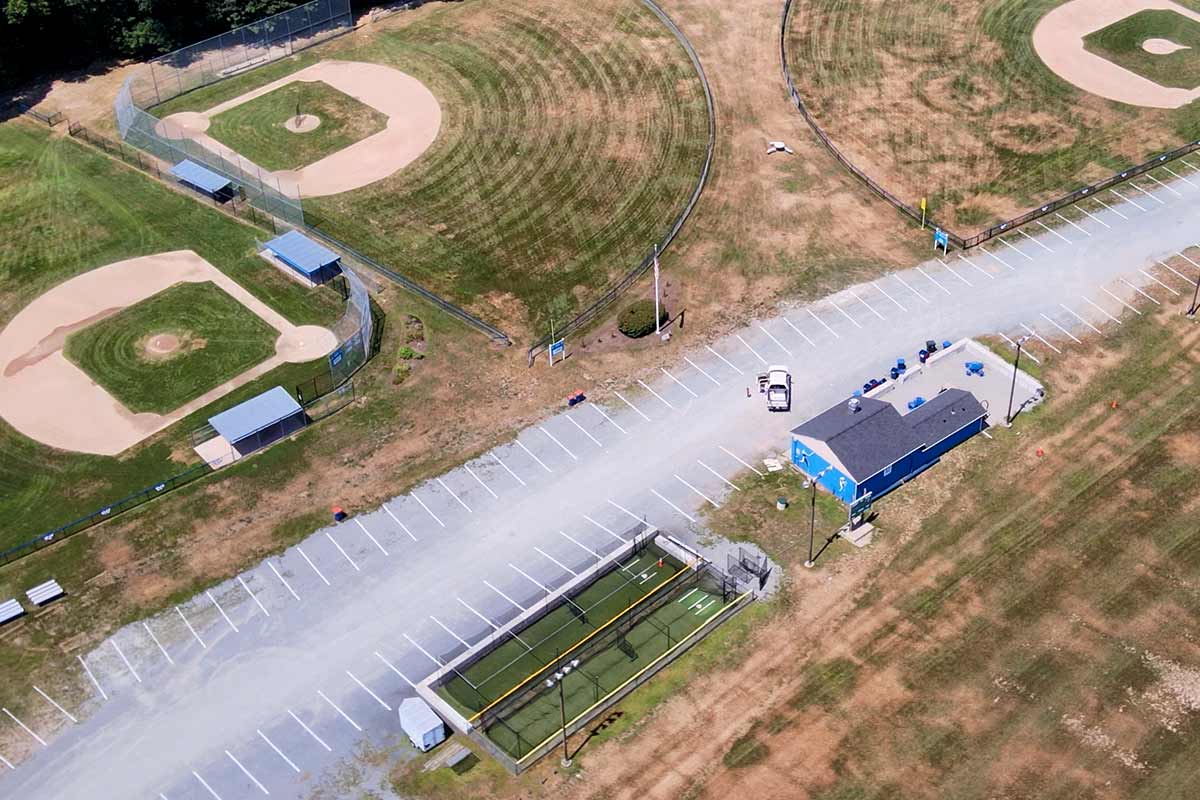
Temporary Parking Lot Striping in East Kansas City, MO
Temporary striping is what you need when the parking has to exist for a weekend, a season, or the duration of a construction phase — and then stop existing.
A field turned into event parking. A church lot that has to double its capacity for one Sunday a year. A construction site where the traffic pattern changes every few weeks. A stadium overflow lot on grass. We lay these out, mark them so drivers can actually use them, and use products that come off when the need is over.
Events, Overflow Lots, and Construction Phasing
Events. A field full of cars parked by instinct holds far fewer cars than a field with lines on it, and it empties badly. We lay out rows, aisles, and entry and exit routing so your event parks efficiently and clears without a queue. Marked pedestrian routes matter here too — an event lot mixes cars and people on foot in the dark.
Seasonal overflow. Retail at the holidays, a church at Easter, a venue in festival season. Capacity you need a few times a year and do not want to pave for.
Construction phasing. Site traffic patterns change as the job moves. We re-mark as the phases shift — temporary aisles, contractor parking, delivery routing, keeping the fire lane clear while the lot is half torn up.
Overflow on grass and gravel. This is the one people assume cannot be done. It can, and in Kansas City it is explicitly contemplated by the code.
Surfaces We Can Mark — Grass, Gravel, and Pavement
Most striping contractors are asphalt-only. If the surface is not pavement, the answer is no.
We mark grass, gravel, pavement, or any other surface where temporary parking has to be laid out. Each behaves differently and each takes a different approach:
- Pavement. Removable water-based traffic paint, which goes down fast and comes up without damaging the surface underneath.
- Gravel. Marking a gravel lot means working with the aggregate rather than against it. Kansas City’s zoning code has a view on the gravel itself: where gravel is allowed, section 88-420-15-M requires a uniform layer at least 2 inches deep, of rock or crushed stone no more than 2 inches in diameter, kept free of dirt and debris. A gravel lot that meets that spec is a gravel lot we can mark cleanly.
- Grass and turf. This is where the product choice matters most, and where the city actually has a rule.
What Kansas City Requires for Overflow and Event Parking on Grass
Most owners assume parking cars on grass is a gray area you get away with. In Kansas City, it is written into the Zoning and Development Code — and so is the requirement to mark it.
Section 88-420-16-O lets the city planning and development director authorize part of your required off-street parking to sit on pervious surfaces, provided those spaces are used “only intermittently, either for special events or for seasonal peak parking demands or overflows.” That is a municipal code describing event and overflow parking on grass, and permitting it.
Then it tells you what you have to do with it:
> “Parking spaces, aisles, etc. must be marked by flags, biodegradable dyes or paints, or some other method that does not kill grass or plants.”
That sentence does two jobs at once. It requires the spaces and aisles to be marked, so you cannot simply wave cars onto a field. And it constrains the product: whatever you mark with must not kill the vegetation. The code also requires that pervious parking areas be adequately drained.
That is not a detail we found in a trade magazine. It is the city telling you the service on this page is mandatory if you want the overflow parking, and telling you the marking has to be done with something that leaves your grass alive afterwards. Which is exactly what removable, water-based, turf-safe marking is for.
If you are planning overflow parking on grass in Kansas City, the authorization comes from the planning and development director, and the marking comes from us.
For a full list of our pavement marking services, visit our parking lot striping in East Kansas City page.
Businesses We Serve




How it Works

GET A FREE ESTIMATE
Contact us today and we’ll have a quote to you in 24 hours

SCHEDULE A STRIPING
We’ll have your space restriped in less than 7 days, without affecting your business hours

GET A PARKING LOT THAT POPS
For a budget-friendly price, you’ll get a parking lot that looks like new
We proudly work with:


We proudly work with:
Frequently Asked Questions About Temporary Parking Lot Striping in East Kansas City, MO
Can you stripe temporary parking on grass or gravel?
Yes — and in Kansas City the code assumes someone will. Section 88-420-16-O of the Zoning and Development Code allows overflow and special-event parking on pervious surfaces, and requires that the spaces and aisles be marked. So this is not an unusual request we accommodate; it is a service the city’s own rules contemplate. We mark grass, gravel, pavement, or whatever the surface happens to be.
Will the paint kill my grass?
It should not, and in Kansas City it legally must not. Section 88-420-16-O requires that spaces and aisles on pervious surfaces be marked “by flags, biodegradable dyes or paints, or some other method that does not kill grass or plants.” That is the city’s language, not ours. We use turf-safe, water-based products for exactly this reason, and we will tell you before we start what will happen to your field afterwards.
How long do temporary markings last?
Long enough for the event and not much longer, which is the point. Removable water-based products are formulated to be visible for the duration of an event or a construction phase and then to weather off or be removed. If you need markings to survive a whole season rather than a weekend, tell us up front — it changes what we put down.
Can you lay out an overflow lot for a one-day event?
Yes. That is a core use case, and it is the exact scenario Kansas City’s code describes when it talks about spaces used intermittently for special events or seasonal peak demand. We can lay out rows, aisles, entry and exit routing, accessible spaces, and pedestrian paths for a single day’s use.
Do you remove the markings afterward?
Depends what we used and what you want. Water-based temporary products are designed to weather off, and on grass and gravel that generally takes care of itself. Where you need a surface returned to a clean state on a schedule, we plan removal into the job rather than leaving you to deal with it.
Do you need a permit for overflow parking on grass?
You need the city’s authorization. Section 88-420-16-O puts that decision with the city planning and development director, who may authorize part of your required off-street parking to be provided on pervious surfaces where the spaces will be used only intermittently for special events, seasonal peaks, or overflow. The code also requires the area be adequately drained. So it is not a free-for-all, and it is not forbidden either — it is a process. We will tell you what the code says and mark the lot once you have the go-ahead.